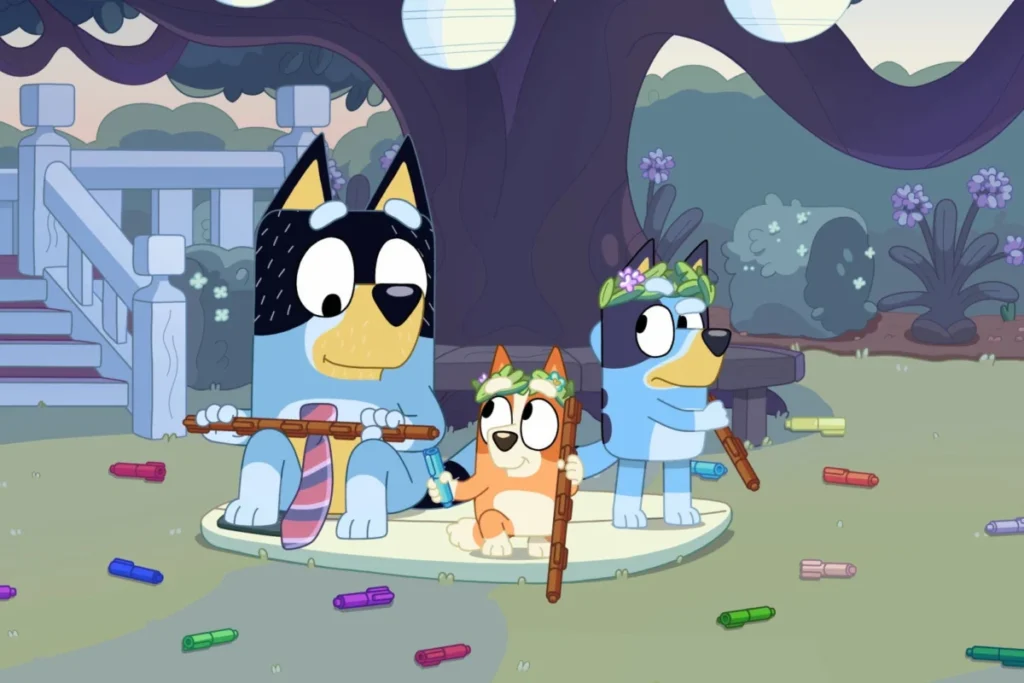

The acclaimed Australian children’s animated series, Bluey, has achieved a significant cultural milestone, with its producer, Sam Moor, hailing the translation of five episodes into Yolŋu Matha as a "natural step" and expressing a keen desire for further Indigenous language initiatives. This groundbreaking endeavour represents the first time the beloved show has been presented in an Australian First Nations language, resonating deeply within Indigenous communities and drawing widespread praise for its commitment to cultural recognition.
A Historic Cultural Initiative for NAIDOC Week
The award-winning series, globally celebrated for its heartwarming portrayal of a family of Blue Heeler dogs, recently unveiled five episodes from its first and second seasons dubbed into Yolŋu Matha. This language is the vibrant First Nations language spoken by the Yolŋu people of north-east Arnhem Land in the Northern Territory of Australia. The release coincided with National Aboriginal and Islanders Day Observance Committee (NAIDOC) Week, an annual event celebrating the history, culture, and achievements of Aboriginal and Torres Strait Islander peoples. The timing underscored the initiative’s profound importance in fostering cultural pride and visibility during a period dedicated to Indigenous recognition.
In an interview with the Press Association, Sam Moor, an award-winning producer at Ludo Studio, the creative force behind Bluey, conveyed immense satisfaction with the "amazing" public reaction. She articulated the studio’s ambition to expand on this initial success, stating, "Ludo is about telling Australian stories for the world, so I just think it felt like a natural step for us to make one of the most popular shows in the world into an Australian language." Moor further clarified that the move was a natural "extension" of the studio’s core mission rather than a departure.

The Genesis of a Vision: Years in the Making
The concept of translating Bluey into an Indigenous language was not a recent one, but rather an ambition harboured since the show’s nascent stages. Moor revealed that the idea "came about right from early days" around its launch in 2018, with the creative team demonstrating immediate and enthusiastic support. However, bringing such a culturally sensitive and logistically complex project to fruition required considerable dedication and time. "It was a long road. It took us a long time to get it to come to fruition," Moor acknowledged, crediting the Australian Broadcasting Corporation (ABC), Bluey‘s commissioning broadcaster, as a "really big supporter" in making the vision a reality.
The project was a collaborative triumph, developed through a partnership between Yolŋu Radio, the Aboriginal Resource and Development Services (ARDS), Ludo Studio, and the ABC. This multi-organizational effort highlights the intricate network of expertise and cultural consultation required to respectfully and accurately undertake such a translation, ensuring linguistic fidelity and cultural appropriateness.
Bluey’s Enduring Philosophy: Relatability and Representation
Moor emphasized that the motivation behind diversifying the show’s linguistic offerings was rooted in Bluey‘s fundamental philosophy: "It’s just about serving the audience – it’s about making every child seen and heard. Making that connection." She elaborated on how Bluey excels at fostering a sense of belonging, stating, "I think that’s what Bluey does really well. It makes every family feel seen."

Crucially, Moor reiterated that Bluey has consistently aimed to be a universally relatable family narrative, steering clear of explicit political messaging. "Bluey’s never been a show about making a point about anything political… There’s never tried to be a message in Bluey," she affirmed. Instead, the show’s power lies in its authentic portrayal of everyday family life, making the integration of Indigenous languages a natural extension of its commitment to showcasing the diverse fabric of Australian experience, rather than a didactic statement. The show’s "amazing platform" is leveraged for opportunities that are a "very natural fit," driven by a collective sense of responsibility and desire as an Australian company.
The Significance of Yolŋu Matha and Indigenous Language Revitalization
Yolŋu Matha is not a single language but rather a group of related dialects spoken by the Yolŋu people across a vast area of Arnhem Land. It is one of the strongest surviving Indigenous language groups in Australia, with thousands of speakers, and plays a vital role in the cultural identity, traditions, and land management practices of the Yolŋu community. The choice of Yolŋu Matha for Bluey‘s inaugural Indigenous language translation is therefore particularly impactful, celebrating a vibrant, living language and supporting its intergenerational transmission.
Australia was once home to over 250 Indigenous languages and 800 dialects prior to European colonization. However, centuries of colonial policies, including forced assimilation and the suppression of Indigenous cultures, led to a catastrophic decline. Today, only around 120 of these languages are still spoken, and many are critically endangered, with only a handful having more than 1,000 speakers. Efforts to revitalize and preserve these languages are crucial, and initiatives like the Bluey translation contribute significantly to these ongoing struggles. They provide visibility, encourage younger generations to engage with their heritage languages, and offer educational resources that were historically absent or suppressed.
The Global Phenomenon of Bluey: A Powerful Vehicle for Cultural Exchange

Bluey‘s unprecedented global success amplifies the impact of this Indigenous language initiative. The show, which first premiered on ABC Kids in Australia in October 2018, rapidly gained international acclaim after being acquired by Disney+ for global distribution. In 2025, it was reported as the most-watched series globally on Disney+, according to the Walt Disney Company, a testament to its universal appeal.
The series has garnered numerous accolades, including a prestigious 2024 Peabody Award and consecutive Television Critics Association Awards in 2023 and 2024. Its storylines, which often centre on imaginative play, family dynamics, and the unique quirks of Australian life, have resonated with audiences across more than 140 countries and in over 20 different language translations. This vast reach means that the Yolŋu Matha episodes not only serve an important domestic audience but also subtly introduce elements of Australia’s rich Indigenous culture to a global viewership, fostering greater understanding and appreciation.
Beyond the Screen: Educational and Emotional Impact
The educational implications of seeing a globally popular children’s show translated into an Indigenous language are profound. For Yolŋu children, hearing familiar characters speak their mother tongue on screen offers a powerful validation of their language and culture. It can boost self-esteem, reinforce linguistic identity, and make learning their heritage language more engaging and accessible. Moor recounted a particularly moving experience, describing a video of Indigenous children reacting to the newly translated episodes: "I had tears pricking my eyes when I saw that, because I just thought, ‘oh wow’… It is just this group of kids that feel like they’ve been seen. It’s really amazing." This emotional response underscores the deep cultural and psychological impact of such representation.
For non-Indigenous audiences, the availability of Bluey in Yolŋu Matha offers an invaluable opportunity for exposure to and appreciation of Australia’s First Nations languages. It subtly educates about linguistic diversity and the importance of cultural preservation, contributing to a broader national dialogue around reconciliation and respect for Indigenous heritage.

Future Aspirations: Expanding the Linguistic Landscape
Looking ahead, Ludo Studio and its partners are not resting on their laurels. Moor expressed a strong desire to continue this linguistic journey. "We’re very keen to do Brisbane, because that’s where the show is made," she told the Press Association, indicating a potential focus on the Indigenous languages of the Brisbane region where Ludo Studio is based. This would involve engaging with local First Nations groups and their linguistic experts to identify and translate into relevant languages, such as Turrbal or Yuggera.
However, Moor also acknowledged the inherent complexities and challenges of this ambitious undertaking. "We are talking with several more groups now – but it’s not a quick process to do. We are hoping to do more, but there’s so many different languages. It’d be hard to do them all." The sheer number of distinct Indigenous languages in Australia, each with its unique linguistic structure, cultural nuances, and often a limited number of fluent speakers, makes each translation project a significant undertaking. It requires meticulous planning, deep community engagement, and sustained financial and logistical support.
Setting a Precedent for Media and Reconciliation
The Bluey Yolŋu Matha translation sets a powerful precedent for the Australian media industry and beyond. It demonstrates that popular mainstream content can be a vital tool for language revitalization and cultural affirmation without compromising its core appeal. By integrating Indigenous languages into globally recognized narratives, Bluey contributes to a more inclusive and representative media landscape.

This initiative aligns with broader efforts towards reconciliation in Australia, emphasizing the importance of recognizing and celebrating First Nations cultures. It encourages other media producers to consider how their platforms can be used to support Indigenous languages and stories, fostering a sense of pride within Indigenous communities and promoting understanding across all Australians. As Bluey continues its reign as a global cultural phenomenon, its commitment to showcasing the rich linguistic tapestry of its homeland ensures that its legacy will extend far beyond entertainment, making a tangible difference in the preservation and celebration of Australia’s invaluable Indigenous heritage.