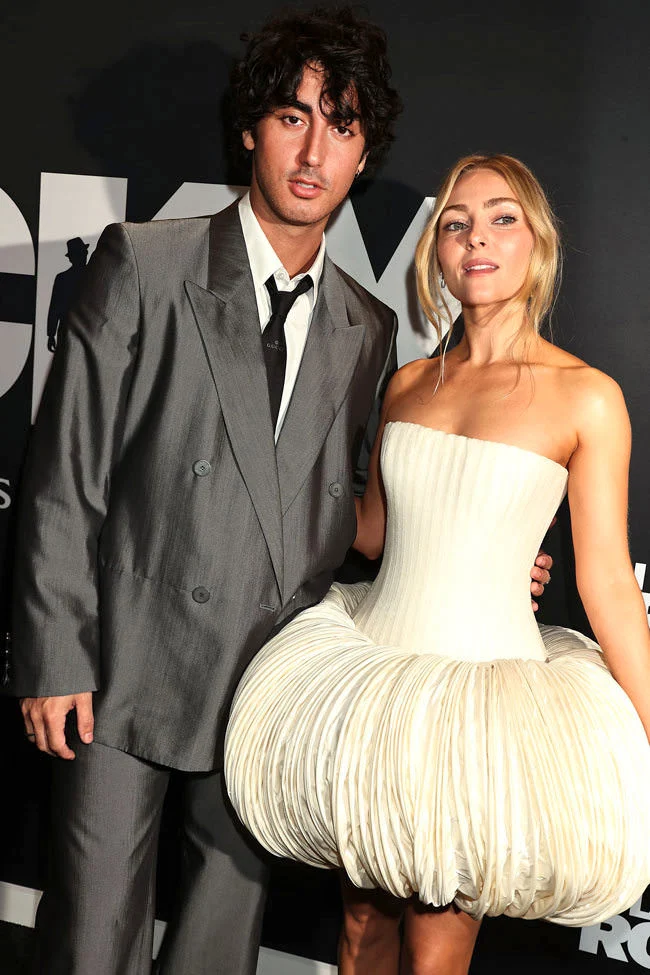

The red carpet outside the New York special screening of the upcoming biographical drama I Play Rocky became a focal point for fashion critics and cinema enthusiasts alike as lead actors Anthony Ippolito and AnnaSophia Robb arrived to present the film. Directed by acclaimed filmmaker Peter Farrelly, the movie chronicles the arduous, real-life journey of Sylvester Stallone as he fought against insurmountable industry odds to write and star in the cinematic masterpiece Rocky. Against the backdrop of a highly anticipated promotional tour that has already stopped in cities like Philadelphia, the film’s central duo captured widespread media attention not only for their involvement in the project, but also for their striking and unconventional wardrobe choices for the evening.
Main Facts of the New York Special Screening

The New York special screening brought together the cast, crew, and notable figures from the entertainment industry to celebrate the eve of the film’s theatrical release. Anthony Ippolito, who takes on a major role in the biographical feature, and AnnaSophia Robb, his co-star, stepped onto the carpet to pose for photographers and speak with press outlets. However, the styling decisions made by both actors quickly became a dominant talking point among fashion commentators.
Ippolito opted for a statement-making look featuring a Gucci suit. While high-end tailoring is a staple of red carpet events, the ensemble drew immediate scrutiny due to its high-shine finish and loose, oversized fit. In addition to the suit’s dramatic proportions, Ippolito embraced a contemporary menswear trend characterized by an intentionally disheveled tie styling. This stylistic choice, which has recently gained traction among younger Hollywood male celebrities, aims for an effortless, casual-cool aesthetic but frequently divides critics regarding its overall polish and appropriateness for formal premieres.
AnnaSophia Robb, meanwhile, chose a sculptural and avant-garde creation by designer Danielle Frankel. The garment immediately drew comparisons to early-2000s fashion sensibilities, bearing a distinct resemblance to archival looks famously championed by style icons like Sarah Jessica Parker during her height on Sex and the City. For Robb, who previously portrayed a young Carrie Bradshaw in The Carrie Diaries, the stylistic nod felt both fitting and nostalgic. The dress featured unique textural elements, most notably a tiered, swirling skirt structure that invited playful critiques from fashion observers comparing its silhouette to unconventional household items, while ultimately praising its sassy, high-impact red carpet presence.

Chronology and Promotional Trail
The New York screening represents a critical milestone in the marketing campaign for I Play Rocky, which is slated for a limited theatrical release on November 6, followed by wider distribution. The promotional tour commenced earlier in the week with a high-profile special screening in Philadelphia—a city intrinsically linked to the legacy of the Rocky franchise.
Following the Philadelphia event, the cast traveled to New York City to engage with domestic press, partake in junkets, and present the film to industry insiders, critics, and select fans. Red carpet appearances during this leg of the tour have been carefully orchestrated by studio publicists and fashion stylists to maximize visibility across digital and print platforms. In an era where red-carpet imagery circulates globally within seconds via social media channels, the polarizing wardrobe selections of Ippolito and Robb served their primary purpose: generating sustained online discourse, viral photo sharing, and heightened public awareness for the film ahead of its opening weekend.

Background Context on I Play Rocky
To fully understand the significance of the premiere, it is essential to examine the origins and narrative scope of the film being promoted. Directed by Peter Farrelly—widely known for his diverse cinematic catalog ranging from comedies like Dumb and Dumber to the Academy Award-winning Best Picture Green Book—I Play Rocky is structured as an electrifying true story centered on perseverance and self-belief.
The script, penned by Peter Gamble, details the period in the mid-1970s when Sylvester Stallone was an absolute unknown, struggling actor living in New York City with little money and even fewer prospects. Despite facing constant rejection from major Hollywood studios that wanted to purchase his screenplay for Rocky without casting him in the lead role, Stallone steadfastly refused to sell unless he was permitted to play the Italian Stallion himself. Holding the line against seemingly impossible odds, he bet everything on his own vision. The resulting film went on to become a cultural phenomenon, winning the Academy Award for Best Picture and cementing its status as the ultimate underdog story behind the ultimate underdog movie.

The film’s production boasts a formidable behind-the-scenes pedigree, produced by Toby Emmerich, p.g.a., Christian Baha, p.g.a., Peter Farrelly, p.g.a., Paul Currie, and Michele Weiss. Alongside Anthony Ippolito and AnnaSophia Robb, the cast features an impressive roster of talent, including Toby Kebbell, P.J. Byrne, Jay Duplass, Kiki Seto, Matt Dillon, Stephan James, and Tracy Letts.
Supporting Data and Visual Impact
The fashion choices made by Ippolito and Robb must be analyzed through the lens of modern red-carpet strategy. In contemporary Hollywood, standard black-tie dressing is frequently subverted to capture the attention of a fragmented media landscape.

Shiny suits, such as the Gucci ensemble worn by Ippolito, historically present technical challenges for red-carpet photography. High-gloss synthetic or treated fabrics tend to reflect flash photography harshly, occasionally creating a visual effect that critics argue detracts from the perceived quality of the tailoring. Furthermore, the deliberate oversized cut challenges traditional sartorial rules of proportion, which dictate that a red-carpet suit should be meticulously tailored to the wearer’s frame. By bucking these conventions—alongside the aforementioned slack tie—Ippolito aligned himself with a broader shift in menswear toward deconstructed, rebellious styling.
AnnaSophia Robb’s Danielle Frankel gown operated on a similar principle of high-impact visual contrast. Traditional red-carpet gowns typically prioritize classical elegance, flowing silhouettes, or minimalist modernism. Frankel’s design, however, leaned heavily into experimental texture and avant-garde structure. While unconventional architectural details—such as the skirt’s swirling, tubular draping—can occasionally invite humorous comparisons from fashion critics, they guarantee widespread circulation across specialized fashion blogs, Pinterest boards, and lifestyle publications. For a mid-budget biographical drama competing for attention against major studio blockbusters, securing this level of organic fashion coverage is a valuable component of the overall marketing strategy.
Official Responses and Industry Reception

While neither Anthony Ippolito nor AnnaSophia Robb directly addressed the specific stylistic critiques leveled against their premiere outfits during the event, publicists and fashion houses involved have expressed enthusiasm for the reception of the tour. Gucci and Danielle Frankel both stand to benefit significantly from the prominent placement of their designs on high-visibility actors during a major film launch.
Industry analysts note that fashion choices on the red carpet are rarely accidental. Wardrobe stylists collaborate closely with actors and studio marketing teams to ensure that the visual presentation aligns with the tone of the project or creates a memorable counter-narrative. In the case of I Play Rocky, a film about breaking molds and defying industry gatekeepers, leaning into bold, rule-breaking fashion choices can be interpreted as an intentional extension of the film’s thematic core—even if those choices spark polarized reactions among traditional style commentators.
Broader Impact and Implications

The New York special screening of I Play Rocky highlights the enduring intersection between cinematic storytelling and high-fashion PR. As release dates approach, studios increasingly rely on multi-platform engagement to drive box office performance. Special screenings in key cultural hubs like Philadelphia and New York serve as vital touchpoints for generating word-of-mouth momentum among critics and tastemakers.
The film enters the theatrical marketplace at a time when audiences and studios are actively evaluating the viability of original mid-budget dramas based on real-life historical events. By leaning into the authentic underdog spirit of Stallone’s early career, the project aims to resonate with moviegoers seeking inspiring, character-driven narratives. Meanwhile, the red-carpet moments provided by its stars ensure that the film remains a lively topic of discussion across both entertainment journalism and digital style forums, proving that bold choices—whether in filmmaking or in fashion—rarely fail to leave an impression.