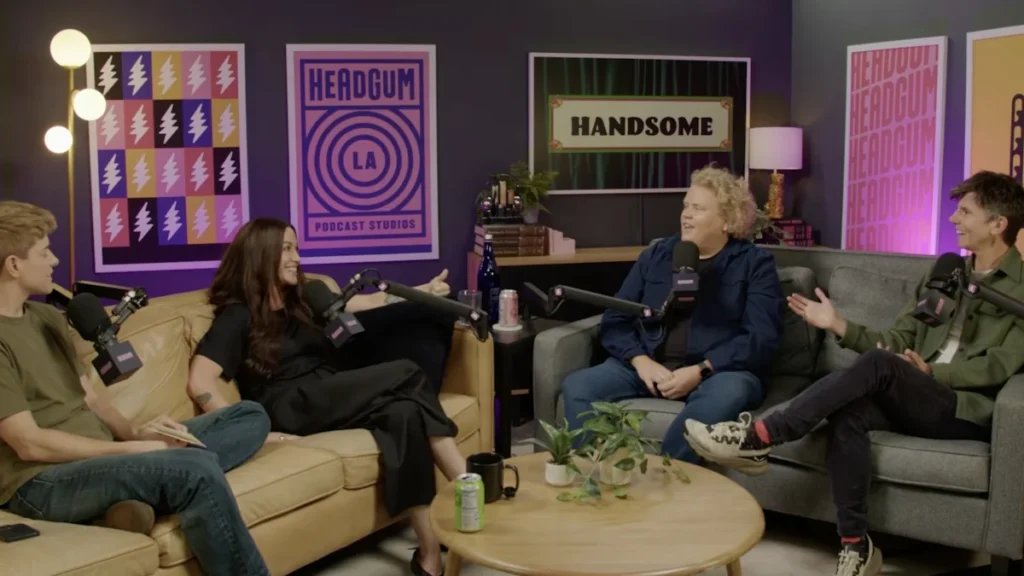

As the iconic voice behind the generation-defining album Jagged Little Pill, Alanis Morissette has long been celebrated for her raw, confessional approach to songwriting. Recently, the Canadian-American singer-songwriter provided a new layer of personal transparency during a guest appearance on the popular podcast Handsome, hosted by comedians Fortune Feimster, Tig Notaro, and Mae Martin. During the candid exchange, the 52-year-old musician officially came out as pansexual, a revelation that has sparked widespread discourse regarding the evolving landscape of identity within the music industry.
The Context of the Disclosure
The revelation occurred during a lighthearted yet deeply personal conversation toward the conclusion of the episode. The discussion had touched upon Morissette’s history of heartbreak and the subsequent creative output that defined her mid-90s success. Fortune Feimster, reflecting on the emotional depth of Morissette’s discography, remarked, “I’m sorry for the men that hurt you, but I’m not sorry for the songs that came from it. Those are pretty amazing.”
In a pivot that transitioned the conversation from her past work to her personal identity, Feimster posed a direct question to the singer: “Did it make you want to be a lesbian at any point?” Morissette, with characteristic directness, responded, “I’m pansexual, so, yeah.” She punctuated the admission with a touch of humor, adding, “I get everything.”
The immediate reaction from the hosts—particularly Tig Notaro—was one of genuine surprise. Notaro, who has been a prominent figure in the LGBTQ+ community, asked for clarification, to which Morissette firmly reiterated, “I am.” The exchange concluded with a humorous critique from Notaro, who joked that such a significant personal disclosure should have been a headline act rather than an epilogue, to which Morissette jokingly replied that she prefers to save her most significant revelations for the very end.
Defining the Identity: A Cultural Shift
Pansexuality, defined as the sexual, romantic, or emotional attraction toward people regardless of their sex or gender identity, is an orientation that has seen increasing visibility in the public sphere over the last decade. By identifying as pansexual, Morissette joins a growing roster of high-profile artists who are utilizing their platforms to dismantle traditional, binary labels.
From a sociological perspective, Morissette’s disclosure serves as a significant marker in the ongoing normalization of queer identities in mainstream pop culture. As a multi-Grammy-winning artist who has maintained a career spanning over three decades, her influence reaches across multiple generations of listeners. Her ability to integrate her personal growth with her artistic brand is consistent with her career-long theme of radical honesty—a trait that arguably solidified her status as an icon of the 1990s alternative rock movement.
Professional Milestones and Current Projects
Morissette’s personal news comes at a time of high professional activity for the artist. Currently 52, she remains as prolific as ever. In November 2026, she officially released her first-ever holiday album, titled Good Weather for Immaculate Conception. The record, which features 12 traditional Christmas classics alongside two original compositions, represents a departure from her typical studio sound, showcasing her vocal versatility.
Furthermore, the singer has embarked on a limited-run residency in Los Angeles. Titled “Butterfly with a Machete,” the series of performances at the YouTube Theater kicked off in early November 2026. These shows have been noted by critics for their intimate atmosphere, often allowing Morissette to engage with her audience in ways that large-scale arena tours do not permit. Her commitment to live performance continues to be a cornerstone of her career, and the residency serves as a testament to her enduring popularity and artistic relevance.
Chronology of Public Advocacy and Identity
While this is the first time Morissette has explicitly used the term “pansexual” in a public forum, followers of her work often point to the recurring themes of fluid identity and emotional independence in her lyrics.
- 1995: The release of Jagged Little Pill catapults Morissette to global stardom, setting a precedent for the confessional songwriting style that would define her career.
- 2000s: Morissette becomes an outspoken advocate for various social issues, often discussing the complexities of gender dynamics and power imbalances in relationships.
- 2010s: The artist focuses on her family life while continuing to produce music that interrogates the nature of intimacy and the human condition.
- 2026: In a candid interview on the Handsome podcast, Morissette formally identifies as pansexual, marking a new chapter in her public narrative.
Industry Implications and Societal Impact
The music industry has historically been a space where artists were pressured to conform to specific archetypes. However, the last decade has signaled a departure from this trend. By coming out as pansexual, Morissette adds her name to a list of influential figures who are effectively broadening the public understanding of human attraction.
Analysts note that for an artist of Morissette’s stature—who is married and a mother of three—the timing and setting of this reveal are significant. It underscores that identity is not a static state of being but an ongoing process of self-discovery. By addressing the topic in a podcast environment, she opted for a medium that favors conversational authenticity over the curated, often sterile nature of traditional press junkets.
Reactions from Peers and the Public
While there has been no official statement from the artist’s representatives beyond the podcast recording, the reception on social media and within the entertainment press has been largely celebratory. Many fans have taken to digital forums to express that her openness validates their own experiences with identity.
Critics have also pointed out that the interaction with the Handsome podcast hosts highlights the importance of safe, queer-led spaces in media. By appearing on a podcast hosted by three prominent LGBTQ+ individuals, Morissette was able to discuss her identity in a setting where she felt secure and understood, rather than being subjected to the performative questioning often found in mainstream celebrity interviews.
Looking Ahead
As Morissette continues her residency and promotes her holiday album, the conversation surrounding her identity is likely to remain a footnote to her musical contributions, yet it remains a powerful element of her public persona. The trajectory of her career—from the angst-filled youth of the 90s to the reflective, self-assured artist of 2026—suggests that she will continue to navigate the intersection of public fame and private truth on her own terms.
The “Butterfly with a Machete” residency continues through November, and with the holiday season approaching, her new album is expected to see a significant spike in demand. For her listeners, this revelation serves as an invitation to revisit her extensive catalog with a new perspective, perhaps finding in her lyrics a deeper resonance than previously understood.
Ultimately, Alanis Morissette’s announcement is more than just a headline; it is a continuation of the dialogue she began over thirty years ago. Whether through the lens of her lyrics or the clarity of her recent admission, she remains a figure who prioritizes truth-telling. In an era where authenticity is increasingly rare, her willingness to share this aspect of her life serves as a reminder that the evolution of the self is a lifelong, and often public, journey. As she once sang, “You learn,” and it is clear that Morissette, along with her global audience, continues to learn, grow, and redefine what it means to live authentically in the public eye.