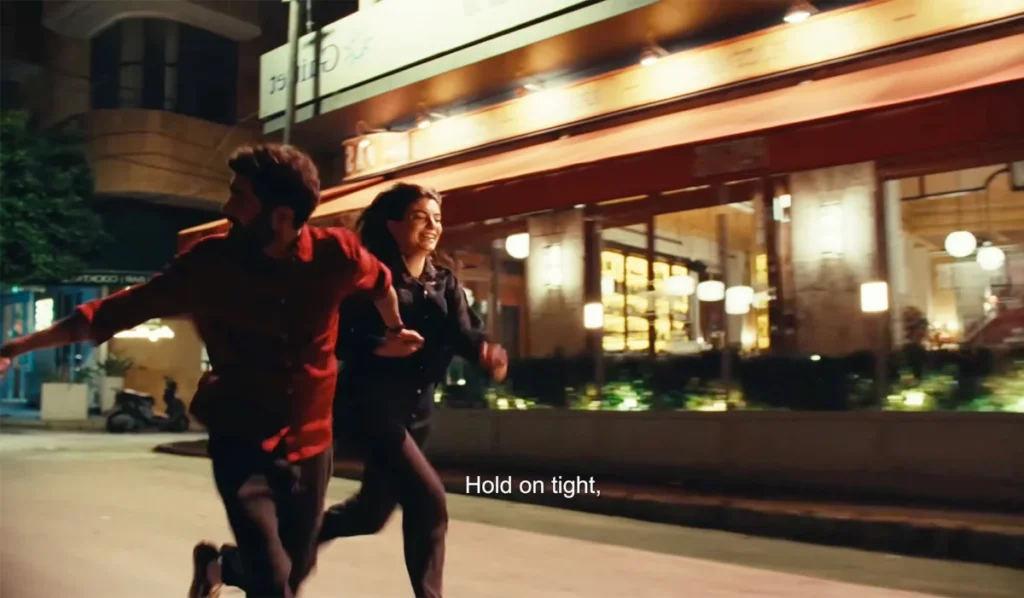

Watermelon Pictures has unveiled a compelling new official U.S. trailer for the Lebanese indie drama, A Sad and Beautiful World, a sweeping love story set against the turbulent backdrop of Beirut over three decades. The film is slated for a limited release in art-house cinemas across the United States on July 24, 2026, offering audiences a poignant narrative of connection, resilience, and enduring love amidst profound societal and political upheaval. This marks a significant cinematic event for Lebanese filmmaking, bringing a homegrown story of passion and survival to international attention.
The film, originally titled Hala’ al-shams fi ardihum (حلا الشمس في أرضهم) in Arabic, delves into the lives of Nino (Hasan Akil) and Yasmina (Mounia Akl), childhood sweethearts whose paths diverge and converge over a span of thirty years. Their story is intricately woven with the historical tapestry of Beirut, a city that has weathered numerous storms, mirroring the personal trials and triumphs of its protagonists. The narrative begins with their birth, seconds apart on what is described as "Lebanon’s darkest day," hinting at a fated connection. An enigmatic star-watcher, Zachariya, is said to foresee a cosmic event intricately linked to their destinies, adding a layer of mystical foreshadowing to their earthly struggles.
A Chronicle of Love and Resilience Across Decades
The early years of Nino and Yasmina’s lives are characterized by a deep, intuitive understanding. Yasmina, seeking an escape from the harsh realities of Beirut, offers Nino a path toward a different future. However, this plan is thwarted, leading to their separation for a significant period. The film’s synopsis suggests a pivotal moment of reunion occurs twenty-four years later, where they fall deeply in love, transcending the years of estrangement. This reunion occurs against the backdrop of escalating political turmoil and social instability in contemporary Lebanon, underscoring the film’s commitment to portraying the human experience within a specific, challenging historical context.

The narrative arc of A Sad and Beautiful World traces their journey through passion, loss, and unwavering hope. They find themselves at a critical juncture, torn between the desire to build a family and find happiness within their homeland, or the profound necessity of survival, which might necessitate leaving Lebanon behind. This central conflict highlights the difficult choices faced by many Lebanese citizens navigating the complexities of their nation’s ongoing crises. The film grapples with themes of emigration, homeland, and the sacrifices individuals make for love and for future generations.
The birth of their daughter, Amal, introduces a new dimension to their relationship. While Nino yearns for a child, Yasmina’s initial cynicism, perhaps a product of her experiences, makes her hesitant. However, she ultimately embraces the prospect of building a family with Nino. Yet, as Beirut continues to face its challenges, the divergent ambitions the couple holds for Amal’s future threaten to create new fissures in their bond. All of this unfolds against a backdrop where "the skies erupt in a surreal spectacle," suggesting a visual metaphor for the extraordinary circumstances and emotional intensity of their lives.
Behind the Scenes: A Visionary Director and Acclaimed Cast
A Sad and Beautiful World is the brainchild of acclaimed Lebanese filmmaker Cyril Aris, whose previous works include the short films The Swing and Dancing on the Edge of a Volcano. Aris also co-wrote the screenplay with Bane Fakih. The film is produced by Jennifer Goyne Blake, Georg Neubert, Georges Schoucair, and April Shih, a collaborative effort that has brought this ambitious project to fruition. The production’s international scope is further evidenced by its premiere at the 2025 Venice Film Festival, a prestigious platform that recognized the film’s artistic merit. It also garnered attention at the 2024 Marrakesh Film Festival in Morocco, underscoring its growing international acclaim and its significance as a cultural export from Lebanon.
The film boasts a talented ensemble cast, led by Mounia Akl and Hasan Akil in the central roles of Yasmina and Nino, respectively. Their performances are expected to carry the emotional weight of the narrative, portraying the complexities of a love that endures through decades of adversity. The supporting cast includes notable Lebanese actors Julia Kassar, Camille Salameh, Tino Karam, and Nadyn Chalhoub, who contribute to the authentic portrayal of Lebanese society and its diverse characters.

Contextualizing the Lebanese Cinematic Landscape
The release of A Sad and Beautiful World arrives at a critical juncture for Lebanese cinema. The country has faced prolonged periods of economic instability, political unrest, and social challenges, particularly since the devastating port explosion in Beirut in 2020. Despite these hardships, Lebanese filmmakers have consistently produced compelling works that reflect the resilience, creativity, and cultural richness of the nation. Films that explore themes of identity, displacement, and the search for hope in challenging circumstances have resonated with both domestic and international audiences.
A Sad and Beautiful World‘s multi-decade narrative allows for a nuanced exploration of Lebanon’s recent history, from periods of relative stability to times of intense conflict and societal transformation. The film’s focus on a personal love story against this grand historical canvas offers a relatable entry point for understanding the lived experiences of individuals navigating such profound societal shifts. The "cosmic event" and "surreal spectacle" mentioned in the synopsis may serve as symbolic representations of the extraordinary and often unpredictable nature of life in Lebanon, where personal destinies are frequently intertwined with national events.
Supporting Data and Industry Reception
The film’s selection for prestigious festivals like Venice and Marrakesh indicates a strong reception within the international film community. Such festival berths often serve as critical indicators of a film’s artistic quality and its potential for broader distribution and critical acclaim. The Venice Film Festival, in particular, is renowned for showcasing auteur-driven cinema and independent productions, suggesting that A Sad and Beautiful World aligns with the festival’s commitment to diverse and thought-provoking storytelling. The Marrakesh Film Festival also plays a vital role in promoting African and Middle Eastern cinema, providing a platform for films like this to reach a wider audience.
The film’s marketing campaign, including the release of multiple trailers, aims to capture the essence of its emotional depth and visual grandeur. While the original article notes a preference for a previous trailer due to its "stunning cinematography," the newly released U.S. trailer, coupled with evocative poster art, suggests a deliberate effort to convey the film’s epic scope and intimate narrative. The cinematography, often a crucial element in conveying the atmosphere and emotional tone of a film, is likely to play a significant role in immersing viewers in the world of Beirut and the lives of Nino and Yasmina.

Broader Impact and Future Implications
The U.S. theatrical release of A Sad and Beautiful World has the potential to foster greater international understanding and appreciation for Lebanese cinema and culture. By bringing a story rooted in the specific experiences of Beirut to American art-house theaters, Watermelon Pictures is facilitating a cultural exchange that can bridge geographical and experiential divides. Films that offer personal narratives within broader socio-political contexts often serve as powerful tools for empathy, allowing audiences to connect with characters and their struggles on a deeply human level, regardless of their own backgrounds.
The success of films like A Sad and Beautiful World can also have a ripple effect on the Lebanese film industry. Increased international visibility and critical acclaim can attract further investment, foster collaborations, and encourage more emerging filmmakers to pursue ambitious projects. This can contribute to the sustained growth and diversification of Lebanese cinema, solidifying its place on the global film stage. As the film opens in select theaters, the conversations it sparks about love, resilience, and the human spirit in the face of adversity will undoubtedly resonate with audiences, offering a poignant reminder of the enduring power of human connection. The film’s exploration of complex themes, set against the backdrop of a city and a nation that have continuously reinvented themselves, promises a cinematic experience that is both deeply personal and universally relevant.