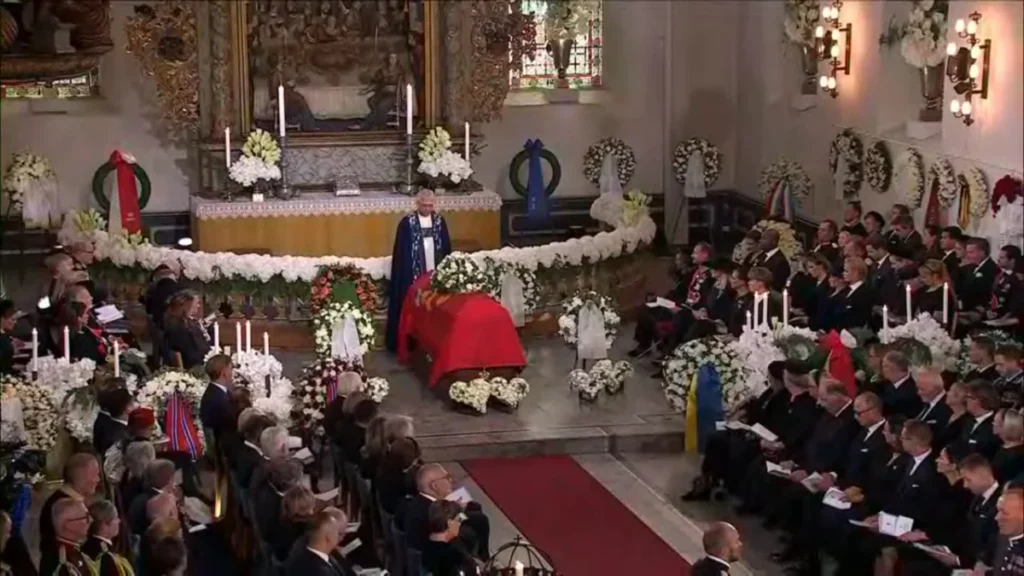

OSLO — The capital of Norway fell into a profound and solemn silence on a crisp autumn morning as kings, queens, princes, and princesses from across the globe converged on Oslo to bid a final farewell to King Harald V. The beloved monarch, who passed away on August 28 at the age of 89 following a brief illness, shaped the modern identity of the Scandinavian nation over a distinguished 35-year reign. His death marks the end of an era that began in January 1991, leaving behind a legacy characterized by deep public affection, steadfast constitutional duty, and an approachable, egalitarian royal ethos that endeared him to generations of Norwegians.
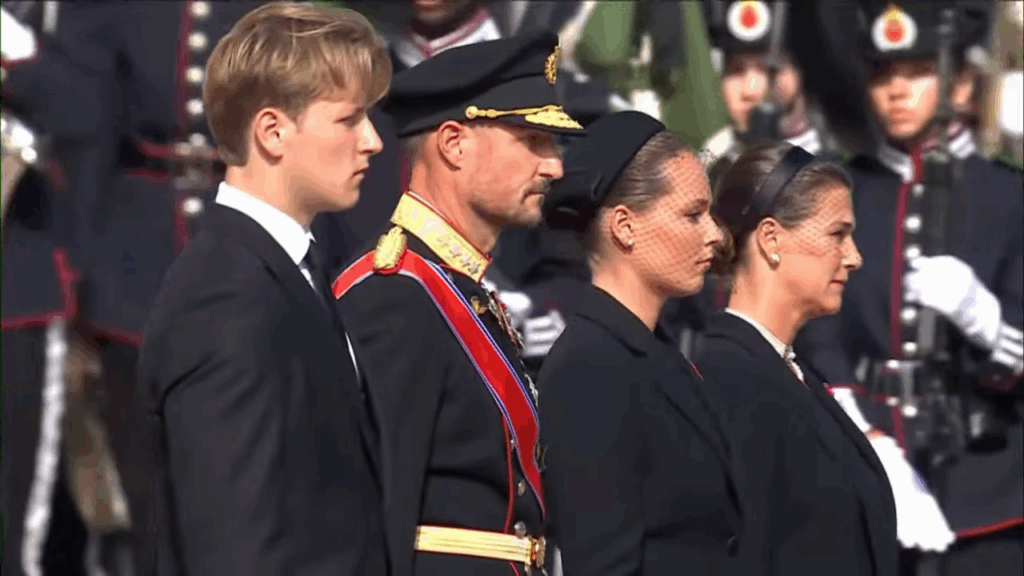
Tens of thousands of mourners lined the flag-draped streets of central Oslo on the day of the state funeral, braving the elements to witness the poignant procession. The solemn march carried the late king’s coffin from the Royal Palace to the historic Oslo Cathedral. At the head of the procession walked his son and successor, King Haakon VIII, flanked by close relatives and foreign royalty. The atmosphere along the route was heavy with grief, punctuated by the rhythmic steps of the honor guard and the quiet tears of citizens who had viewed King Harald not merely as a head of state, but as a comforting, unifying pillar of the national community.
A Solemn Procession Through the Heart of Oslo
The state funeral began with quiet dignity at the Royal Palace, where King Harald’s coffin was placed on an open, flower-strewn bier. Behind the carriage walked the newly acceded King Haakon VIII, maintaining a composed yet sorrowful demeanor alongside his children: Crown Princess Ingrid Alexandra and Prince Sverre Magnus. Princess Märtha Louise, the late king’s daughter, also walked prominently in the procession, visibly moved by the outpouring of public solidarity.
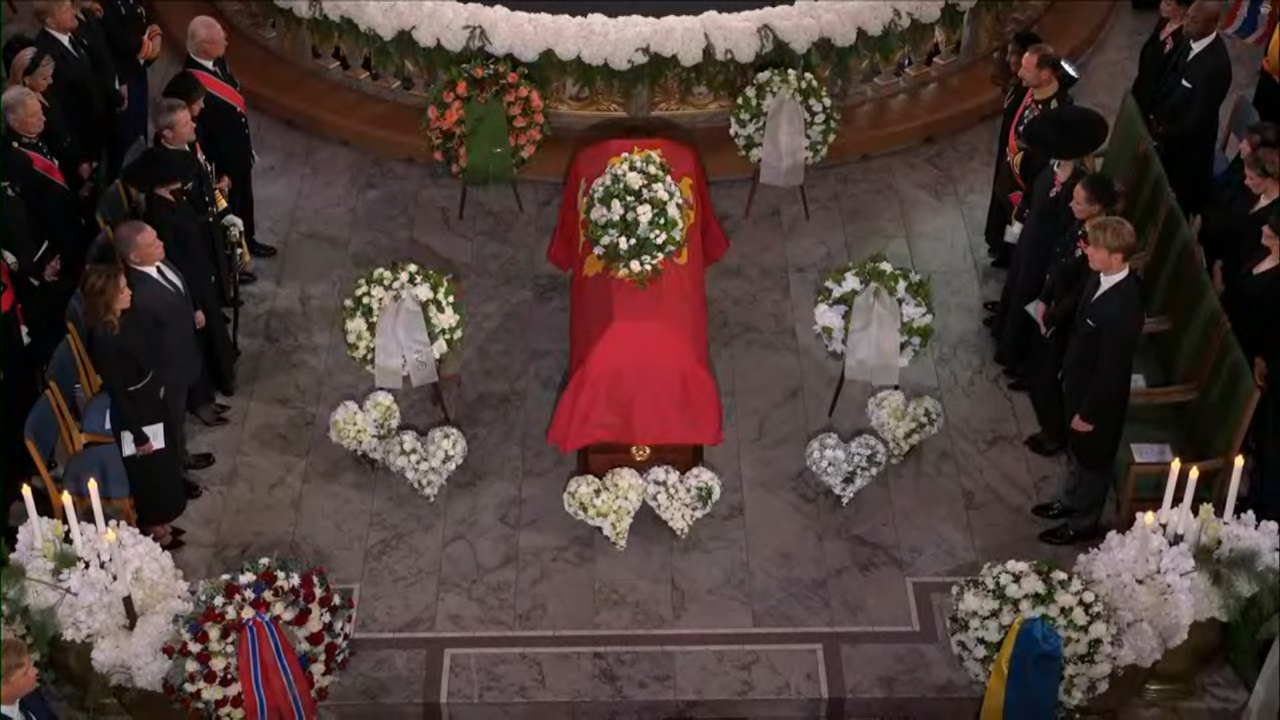
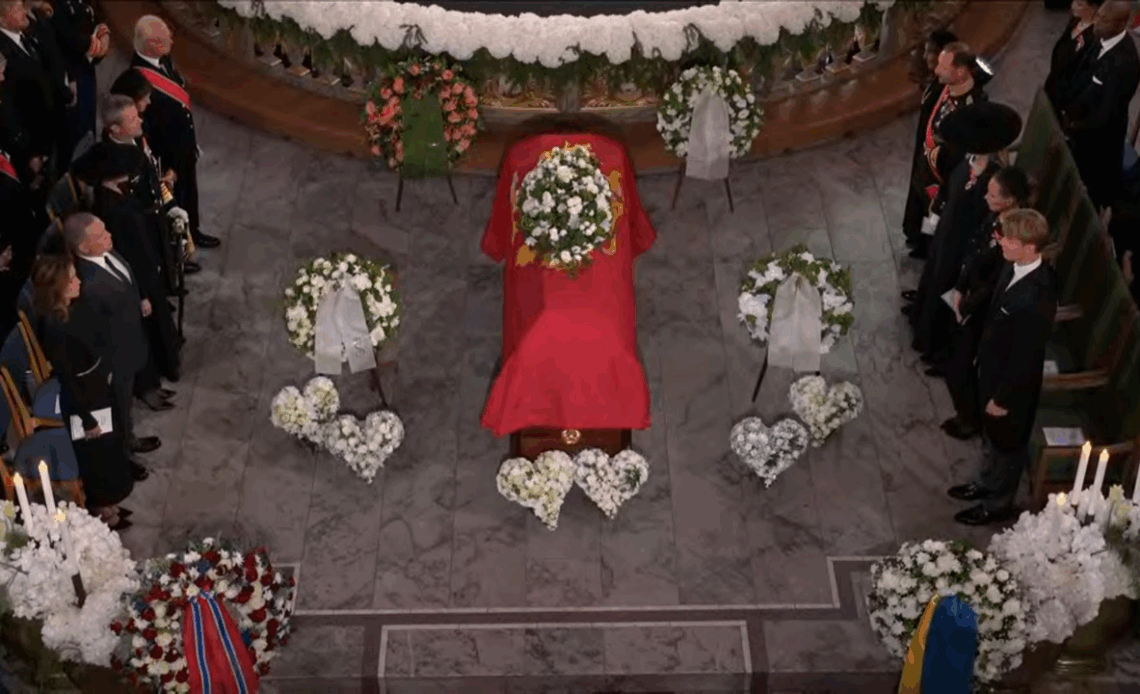
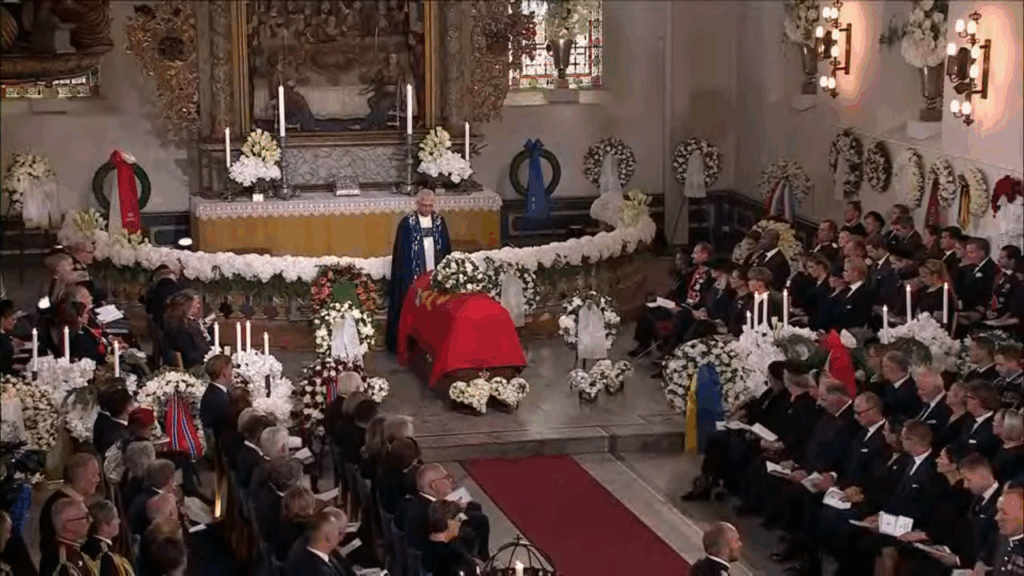
As the funeral bier progressed slowly toward Oslo Cathedral, the crowds maintained a respectful hush, occasionally breaking into spontaneous applause to honor the late monarch’s decades of dedicated service. Upon arrival at the cathedral steps, King Haakon stepped forward to gently greet his mother, Queen Sonja, who had arrived by car due to health considerations. The coffin was then carried into the sanctuary by members of the Norwegian Armed Forces, coming to rest on a bier surrounded by floral tributes and seated dignitaries representing royal houses from Europe and beyond.
A Moving Liturgical Service and Personal Tributes
The state service inside Oslo Cathedral was a harmonious blend of solemn religious tradition and deeply personal farewells. Bishop Olav Fykse Tveit and Sunniva Gylver, Bishop of the Oslo Diocese, jointly led the liturgy. The spiritual tone of the ceremony reflected both national heritage and international ties, beginning with a powerful rendition of "Abide With Me" sung in English, followed by a choral arrangement of a hymn originally composed two decades prior to celebrate the joint seventieth birthdays of King Harald and Queen Sonja.
Further honoring the cultural fabric of Norway, the congregation sang "I know of a fortress in Heaven," a traditional hymn set to a beloved Norwegian folk melody. Demonstrating the interconnected nature of European royalty, Crown Princess Victoria of Sweden—who served as a goddaughter to King Harald—read a prayer with quiet poise. The service also featured the timeless prayer of St. Francis of Assisi, "Make me an instrument of your peace," recited in Swedish as a subtle nod to the late king’s maternal heritage; his mother was the late Princess Märtha of Sweden.
One of the most emotionally resonant moments of the service occurred when Queen Sonja walked slowly toward her husband’s bier. In a quiet, heartbreaking gesture of finality, she placed a single, long-stemmed red rose upon the coffin, pausing for a moment of silent reflection that brought many in the congregation to tears. Among the younger mourners, King Harald’s grandchildren—including Maud Behn, Leah Behn, and Emma Behn—displayed visible sorrow, embodying the generational grief felt by the entire family.
International Dignitaries and Diplomatic Resonance
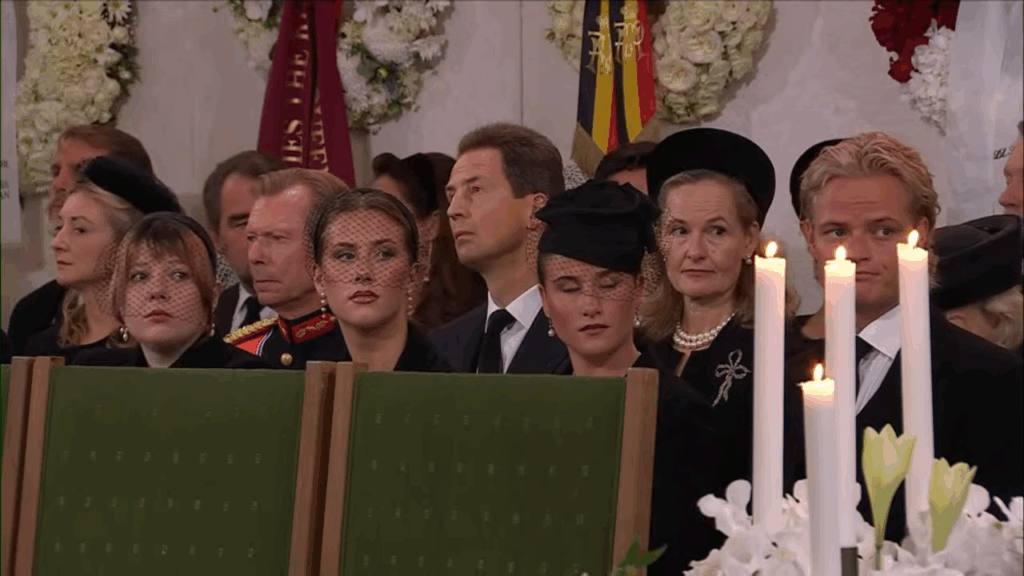
The funeral drew a remarkable gathering of international royalty and heads of state, underscoring the high regard in which King Harald was held internationally. Seated within the cathedral were members of nearly every reigning European royal house. The Swedish royal family attended in full force, led by King Carl XVI Gustaf, while Denmark was represented by King Frederik X and Queen Mary. The British delegation included the Prince of Wales and the Princess Royal, reflecting deep historical ties between the British and Norwegian crowns.
Following the formal service, interactions among the grieving royals highlighted both institutional continuity and enduring personal friendships. Crown Princess Ingrid Alexandra was seen expressing heartfelt gratitude to Prince William and Princess Anne for their words of condolence, demonstrating poise in her new, highly visible role. In another poignant exchange, Princess Beatrix of the Netherlands greeted her longtime friend Queen Sonja, the two women sharing an emotional embrace and quiet words that acknowledged decades of shared history and mutual support.
Burial at Akershus Fortress and Public Reconnection
Following the conclusion of the cathedral service, King Harald’s coffin was placed once more upon an open carriage for the final leg of its journey to Akershus Fortress, the historic medieval castle and royal burial site overlooking the Oslofjord. King Haakon VIII walked directly behind the bier, flanked by King Frederik X of Denmark and King Carl XVI Gustaf of Sweden, forming a striking visual symbol of Nordic unity and familial solidarity during a time of national transition.
A private service of committal and burial was held within the royal mausoleum at Akershus Fortress, restricted to close family members. Meanwhile, back at the Royal Palace, King Haakon VIII and Queen Mette-Marit emerged onto the central balcony to address the vast sea of citizens still gathered below. Their appearance served to reassure the public and symbolize the seamless continuation of the monarchy. Inside the palace, a formal reception was held to honor the visiting foreign dignitaries and diplomats who had traveled to Oslo to pay their respects.
Historical Context and the Legacy of a Reign
King Harald V ascended to the throne on January 17, 1991, following the death of his father, King Olav V. From the outset of his reign, Harald charted a modernizing course for the Norwegian monarchy while preserving its deeply democratic traditions. Known for his self-deprecating humor, down-to-earth demeanor, and passion for sailing—having represented Norway in the Olympic Games—he successfully bridged the gap between traditional royal dignity and contemporary social values.
His marriage to Queen Sonja in 1968, achieved after a nine-year courtship due to her commoner status, demonstrated a tenacity and commitment that later influenced the modernizing choices of his own children. Throughout periods of economic shift, national crises, and personal health challenges late in life, King Harald remained a steady, trusted anchor for the Norwegian state. His constitutional role as an impartial head of state earned him universal respect across the political spectrum.
Implications and the Future of the Norwegian Monarchy
The accession of King Haakon VIII brings both continuity and a subtle generational shift to the Norwegian crown. Having acted as regent during his father’s final illnesses, King Haakon is well-prepared for the responsibilities of the throne. Analysts note that the widespread public mourning and the dignified transition of power have reaffirmed the stability and enduring relevance of the Norwegian constitutional monarchy.
As Norway adjusts to life under a new sovereign, the legacy of King Harald V will continue to define the institution. His ability to connect with everyday citizens while maintaining the solemnity of his office sets a high standard for his successors. The unprecedented gathering of global royalty in Oslo not only paid tribute to a remarkable life of public service, but also underscored the enduring diplomatic and familial bonds that unite Europe’s remaining monarchies in times of profound change.