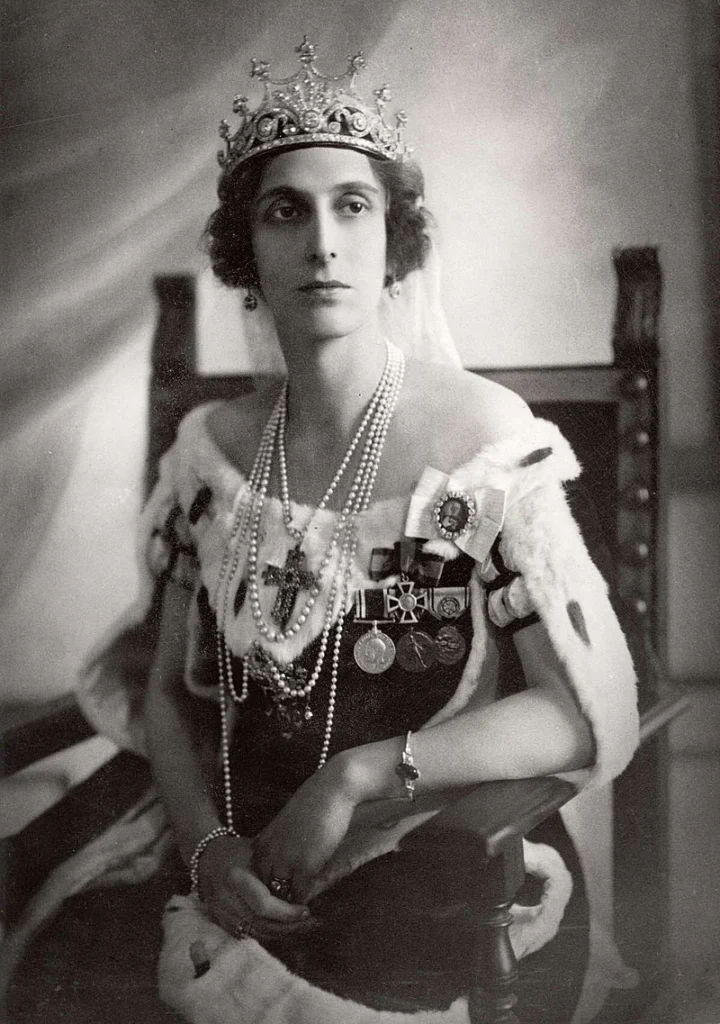

The year 1923 stands out in modern European history as an exceptionally vibrant epoch for dynastic unions. While the springtime nuptials of Albert, Duke of York—later King George VI—and Lady Elizabeth Bowes-Lyon drew colossal, cheering crowds to the heart of London, the British capital played host to yet another magnificent royal celebration that autumn. On November 3, 1923, Lady Louise Mountbatten walked down the aisle at the Chapel Royal of St James’s Palace to wed Crown Prince Gustaf Adolf of Sweden. This union set in motion a remarkable journey that would ultimately lead Louise to a European throne, cementing a personal romance that defied the rigid political calculations of the era.
A Modern Princess Defies Tradition
Long before her historic marriage, Lady Louise Mountbatten had established a reputation as an independent woman determined to govern her own romantic destiny. Born Princess Louise of Battenberg, she had frequently been mentioned by contemporary gossip columns and courtiers as a prospective bride for several high-profile European sovereigns. Yet, she persistently maintained that she would marry solely for love rather than out of dynastic obligation.
This conviction led her through a series of relationships that were ultimately thwarted by the intense sociopolitical pressures of her family and royal station. In her youth, Louise had famously vowed never to marry a reigning monarch or a widower—two conditions she ultimately broke when she accepted Crown Prince Gustaf Adolf’s proposal. Despite the contradiction to her earlier pledges, the match transcended conventional geopolitical maneuvering. It blossomed into a deeply affectionate partnership rooted in mutual admiration, emotional resilience, and shared progressive values.
Grief, Romance, and the Road to the Altar
For the future King of Sweden, the romance arrived as an unexpected chapter of healing following profound personal tragedy. Crown Prince Gustaf Adolf had previously been married to Princess Margaret of Connaught in 1905, in a union widely celebrated for its genuine happiness and domestic harmony. Tragically, in May 1920, Princess Margaret passed away suddenly from blood poisoning while pregnant with the couple’s sixth child. Gustaf Adolf was left devastated, a grieving father and crown prince trying to manage his public duties while mourning a devastating personal loss.
The turning point arrived during the summer of 1923 when Gustaf Adolf visited London. Amid the city’s social engagements, he encountered Louise, and the two found themselves drawn to one another. What began as an amicable acquaintance quickly deepened into a profound romance. On July 1, 1923, the engagement was officially announced, setting off frantic preparations across European capitals for a late autumn wedding.
Constitutional Hurdles and the Question of Royal Status
The engagement was not entirely without controversy, sparking delicate diplomatic and constitutional debates within Sweden. Certain factions within the Swedish establishment argued that Louise—as a great-granddaughter of Queen Victoria—did not possess sufficiently elevated royal blood to marry their future king.

The complexity stemmed from post-World War I geopolitical realignments. Until 1917, when King George V formally relinquished all German titles on behalf of the British royal family in response to rising anti-German sentiment during the First World War, Louise had been known as Princess Louise of Battenberg. Following the renunciation, her father, Prince Louis of Battenberg, was created Marquess of Milford Haven, rendering Louise simply the daughter of a marquess by British standards.
This shift prompted anxious deliberations in Stockholm over whether her pedigree met the strict constitutional requirements of the Swedish monarchy. Following extensive legal and genealogical reviews, authorities concluded that her illustrious lineage as a descendant of Queen Victoria more than satisfied the criteria. The path was cleared, and the wedding date was firmly scheduled for November.
An Intimate Ceremony Steeped in Family History
The wedding ceremony took place on November 3, 1923, at the Chapel Royal of St James’s Palace in London. Though relatively modest in scale compared to massive state weddings, the pews were packed with Europe’s foremost royalty. The groom’s father, King Gustaf V of Sweden, made the journey to London, joined by King George V, Queen Mary, and Queen Alexandra. Because Louise’s father had passed away years prior, she was escorted down the aisle by her eldest brother, George, Marquess of Milford Haven. Waiting inside to greet her were her mother, Victoria, Dowager Marchioness of Milford Haven, alongside her other siblings, Lord Louis Mountbatten and Princess Andrew of Greece.
True to the stylistic shifts of the era, the bride bypassed traditional heavy velvet robes in favor of a distinctly modern 1923 silhouette. Louise’s wedding gown was crafted from shimmering Indian silver gauze, featuring a contemporary square neckline and a dropped waistline that flowed into an elongated skirt and wide train.
Despite the modern aesthetic of her dress, the ensemble was deeply anchored in family sentiment. Louise wore a treasured Honiton lace veil that had once belonged to her maternal grandmother, Princess Alice, Grand Duchess of Hesse and by Rhine—a grandmother Louise never met, as Alice died in 1878. The lace had originally been presented to Princess Alice by her mother, Queen Victoria. Following Alice’s untimely death, the veil assumed profound emotional significance for the family. Louise’s own mother had worn it at her wedding to honor her late mother, and now it bridged generations to connect a twentieth-century royal bride with her maternal lineage.
Completing her bridal attire, Louise chose not to wear a tiara, opting instead for a botanical headpiece composed of intricately woven orange blossom buds that mimicked the height and elegance of a tiara resting atop the Honiton lace. She carried a large bouquet of lily of the valley, a floral favorite among British and European royal brides that traditionally signifies the return of happiness—a subtle nod to the Victorian language of flowers so favored by her great-grandmother, Queen Victoria.
A Young Royal Retinue
The bridal procession featured a youthful and illustrious group of nephews and nieces. Four-year-old David Mountbatten and his five-year-old sister, Tatiana, proudly served as train-bearers, assisting the bride as she entered the chapel on the arm of their father, George.

They were followed down the short aisle by the four daughters of Princess Andrew of Greece: 18-year-old Margarita, 17-year-old Theodora, 12-year-old Cecilie, and nine-year-old Sophie. Notably absent from the active wedding party was Louise’s youngest nephew, two-year-old Prince Philip of Greece and Denmark—later the Duke of Edinburgh—who was deemed too young to participate. The young bridesmaids wore charming peach-colored dresses, while the pageboy appeared in a traditional sailor suit.
Public Reception and Honeymoon
Following the ceremony, officiated by the Archbishop of Canterbury, the wedding party traveled in a processional carriage back to Kensington Palace. En route, the newlyweds were greeted by enthusiastic London crowds who lined the streets to cheer for the couple.
The private reception welcomed close family members alongside extended representatives of the House of Windsor, including the Duke and Duchess of York, who had celebrated their own high-profile wedding earlier that year. Shortly after the celebrations concluded, Crown Prince Gustaf Adolf and Crown Prince Louise departed for their honeymoon before returning to Stockholm to establish their permanent residence.
Chronology of Key Events
- May 1920: Princess Margaret of Connaught, wife of Crown Prince Gustaf Adolf, passes away unexpectedly.
- Summer 1923: Crown Prince Gustaf Adolf visits London and meets Lady Louise Mountbatten, sparking a swift romance.
- July 1, 1923: The formal engagement between Crown Prince Gustaf Adolf and Lady Louise Mountbatten is officially announced.
- Autumn 1923: Swedish authorities resolve constitutional debates concerning the bride’s post-war British titles and royal lineage.
- November 3, 1923: The wedding takes place at the Chapel Royal of St James’s Palace in London.
- 1925: Louise gives birth to a stillborn daughter, her only biological child with Gustaf Adolf.
- October 1950: Gustaf Adolf ascends the Swedish throne as King Gustaf VI Adolf, making Louise the Queen Consort of Sweden.
- March 7, 1965: Queen Louise passes away in Stockholm at the age of 75, leaving behind a legacy of modern leadership and public service.
Broader Impact and Historical Implications
Louise’s integration into the Swedish royal family proved transformative for the institution. As stepmother to her husband’s five children from his first marriage, she cultivated a stable, affectionate household despite the heartbreaking loss of her own daughter, who was stillborn in 1925.
Quickly endearing herself to the Swedish public, Queen Louise embraced a vast portfolio of charitable patronages, overseas diplomatic tours, and social welfare initiatives. Long before it became commonplace among European royalty, she championed progressive ideals, publicly advocating for gender equality and women’s rights. During the turbulent years of the Second World War, Louise demonstrated unwavering commitment to humanitarian relief by actively working with the Swedish Red Cross and establishing safe havens for children displaced by the conflict in Europe.
When her husband ascended the throne as King Gustaf VI Adolf in 1950, Louise’s forward-thinking approach reshaped the internal operations of the Swedish court. She notably abolished formal court presentations—a rigid relic of aristocratic tradition—and modernized the royal residences to reflect a more accessible, egalitarian style of monarchy.
When Queen Louise passed away in March 1965, she was mourned not merely as a sovereign consort, but as a beloved public figure who modernized the Swedish crown. Her final resting place at Solna cemetery, alongside King Gustaf VI Adolf and his first wife, Princess Margaret, stands as a testament to a life defined by duty, resilience, and a love story that reshaped twentieth-century European royalty.