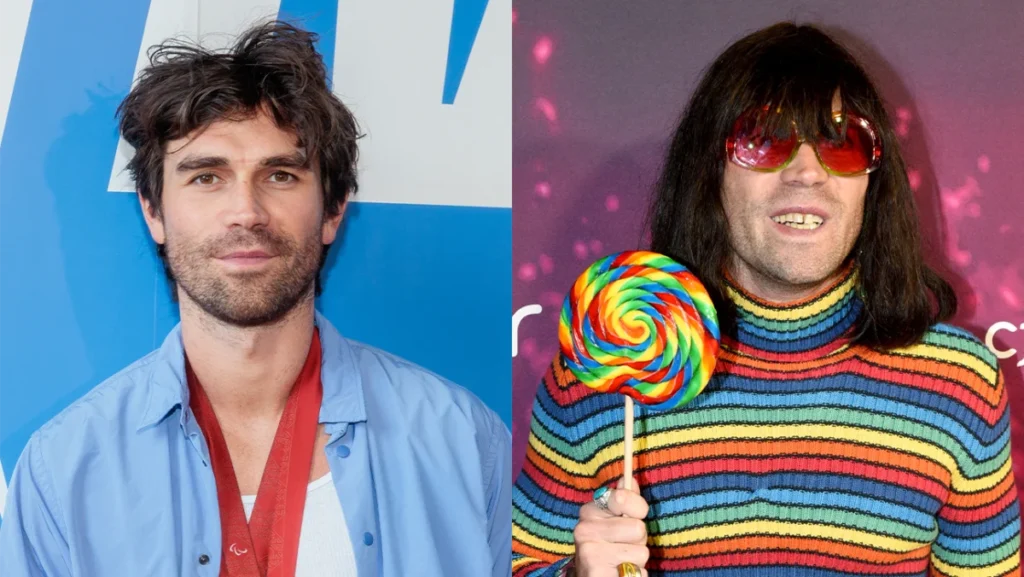

In a dramatic turn of events that has captivated the entertainment industry and social media, Riverdale actor KJ Apa has publicly accused viral sensation Mr. Fantasy of egregious image appropriation, asserting that Mr. Fantasy has stolen his likeness and negatively impacted his career. The accusation, delivered via a lengthy and emotionally charged video on Apa’s Instagram, marks the first time the actor has directly addressed the long-standing fan theories suggesting Mr. Fantasy is his alter ego. The unprecedented outburst has ignited a heated debate about celebrity identity, intellectual property in the digital age, and the blurred lines between artistic expression and outright imitation.
The core of the dispute revolves around Mr. Fantasy, a figure who exploded onto the social media scene in September 2025. He quickly garnered widespread attention for his distinctive, eccentric personality, quirky fashion sense, and a signature black bob hairstyle. However, what truly propelled Mr. Fantasy into the viral stratosphere was the uncanny resemblance he bore to KJ Apa, further fueled by the striking detail that both individuals appeared to share identical tattoos. This visual synchronicity immediately sparked rampant speculation among fans across platforms like TikTok and Instagram, leading to the pervasive theory that Mr. Fantasy was, in fact, an elaborate alter ego created by Apa himself.
The "Alter Ego" Theory: A Deep Dive
For months leading up to Apa’s recent statement, the entertainment landscape has been buzzing with the "Mr. Fantasy is KJ Apa’s alter ego" narrative. This theory gained traction not just from their physical similarities but from the meticulous observation of their tattoos. Fans painstakingly cross-referenced images, pointing out that the intricate designs and placements on both individuals were indistinguishable. In an era where celebrities often cultivate distinct personas for different artistic endeavors – think of Garth Brooks’ Chris Gaines or Beyoncé’s Sasha Fierce – the idea of Apa creating a musical alter ego wasn’t entirely far-fetched for many.
KJ Apa, known globally for his role as Archie Andrews in The CW’s hit teen drama Riverdale, has cultivated a public image as a charismatic and talented actor. His career has seen him transition from television to film, including projects like The Last Summer and The Map That Leads to You. The contrast between Apa’s typically more mainstream, often brooding or heroic roles, and Mr. Fantasy’s flamboyant, performance-art-esque persona only added fuel to the alter ego speculation, making the potential duality all the more intriguing to a curious public.
Mr. Fantasy, meanwhile, has carved out his own significant niche. Beyond the initial virality, he has cemented his status as a legitimate musical artist and internet personality. His rise has been meteoric, amassing over 1.2 million followers on TikTok, a platform renowned for its ability to launch new stars overnight. His musical output, including the track "Mr. Fantasy," has resonated with a growing fanbase, culminating in a high-profile performance at the iconic Macy’s Thanksgiving Day Parade. This national exposure, typically reserved for established artists, further solidified Mr. Fantasy’s independent standing, even as the whispers of his connection to Apa persisted.
Mr. Fantasy’s Meteoric Rise and Apa’s Silence
The chronology of Mr. Fantasy’s ascent and Apa’s long-maintained silence is crucial to understanding the current conflict.
- September 2025: Mr. Fantasy first garners significant attention online. The striking similarities to KJ Apa, particularly the identical tattoos, immediately become a dominant talking point. Fan theories regarding an alter ego spread rapidly across social media platforms.
- Ongoing Months (Late 2025 – Early 2026): Mr. Fantasy continues to build his brand. His unique aesthetic and musical releases gain traction, leading to a substantial increase in his social media following. He secures high-profile opportunities, including a performance at the Macy’s Thanksgiving Day Parade, traditionally a significant milestone for any artist. During this period, Apa remains notably quiet, refraining from commenting on the comparisons or the alter ego theories, despite their pervasive nature.
- "Last Year" (referring to 2025, from a 2026 perspective): The Hollywood Reporter conducted an interview with Mr. Fantasy, specifically addressing the comparisons to Apa. At the time, Mr. Fantasy dismissed any concerns, stating, "Not bothered by it, not bothered by it… Things can be hurtful, sure, but I focus on the positive. I focus on the people whom I love and who love me and that have a positive influence on my life, like James Franco." This statement, while seemingly nonchalant, indicated an awareness of the comparisons but a public indifference.
- "Last Week" (early 2026): Mr. Fantasy released the music video for his new song, "Do Me Right." This video proved to be a significant turning point, not only for its artistic content but for its star-studded cast.
- "Wednesday" (mid-week, early 2026): KJ Apa broke his prolonged silence, posting a raw and impassioned video on his Instagram account, directly addressing the situation and launching his accusations.
The Breaking Point: Apa’s Instagram Denunciation
Apa’s decision to finally speak out came after what he described as a long period of internal debate, acknowledging that he initially deemed the comparisons unworthy of a response. However, the impact on his personal life and professional career, particularly after the release of Mr. Fantasy’s latest music video, pushed him to his breaking point.
In a visibly distressed and serious tone, Apa addressed his followers: "So there has been something going on for a long time that I haven’t addressed because I didn’t think it was even worth addressing. But now, because of how it’s impacted my life personally, I feel like I have to talk about it, and I don’t usually do this, take things here to talk about. But I have to do it now because it’s hurting me, and my career, and there was recently a music video that was released that included a bunch of people who were really close to me by a guy who’s completely and utterly stolen my image and misappropriated my image. And I think we all know who we’re talking about."
While Apa conspicuously avoided naming Mr. Fantasy directly in his verbal statement, the context and timing made it unequivocally clear whom his message was directed towards. His language escalated in intensity as he described the depth of his frustration and anger.
The Controversial Music Video: A Star-Studded Lineup
The catalyst for Apa’s public outcry was undoubtedly the music video for Mr. Fantasy’s new song, "Do Me Right," which premiered last week. The video featured an unexpected and significant roster of celebrity cameos, including several of Apa’s Riverdale co-stars: Camila Mendes, Lili Reinhart, and Madelaine Petsch. This particular detail is crucial, as it suggests either a lack of awareness among Apa’s close colleagues regarding his distress or a perceived neutrality on their part regarding the Mr. Fantasy phenomenon. The presence of these co-stars, who share a professional history and presumed friendship with Apa, added a layer of personal betrayal to the situation from Apa’s perspective.
Beyond the Riverdale cast, the "Do Me Right" video boasted an impressive lineup of other notable figures from film, television, and social media. These included Alex Warren, Dave Franco, Rob Lowe, Nick Jonas, Neal McDonough, Hough Kiernan, Patrick Schwarzenegger, Sombr, and Zoey Deutch, among others. The involvement of such high-profile individuals lent significant credibility and visibility to Mr. Fantasy’s project, further exacerbating Apa’s feelings of image theft and exploitation. The juxtaposition of Apa’s strong condemnation with the enthusiastic participation of these celebrities in Mr. Fantasy’s video highlights a potential disconnect in understanding the severity of Apa’s concerns within the industry.
Impact on Apa’s Career and Public Image
Apa explicitly articulated the tangible negative consequences this situation has had on his professional life. He stated, with raw emotion, "It’s fucked up. It’s fucked up because I just lost on a huge job. And can no longer go in for serious work because people think that I’m a joke because of this guy. And I don’t know what to do about it other than bring it here and do everything that I can to protect myself because it’s completely fucking disrespectful and completely wrong to do that."
This claim of losing a significant job due to the confusion and perceived association with Mr. Fantasy underscores the very real economic and reputational damage Apa alleges. In the highly competitive entertainment industry, an actor’s public image and perceived seriousness can directly impact casting decisions. If industry professionals indeed perceive Apa as a "joke" or conflate his identity with Mr. Fantasy’s distinct persona, it could severely hinder his ability to secure roles that require a different, more serious artistic gravitas. Apa’s plea for protection suggests a feeling of helplessness against what he perceives as a deliberate and harmful act of identity theft.
He concluded his impassioned statement with a scathing indictment of Mr. Fantasy’s character: "If anyone out there thinks that it’s OK to take someone’s image, literal tattoos, and to use it for their own success, it’s completely wrong. And I can’t just sit back and watch it happen and see my life literally, everything that I’ve worked hard for, now come to a halt because of this fucking idiot. That’s all I’ll say. You know, this person advocates for positivity and for kindness and for all of this stuff. Look in the mirror and tell yourself that you’re not a fucking liar and a thief because that’s exactly what you are." These strong words not only convey his personal distress but also challenge Mr. Fantasy’s public persona as an advocate for positivity, accusing him of hypocrisy.
The Legal and Ethical Dimensions of Image Appropriation
Apa’s accusations raise significant legal and ethical questions concerning image rights, personality rights, and intellectual property in the entertainment world. While the concept of an "alter ego" is often a creative choice by an artist, the alleged unauthorized adoption of one’s entire physical likeness, including unique identifiers like tattoos, for commercial gain, could venture into legally actionable territory.
In many jurisdictions, individuals have a right to control the commercial use of their name, image, and likeness (NIL). This is often referred to as the "right of publicity." If Mr. Fantasy has indeed copied Apa’s distinctive tattoos and overall appearance to such a degree that it creates confusion or suggests an endorsement where none exists, Apa could potentially pursue legal avenues for misappropriation of likeness. The fact that Apa claims to have lost work directly because of this confusion strengthens his potential case, as it establishes concrete damages.
The ethical dimension is also profound. In an age of digital reproduction and viral content, the boundaries of originality and inspiration versus outright copying are increasingly fluid. Apa’s vehement assertion that his image has been "stolen" and "misappropriated" highlights the personal violation an artist can feel when their identity is seemingly co-opted without consent, especially when it impacts their livelihood and reputation.
Mr. Fantasy’s Previous Stance and the Road Ahead
In light of Apa’s explosive accusations, attention now turns to Mr. Fantasy for a response. His previous statements to The Hollywood Reporter indicated a casual indifference to the comparisons, framing them as minor annoyances he chose to overlook in favor of positivity. He notably cited focusing on positive influences in his life, specifically mentioning "James Franco." This prior stance stands in stark contrast to Apa’s current emotional and professional distress.
The current situation presents Mr. Fantasy with a critical juncture. His response, or lack thereof, will significantly shape public perception and could determine the future trajectory of this burgeoning conflict. A direct rebuttal, an acknowledgment, or an attempt at reconciliation could all be possibilities. The involvement of numerous celebrities in his recent music video further complicates the narrative, potentially drawing other prominent figures into the discussion.
The Broader Implications for Celebrity Identity in the Digital Age
This unfolding drama between KJ Apa and Mr. Fantasy serves as a potent case study on the complexities of celebrity identity in the digital age. Social media platforms, while offering unprecedented avenues for connection and self-expression, also create new challenges regarding image control, authenticity, and the potential for misinterpretation or exploitation. The rapid spread of fan theories, the swift rise of viral personalities, and the blurring of lines between real and curated personas all contribute to a landscape where individual identity can become a contested space.
The conflict also underscores the increasing pressure on public figures to maintain control over their narratives and protect their brand. As digital content becomes more pervasive and easily replicable, the mechanisms for safeguarding one’s unique identity and intellectual property are constantly being tested. The outcome of this dispute, whether resolved privately, publicly, or through legal means, will undoubtedly set a precedent for how similar issues of image appropriation and celebrity identity are navigated in the future. The entertainment world, and indeed the broader digital sphere, will be watching closely to see how this high-stakes confrontation ultimately unfolds.