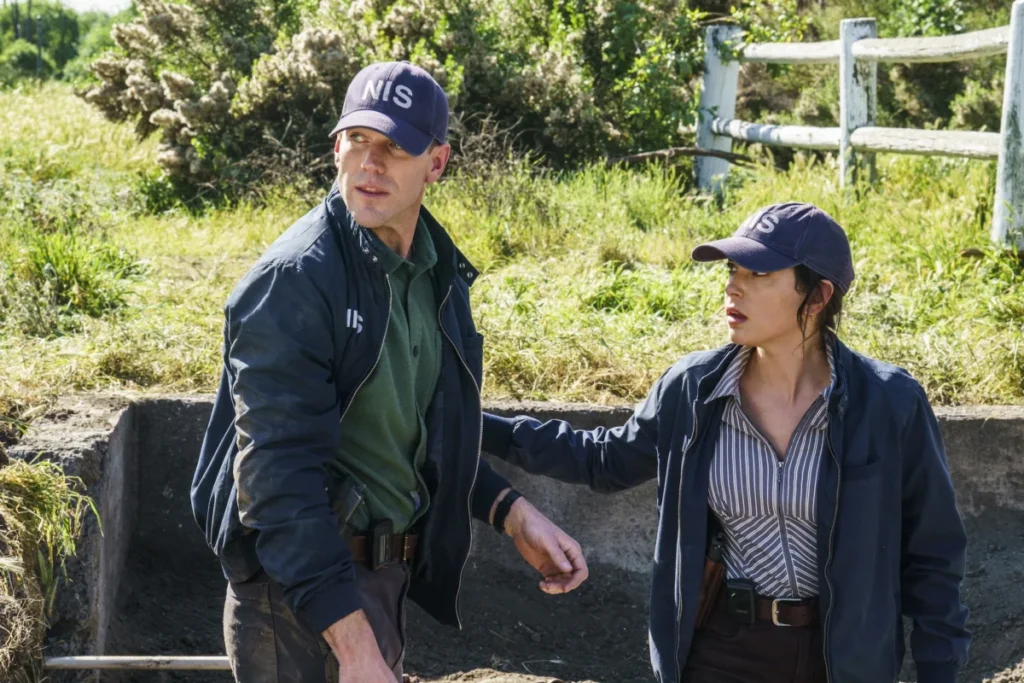

The highly anticipated Season 2 finale of NCIS: Origins concluded on a surprising note, delivering a romantic culmination for its lead characters alongside a perilous cliffhanger that plunges one of the team into immediate danger. This pivotal episode, titled "Hollywood Ending," defied franchise conventions in its final moments, leaving viewers with a potent blend of heartfelt resolution and suspense. The season’s dramatic conclusion saw the Camp Pendleton office facing imminent closure, a development that rippled through the team, triggering a cascade of personal and professional reevaluations.
The Shifting Sands of Camp Pendleton
The news of the Camp Pendleton office’s impending shutdown served as the catalyst for significant character arcs. For Leroy Jethro Gibbs (Austin Stowell), the prospect of closure brought a palpable sense of disappointment, compounded by Lala’s (Mariel Molino) contemplation of a life change. Lala revealed her consideration of relocating to the small town where Manny (Miguel Gomez) resides under witness protection, even expressing an interest in becoming the town’s sheriff. This revelation introduced a poignant layer to their evolving relationship, hinting at diverging paths.
Meanwhile, Randy (Caleb Foote) saw the impending digital transition of case files as an opportunity. His meticulous work in digitizing records, a task he had been engaged in throughout the season, was viewed as leverage to secure a coveted assignment in Naples, with the hopeful intention of bringing Lala with him. This ambition underscored Randy’s proactive nature and his growing assertiveness within the team.
Special Agent Mike Franks (Kyle Schmid), though seemingly detached from the administrative upheaval, found himself embroiled in a far more immediate and perilous crisis. The finale’s narrative intertwined the impending office closure with a volatile hostage situation orchestrated by Abe Pruitt (Christopher Backus) at his compound. Pruitt’s actions, which included holding his own brother captive, presented a direct and life-threatening challenge that demanded immediate intervention. Gibbs, in a critical moment, placed himself between Mason (Philip Winchester) and a bullet, averting further tragedy and ensuring Pruitt’s subsequent apprehension.
Strategic Maneuvering and Institutional Evolution
Amidst the personal and operational turmoil, a strategic effort was underway to safeguard the team’s future. Vera (Diany Rodriguez) convened a crucial "brain trust" comprising key personnel, including Mary Jo (Tyla Abercrombie), Kowalski (Michael Harney), Herm (Daniel Bellomy), Dalton (Jeffrey Boehm), Woody (Bobby Moynihan), and Lenora (Lori Petty). This collective deliberated on a strategy to present a compelling case to the new director – Tom Morrow (Alan Dale), a familiar face from the flagship NCIS series. Their objective was to demonstrate the team’s unwavering commitment to stringent law enforcement, a persuasive argument aimed at preventing the shutdown and securing their continued operational status. The strategy proved successful, effectively solidifying the team’s position.
A Romantic Climax and a Gripping Kidnapping
However, the respite provided by their successful presentation was short-lived, as the finale delivered two significant, and starkly contrasting, climactic events. The first involved Randy, whose earlier work with digital files tragically led to his abduction. This kidnapping serves as a direct consequence of his season-long efforts, introducing a perilous cliffhanger that directly impacts his future and the team’s ongoing mission.
Simultaneously, the episode culminated in a profoundly romantic moment between Gibbs and Lala. As the iconic ballad "I Will Always Love You" played, Gibbs rushed to Lala’s apartment. The scene, imbued with emotional weight, saw Lala, who had seemingly departed, return and express her desire for Gibbs to ask her to stay. His heartfelt plea, followed by a passionate kiss, marked a long-awaited romantic milestone. This moment was underscored by a poignant voiceover from Mark Harmon, who narrated, "We got our happy ending. I only wish it could’ve lasted forever." This sentiment resonated deeply, acknowledging the joy of their union while hinting at the inherent complexities of their future, especially within the established canon of Gibbs’ personal life.
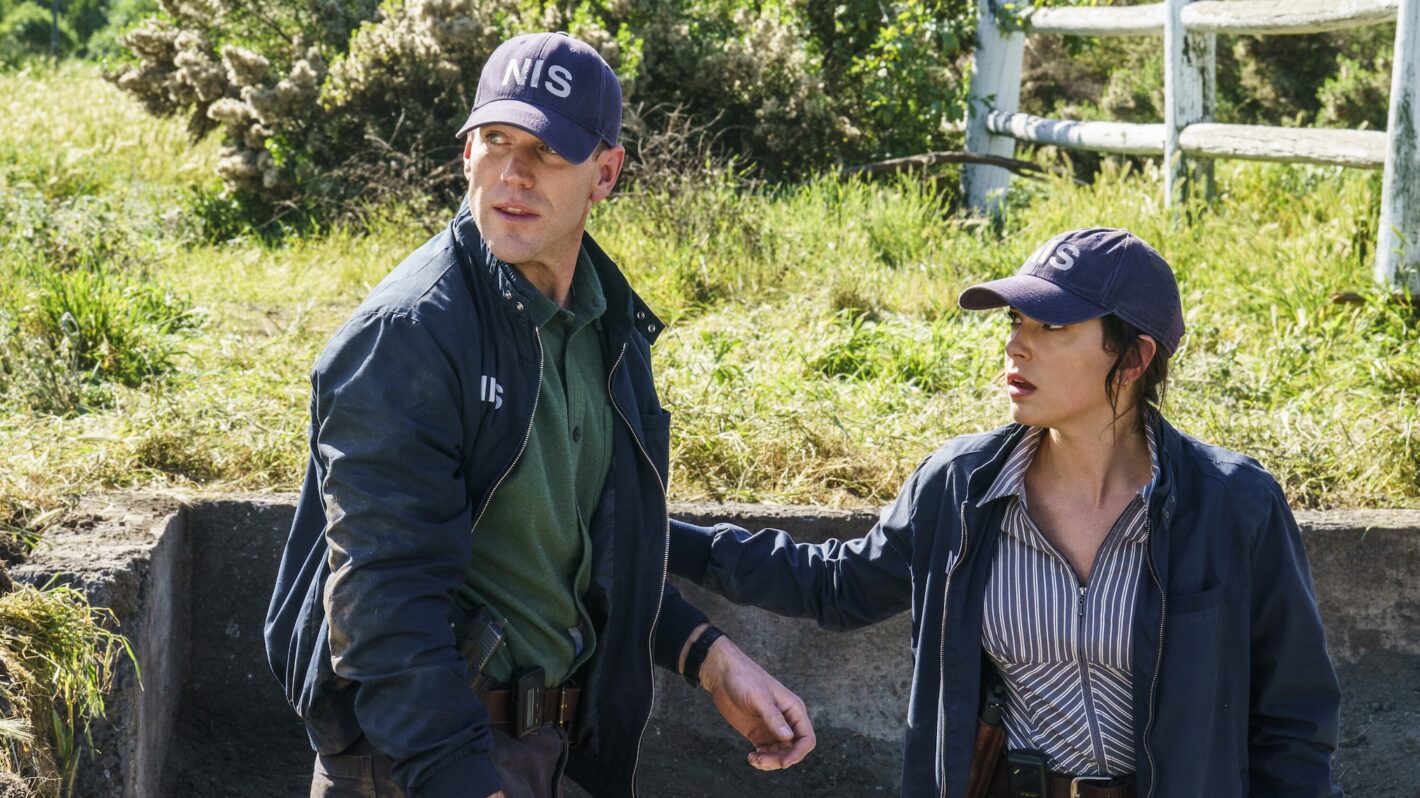
Showrunner Insights: Crafting the Finale’s Emotional Arc
In an exclusive interview, showrunners David J. North and Gina Lucita Monreal, who are not returning for Season 3, provided extensive insights into the creative decisions behind the Season 2 finale.
On the Unconventional Romantic Climax:
Monreal shared that the initial working title for the episode was humorously intended to be How to Lose a Guy in 10 Days, reflecting the romantic comedy undertones of the final scenes. She revealed that the intention for Gibbs and Lala to kiss had been a season-long objective: "We knew from the beginning of this season that we were building to that kiss. And so we really tried to lay the groundwork for that and make it make emotional sense, which I feel that we did get there with the characters."
North was particularly moved by an unscripted moment where Austin Stowell, as Gibbs, tossed his cap back into his car. "I didn’t even know that," North expressed, highlighting the organic nature of the scene’s emotional impact. Monreal elaborated on the desire to surprise audiences: "We also wanted it to be unexpected and it doesn’t really go along with what we normally do in the NCIS franchise world. Usually we will tease that out until we can’t possibly do it anymore. So we really wanted to surprise people and also just remain true to the characters. And we felt like in this moment this was the truth for them."
The departure from the typical NCIS trope of first kisses occurring during separations was also a deliberate choice. Monreal noted, "it was nice for it to come as one that’s like, ‘No, I’ll actually stay.’"
Navigating Canon and Character Development:
The showrunners addressed the challenges of building the Gibbs-Lala romance while respecting established NCIS canon, particularly Gibbs’ prior marriage to Diane. Monreal explained, "we were also trying to remain true to the Diane story and canon with Diane. So we did play that out and they are still technically married and they are in canon technically married, even though the papers have not been signed. At the same time, we wanted to tell this Manny and Lala story. We felt like it deserved to be told. We love those two characters together. So we wanted to accomplish all of that while still building to bringing Gibbs and Lala together."
The influence of other NCIS relationships on their storytelling was acknowledged, with a viewer drawing a parallel between the Gibbs-Lala compound scene and a memorable moment between Kensi and Deeks in NCIS: Los Angeles. Monreal responded with laughter, confirming the resonance of such character-driven interactions.
Regarding the future of Gibbs and Lala, North acknowledged the known canon of Gibbs’ romantic history but expressed excitement for the potential of their storyline: "And I think it was just it’s time. It’s early as like you guys said as far as what’s typical in NCIS or these shows, but it felt like it was time for them to get together. And it was very powerful hearing Gibbs say, ‘I wish it could have lasted forever.’ It’s very vulnerable from the Mark Harmon Gibbs that we’ve known. And yeah, everybody should stay tuned. I’m excited to see what happens with these two."
The "Story of Her" Enigma:
The recurring line, "the story of her," was clarified by Monreal as a late addition during the editing process, emphasizing its serendipitous inclusion. "That line is funny though, because that line, like the story of her never happened, it wasn’t in the script and it wasn’t in the show until our last day of editing it… And I was like, ‘Oh, we need to put that in there.’ So yeah, that was a late edition." This suggests the line was more of an evocative callback than a direct foreshadowing of a new plot point.

Randy’s Kidnapping: A Season-Long Buildup
The kidnapping of Randy, a stark contrast to the romantic resolution, was a planned consequence of his season-long work with digital files. Monreal stated, "we talk about the finale in the very first weeks that we get into the room when we’re talking about the season. And I think that’s one of the things that separates us from other procedurals is that we really are tracking the emotional arcs of our characters and we know we want to set them at the end of the season so we can build to it."
The connection of Randy’s abduction to his computer work was intentionally woven into the narrative throughout the season. When asked if the kidnapping was linked to a previously seen case or an unseen one, North responded, "We don’t want to reveal that because it’d be such an important part of Season 3." This indicates that Randy’s predicament will be a central focus of the upcoming season.
North also commented on Randy’s character growth, noting, "Randy’s grown a lot since Season 1." He expressed enthusiasm for continuing the show’s blend of workplace comedy and dramatic storytelling, while acknowledging the unknown trajectory of Randy’s character within the established canon. Monreal praised actor Caleb Foote’s versatility, stating, "Caleb is also a very versatile actor, so he does the comedy so well, but he also does serious stuff. In drama, he really digs in. So I’m excited to see where his character goes."
The Transition to NCIS and Character Arcs
The pivotal moment of NIS transitioning to NCIS was orchestrated through the "brain trust" scene. Monreal explained the genesis of this idea: "I think it started with, wouldn’t it be fun to have Woody at NIS at Pendleton? That’s where the idea started. And then we knew we wanted to highlight the name change and that this was actually happening in real life at this time." The scene effectively captured the institutional shift while highlighting the camaraderie and ingenuity of the team.
The emotional impact of the office closure on Wheeler (Patrick Fischler) was a key element. Monreal lauded Patrick Fischler’s performance, noting his vulnerability in conveying the significance of the office and its personnel to his character. North added context to Wheeler’s arc, suggesting that the job represents an escape from personal losses, including his marriage and strained relationship with Jason.
The dynamic between Wheeler and Mary Jo was also a highlight, with Monreal describing their interactions as "magical."
Nostalgic Echoes and Character Evolution:
The iconic NCIS theme music accompanying Gibbs putting on his jacket and hat was a deliberate and deeply resonant choice. Monreal revealed, "We knew that from the moment we were writing the pilot, when we started breaking it, we wanted that moment of him putting on the jacket with the NCIS theme playing." The decision to prioritize the music over voiceover in the final edit underscored its emotional significance for long-time fans.
The "Head Slap" delivered by Franks to Gibbs was another moment that resonated with the NCIS lore. While the exact timing of its inclusion alongside the NIS to NCIS transition was serendipitous, Monreal noted its natural fit: "It felt very natural there, but I think it was a lucky break for us that happened at the same time as the transition to NCIS."
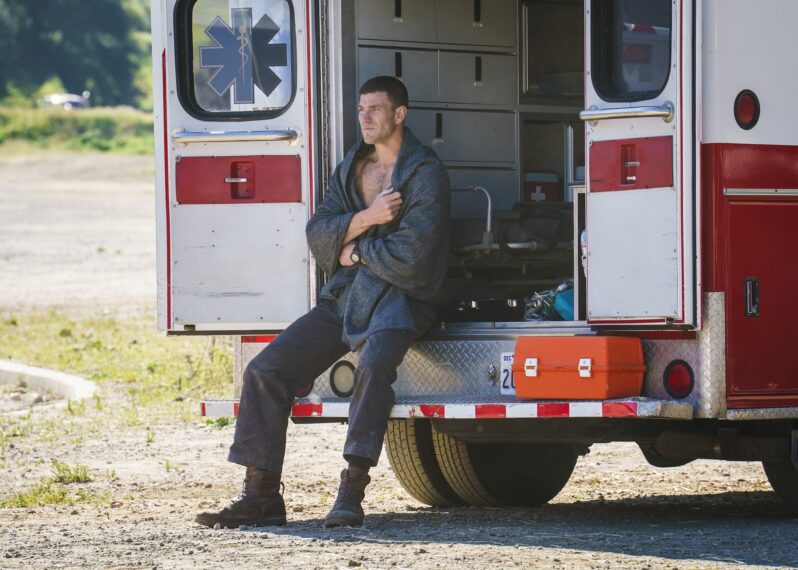
Franks’ storyline in the finale was particularly layered, encompassing the office closure, the return of Abe Pruitt, and the mention of Swanson (Hannah Barefoot). Monreal praised Kyle Schmid’s performance, highlighting his ability to portray a range of emotions, from frustration in the locker room to vulnerability in his interactions. The developing relationship between Franks and FBI Agent Swanson was also noted as a point of interest for future seasons.
The conclusion of Abe Pruitt’s storyline with his apprehension was framed as a closure to the compound incident, though North hinted that Pruitt’s manipulative nature might lead to his return. The complex brotherly dynamic between Franks and Mason was depicted as having turned a corner, though the "baggage there" suggests continued challenges.
The evolution of the Franks-Gibbs relationship was a focal point, with Monreal explaining the intention to echo Franks’ earlier, more abrasive interactions with Lala. "We’re seeing how Franks is evolving as a leader, as a human being," she stated, emphasizing the relatable nature of these character-driven moments. The scene between Franks and Lala regarding Manny at the copier was highlighted as a testament to Franks’ character development, moving from judgment to concern.
The flashback episode featuring Doc Tango (Julian Black Antelope) and young Ducky (Adam Campbell) was celebrated as a particularly strong installment, with Monreal confirming the initial idea was to pair Tango and Ducky.
Looking Ahead to Season 3
When asked about a potential time jump for Season 3, North offered a coy "Stay tuned." He assured viewers that the upcoming season will be "jam-packed" and will continue to honor the show’s established tone. The fate of Randy and the unfolding romance between Gibbs and Lala were flagged as key elements to watch.
The future of NCIS: Origins is set for Fall 2026 on CBS, promising further explorations of these compelling character arcs and the continued evolution of the early NCIS team. The Season 2 finale successfully balanced the foundational elements of the NCIS universe with fresh narrative directions, leaving audiences eagerly anticipating what lies ahead.