
The first Monday in May once again marked the highly anticipated return of the Met Gala, the premier annual fundraising event for the Metropolitan Museum of Art’s Costume Institute. For its 2026 edition, held on May 4th, the iconic event gathered a constellation of stars and fashion luminaries under the banner of "Costume Art," a theme designed to challenge attendees to reimagine the human form as a dynamic, wearable canvas. Chaired by a powerful quartet comprising global music icon Beyoncé, Oscar-winning actress Nicole Kidman, tennis legend Venus Williams, and the inimitable Vogue editor-in-chief Anna Wintour, the evening promised a blend of high fashion, artistic expression, and cultural commentary. Anthony Vaccarello, creative director of Saint Laurent, and actress Zoë Kravitz served as co-chairs for the Gala Host Committee, further cementing the event’s blend of fashion, film, and music.

The Theme: "Costume Art" and Its Interpretations
The 2026 theme, "Costume Art," prompted guests to delve into the intricate relationship between clothing and artistic expression, encouraging a sartorial exploration of the human body as a living sculpture. This concept builds upon the Costume Institute’s enduring mission to preserve and interpret fashion history, presenting it as a legitimate and profound art form. The curatorial vision behind "Costume Art" sought to move beyond mere aesthetic appeal, pushing designers and attendees alike to consider garments as mediums for storytelling, social commentary, and personal identity. Historically, the Met Gala themes have ranged from abstract concepts like "Camp: Notes on Fashion" to homages to specific designers such as "Rei Kawakubo/Comme des Garçons: Art of the In-Between." "Costume Art" offered a broad yet profound prompt, allowing for diverse interpretations from minimalist elegance to avant-garde theatricality. The expectation was for looks that transcended traditional clothing, venturing into performance art and sculptural design.

A Shadow of Controversy: The Honorary Chairs and Ethical Debates
Even amidst the glamour, the 2026 Met Gala was not immune to controversy. The appointment of Jeff Bezos and Lauren Sánchez Bezos as honorary chairs sparked considerable debate across social media and within industry circles. Critics highlighted Amazon’s well-documented history of labor disputes and questioned the appropriateness of their prominent role in a cultural institution dedicated to art and creativity. The controversy reportedly led several high-profile figures, including veteran actress Meryl Streep, to decline their invitations, underscoring a growing tension between corporate sponsorship and celebrity activism within elite cultural events. This incident reignited discussions about the ethical considerations of funding for major arts institutions and the perceived compromises in values when aligning with certain corporate entities. The Met Gala, while a vital fundraiser, often finds itself at the intersection of commerce, culture, and social responsibility, and the 2026 edition served as a potent reminder of these complex dynamics.

Musicians Take the Stage: A Red Carpet of Artistic Expression
The red carpet, famously known as fashion’s biggest night, saw musicians and pop culture icons interpreting "Costume Art" with varying degrees of literalism and creative flair. Here’s a closer look at how some of the most anticipated musical guests embraced the evening’s challenging brief, transforming themselves into walking masterpieces.

Beyoncé and Blue Ivy: The Matriarch and the Muse
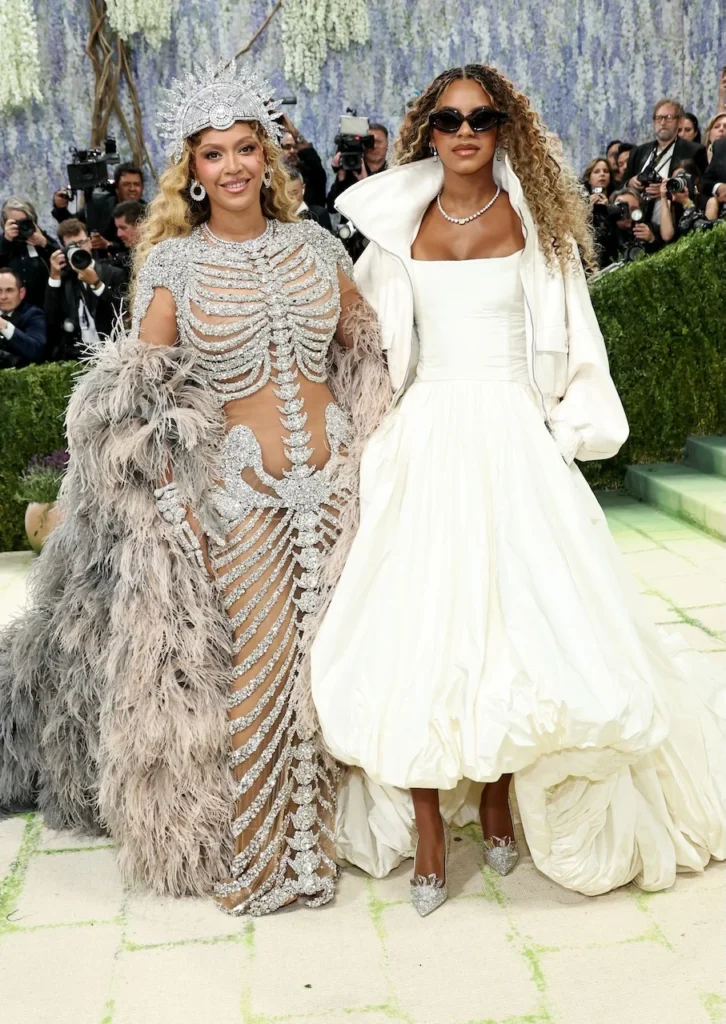
Co-chair Beyoncé, ever the visionary, arrived alongside her daughter Blue Ivy, creating a moment that transcended fashion into a powerful statement of lineage and artistic legacy. Beyoncé’s ensemble, often meticulously crafted to echo her artistic narratives, was rumored to be a custom creation that blurred the lines between haute couture and classical sculpture. Her choice to bring Blue Ivy, who herself has begun to forge a distinct public image, suggested a passing of the torch within the realm of "Costume Art," with Blue Ivy’s attire complementing her mother’s with youthful yet sophisticated artistry. Their coordinated appearance was widely interpreted as an embodiment of fashion as an evolving art form, passed down through generations.
Madonna: The Ever-Evolving Icon
Madonna, a perennial provocateur and master of reinvention, was expected to deliver a look that challenged conventions, true to her "Costume Art" spirit. Known for her theatricality and her ability to merge fashion with performance, her ensemble was anticipated to be a commentary on identity and transformation. Speculation prior to the event centered on whether she would draw from historical art movements or present a futuristic vision, ultimately leaning into her reputation for boundary-pushing aesthetics that have consistently redefined pop culture fashion for decades.

Stevie Nicks: Mysticism Embodied
Fleetwood Mac’s legendary vocalist, Stevie Nicks, brought her signature bohemian-gothic aesthetic to the Met Gala carpet. Her style, deeply rooted in mysticism, lace, and flowing silhouettes, is already a form of "Costume Art" in itself. For this theme, Nicks was anticipated to elevate her iconic look, perhaps incorporating more sculptural elements or intricate handiwork that emphasized the artisanal aspect of her clothing. Her presence often evokes a sense of timeless magic, and her interpretation was expected to be a deeply personal and authentic expression of her enduring artistic persona.
Bad Bunny: Disrupting Norms with Sartorial Artistry
Bad Bunny, an artist who consistently defies gender norms and traditional fashion codes, was a highly anticipated presence. His Met Gala history includes bold, theatrical looks that challenge expectations. For "Costume Art," he was expected to push the boundaries further, perhaps appearing in an ensemble that blurred the lines between menswear and womenswear, or one that incorporated elements of traditional Latin American artistry with contemporary high fashion. His approach to fashion is inherently artistic, treating his body as a canvas for cultural commentary and individual expression.

Sabrina Carpenter: Pop’s Delicate Craftsmanship
Rising pop star Sabrina Carpenter, known for her sweet yet edgy style, offered a fresh interpretation of "Costume Art." Her look was expected to showcase intricate detailing and delicate craftsmanship, perhaps playing with textures and embellishments that highlighted the artistic skill behind her garment. Her style often balances youthful charm with sophisticated elegance, and her Met Gala ensemble was anticipated to reflect a thoughtful, perhaps whimsical, approach to the theme, demonstrating that "Costume Art" can also be found in intricate beauty.
Cher: The Goddess of Transformation
Cher, a true icon whose career is a testament to sartorial evolution and fearless expression, graced the carpet, undoubtedly delivering a show-stopping "Costume Art" moment. Her legacy of groundbreaking outfits, often designed by Bob Mackie, makes her a living embodiment of the theme. Her look was expected to be a dramatic, perhaps sequined or feathered, creation that celebrated her enduring status as a fashion pioneer who has always treated her body as the ultimate stage for artistic display.

Katy Perry: Playful Masterpiece
Katy Perry, celebrated for her imaginative and often whimsical Met Gala appearances, was expected to transform into a playful yet meticulously crafted piece of "Costume Art." Her past looks have included chandeliers, hamburgers, and angelic wings, proving her dedication to conceptual fashion. For this theme, she was anticipated to wear something equally inventive, perhaps a wearable sculpture or an illusionary garment that cleverly played with the concept of the human body as a canvas for artistic creation.
Janelle Monáe: Afrofuturistic Visionary
Janelle Monáe, whose artistry and style are deeply intertwined with Afrofuturism and narrative storytelling, was a natural fit for "Costume Art." Her looks consistently offer a blend of architectural silhouettes, monochrome palettes, and powerful messages. For the 2026 gala, Monáe was expected to present an ensemble that was not just a dress, but a multi-dimensional art piece, potentially incorporating technological elements or abstract forms that further her unique vision of future-forward fashion as a form of cultural commentary.

SZA: Ethereal and Sculptural
SZA, known for her soulful sound and equally ethereal style, was anticipated to bring a soft yet sculptural interpretation to "Costume Art." Her aesthetic often features flowing fabrics, natural textures, and a dreamy quality. Her Met Gala look was expected to elevate these elements, perhaps through draping that mimics classical sculpture or through intricate embroidery that tells a story, positioning her body as a graceful, artistic form.
Charli XCX: Pop’s Avant-Garde Edge
Charli XCX, a vanguard in experimental pop, delivered an avant-garde interpretation of the theme. Her fashion choices often reflect a futuristic, rebellious spirit. Her ensemble was expected to be a bold, perhaps deconstructed or geometrically innovative, design that pushed the boundaries of traditional garment construction, aligning perfectly with the idea of fashion as an embodied art form that challenges perceptions.

Doja Cat: Fearless Artistic Expression
Doja Cat, an artist celebrated for her fearless approach to fashion and her chameleon-like ability to transform, was a key figure to watch. Her past red carpet looks have ranged from abstract to overtly theatrical, often becoming viral moments. For "Costume Art," she was expected to present a look that was both visually striking and conceptually rich, possibly incorporating body paint, prosthetics, or architectural elements that rendered her a living, breathing art installation.
Sam Smith: Gender-Fluid Grandeur
Sam Smith, an artist who champions gender fluidity in their music and style, was expected to interpret "Costume Art" with a powerful statement on identity and expression. Their past looks have often embraced grand, theatrical silhouettes. For this theme, Smith was anticipated to wear an ensemble that blurred traditional lines, perhaps a voluminous, sculptural creation that celebrated the body as a non-binary canvas, merging elements of historical costume with contemporary genderqueer aesthetics.

ROSÉ and LISA (BLACKPINK): K-Pop’s Global Canvas
As members of global phenomenon BLACKPINK, Rosé and Lisa’s appearances are always highly scrutinized and anticipated. Their individual styles, while distinct, both embody a blend of luxury fashion and K-pop’s cutting-edge trends. For "Costume Art," Rosé, often favoring sleek and elegant lines, was expected to showcase an outfit that emphasized sophisticated construction and artistic tailoring. Lisa, known for her bolder, more experimental fashion, was anticipated to deliver a dynamic, perhaps structurally innovative, look that reflected her fierce stage presence and global fashion influence. Their attendance underscored the increasing global reach and cultural significance of the Met Gala.
Doechii: Raw Artistry and Vision
Doechii, a rising star known for her distinctive musical style and equally unique fashion sense, brought a fresh, raw energy to the "Costume Art" theme. Her aesthetic often blends streetwear influences with high fashion, creating looks that are both edgy and artistic. Her ensemble was expected to be a vibrant, perhaps unconventional, creation that highlighted her individuality and her embrace of fashion as a powerful form of self-expression.

Laufey: Classic Elegance Reimagined
Laufey, the Icelandic-Chinese jazz-pop sensation, whose music evokes a timeless, elegant sensibility, was expected to interpret "Costume Art" through a lens of classic beauty and understated artistry. Her style often leans into vintage-inspired glamour. For the gala, she was anticipated to wear a gown that felt like a wearable piece of classical art, perhaps with intricate details or a silhouette reminiscent of historical portraiture, showcasing how traditional elegance can be profoundly artistic.
Tate McRae: Modern Movement as Art
Pop sensation Tate McRae, a dancer turned singer, brought her understanding of movement and physicality to the "Costume Art" theme. Her look was expected to incorporate elements that emphasized fluidity, structure, and the body in motion. Perhaps a garment with dynamic lines or an ethereal quality that reflected the grace and power of dance, treating her body as a kinetic sculpture.

María Zardoya (The Marías): Evocative and Dreamlike
María Zardoya, the enchanting frontwoman of The Marías, known for her sultry vocals and retro-inspired, often dreamlike aesthetic, was anticipated to deliver an evocative interpretation of "Costume Art." Her style often features luxurious fabrics and an otherworldly charm. Her ensemble was expected to be a creation that felt like a painting come to life, perhaps with rich textures, flowing silhouettes, and a captivating allure that underscored the artistic narrative of her persona.
Anderson .Paak: Eclectic Grandeur
Anderson .Paak, a musician whose vibrant personality and eclectic style are instantly recognizable, was expected to bring his unique brand of cool to the "Costume Art" theme. Known for his retro-inspired, often flamboyant suits and distinctive headwear, his look was anticipated to be a maximalist, artistic statement. He often treats his attire as an extension of his performance, making him a perfect candidate to embody the "Costume Art" brief with a blend of musicality and sartorial spectacle.

sombr: Enigmatic Artistry
The artist sombr, often known for their enigmatic presence and avant-garde sound, was expected to deliver a visually striking and conceptually rich interpretation of "Costume Art." Their style tends to be boundary-pushing and experimental, aligning well with the theme’s invitation to treat the body as a canvas. Their look was anticipated to be a thought-provoking ensemble that blurred the lines between fashion, sculpture, and performance, embodying a truly artistic approach to costume.
Suki Waterhouse and Troye Sivan: Collaborative Artistry
The duo of Suki Waterhouse and Troye Sivan, both style icons in their own right, presented a compelling "Costume Art" statement. Waterhouse, an actress and musician, often embodies a bohemian-chic aesthetic, while Sivan, a pop star and actor, is known for his sleek, modern, and often gender-fluid fashion. Their combined appearance was anticipated to be a complementary, perhaps narrative-driven, pairing that showcased a collaborative artistic vision, treating their presence on the red carpet as a joint performance art piece.

Broader Impact and Implications
The 2026 Met Gala, with its "Costume Art" theme, further solidified the event’s status as a critical platform for fashion as an art form. The event typically raises tens of millions of dollars for the Costume Institute, funding its exhibitions, acquisitions, and conservation efforts, which are crucial for maintaining the museum’s extensive collection of over 35,000 costumes and accessories. The theme itself prompted designers to push creative boundaries, influencing upcoming fashion trends and stimulating conversations about the future of wearable art.

Beyond the immediate spectacle, the Met Gala continues to serve as a bellwether for cultural conversations, particularly regarding celebrity influence, corporate philanthropy, and ethical consumption. The controversy surrounding the honorary chairs highlighted the increasing scrutiny public figures and institutions face regarding their affiliations. As the world continues to grapple with complex social and economic issues, the Met Gala, while a celebration of art and glamour, remains a poignant reflection of these broader societal dialogues, constantly evolving at the intersection of high culture and public consciousness. The musicians, with their inherent understanding of performance and visual storytelling, truly embraced the assignment, transforming the red carpet into a dynamic gallery of living "Costume Art."