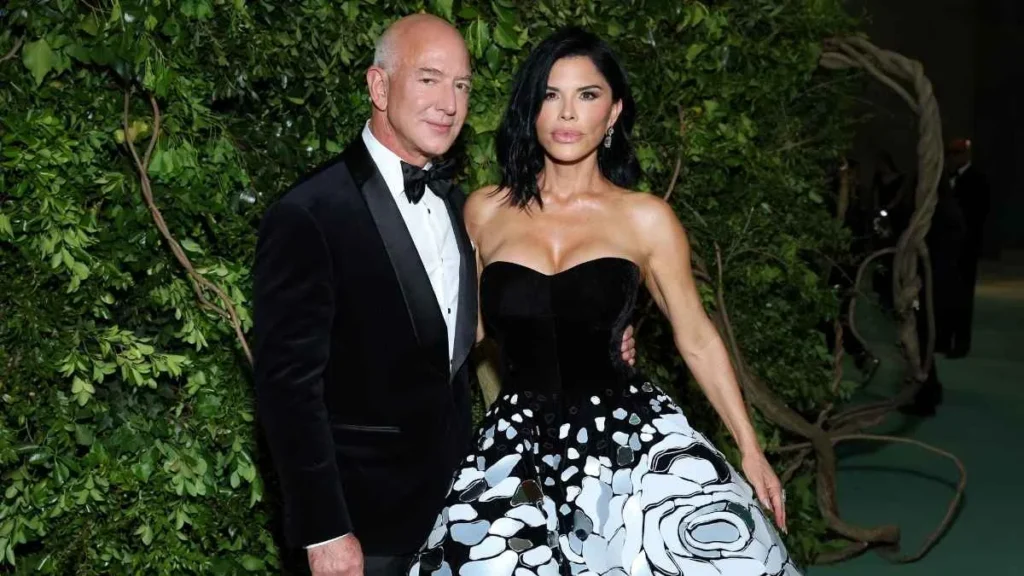

The landscape of New York City’s most prestigious social event is undergoing a significant shift as Amazon founder Jeff Bezos and his fiancée, Lauren Sanchez, have reportedly committed a sum exceeding $10 million to sponsor the 2026 Met Gala. This substantial financial contribution, which some industry insiders suggest could reach as high as $20 million, secures the couple’s position at the helm of the fashion world’s premier night. The event, officially titled the Metropolitan Museum of Art Costume Institute Benefit, serves as the primary fundraiser for the museum’s Costume Institute and is widely regarded as the "Oscars of Fashion."
The 2026 iteration of the gala is scheduled to take place on May 4, centering on the theme "Costume Art." By assuming the role of primary sponsors, Bezos and Sanchez have also been named honorary co-chairs for the evening. They will join an elite roster of co-chairs that includes Academy Award winner Nicole Kidman, global music icon Beyoncé, tennis legend Venus Williams, and Vogue editor-in-chief Anna Wintour. While the sponsorship underscores the couple’s growing influence within the upper echelons of the fashion industry, it has also sparked a complex dialogue regarding the intersection of extreme wealth, institutional philanthropy, and the traditional gatekeeping of high society.
The Evolution of Met Gala Sponsorship and Financial Scale
To understand the magnitude of the Bezos-Sanchez sponsorship, one must look at the financial trajectory of the Met Gala over the last two decades. Under the leadership of Anna Wintour, who has chaired or co-chaired the event since 1995 (with the exception of 1996 and 1998), the gala has transformed from a local charitable dinner into a global media phenomenon.
Historically, the Met Gala has been supported by major fashion houses such as Chanel, Gucci, and Prada, or tech-adjacent giants like Apple, Amazon (previously in 2012), and most recently, TikTok. The cost of attendance has skyrocketed in tandem with the event’s prestige. In the 1970s, tickets were priced at approximately $100. By the early 2020s, individual tickets were reported to cost around $50,000, with entire tables starting at $300,000.
The reported $10 million to $20 million contribution from Bezos and Sanchez represents a new tier of personal sponsorship. Unlike corporate sponsorships, which are often marketing expenditures for brands looking to align with luxury, this personal investment by the Bezos family signals a strategic move to solidify their "cultural capital." The funds are directed toward the Anna Wintour Costume Center, the only department within the Metropolitan Museum of Art that must fund its own operating budget and exhibitions.
Chronology of the Bezos-Sanchez Fashion Integration
The involvement of Jeff Bezos and Lauren Sanchez in the 2026 Met Gala is the culmination of a multi-year effort to integrate into the global fashion elite.
- 2012: Amazon sponsors the Met Gala theme "Schiaparelli and Prada: Impossible Conversations." At the time, Bezos’s presence was seen through the lens of a tech CEO attempting to break into the apparel market.
- 2019–2022: Following his divorce from MacKenzie Scott and the public debut of his relationship with Lauren Sanchez, Bezos began appearing more frequently at high-fashion events, including the Dolce & Gabbana Alta Moda shows and various international fashion weeks.
- 2023: The couple made a high-profile appearance at the Met Gala honoring Karl Lagerfeld. Sanchez wore a custom Valentino gown, signaling a departure from her previous aesthetic toward more "couture-aligned" choices.
- 2024: Reports surfaced of Sanchez working closely with prominent stylists and editors to refine her public image, moving toward what social commentators have described as a "high-society" or "Old Money" aesthetic, despite the "New Money" origins of the Bezos fortune.
- Late 2025: Anna Wintour officially confirmed the sponsorship and co-chair roles for the 2026 event during a series of press engagements, signaling the ultimate seal of approval from the fashion establishment.
Institutional Support and the "AWOK" Factor
Anna Wintour’s endorsement is the most critical component of this transition. In an interview with CNN, Wintour praised Sanchez’s involvement, describing her as a "wonderful asset" to the Metropolitan Museum. Wintour emphasized Sanchez’s passion for the history of clothing, noting, "She is a great lover of costume and obviously of fashion. We’re very grateful for her incredible generosity."
This endorsement is often referred to in the industry as "AWOK"—Anna Wintour OK. For figures like Bezos and Sanchez, who have faced public scrutiny over their displays of wealth, the AWOK stamp serves as a form of social validation. William Norwich, a former Vogue editor and a longtime observer of the New York social scene, told Page Six that the Bezoses currently represent the pinnacle of the American dream in terms of status and style. He noted that they represent "conspicuous consumption" at a level that is now being embraced, rather than shunned, by institutions in need of significant funding.
Internal Dissent and the "Pay-to-Play" Critique
Despite the official warmth from the Metropolitan Museum, the announcement has not been without controversy. The fashion industry is notoriously protective of its hierarchy, and the perception that co-chair positions—traditionally earned through career achievement in the arts—can be purchased has caused friction.
One frequent Met Gala guest and industry insider reportedly expressed being "heartbroken" by the move, suggesting that the event is becoming a platform where one can simply "buy" their way into the good graces of the cultural elite. This critique touches on a broader anxiety within the arts: the fear that institutional independence is being compromised by a reliance on "mega-donors" whose personal brands may overshadow the artistic mission of the museum.
Furthermore, the "takeover" by the Bezos family has allegedly influenced the guest list for 2026. Reports from Hello! Magazine suggest that some perennial favorites of the Met steps, including Zendaya and Meryl Streep, may opt out of the 2026 event. While representatives for these stars have not cited the Bezos sponsorship as a formal reason for potential absences, industry rumors suggest a growing divide between celebrities who view the Met Gala as a creative performance space and those who see it as an increasingly corporate and billionaire-centric networking event.
Analysis of the 2026 Theme: "Costume Art"
The theme for the 2026 gala, "Costume Art," appears designed to bridge the gap between traditional fashion and fine art. This theme is particularly relevant given the involvement of a sponsor like Bezos, whose company, Amazon, has revolutionized the logistics of how clothing is consumed, but has often struggled to be seen as a curator of "art."
"Costume Art" is expected to explore the craftsmanship, sculpture, and historical significance of garments as non-utilitarian objects. For the Costume Institute, this theme allows for a retrospective of high-fashion techniques, potentially featuring works from legendary couturiers alongside modern avant-garde designers. For Sanchez and Bezos, co-chairing an event with this specific theme allows them to frame their patronage as a support for "High Art" rather than just "Luxury Retail."
Broader Implications for Philanthropy and High Society
The Bezos-Sanchez sponsorship of the Met Gala is a case study in the evolution of modern philanthropy. As federal and local funding for the arts becomes more precarious, cultural institutions are increasingly reliant on the ultra-wealthy to bridge budget gaps. The Metropolitan Museum of Art, while possessing a massive endowment, operates the Costume Institute as a self-funding entity. A $20 million influx ensures the department’s stability for several exhibition cycles.
However, this reliance creates a "plutocratic" social structure where the barriers to entry are no longer based on lineage or professional merit alone, but on the ability to provide transformative capital. The integration of Jeff Bezos into the Met Gala hierarchy reflects a broader trend in New York City, where the "Tech Elite" are displacing the "Media and Finance Elite" of previous generations.
From a public relations perspective, the Met Gala provides Sanchez and Bezos with a platform to soften their image. By associating with beloved figures like Nicole Kidman and Beyoncé, and contributing to a revered public institution like the Met, the couple shifts the narrative from "corporate monopolists" to "cultural patrons."
Conclusion: The Future of the "First Monday in May"
As the May 4, 2026, date approaches, the fashion world remains divided. To some, the Bezos-Sanchez sponsorship is a necessary evolution that secures the financial future of the Costume Institute and reflects the reality of modern power. To others, it marks the end of an era where the Met Gala was a celebration of artistic whimsy, now replaced by a more transactional form of social climbing.
Regardless of the internal industry debate, the 2026 Met Gala is poised to be one of the most watched events in the museum’s history. With the theme of "Costume Art" and a co-chair roster that blends Hollywood royalty, music legends, and the world’s wealthiest individuals, the evening will serve as a definitive marker of where the American dream—and the American social hierarchy—stands in the mid-2020s. Whether the presence of the Bezoses leads to a permanent shift in the gala’s DNA or remains a unique moment in its storied history will depend on the success of the 2026 exhibition and the continued influence of the "AWOK" endorsement in an ever-changing cultural landscape.