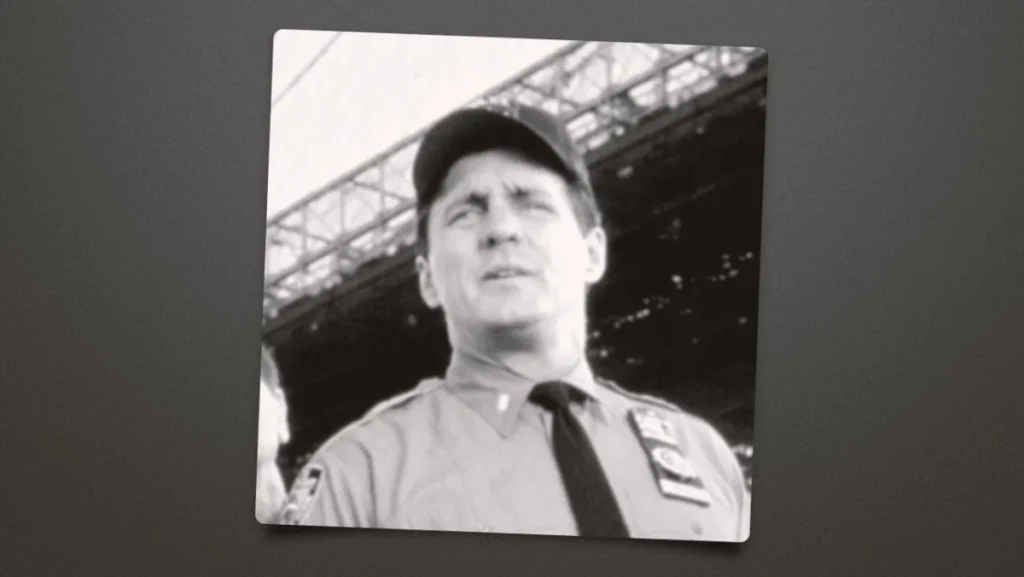

Beau Starr, the prolific character actor whose diverse career spanned professional football fields to iconic roles in the Halloween horror franchise and Martin Scorsese’s crime epic Goodfellas, has passed away at the age of 81. Starr’s brother, Mike, confirmed to TMZ that the actor died on Friday, April 24, in Vancouver, Canada, of natural causes. His passing marks the end of a remarkable life dedicated to both athletic prowess and the nuanced art of performance, leaving behind a legacy appreciated by fans across multiple genres and generations.
A Life of Transitions: From Gridiron to Stage
Born in Queens, New York, Beau Starr’s journey to the silver screen was anything but conventional, beginning with a significant chapter in professional sports. Before his indelible mark on Hollywood, Starr was a formidable presence on the football field. He began his professional career with the New York Jets, a prominent team in the National Football League (NFL), demonstrating a powerful athleticism that would later inform his physical presence on screen. His football career also took him north of the border, where he played for two Canadian Football League (CFL) teams: the Montreal Alouettes and the Hamilton Tiger-Cats. This early career provided Starr with discipline, resilience, and a robust physical bearing that would serve him well in the demanding world of acting. While specific dates for his athletic career are not widely publicized, his time in professional football predates his emergence in the entertainment industry in the late 1970s, suggesting a dedicated period to the sport before he transitioned.
The transition from the high-stakes world of professional sports to the performing arts is a challenging one, yet Starr navigated it with apparent ease and dedication. In 1980, he honed his craft on the theatrical stage, starring in a play at the esteemed American Theater of Actors in New York City. This pivotal experience in live theatre provided him with foundational acting skills and a deep understanding of character development, preparing him for the camera. His official entry into television came shortly before his significant theatrical work, with his first credited appearance in 1979 on the sketch comedy series Bizarre. This early exposure marked the beginning of a relentless and varied career in both television and film, where he quickly became a recognizable and reliable presence.
Establishing a Foothold: Early Television and Film Work
The 1980s proved to be a fertile decade for Beau Starr, as he steadily built his resume with appearances in some of the era’s most popular and enduring television series and films. His versatility allowed him to move seamlessly between comedic and dramatic roles, often portraying figures of authority or blue-collar characters with a grounded authenticity. In 1983, he appeared in an episode of the wildly popular sitcom Three’s Company, a show known for its farcical situations and comedic timing, demonstrating his ability to adapt to different genres. That same year, he featured in the Steve Martin-starring comedy The Lonely Guy, a film that captured the zeitgeist of urban loneliness with humor.
Starr’s consistent work ethic saw him land roles in several action-adventure television series that defined 1980s pop culture. He appeared in The A-Team between 1983 and 1985, a show famous for its ex-Special Forces unit on the run, known for its thrilling action sequences and charismatic cast. Simultaneously, he contributed to The Fall Guy from 1983 to 1986, a series that blended action with Hollywood stunt work, starring Lee Majors. These roles often cast him as a tough, no-nonsense character, capitalizing on his imposing physical presence. In 1985, he also appeared in the comedy-mystery film Fletch, starring Chevy Chase, further showcasing his range. Towards the end of the decade, in 1988, he made an appearance in Highway to Heaven, a heartwarming fantasy drama starring Michael Landon, underscoring his ability to perform in narratives focused on compassion and human connection. These early roles established Starr as a dependable character actor, laying the groundwork for more prominent parts.
Entering the Hallowed Halls of Horror: The Halloween Franchise
Beau Starr’s most widely recognized role for many fans came with his entry into one of horror cinema’s most iconic and enduring franchises: Halloween. In 1988, he joined the terrifying world of Michael Myers in Halloween 4: The Return of Michael Myers, where he took on the significant role of Sheriff Ben Meeker. This installment was crucial for the franchise, serving as a direct sequel to Halloween II (1981) and attempting to reignite the series after the departure of Jamie Lee Curtis and a standalone third film. Sheriff Meeker became a central figure, working alongside Dr. Samuel Loomis (Donald Pleasence), the franchise’s steadfast protagonist, in the desperate attempt to protect Jamie Lloyd, Michael Myers’ niece, from her murderous uncle.
Starr’s portrayal of Sheriff Meeker was lauded for its gravitas and believability. He embodied the weary but determined small-town lawman, tasked with confronting an almost supernatural evil. His performance brought a grounded sense of reality to the escalating terror, providing a relatable human element amidst the supernatural horror. The film was a commercial success, grossing over $17.7 million on a modest budget of $5 million, signaling a successful return for the iconic slasher. Starr reprised his role as Sheriff Meeker in the franchise’s fifth entry, Halloween 5: The Revenge of Michael Myers, released in 1989 (though often cited as 1990). In this sequel, Meeker continued his valiant efforts to protect Jamie Lloyd and the town of Haddonfield from Michael Myers’ relentless pursuit. While Halloween 5 received a more mixed critical reception compared to its predecessor, Starr’s consistent portrayal maintained a sense of continuity and steadfastness within the increasingly complex mythology of the series. His contribution solidified his place in horror film history, making him a memorable face for legions of Halloween fans. The Halloween franchise, initiated by John Carpenter in 1978, is renowned for its significant impact on the slasher genre and horror cinema as a whole, and Starr’s involvement placed him squarely within this legendary lineage.
"Goodfellas" and Critical Acclaim
Beyond the realm of horror, Beau Starr demonstrated his profound dramatic capabilities in one of the most celebrated films of all time: Martin Scorsese’s 1990 masterpiece, Goodfellas. In this seminal crime drama, Starr played the pivotal role of the father to Henry Hill, the film’s protagonist, portrayed by Ray Liotta. Although his screen time was limited, Starr’s performance was impactful, grounding Henry’s complex family background and offering a glimpse into the pressures and expectations that shaped his early life. His portrayal added depth to the character of Henry Hill, illustrating the traditional family dynamics against which Henry’s eventual descent into organized crime unfolded.
Goodfellas is widely regarded as a cinematic triumph, earning six Academy Award nominations, including Best Picture, and winning one for Joe Pesci’s unforgettable performance as Tommy DeVito. Its critical acclaim, box office success (grossing over $47 million domestically on a $25 million budget), and enduring cultural influence cemented its status as a landmark film. For Starr, being part of such a prestigious project underscored his talent and versatility, showcasing his ability to inhabit nuanced characters in critically acclaimed, serious dramas. It highlighted his range, moving from the genre confines of horror to the raw, visceral realism of Scorsese’s mob world. His performance in Goodfellas, however brief, is frequently cited by film aficionados as a testament to his understated power as a character actor.
Tributes and Legacy: Remembering a "Great Guy"
Following his passing, tributes poured in, notably from those who had the privilege of working alongside him. Christopher Serrone, who brilliantly portrayed the younger version of Henry Hill in Goodfellas, penned a heartfelt tribute on Instagram on Saturday, honoring Starr’s memory. Serrone’s message, conveyed with a heavy heart, confirmed Starr’s passing and illuminated the multifaceted life he led: “It is with a heavy heart I’m here to inform everyone of the very sad passing of Beau Starr. [Mike Starr] asked me to make the announcement,” Serrone wrote. “Beau enjoyed a rich and meaningful life. He was a son, brother, father, grandfather, actor and NFL/CFL player. Please take a moment to help me remember a great guy. RIP.”
Serrone’s tribute beautifully encapsulates the essence of Beau Starr’s life—a man of many roles, both professional and personal. It speaks volumes about the respect and affection he garnered from his colleagues. The emphasis on his identity beyond just an actor—as a family man and athlete—paints a picture of a well-rounded individual whose impact extended beyond his on-screen presence. This sentiment is echoed by the broader film community, which often celebrates character actors like Starr for their consistent contributions and their ability to elevate any project they are part of. His ability to move between genres and mediums, from intense drama to lighthearted comedy and terrifying horror, made him a truly versatile performer.
A Prolific Career: Diverse Projects and Enduring Presence
Throughout his career, Beau Starr maintained an impressive pace, appearing in a plethora of other projects that showcased his range and reliability. He held a starring role in NBC’s crime drama series True Blue, which aired in 1989 and 1990, running for 12 episodes. In this series, he played Detective Frankie Avila, a central character in a police drama focused on the lives of uniformed officers in New York City. This role allowed him to delve deeper into a regular character, showcasing his ability to sustain a performance over multiple episodes.
His additional credits span decades and genres, highlighting his enduring presence in the entertainment industry. These include appearances in the dramatic series 2000 Malibu Road (1992), the action film Bad Blood (1994), the blockbuster action-thriller Speed (1994) starring Keanu Reeves and Sandra Bullock, and the critically acclaimed police procedural NYPD Blue (1995), known for its gritty realism. Later in his career, he continued to appear in television dramas such as Leap Years (2001), Doc (2001-2004), the science fiction television film Final Days on Planet Earth (2006), and the popular comedic detective series Psych (2010). Each of these roles, whether a guest spot or a recurring character, benefited from Starr’s distinctive presence and his knack for bringing authenticity to even the briefest of appearances. His long list of credits is a testament to his sustained commitment to acting and his ability to work consistently in a highly competitive industry.
Broader Impact and Implications: The Role of the Character Actor
Beau Starr’s career exemplifies the invaluable contribution of the character actor to the tapestry of film and television. Often not the leading man, character actors are the backbone of any production, providing depth, realism, and a familiar face that grounds narratives. Starr specialized in roles that required a certain gravitas, often portraying figures of authority—sheriffs, detectives, fathers—or working-class individuals, lending authenticity to every scene. His ability to inhabit these roles convincingly, whether in a high-octane action film like Speed or a chilling horror movie like Halloween, speaks to his immense talent and professionalism.
His journey from professional athlete to esteemed actor also offers an interesting case study in career transitions. The discipline and resilience honed on the football field likely served him well in the often-unpredictable world of acting. It demonstrates that passion and dedication can lead to success in vastly different fields. Furthermore, Starr’s enduring presence in both cult horror films and critically revered dramas highlights the broad appeal of actors who can transcend genre boundaries. He was a recognizable figure to diverse audiences, from horror enthusiasts to fans of prestige cinema, underscoring his wide-ranging impact.
The passing of Beau Starr leaves a void in the entertainment industry. He was a performer whose work consistently enriched the projects he was a part of, bringing a quiet strength and authenticity to his characters. His legacy will be remembered not only through his memorable performances in iconic films and television series but also through the respect and affection he earned from his colleagues and the lasting impression he made on audiences worldwide. His career serves as a powerful reminder of the profound and often unsung contributions of character actors, who are essential in crafting the rich, detailed worlds that captivate us on screen. Beau Starr’s life was indeed rich and meaningful, a testament to a multifaceted individual who excelled in every arena he chose to conquer.