
California’s architectural landscape serves as a physical manifestation of its diverse topography, transitioning seamlessly from the rugged, fog-swept cliffs of the Pacific Coast to the sun-bleached, arid expanses of the inland deserts. This geographic variety has fostered a design culture rooted in the concept of expansive potential, where the primary objective is to dissolve the boundaries between indoor and outdoor living. Western design motifs frequently prioritize the framing of natural light and maritime vistas, utilizing a minimalist aesthetic that allows the environment—whether it be a dense tropical canopy or a sparse volcanic plain—to remain the focal point. Across the state, a curated selection of short-term rental properties has come to embody these quintessential West Coast themes, ranging from the geometric precision of Midcentury Modernism to the whimsical, organic forms of 1970s experimentalism. As the "experience economy" continues to redefine the travel industry, these structures offer more than mere lodging; they provide an immersive dive into the history and future of California’s built environment.
The Evolution of California’s Architectural Identity
To understand the significance of these modern rentals, one must look at the chronological development of California’s design language. Following World War II, the state became a laboratory for residential innovation. The Midcentury Modern movement, led by figures such as Richard Neutra and Joseph Eichler, sought to bring high-end design to the masses through open floor plans and the extensive use of glass. This era established the "indoor-outdoor" lifestyle that remains the gold standard for luxury today.
By the 1970s, a counter-movement of organic architecture began to take root, favoring hand-carved materials and irregular, biomimetic shapes that rejected the rigid lines of industrialism. In the 21st century, this has evolved into "Coastal Modernism" and "Desert Minimalism," styles that prioritize sustainability, reclaimed materials, and a "wellness-first" approach to amenities. The following nine properties represent the pinnacle of this evolution, offering travelers a chance to reside within functional works of art.
The Whale House: A Masterpiece of Organic Whimsy in Santa Barbara
The Whale House in Santa Barbara stands as one of the most significant examples of organic architecture in the United States. Built in the 1970s and heavily influenced by the Catalan architect Antoni Gaudí, the structure eschews traditional right angles in favor of undulating lines and hand-crafted textures. The exterior is clad in rippling cedar shingles, designed to mimic the skin of a cetacean. The entrance is a literal interpretation of its namesake, speckled with rocks to resemble a whale’s mouth, while stained-glass windows are positioned to act as the mammal’s eyes.
The interior continues this defiance of architectural rigidity. Free-flowing curves cradle a freestanding soaking tub and a sculptural walk-in shower. The kitchen is outfitted with high-end appliances from Fisher & Paykel and SMEG, blending historical design with modern utility. The estate’s centerpiece is a 75-foot saltwater pool that transitions into the shape of a whale’s tail, complemented by a hand-carved sauna and an ozonated hot tub. This property reflects a period of California history where architects were encouraged to treat homes as habitable sculptures, a trend that is seeing a resurgence among luxury travelers seeking "storybook" aesthetics.
Villa Rosa: Mediterranean Wellness in the Coachella Valley
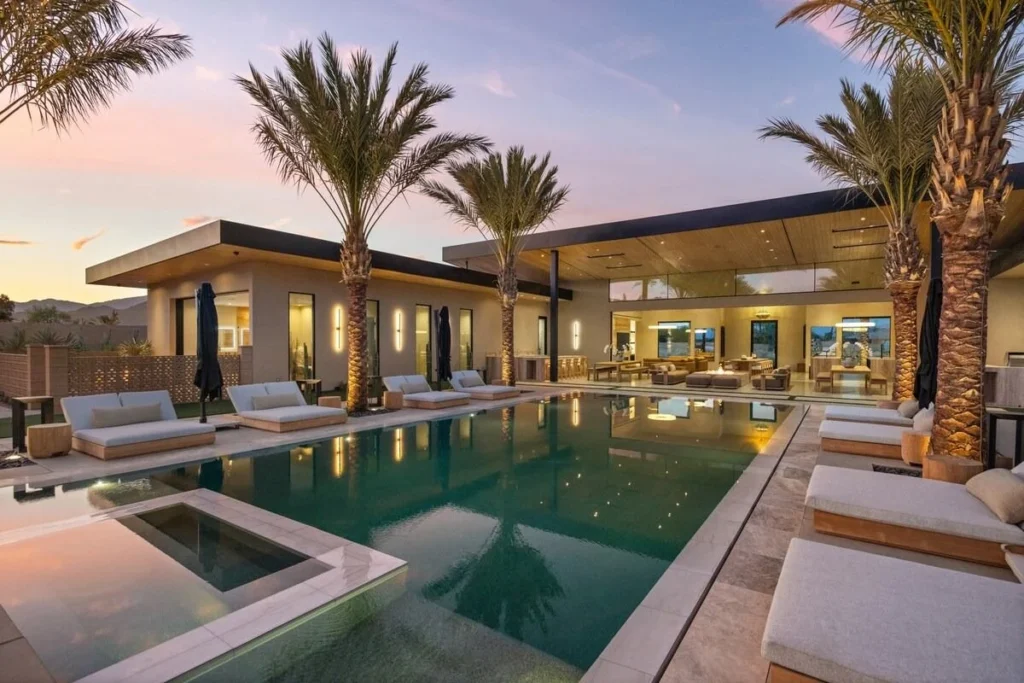
Located in Indio, Villa Rosa represents the intersection of Mediterranean luxury and the modern wellness movement. Spanning 14 acres, this desert jewel is designed to cater to the influx of high-net-worth individuals drawn to the Coachella Valley for events like the Coachella Valley Music and Arts Festival and the Indian Wells Tennis Garden. The property features six en suite bedrooms and floor-to-ceiling windows that offer panoramic views of the surrounding desert.
The amenities at Villa Rosa are rooted in "biophilic design," which suggests that human well-being is improved by proximity to nature. The saltwater infinity pool is framed by Medjool palms, and the professional-grade gym includes a cold plunge and an infrared sauna—tools typically found in high-end recovery centers. The inclusion of a dual sports court for padel ball and basketball highlights the growing demand for "active luxury" in the short-term rental market.
Agave House: Coastal Modernism and the Malibu Aesthetic
Malibu’s Agave House is a 3,000-square-foot testament to Coastal Modernism. Situated between steep hillsides and the Pacific Ocean, the home utilizes reclaimed wood, rattan fixtures, and a neutral color palette to create a sense of "airy" sophistication. The design philosophy here is one of restraint; the architecture serves merely as a frame for the ocean views.
The property features a meditation deck and a teak jacuzzi nestled among native agave plants, emphasizing a connection to the local flora. Malibu has long been a bastion of high-end residential design, and properties like Agave House illustrate the shift toward "quiet luxury," where the value is found in the quality of materials and the serenity of the location rather than overt opulence.
Rancho Panoramo: Warm Minimalism on the Edge of Joshua Tree
Bordering Joshua Tree National Park, Rancho Panoramo is a two-bedroom wooden structure that exemplifies "warm minimalism." The interior features solid French Oak cabinetry and a massive Italian Oak dining table, creating a tactile connection to the environment. The property is particularly notable for its "Listening Building," an acoustically treated space equipped with focal speakers and a 4K projector.
This focus on high-fidelity audio and cinematic experiences reflects a broader trend in the luxury rental market: the "amenity arms race." As travelers become more discerning, hosts are providing specialized spaces—such as private cinemas and recording studios—to differentiate their properties. Rancho Panoramo’s integration of a wood-fired pizza oven and an outdoor hot tub made from old-growth redwood further cements its status as a premier desert sanctuary.
The Modern Tree House: Organic Minimalism in Topanga Canyon
Topanga Canyon has historically been a retreat for artists and musicians seeking a bohemian lifestyle within reach of Los Angeles. The Modern Tree House honors this history through organic minimalism. The redwood-framed structure features soaring ceilings and a dedicated third-floor yoga studio with canyon views. The seamless flow between the interior and the outdoor cedar hot tub illustrates the California mandate of living in harmony with the terrain. This property caters to the "digital nomad" and the "wellness seeker," offering a secluded environment that prioritizes mental clarity and physical health.
La Cave: Cycladic Influence in the High Desert
La Cave in Joshua Tree takes its cues from the architecture of the Greek Isles, featuring whitewashed walls and earth-toned materials that provide a stark contrast to the rugged desert terrain. The property’s defining feature is a private saltwater cave pool and spa, a feat of engineering that brings a Mediterranean "grotto" experience to the California desert. The use of rattan decor and sun-soaked rooms creates a serene, minimalist atmosphere that has become highly sought after in the "Instagrammable" era of travel.
The Romantic A-Frame: Rustic Luxury in Running Springs
The A-frame cabin, a staple of 1950s vacation architecture, has seen a massive revival in recent years. The Running Springs A-Frame Cabin blends this nostalgic silhouette with modern luxury. Inside, furnishings from Restoration Hardware and Arhaus provide a high-end contrast to the rustic, gas-lit fireplace. The property’s outdoor cedar soaking tub allows guests to engage with the natural boulders and pine forests of the San Bernardino Mountains. This property highlights the trend of "elevated nostalgia," where traditional forms are updated with contemporary comforts.
Midcentury Bungalow: The Legacy of Barry Berkus in Palm Springs
Palm Springs is arguably the world capital of Midcentury Modernism, and this 1961 bungalow by renowned architect Barry Berkus is a primary example. Featuring a folded-plate roofline and an open floor plan, the home is a masterclass in geometric design. The use of bright corals, yellows, and teak furniture maintains the optimistic, forward-looking spirit of the 1960s. The property remains a significant piece of architectural history, offering views of the San Jacinto Mountains that have inspired designers for decades.
Economic Impact and Market Analysis of Architectural Rentals
The rise of these high-design rentals is supported by significant data within the travel industry. According to recent market reports, the "Luxury Short-Term Rental" sector has seen a 25% year-over-year increase in demand, outperforming traditional luxury hotels in certain California markets. Travelers are increasingly willing to pay a premium—ranging from $500 to over $5,000 per night—for properties that offer unique architectural pedigrees and "wellness-integrated" amenities.
The economic impact extends beyond the rentals themselves. High-end properties often drive traffic to local "curated" experiences. For instance, guests at the Santa Barbara Whale House are encouraged to visit The Lark, a restaurant known for its locally sourced wine menu, while Palm Springs visitors frequent institutions like Mr. Lyons Steakhouse. This synergy between architectural tourism and local commerce creates a robust micro-economy centered around "tastemaker" travel.
Broader Implications for the Future of Housing
The popularity of these Airbnbs also has implications for the broader future of residential architecture. These properties serve as "beta tests" for sustainable technologies and unconventional building materials. The use of reclaimed woods in Malibu and the "saltwater cave" engineering in Joshua Tree demonstrate how luxury can be synonymous with environmental consciousness and innovative land use.
However, the growth of this sector is not without controversy. Many California municipalities have introduced stricter Short-Term Rental (STR) regulations to preserve housing stock for permanent residents. The properties listed here represent a niche "Luxe" category that often navigates these regulations by positioning themselves as "living museums" or exclusive retreats that contribute significantly to local transient occupancy tax (TOT) revenues.
Conclusion
California’s architectural rentals are more than just places to sleep; they are expressions of the state’s ongoing dialogue with its own landscape. From the hand-carved shingles of the Whale House to the midcentury precision of a Barry Berkus bungalow, these structures offer a chronological map of California’s design soul. As the travel industry moves toward a future defined by personalization and aesthetic depth, these nine properties stand as benchmarks for what is possible when architecture and environment are treated as a single, cohesive entity. For the modern traveler, a stay in one of these homes is an opportunity to inhabit a piece of history while experiencing the cutting edge of contemporary luxury.