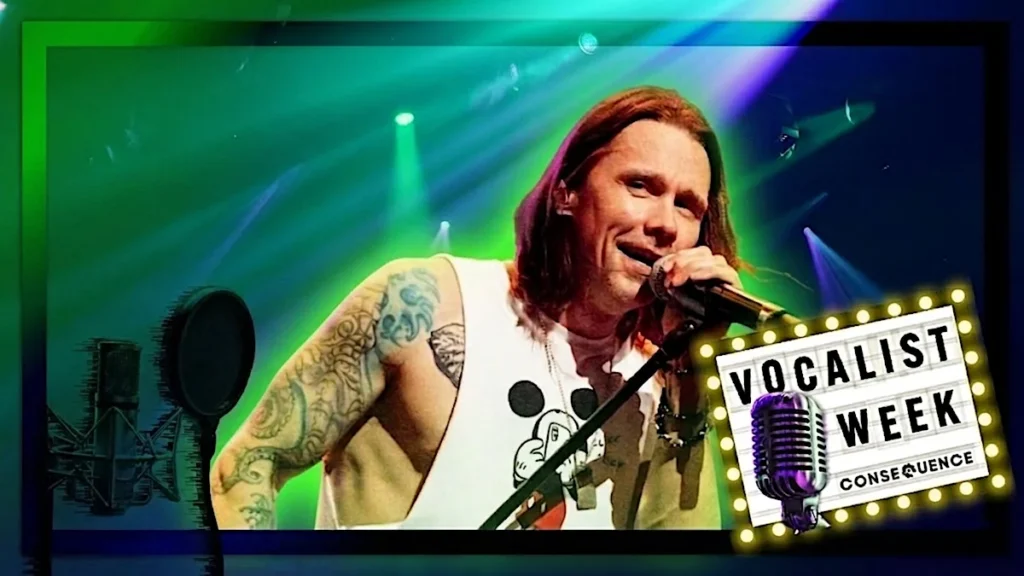

Renowned for his powerful and versatile vocal contributions to Alter Bridge and Slash Featuring Myles Kennedy and The Conspirators, Myles Kennedy has unveiled his personal selection of the top five vocalists across music history. This highly anticipated list was shared as part of Consequence‘s ongoing "Vocalist Week" initiative, a series dedicated to celebrating and analyzing the art of vocal performance across genres. Kennedy’s choices offer a compelling glimpse into the diverse influences that have shaped his own critically acclaimed career, spanning rock, jazz, and beyond.
Myles Kennedy’s standing in the contemporary rock landscape makes his vocal insights particularly valuable. With a career marked by technical proficiency, an expansive vocal range, and profound emotional delivery, Kennedy is widely regarded as one of modern rock’s premier voices. His ability to seamlessly transition between the melodic intricacies of Alter Bridge and the hard-rocking anthems with Slash showcases a mastery that few achieve. This deep understanding of vocal mechanics and artistic expression underpins the thoughtful curation of his top five, reflecting a broad appreciation for talent that transcends conventional genre boundaries. The announcement arrives amidst a busy period for Kennedy, as Alter Bridge recently embarked on a North American tour supporting their self-titled eighth album, released in January. The tour, which commenced recently, is scheduled to conclude with a performance in Tampa, Florida, on May 24th, with tickets for the remaining dates available through Ticketmaster and StubHub.
The Genesis of "Vocalist Week" and Kennedy’s Influence
Consequence‘s "Vocalist Week" is designed to engage music enthusiasts in a deeper conversation about vocal artistry, featuring insights from prominent musicians, critics, and industry figures. The series aims to highlight the technical prowess, emotional depth, and cultural impact of vocalists across various eras and styles. By inviting artists like Myles Kennedy to contribute their personal lists, Consequence fosters a dialogue that underscores the subjective yet profoundly influential nature of vocal performance. Kennedy’s participation is particularly significant given his own reputation as a vocal powerhouse. Since his emergence with The Mayfield Four in the late 1990s and his subsequent rise to international fame with Alter Bridge in the early 2000s, Kennedy has consistently demonstrated a unique blend of technical skill, emotional resonance, and stage presence. His collaboration with Slash, which began in 2010, further solidified his status, proving his adaptability and capacity to excel in different musical contexts. For many aspiring vocalists and established musicians, Kennedy’s own journey serves as an inspiration, making his curated list a point of considerable interest and discussion within the music community.
David Bowie: The Fearless Innovator
The first artist on Myles Kennedy’s esteemed list is David Bowie, whom Kennedy describes as "not just an incredible singer but also a groundbreaking artist who epitomized what it meant to be fearless throughout his career." Bowie’s influence on popular music and culture is immeasurable, characterized by his continuous reinvention and fearless exploration of new artistic territories. Born David Robert Jones in 1947, Bowie rose to prominence in the early 1970s with his enigmatic alter ego, Ziggy Stardust, a character that blurred the lines of gender and theatricality. Throughout his career, he traversed glam rock, art rock, soul, electronic, and new wave, consistently pushing sonic and visual boundaries.
Vocalistically, Bowie possessed a distinctive baritone voice, known for its expressive quality and versatility. He could deliver raw, gritty rock vocals, yet also employ a tender, melancholic croon, adapting his delivery to suit the myriad personas and musical styles he adopted. His control over dynamics and phrasing allowed him to imbue his lyrics with profound emotional depth, making even his most experimental tracks resonate deeply with audiences. Performances like his iconic rendition of "Heroes" at Live Aid in 1985 showcased his ability to command massive audiences with both vulnerability and immense power, a moment that remains etched in music history. Kennedy’s admiration for Bowie’s fearlessness likely stems from the artist’s unwavering commitment to artistic integrity and innovation, qualities that Kennedy himself embodies in his own musical pursuits. Bowie’s legacy, spanning nearly five decades until his passing in 2016, continues to inspire artists to defy categorization and embrace creative liberation.
Ella Fitzgerald: The First Lady of Song
Kennedy’s second choice, Ella Fitzgerald, demonstrates the breadth of his musical appreciation, extending far beyond the rock genre. He states, "Most who know me know that she’s my go to. Her ability to interpret songs from the ‘Great American Songbook’ as well as the versatility highlighted by her ability to improvise vocally in a Jazz context is truly remarkable." Often referred to as the "First Lady of Song," Fitzgerald (1917-1996) is widely regarded as one of the greatest jazz vocalists of all time, celebrated for her impeccable diction, flawless pitch, and unparalleled improvisational skills, particularly in scat singing.
Fitzgerald’s career began in the mid-1930s, and she quickly rose to prominence with her extraordinary vocal agility and warmth. Her interpretations of the Great American Songbook, a series of eight albums recorded between 1956 and 1964, set the gold standard for vocal artistry. These recordings showcased her ability to breathe new life into classic compositions, delivering each lyric with precision and emotional nuance. Beyond her interpretive skills, Fitzgerald was a master of vocal improvisation, using her voice as an instrument with the same dexterity as a horn player. Her scat solos were legendary, demonstrating a profound understanding of harmony and rhythm. A quintessential example of her artistry is her 1968 rendition of "Summertime," where her soulful delivery and technical brilliance transform the Gershwin classic into a timeless masterpiece. For Kennedy, Fitzgerald’s inclusion highlights his respect for pure vocal technique, musicality, and the ability to connect deeply with material, qualities that are paramount in any genre. Her influence extends through generations of singers, from jazz to contemporary pop, proving the universal appeal of her unparalleled talent.
Jeff Buckley: The Otherworldly Voice
Third on Kennedy’s list is Jeff Buckley, an artist whose tragically short career left an indelible mark on music. Kennedy vividly recalls, "It’s been amazing to see Jeff’s influence stretch across decades. I saw him perform in 1995 in a small venue of about 500 in Seattle. He took all of us on a profound musical journey that almost felt transcendent. His voice was otherworldly." Born in 1966, Buckley released only one studio album, Grace, in 1994, before his untimely death in 1997. Despite this limited output, his impact has continued to grow, cementing his status as a cult icon and a significant influence on alternative rock and singer-songwriters.
Buckley’s voice was extraordinary, characterized by its immense range, from a delicate, soaring falsetto to a powerful, raw wail. He possessed a rare ability to convey intense emotion, often shifting between vulnerability and explosive power within a single phrase. His dynamic control and intricate phrasing made his performances mesmerizing, creating an almost spiritual experience for listeners. His rendition of Leonard Cohen’s "Hallelujah" is perhaps his most famous recording, transforming the already profound song into an even more transcendent and deeply personal anthem. The live performance of "Hallelujah" from Bearsville perfectly encapsulates his raw talent and emotional delivery. Kennedy’s personal experience of witnessing Buckley live underscores the profound impact the vocalist had, creating a "transcendent" and "otherworldly" journey. This speaks to Buckley’s unique ability to connect on a deeply spiritual level through his voice, a quality Kennedy clearly values in vocal artistry. Buckley’s legacy continues to inspire artists to explore the outer reaches of vocal expression and emotional honesty.
Paul Rodgers: The Soulful Blues-Rock Master
Myles Kennedy’s fourth selection, Paul Rodgers, brings the list back firmly into the realm of rock, albeit with a profound blues inflection. Kennedy praises Rodgers, stating, "As a blues rock singer, Paul is in a league of his own. I’ve always admired his vocal tone and his ability to weave around melodies with inflections. Listening to him is an unparalleled masterclass in singing with soul." Paul Rodgers, born in 1949, is synonymous with some of the most iconic bands in blues-rock history, including Free, Bad Company, and The Firm, and later performing with Queen + Paul Rodgers.
Rodgers’ voice is a benchmark for blues-rock vocalists: powerful, gritty, and imbued with an undeniable soulful essence. His vocal tone is instantly recognizable, characterized by its warmth, slight rasp, and incredible sustain. He has a natural command over dynamics and phrasing, allowing him to effortlessly navigate complex melodies while maintaining a raw, authentic feel. His ability to deliver powerful, emotional performances without resorting to excessive histrionics has cemented his status as a true master of his craft. Songs like Free’s "All Right Now," an anthem of 1970s rock, perfectly showcase Rodgers’ robust vocal delivery and his ability to infuse a track with undeniable energy and soul. His performance on the "Doing Their Thing" live video from 1970 demonstrates his magnetic stage presence and vocal command early in his career. Kennedy’s admiration for Rodgers’ "masterclass in singing with soul" reflects his own appreciation for authenticity and emotional depth in rock vocals, elements that are prominent in Kennedy’s own performances with Alter Bridge and Slash. Rodgers’ influence on countless rock singers is undeniable, making him a foundational figure in the genre.
Freddie Mercury: The Ultimate Performer
Concluding Kennedy’s list is the legendary Freddie Mercury of Queen, whom he describes as having "it all: charisma, power, range, and above all, an incredible songwriter and performer whose legacy will resonate for generations to come." Freddie Mercury (1946-1991) remains one of the most iconic and beloved figures in music history, celebrated for his extraordinary four-octave vocal range, theatrical stage presence, and unparalleled songwriting prowess.
Mercury’s career with Queen, which began in the early 1970s, saw the band rise to global superstardom, producing a string of hits that blended rock, opera, pop, and classical elements. His voice was a phenomenon: capable of operatic grandeur, raw rock power, and delicate balladry, often within the same song. His incredible control, precision, and the ability to convey a vast spectrum of emotions made him a truly unique talent. Beyond his vocal gifts, Mercury was a consummate showman, possessing an electric charisma that captivated millions. His performance at Live Aid in 1985 is frequently cited as one of the greatest live performances in rock history, demonstrating his unparalleled ability to command and connect with a stadium audience. Iconic songs like "Bohemian Rhapsody," "Somebody to Love," and "We Are the Champions" showcase his songwriting genius and the sheer power and versatility of his voice. Kennedy’s tribute to Mercury highlights the comprehensive nature of his artistry – not just a singer, but a complete performer and creative force. This appreciation for the full package of vocal talent, charisma, and songwriting echoes Kennedy’s own multifaceted contributions to music, making Mercury a fitting culmination to his list of vocal titans.
Broader Implications and Kennedy’s Ongoing Journey
Myles Kennedy’s selection of his top five vocalists offers more than just a list of personal favorites; it provides insightful commentary on the qualities he values most in a vocalist. The diverse range of genres represented—from the jazz improvisations of Ella Fitzgerald and the art-rock innovations of David Bowie to the blues-rock soul of Paul Rodgers and the unparalleled rock showmanship of Freddie Mercury, alongside the ethereal intensity of Jeff Buckley—underscores Kennedy’s broad musical palate and his deep respect for various forms of vocal excellence. This eclectic taste likely contributes to the nuanced and dynamic quality of Kennedy’s own voice, which effortlessly blends power, melody, and emotional depth.
The "Vocalist Week" initiative by Consequence serves as a crucial platform for fostering critical appreciation of vocal talent in an era often dominated by instrumental prowess or digital production. Such lists ignite discussions among fans and musicians alike, encouraging a deeper dive into the legacies of these iconic artists and the technicalities that make their voices so compelling. Kennedy’s choices reaffirm the timeless influence of these musical giants and their continued relevance in shaping contemporary music. As Alter Bridge continues its North American tour, fans will undoubtedly listen with a renewed appreciation for Kennedy’s own vocal artistry, recognizing the echoes of his heroes in his performances. His selections not only honor the legends but also subtly illuminate the influences that have cemented Myles Kennedy’s place among the most respected vocalists of his generation.