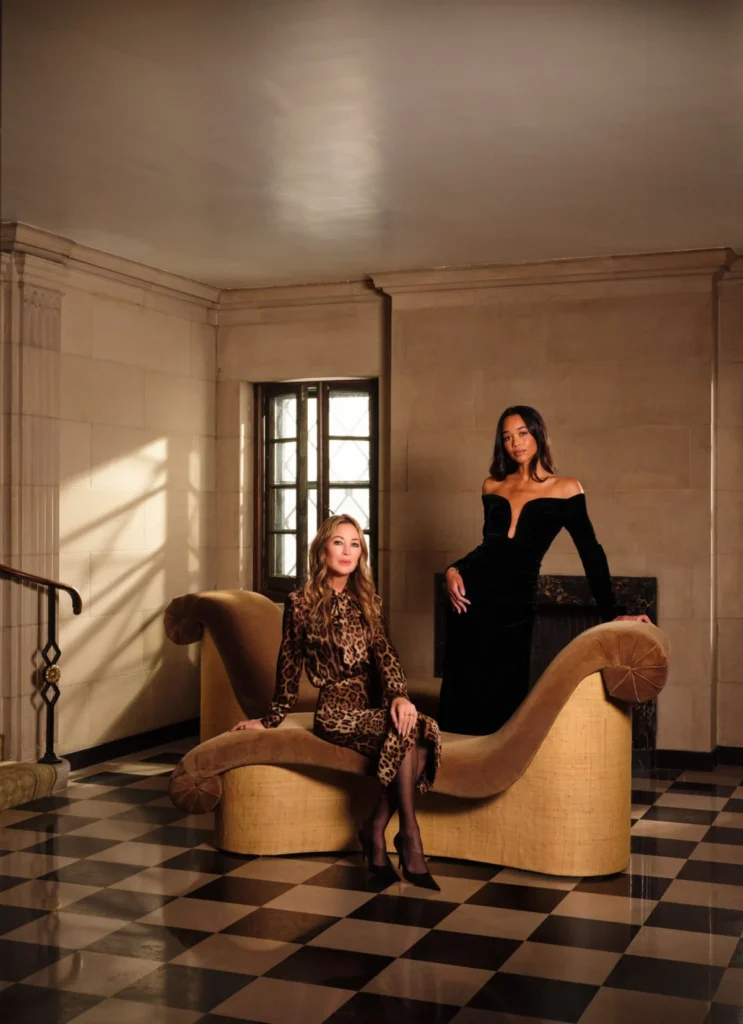

The retail landscape for high-end home furnishings has reached a new milestone with the debut of a comprehensive collaboration between actress Laura Harrier, interior designer Tiffany Howell of Night Palm, and global lifestyle brand Crate & Barrel. This 87-piece collection represents the culmination of a multi-year creative partnership between Harrier and Howell, moving beyond individual residential projects into a commercially available line that merges the aesthetics of Hollywood noir with mid-century organic modernism. The collection, which officially launches to the public on April 23, includes a wide array of furniture, lighting, and decorative accessories characterized by rich textures, cinematic references, and high-gloss finishes.
A Creative Partnership Rooted in Personal History
The origins of this collaboration trace back to 2020, when Laura Harrier, known for her roles in Ryan Murphy’s Hollywood and Marvel’s Spider-Man: Homecoming, sought out Tiffany Howell to design her Los Angeles residence. Howell, the founder of the design firm Night Palm, has built a reputation for creating "cinematic" interiors that prioritize mood, lighting, and narrative over fleeting trends. Their initial work on Harrier’s home was subsequently featured in Architectural Digest, highlighting a shared affinity for "soft glamour" and vintage influences.
Since that initial project, the pair has collaborated on several interior design ventures, but the Crate & Barrel release marks their first foray into the consumer market. According to the designers, the collection is less a reflection of current market trends and more an extension of their personal creative shorthand. This shorthand is built on a foundation of shared references—ranging from the organic jewelry designs of Elsa Peretti to the moody, saturated visuals of late 20th-century cinema.

Cinematic Noir and the Art of Narrative-Led Design
A defining feature of the Harrier and Howell collection is its explicit reliance on filmic storytelling. During the development process, the duo drew inspiration from the aesthetics of the 1980s and 1990s, specifically citing films known for their provocative atmosphere and sartorial elegance.
Key influences include David Lynch’s Blue Velvet (1986), Paul Schrader’s American Gigolo (1980), and the erotic thriller Basic Instinct (1992). The designers noted that the collection was heavily influenced by Lauren Hutton’s character in American Gigolo, whose wardrobe—designed by Giorgio Armani—defined a era of Italian minimalism and understated luxury. This influence is manifested in the collection’s use of trench-coat-inspired tones, silks, and deep burgundies.
Howell and Harrier also looked to the photography of Sheila Metzner, known for her dreamlike, jewel-toned compositions, and the historical design language of Biba, the iconic London department store that bridged the gap between Art Deco and 1960s mod style. By prioritizing these narrative anchors, the collection offers a distinct alternative to the minimalist "Scandi-chic" and "modern farmhouse" aesthetics that have dominated the mass market in recent years.
Materiality and Form: Burl Wood, Lacquer, and Organic Curves
The 87-piece collection is distinguished by a specific material palette that evokes a sense of "dangerous, sexy" luxury. Central to the line is the extensive use of burl wood, a material prized for its complex, swirling grain patterns and its association with 1970s and 80s high-end furniture design. The "Siren" bed, for instance, features a burl wood frame that encases fluted beige upholstery, a nod to the work of legendary designer Milo Baughman.

In addition to wood, the collection leans heavily into high-gloss lacquer. The "Duras" dresser and the "Arlo" bar cabinet utilize a decadent cream lacquer that provides a stark, reflective contrast to the deeper wood tones. This emphasis on reflection is a recurring theme, with gold accents and chrome borders appearing on drink trays and console tables.
Organic forms serve as the structural backbone of the collection. Harrier specifically cited Elsa Peretti’s "Bean" design for Tiffany & Co. as a primary reference for the "Salon Sofa." The result is a piece that prioritizes natural, undulating curves over rigid geometry, creating an environment that feels both curated and comfortable. The "Salon Swivel" accent chair continues this theme, offering a sculptural silhouette that encourages conversation and movement within a living space.
Key Highlights of the 87-Piece Collection
The collection covers nearly every category of home furnishing, from large-scale foundational pieces to small-scale decorative objects. Notable highlights include:
- The Salon Sofa: A centerpiece of the collection, this sofa features an organic, curved silhouette upholstered in premium fabrics, designed to anchor a room with its sculptural presence.
- The Arlo High-Gloss Bar Cabinet: Priced at approximately $4,999, this piece features a gilded interior and a high-gloss finish, reflecting the collection’s focus on home entertaining and "leading lady" glamour.
- The Duras Dresser: A six-drawer unit that exemplifies the collection’s use of cream lacquer and Art Deco–inspired details, retailing for $2,499.
- The Mystic Chaise Lounge: Upholstered in chestnut velvet, this piece is intended to evoke the "soft glamour" of mid-century Hollywood dressing rooms.
- Lighting and Accessories: The "Sonja" chandelier and "Lola" table lamp utilize mixed metals and glass to create mood-centric lighting, while the "Romeo" ice bucket and "Casa Blanca" glassware bring the collection’s cinematic theme to the tabletop.
Crate & Barrel’s Strategic Shift Toward Designer-Led Collaborations
The partnership with Harrier and Howell is part of a broader strategic initiative by Crate & Barrel to diversify its offerings and appeal to a more design-conscious demographic. In recent years, the retailer has successfully launched collaborations with other tastemakers, such as Athena Calderone and Leanne Ford. These partnerships allow the brand to offer "attainable luxury"—pieces that carry the prestige and unique vision of independent designers but are manufactured at a scale that remains accessible to a wider audience.

By tapping into Laura Harrier’s status as a fashion icon and Tiffany Howell’s reputation as an "it-designer" in Los Angeles, Crate & Barrel is positioning itself at the intersection of celebrity culture and high-end interior design. Industry analysts suggest that this "narrative-led" approach to furniture design is a response to the growing consumer desire for homes that feel personal and storied, rather than mass-produced.
The Influence of 1980s Minimalism and Italian Design
A significant portion of the collection serves as an homage to the minimalist movements of the early 1980s. The designers aimed to replicate the "sartorial masterclass" seen in films of that era, where the environment was as much a part of the character’s identity as their clothing. The use of cognac velvet, high-pile rugs, and marbled telephone tables suggests a return to a more opulent, textured version of minimalism.
Howell emphasized that the collection was designed to be "livable luxury." While the references are high-end and cinematic, the actual construction of the pieces focuses on comfort and durability. This balance is critical for a mass-market collaboration, where the aesthetic must be matched by the functional requirements of daily life. "Tiffany is really good about creating spaces that feel so elevated and cool… but still very livable," Harrier noted, describing the goal of making a home feel like a sanctuary rather than a museum.
Market Availability and Industry Impact
The Laura Harrier and Tiffany Howell collection will be available for purchase starting April 23 through Crate & Barrel’s website and select retail locations. Given the high profile of the collaborators and the current market interest in "vintage-inspired" and "Hollywood Regency" styles, industry experts anticipate strong performance for the line.

The launch comes at a time when the home furnishings sector is seeing a resurgence in "mood-based" design. As consumers move away from the starkness of previous decades, the demand for rich colors (like the collection’s cognac and burgundy), tactile materials (burl and velvet), and historical references is on the rise.
Furthermore, this collaboration highlights the evolving role of the celebrity in the design space. Rather than a simple endorsement, Harrier’s involvement appears to be a deeply integrated creative partnership, leveraging her eye for fashion and film to inform the physical products. As the line between fashion, film, and furniture continues to blur, the Harrier x Howell collection for Crate & Barrel stands as a definitive example of the new era of "cinematic living."
The 87-piece collection is expected to influence upcoming design trends for the remainder of the year, particularly in the realms of home bar setups, sculptural seating, and the use of high-gloss finishes in traditional bedroom and living room layouts. With prices ranging from $55 for glassware to nearly $5,000 for signature furniture pieces, the collection seeks to capture a broad spectrum of the luxury home market.