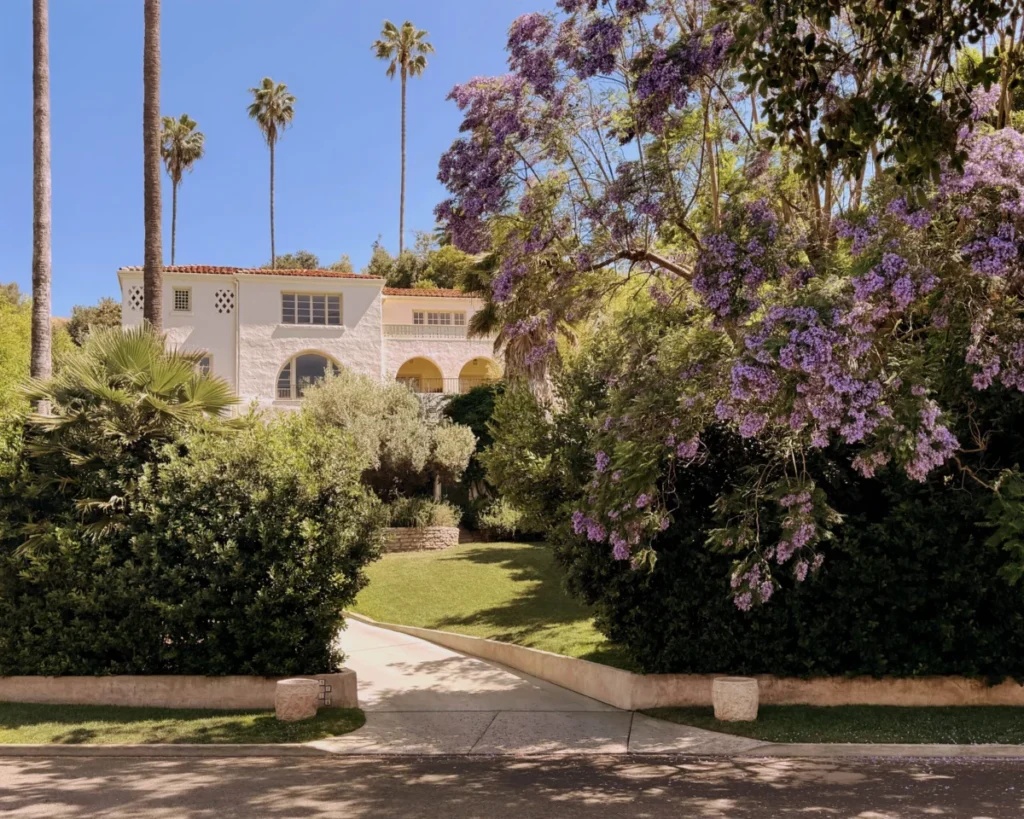

The narrative of Los Angeles as a city devoid of deep historical roots is a persistent misconception often held by outsiders, but for architects Michael Breland and Peter Harper, the reality is found within the layers of lath, plaster, and patinated terrazzo that define the city’s residential heritage. As principals of the Los Angeles-based firm Breland-Harper, the couple has transformed their own Mediterranean Revival residence into a manifesto for classical riffs on modern living, challenging the ephemeral nature of Southern California’s real estate market. Their home, a hillside property that remained in the same family for nearly seven decades, serves as a testament to the enduring allure of the "Spanish Style" that shaped the visual identity of Los Angeles during the early 20th century.

The Architectural Heritage of the Mediterranean Revival
The Mediterranean Revival style, which reached its zenith in California between 1915 and 1930, was more than a mere aesthetic choice; it was a deliberate attempt to create a regional identity rooted in the romanticized history of the Mediterranean coast. Architects of the era, such as George Washington Smith and Wallace Neff, drew inspiration from the villas of Spain, Italy, and North Africa to create homes that suited the semi-arid climate of Southern California. These structures are characterized by their white stucco walls, red-tiled roofs, arched openings, and a seamless integration between indoor and outdoor spaces.
For Breland and Harper, the opportunity to acquire a largely untouched example of this style was a professional and personal turning point. The property was previously owned by Patricia Adler-Ingram, a formidable figure in California’s preservation circles. As the longtime executive director of The Historical Society of California, Adler-Ingram maintained the home with a level of care that preserved its essential character while allowing the surrounding landscape to flourish. The terraced garden she left behind—complete with old oaks, a functional vineyard, and climbing white roses—provided a ready-made ecosystem that anchored the house to its hillside site.

A Chronology of Design and Collaboration
The professional trajectory of Michael Breland and Peter Harper is as much a part of the home’s story as the architecture itself. Both natives of Northern California, the pair met while studying at the University of Southern California (USC) School of Architecture. This institution has long been a crucible for California modernism, but it also instills a deep respect for the tectonic realities of building.
Following graduation, their paths diverged to gain specialized expertise. Breland moved to New York, where he worked with the Storefront for Art and Architecture, a nonprofit organization known for its commitment to innovative design and the intersection of art and the built environment. Harper, meanwhile, traveled abroad to focus on architectural conservation, a discipline that emphasizes the scientific and historical preservation of structures. Upon returning to Los Angeles, Harper further refined his aesthetic at Atelier AM, a firm perennial on the AD100 list known for its rigorous approach to luxury and ancient-meets-modern interiors.

In 2019, the couple merged their distinct backgrounds to form Breland-Harper. Their firm quickly gained a reputation for projects that balance contemporary minimalism with a tactile, historical soul. The purchase of their current home was an unexpected detour; they were already in the process of designing a ground-up contemporary residence when their real estate agent brought the Adler-Ingram property to their attention. The rarity of a historic home hitting the market for the first time in 70 years proved too significant to ignore. Within minutes of entering the house, Breland recognized it as a "postcard for Los Angeles," a quintessential representation of the city’s architectural golden age.
The Restoration Process: Peeling Back the Decades
The restoration of the residence was defined by a philosophy of "studied intention." Rather than a traditional renovation that seeks to replace the old with the new, Breland and Harper engaged in a process of architectural archaeology. This involved stripping away "renovation layers" added in the 1980s, which often obscured the home’s original craftsmanship.

One of the most significant discoveries occurred beneath pink carpeting in the entry hall. Removal of the carpet revealed indigo-hued terrazzo floors inlaid with mother-of-pearl, a luxury finish that would be cost-prohibitive to replicate today. Similarly, white tiles in the breakfast room were removed to uncover a diamond-patterned terrazzo floor. These discoveries reinforced the couple’s "do no harm" ethos. By preserving these original elements, they maintained the home’s material history while creating a backdrop for their curated collection of furniture and art.
The treatment of the windows was another critical component of the restoration. By removing heavy curtains and dark awnings, the architects allowed natural light to become a primary design element. The resulting "warm, flattering glow" emphasizes the chalky white walls and soaring ceilings. This focus on light and shadow is a hallmark of Mediterranean design, where the movement of the sun throughout the day changes the atmosphere of the interior spaces.

Technical Modernization and the Preservation of Spirit
While the aesthetic focus was on preservation, the functional aspects of the home required significant modernization. To make the 1920s structure viable for 21st-century living, the architects updated the electrical systems and installed discreet air conditioning—a challenge in historic homes where thick plaster walls and lack of ductwork often complicate such upgrades.
In the kitchen and service areas, they introduced modern conveniences designed to facilitate their love of entertaining. This included the addition of a second dishwasher and the transformation of a Prohibition-era speakeasy into an open bar area. However, even these updates were handled with restraint. In the bathrooms, they eschewed the modern trend of floor-to-ceiling marble slabs in favor of the original basket-weave tile floors. Harper’s analogy—that over-renovating a historic home is like pulling a thread on a sweater until it unravels—guided their decision to leave the original layout largely intact.

Curating a Global and Indigenous Aesthetic
The interior design of the home reflects a "complex milieu" of cultures, mirroring the diversity of California itself. The furniture is a mix of the couple’s own designs, European antiques, and 20th-century modernist pieces. In the library, an English Regency cane chair and a 1930s Jean-Michel Frank chair sit atop a hemp rug, while the side tables and lamps are original Breland-Harper designs.
The living room serves as a gallery for their eclectic tastes. A 19th-century Neapolitan "Mecca" mirror and 18th-century Mexican silver altar candlesticks represent the historical ties between Southern California and the broader Spanish colonial world. These are balanced by modern pieces, such as a metal Donald Judd corner chair—a reference to Breland’s time at the Chinati Foundation in Marfa, Texas—and a sunrise photograph by Catherine Opie.

A particularly poignant element of the home is the couple’s collection of indigenous California baskets. Including pieces from the Yokuts, Pomo, Pima, Mono, and Kumeyaay peoples, the collection acknowledges the original inhabitants of the region. By placing these objects alongside European antiques and contemporary art, Breland and Harper create a dialogue about history, craftsmanship, and the various cultures that have shaped the California landscape.
Broader Implications for Urban Identity
The work of Breland and Harper arrives at a time when Los Angeles is grappling with its architectural identity. As the city faces pressure to increase housing density, many historic single-family homes are being demolished to make way for modern developments. The preservation of the Adler-Ingram house stands as a counter-argument to the "tear-down" culture. It suggests that the value of Los Angeles real estate lies not just in the land, but in the accumulated history of its built environment.

Data from the Los Angeles Conservancy and other preservation groups indicate that historic districts often maintain higher property values and more stable communities over time. By demonstrating that a historic home can be adapted for modern life without losing its soul, Breland and Harper provide a model for sustainable urban development that respects the past.
Conclusion: The Future of the Past
The Breland-Harper residence is more than a home; it is a curated experience that bridges the gap between 1926 and 2024. Through their meticulous restoration and thoughtful curation, Michael Breland and Peter Harper have proven that Los Angeles does indeed have a history—one that is visible in the grain of the wood, the pattern of the terrazzo, and the light filtering through an unadorned window. Their "do no harm" approach ensures that the legacy of Patricia Adler-Ingram and the original architects of the Mediterranean Revival continues to inform the city’s evolving narrative. As the skyscrapers of downtown Los Angeles continue to rise in the distance, this hillside retreat remains a steadfast anchor to the romantic, complex, and beautiful history of California.