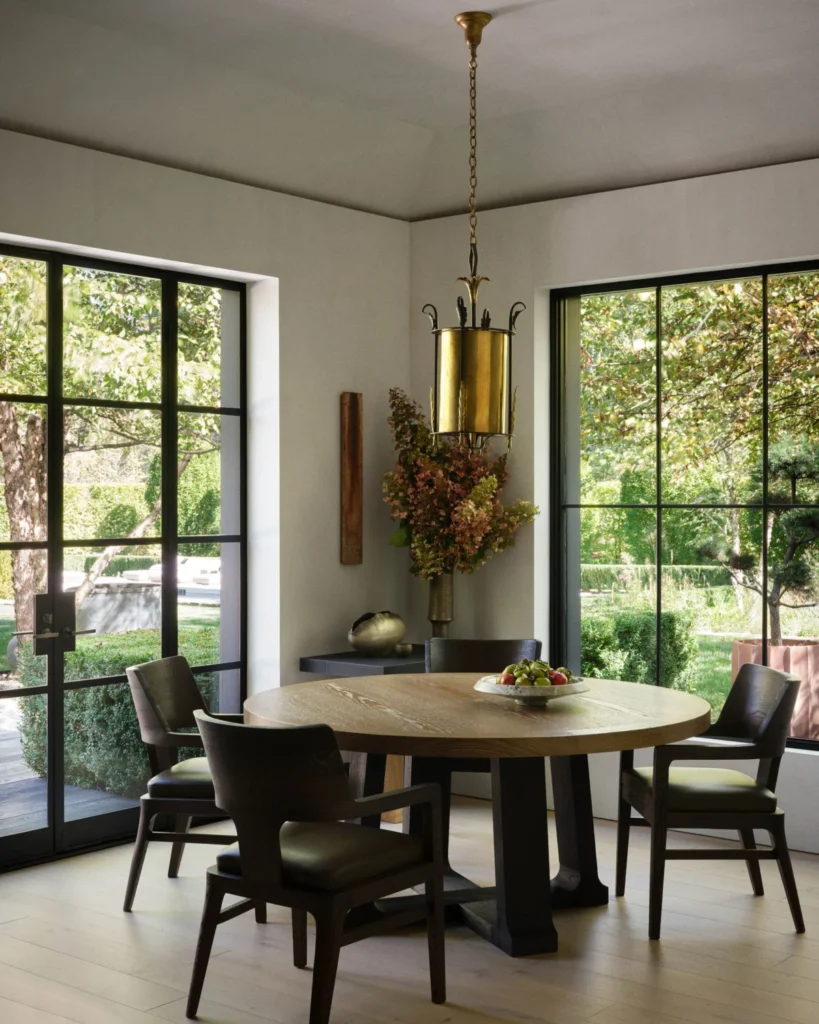

In the competitive landscape of the Hudson Valley’s luxury real estate market, the acquisition of a property often hinges as much on professional networks as it does on public listings. In 2022, Matthew Fisher, the founder of the New York-based design studio M.Fisher, and his husband, Casey Fisher, a third-generation real estate developer, secured a historic Rhinebeck residence through a direct tip from the design community. The property, previously owned by Gabriel Hendifar and Jeremy Anderson—the cofounders of the renowned lighting and furniture brand Apparatus—represented a unique confluence of 19th-century history and 21st-century architectural modernism.

The estate, situated on nearly three acres near the village of Rhinebeck, features an original 1829 farmhouse complemented by a sleek, gabled modern extension. For the Fishers, the property offered a rare balance between the rustic "upstate aesthetic" and the sharp, clean lines of contemporary design. Matthew Fisher, whose studio specializes in classically informed art objects and commissions, recognized the site as a potential sanctuary for a growing collection of art and evocative objects.
The Architectural Evolution of the Rhinebeck Estate
The residence at the heart of this transformation is a study in architectural layering. The primary structure dates back to 1829, an era when Rhinebeck was evolving into a preferred retreat for prominent New York families. The original farmhouse reflects the vernacular architecture of the period, characterized by sturdy timber frames and a layout designed for agrarian life.

Under the previous ownership of Hendifar and Anderson, the property underwent a significant modernization that included the addition of a contemporary wing. This extension utilized gabled forms to echo the traditional farmhouse silhouette while employing modern materials and expansive glazing to invite the landscape indoors. When the Fishers took possession in 2022, their objective was not to alter the existing architectural volumes—which they described as "brilliant"—but to refine the interior systems and reorient the home’s "energy" to reflect their personal history and aesthetic priorities.
The renovation required a meticulous deconstruction of the interior to upgrade the home’s underlying infrastructure. This process provided Matthew and Casey Fisher with the opportunity to "suss out" each space, ensuring that the final result was a true reflection of their identities rather than a mere continuation of the previous designers’ vision.

Interior Reconfiguration and Craftsmanship
One of the most significant changes occurred in the kitchen and the vertical circulation of the home. The Fishers reconfigured the kitchen layout to better accommodate their lifestyle and reconstructed the adjacent staircase using plaster, a material chosen for its tactile, artisanal quality. This emphasis on hand-crafted finishes extends to the attic-level primary bedroom, where a glass and steel partition was installed to provide a modern architectural counterpoint to the farmhouse’s sloped ceilings.
The primary suite also features an oak wardrobe that serves as a canvas for hand-painted forest figures, adding a narrative element to the functional storage space. Matthew Fisher noted that the renovation was a slow, deliberate process, stating that they were "not bothered by living with a hacksaw in a corner" while they perfected the details. This patient approach allowed for the integration of highly personal elements, such as a striped silk jacquard draped above the bed to soften the interplay of oak and mirrored surfaces.

In the bathroom of the primary suite, the design pays homage to Fisher’s professional influences. The Rosso Levanto-clad vanity was detailed after a tray in the M.Fisher collection, while the wall-mounted luminaires are original Apparatus pieces, serving as a stylistic nod to the home’s former owners. For Matthew, a former classical dancer, the lighting also evokes the atmosphere of the dressing rooms he frequented during his stage career.
Familial Integration and Guest Accommodations
While the home was primarily designed as a private retreat for Matthew and Casey, it was also conceived as a space to welcome their extended family. The second floor includes a bedroom specifically designed for Matthew’s brother, a naval engineer, and his family. To create a sense of continuity with the brother’s nautically themed home in Connecticut, the Fishers employed a palette of blues and mounted a set of hand-painted aquatic plates by Marcel Guillot above the bed.

Furthermore, the property’s ancillary structure—formerly a pottery studio—was converted into a self-contained guest suite. This modification allows for a degree of privacy for visiting relatives, including nieces and nephews, while maintaining a cohesive aesthetic across the estate. The guesthouse bathroom features oak-clad walls, reinforcing the use of natural materials that define the main residence.
The Curatorial Philosophy: Evocative Objects
Central to the design of the Rhinebeck home is a philosophy that prioritizes curation over the conventional demands of "kid-friendliness" or mass entertainment. Matthew Fisher cites the book Evocative Objects: Things We Think With, edited by Sherry Turkle, as a primary influence on their approach. The text explores how physical objects can be "companions to our emotional lives" and "provocations to thought."

This theory is visible in every room of the house. The living and dining spaces are bridged by a sculptural steel fireplace equipped with wrought-iron tools designed by Raymond Subes in 1948. In the dining room, a gold-foil cutout work by the avant-garde artist Lucio Fontana is housed in a colonial-era Dutch frame, a juxtaposition that highlights the Fishers’ interest in blending disparate historical periods.
"Objects are imbued with meaning—the places where we saw them originally or the period of life they went through with us," Matthew Fisher explained. "The things we have in this house don’t necessarily make sense together because they’re memories of us." This sentiment is echoed in the guest bedroom, which contains a vintage Fortuny tapestry and a Biedermeier end table, both sourced from local antique warehouses and shows in the Hudson Valley.

Landscape and External Context
The exterior of the property was equally important in establishing the home’s role as a "garden oasis." The Fishers collaborated with the Brooklyn-based garden design studio Harrison Green to update the grounds. While several elements of the landscape were established by Hendifar and Anderson, Harrison Green’s intervention aimed to refine the outdoor experience. An outdoor seating area arranged around a custom marble fire table now serves as a focal point for the couple’s outdoor life, bridging the gap between the historic farmhouse and the modern extension.
Market Trends and the Hudson Valley Design Renaissance
The Fisher renovation is emblematic of a broader trend within the Hudson Valley real estate market, which has seen a surge in high-end, design-led renovations since 2020. According to regional market data, Dutchess County—where Rhinebeck is located—has experienced a steady increase in property values as creative professionals from New York City seek permanent or semi-permanent residences in the area.

Design analysts suggest that the "Apparatus to M.Fisher" transition represents a maturation of the local market, where properties are no longer just weekend getaways but are becoming significant architectural statements. The influx of designers and artists has turned the Hudson Valley into a "design laboratory," where historical preservation meets experimental interior design.
Implications for Modern Residential Design
The project at Rhinebeck offers several insights into the current state of luxury residential design:

- Infrastructure as Opportunity: The Fishers demonstrated that the necessity of upgrading mechanical systems can be leveraged to fundamentally rethink a home’s interior flow and material palette.
- Narrative-Driven Curation: By prioritizing objects with personal and emotional significance, the Fishers have created a space that functions as a living memoir, challenging the trend of "staged" or impersonal luxury interiors.
- Historical Continuity: The decision to retain the architectural volumes established by previous owners while introducing new artisanal details suggests a sustainable approach to renovation that honors both the 19th-century origins and the 21st-century additions.
For Matthew Fisher, the home ultimately serves a purpose beyond mere aesthetics. By creating a space dedicated to "memory and healing," he and Casey have established a residence that functions as a sanctuary for their relationship and their shared history. As the Hudson Valley continues to evolve as a cultural and design hub, the Fisher residence stands as a prominent example of how thoughtful curation can transform a historic property into a deeply personal, modern home.