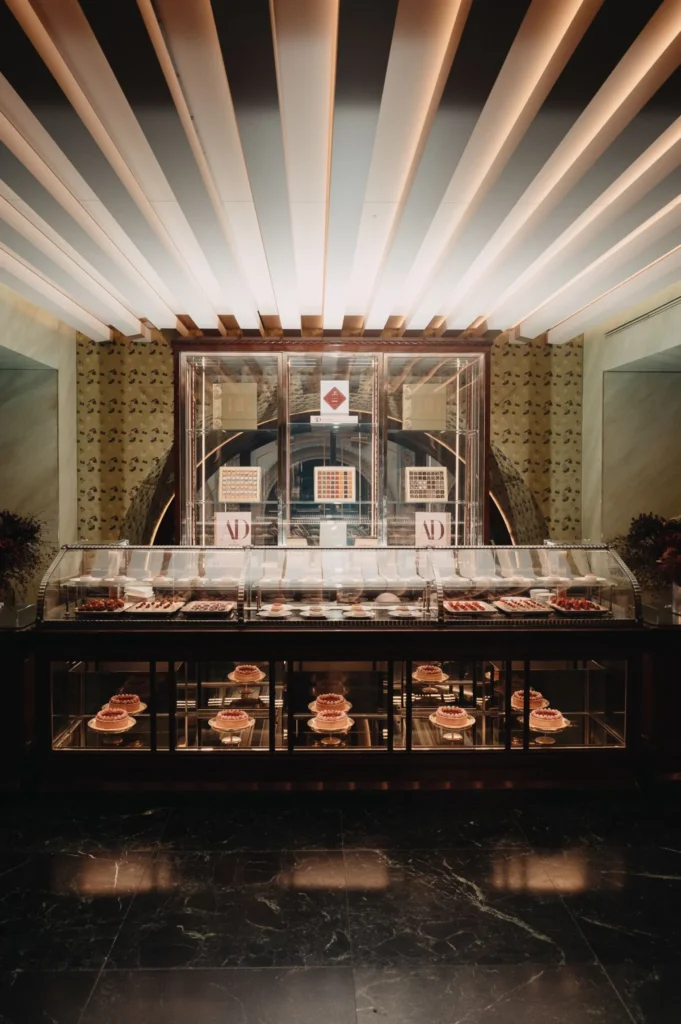

In the heart of Milan’s historic Galleria Vittorio Emanuele II, within the pistachio-hued walls of the celebrated Marchesi 1824 bakery, a gathering of the world’s leading design minds recently convened to dissect the shifting landscape of the domestic kitchen. The event, titled AD Salotto and hosted by Architectural Digest Global Editorial Director Amy Astley, served as a high-level symposium on how the most functional room in the home is undergoing a radical transformation. Moderated by Asad Syrkett, head of editorial content at AD Italia, the panel featured AD100 designer Adam Charlap Hyman, Paris-based architect Sophie Dries, and Axel Kniehl, the executive director of marketing and sales at the premium appliance manufacturer Miele. The discussion moved beyond mere aesthetics, exploring the kitchen’s role as a cultural barometer, a technological battleground, and a space of increasing architectural complexity.
The Cultural Core of the Modern Home
The central thesis of the discussion was established early by Asad Syrkett, who posited that kitchens are the primary spaces within a residence that reflect a resident’s culture. This sentiment was echoed by Axel Kniehl, who noted that despite global differences in cuisine and customs, the fundamental purpose of the kitchen has reverted to its ancestral roots. Kniehl observed that the kitchen has evolved far beyond a utilitarian zone for food preparation; it has reclaimed its status as the primary social hearth where people gather, mirroring domestic patterns that date back thousands of years.

This shift is supported by broader industry data. According to recent residential trend reports from the National Kitchen & Bath Association (NKBA), nearly 80% of homeowners now prioritize "socializing and entertaining" as a primary function of their kitchen renovations. This data aligns with Miele’s current branding strategy, "Designed To Move With You," which emphasizes the kitchen as a dynamic, living environment rather than a static workspace.
Regional Divergence: The Parisian Shift vs. New York Traditionalism
One of the most compelling segments of the panel focused on how geographical and historical contexts dictate modern kitchen layouts. Sophie Dries, an architect known for her work in high-end Parisian apartments, highlighted a significant shift in French domestic architecture. Historically, grand Parisian residences featured "service kitchens" tucked away at the rear of the apartment, physically and socially separated from the living and entertaining areas.
Dries noted that contemporary clients are now demanding these spaces be brought forward, often situated near the entrance or integrated into the main living flow. This relocation serves a dual purpose: it facilitates a more inclusive style of entertaining and acknowledges the reality of the modern workday, where the kitchen island often doubles as a satellite office for morning correspondence. This "multifunctionalism" is a direct response to the densification of urban living and the erosion of the boundaries between professional and private life.

Conversely, Adam Charlap Hyman reported an inverse trend emerging in New York City. For decades, the standard procedure for townhouse renovations involved moving the kitchen from the basement to the parlor floor to create an "open-concept" living space. However, Charlap Hyman observed a growing contingent of clients requesting a return to traditional separation. There is a renewed interest in the formal dining room as a distinct entity, suggesting a "fatigue" with open-plan living. This return to tradition indicates a desire for architectural boundaries that define specific moods and activities, moving away from the "all-in-one" room concept that dominated the early 21st century.
The Technical Puzzle: Modularity and the Appliance Constraint
Despite the creative aspirations of designers, the panel acknowledged the rigid physical constraints that govern kitchen design. Charlap Hyman described the process as a "puzzle," where the designer’s vision must contend with the standardized dimensions of major appliances. The refrigerator, in particular, remains the most difficult piece of the puzzle to integrate.
While the design world often speaks of "modularity," the reality is that high-performance appliances come in specific footprints that dictate the cabinetry and flow of the room. Charlap Hyman noted a specific interest in "over-the-counter" refrigeration and integrated units that disappear into upper cabinetry, especially in compact urban environments where floor space is at a premium. The challenge for the future, the panel suggested, is for manufacturers to provide even greater flexibility in how these machines are housed, allowing the architecture of the room to lead the appliances, rather than the other way around.

The Digital Backlash: A Return to Analog Tactility
In an era defined by the "Smart Home," Axel Kniehl shared a surprising observation from Miele’s market research: a growing segment of luxury consumers is rejecting digital interfaces in favor of analog controls. While technology has enabled ovens that can be controlled via smartphone apps and refrigerators with internal cameras, there is a visible pushback against digital screens in the kitchen.
Kniehl noted that many users are expressing a preference for physical knobs with tactile feedback and clear, etched text. This "analog revival" is attributed to digital overstimulation; homeowners who spend their workdays staring at screens often desire a "tech-free" experience when engaging in the tactile, sensory act of cooking. This presents a unique challenge for manufacturers like Miele, who must find ways to integrate cutting-edge precision and energy efficiency behind interfaces that feel traditional and intuitive.
Economic and Industry Implications
The insights shared at the AD Salotto reflect a robust global market for kitchen innovation. According to a 2023 report by Grand View Research, the global smart kitchen appliance market is expected to grow at a compound annual growth rate (CAGR) of 18.4% through 2030. However, the panel’s discussion suggests that the "smart" aspect of this growth may focus more on "invisible technology"—such as energy-saving sensors and silent ventilation—rather than flashy touchscreens.

Furthermore, the "multifunctional" kitchen trend identified by Sophie Dries is driving a surge in the "hidden kitchen" market—cabinetry systems that can completely conceal sinks, stoves, and appliances behind pocket doors. This allows a kitchen to transform into a sleek gallery or living space within seconds, a feature that is increasingly valuable in high-end real estate where square footage must perform multiple roles.
Chronology of Kitchen Evolution: A Brief Context
To understand the current moment, it is helpful to view the timeline of kitchen design over the last century:
- The 1920s: The "Frankfurt Kitchen" introduces the concept of the laboratory-style, hyper-efficient workspace designed for a single person.
- The 1950s: The post-war era introduces the "fitted kitchen" and the rise of labor-saving electric appliances as symbols of middle-class prosperity.
- The 1980s-90s: The rise of the "Professional Range" in the home; the kitchen begins to grow in size, becoming a status symbol.
- The 2010s: The peak of "Open Concept" living, where walls are removed to merge the kitchen, dining, and living rooms into one "Great Room."
- The 2020s (Present): A period of "Nuanced Versatility." The kitchen remains social but begins to re-establish boundaries, emphasizing high-quality materials, analog controls, and multifunctional use cases.
The Path Forward: Flexibility as the New Luxury
The conclusion of the panel discussion centered on the concept of "versatility." Asad Syrkett noted that the modern consumer expects their physical environment to be as flexible as their digital lives. This means kitchens that can transition from a high-intensity cooking zone to a quiet workspace, and finally to a sophisticated evening entertaining venue.

The future of kitchen design, according to the AD Salotto experts, will not be defined by a single aesthetic style but by the ability of the space to adapt to the idiosyncratic needs of the resident. Whether it is the return to formal dining in New York or the integration of the kitchen into the foyer in Paris, the underlying theme is a move toward personalization. As technology becomes more sophisticated, its primary goal will be to disappear, leaving behind a space that feels more human, more tactile, and more culturally resonant.
This shift marks the end of the "one-size-fits-all" kitchen. In its place is an era where the kitchen is truly the "heart of the home"—not just as a sentimental phrase, but as a complex, multifunctional engine of modern life that balances the demands of efficiency with the timeless human need for connection and comfort.