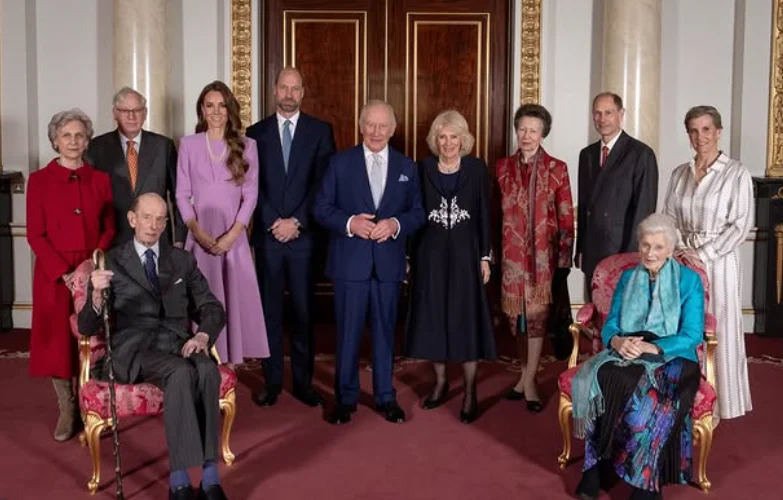

The Princess of Wales, Catherine, marked a deeply personal and symbolic tribute to the late Queen Elizabeth II on the momentous occasion of her centenary, choosing an ensemble that resonated with historical significance and maternal legacy. The carefully selected outfit, unveiled at a poignant commemoration held at Buckingham Palace, went beyond mere sartorial choice, weaving together a narrative of remembrance through both its colour palette and the precious jewels adorning her. This thoughtful presentation underscored Catherine’s profound respect for her late mother-in-law and her commitment to continuing the monarchical traditions that Queen Elizabeth II so masterfully embodied.
A Palette of Remembrance: The Significance of Mauve Pink
Central to Catherine’s tribute was her choice of a delicate mauve pink dress, a hue that carried a significant weight of royal history. This particular shade of pink was not merely a fashionable preference but a direct echo of Queen Elizabeth II’s own sartorial choices during pivotal moments in her long reign. The Princess’s adoption of this colour served as a visual dialogue with the past, connecting her present actions to the enduring memory of the late monarch.
The choice of mauve pink is particularly resonant when considering Queen Elizabeth II’s own early connections to the colour. As a nine-year-old Princess Elizabeth, she famously wore a mauve pink dress to the Silver Jubilee celebrations of her grandfather, King George V, in 1935. This childhood memory, linked to a significant royal milestone, undoubtedly informed her own subsequent affinity for the colour. This personal historical anchor for the Queen was then mirrored in her own iconic fashion moments, most notably during her Silver Jubilee celebrations in 1977.
The Queen’s Silver Jubilee was a period of national rejoicing, and her choice of a striking pink gown, created by her favoured designer Sir Hardy Amies, for the Service of Thanksgiving at St. Paul’s Cathedral became an indelible image of the celebrations. The accompanying hat, a masterpiece by Simone Mirman, with its distinctive flowing flowerheads, further cemented the ensemble in the public consciousness. This sartorial decision by the young Queen was a deliberate link to her own royal lineage, demonstrating a conscious understanding of the historical resonance of colour and occasion.
The enduring affection Queen Elizabeth II held for shades of pink and mauve was further evidenced in the lead-up to her Platinum Jubilee in 2022. For the official portrait commissioned to commemorate this unprecedented milestone, the late monarch chose an image of herself wearing a pink ensemble, underscoring the colour’s continued significance for her throughout her life. This consistent use of pink across decades, from her childhood to her final years, speaks volumes about its personal and symbolic importance to the Queen. Catherine’s adoption of this colour, therefore, was not a casual decision but a deeply considered act of homage, acknowledging and celebrating the Queen’s lifelong connection to this specific shade.
The Echo of Pearls: A Direct Link to the Monarch
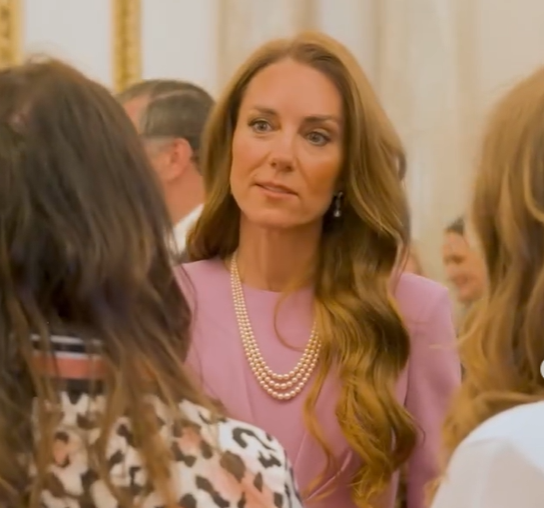
Complementing the symbolic significance of the dress, Catherine’s jewellery selection offered a more direct and instantly recognisable nod to Queen Elizabeth II. The Princess wore a classic three-strand pearl necklace, a piece that had been a signature of the late monarch and a constant presence throughout many of her public engagements. Pearls, often associated with elegance, purity, and enduring quality, were a staple in Queen Elizabeth II’s jewellery collection, and this particular necklace was one of her most cherished.
The significance of this necklace was amplified by the fact that it was the very same piece the Queen wore for her final public appearance on the Buckingham Palace balcony. This poignant memory, captured during the closing moments of the Platinum Jubilee celebrations, imbues the necklace with a profound sense of continuity and farewell. By choosing to wear it, Catherine not only paid tribute to the Queen’s personal style but also connected herself to one of the most emotionally charged moments of the late monarch’s final public engagements.
Further adding to the personal tribute were the Bahrain Pearl Earrings, also belonging to Queen Elizabeth II. These exquisite earrings, a wedding gift from the then ruler of Bahrain, held a unique place in the Queen’s collection. She had previously loaned them to Diana, Princess of Wales, and since 2022, Catherine has worn them on several occasions, further strengthening the intergenerational connection through shared adornments. The re-emergence of these earrings at such a significant commemorative event served as a tangible link to the Queen’s personal history and her generosity in sharing these precious heirlooms.
The Context of the Centenary: A National Moment of Reflection
The commemoration of Queen Elizabeth II’s centenary, held on April 21st, 2026, was a date of profound national and international importance. It marked 100 years since the birth of a monarch who defined an era, witnessing and shaping immense global change throughout her 70-year reign. The event at Buckingham Palace brought together key members of the Royal Family, representatives from charities the Queen had long supported, and individuals who were themselves celebrating their own centenarian birthdays.
This gathering served a dual purpose: to honour the Queen’s extraordinary life and legacy, and to highlight the ongoing work of the organisations she championed. By inviting representatives of these charities, the Royal Family acknowledged the Queen’s dedication to a multitude of causes, from conservation and the arts to healthcare and youth development. It was a testament to her enduring influence and the continuation of her philanthropic spirit.
The presence of centenarians at the event added a deeply human dimension to the proceedings. Meeting individuals who had also lived through a century of history, and who were marking their own significant milestones, created a powerful synergy of lived experience and historical reflection. King Charles III, in his role as Head of State, personally presented the traditional royal greeting to these remarkable individuals, a gesture that underscored the personal connection the monarchy seeks to maintain with its subjects.
A Wider Landscape of Tributes
Catherine’s sartorial tribute was part of a broader series of commemorative events and gestures undertaken by the Royal Family throughout the day. Earlier, King Charles III and Queen Camilla had visited St. James’s Park to view the final plans for the national memorial dedicated to Queen Elizabeth II. This ambitious project, which features a striking glass cast bridge inspired by the Queen’s wedding tiara and statues of both Queen Elizabeth II and Prince Philip, has already sparked considerable public discussion and debate, reflecting the diverse perspectives on how best to memorialise such a significant figure.
The Princess Royal, Anne, also played an active role, officially opening a memorial garden established in honour of her mother. These diverse acts of remembrance, from the personal choice of an outfit to the unveiling of national monuments, collectively painted a comprehensive picture of a nation and a Royal Family united in their admiration and remembrance of Queen Elizabeth II.
The gathering at Buckingham Palace itself was a significant display of familial unity. Beyond King Charles, Queen Camilla, and the Prince and Princess of Wales, the event was attended by several other senior members of the Royal Family, including the Duke of Kent, Princess Alexandra (the Queen’s cousins), the Princess Royal, the Duke and Duchess of Edinburgh, and the Duke and Duchess of Gloucester. This multi-generational presence underscored the enduring strength and continuity of the monarchy, a legacy Queen Elizabeth II had so diligently cultivated.
Analysis and Implications: Continuity and Legacy
Catherine’s meticulously planned tribute carries significant implications for the future of the monarchy. Her ability to weave together historical references, personal sentiment, and contemporary relevance demonstrates a sophisticated understanding of royal symbolism and public communication. By consciously aligning herself with Queen Elizabeth II’s legacy through fashion and jewellery, the Princess of Wales signals her intention to uphold these traditions while forging her own path.
The choice of an Emilia Wickstead dress further highlights Catherine’s preference for designers who understand the nuances of royal dressing, favouring elegance and timelessness over fleeting trends. This aligns with the broader perception of the Princess as a modern royal who respects tradition. The specific designer, Emilia Wickstead, is known for her elegant and sophisticated creations, often favoured by members of the Royal Family for formal occasions. This choice reinforces the image of continuity and refined taste.
The re-emergence of the Bahrain Pearl Earrings, once loaned to Diana, Princess of Wales, and now frequently worn by Catherine, serves as a potent symbol of the passing of the torch. It illustrates how royal heirlooms can transcend individual lives, connecting generations and embodying the enduring narrative of the Royal Family. This act of wearing pieces with such a rich history allows Catherine to subtly connect her own journey as a future Queen Consort to the experiences of both her late mother-in-law and her husband’s mother.
Furthermore, the timing of these tributes, coinciding with the centenary of Queen Elizabeth II’s birth, is strategically significant. It occurs at a time when the Royal Family is navigating a period of transition, with King Charles III now on the throne and the Princess of Wales increasingly taking on a more prominent public role. These gestures of remembrance and continuity are crucial for reinforcing the stability and enduring relevance of the monarchy in the public eye. They demonstrate that while the faces may change, the core values and the historical narrative remain strong.
The engagement with charities and the celebration of individual centenarians also reflect a modern approach to monarchy, one that seeks to be inclusive, empathetic, and actively engaged with the lives of ordinary people. This approach, pioneered by Queen Elizabeth II, is being embraced and adapted by the current generation of royals, ensuring that the institution remains connected to the evolving needs and aspirations of society.
In conclusion, the Princess of Wales’s ensemble for Queen Elizabeth II’s centenary was far more than just a beautiful outfit. It was a carefully constructed narrative of respect, remembrance, and continuity, spoken through the language of colour, jewellery, and historical allusion. It served as a powerful reminder of the late Queen’s indelible impact and offered a glimpse into the future of the monarchy, guided by a Princess deeply attuned to the weight and privilege of her role.