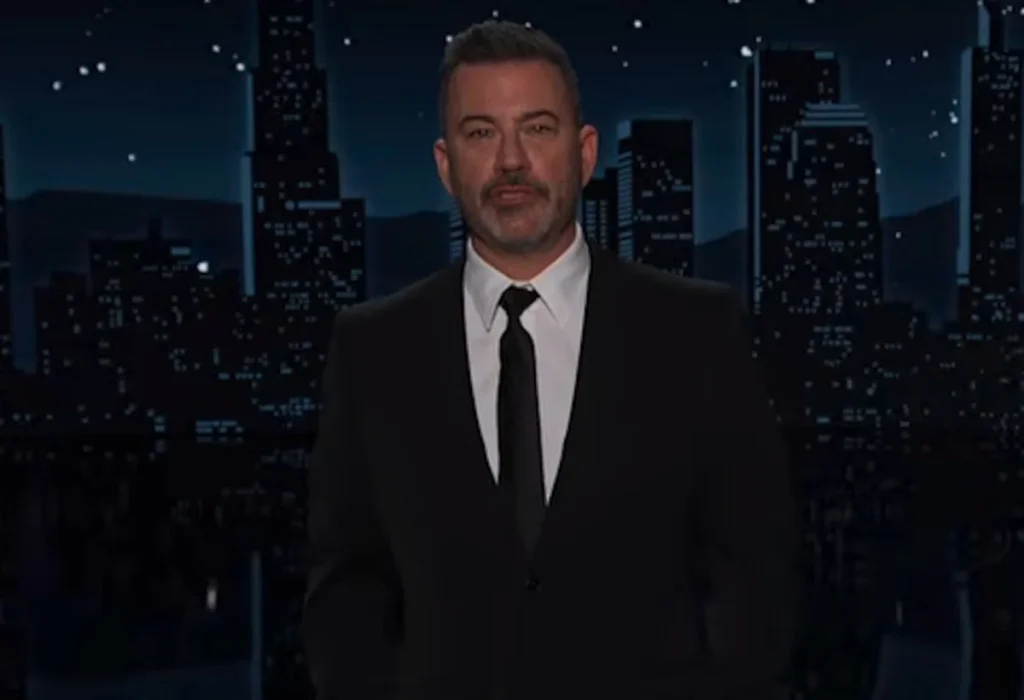

Late-night host Jimmy Kimmel has expressed bewilderment and offered sharp comedic critiques regarding former President Donald Trump’s reported actions and statements, particularly a recent Wall Street Journal report suggesting Trump is considering awarding himself the Congressional Medal of Honor. Kimmel, during his show Jimmy Kimmel Live!, questioned the logic and ethical implications of such a move, drawing parallels to Trump’s past behaviors and highlighting perceived disconnects with reality. The monologue also delved into Trump’s remarks about a “corner store” and his pronouncements on the Strait of Hormuz, painting a picture of a political figure whose public persona continues to be a rich source of satire for the late-night circuit.
The Medal of Honor Controversy
The focal point of Kimmel’s recent monologue was a report by The Wall Street Journal, which indicated that Donald Trump has privately mused about awarding himself the Congressional Medal of Honor. This prestigious military decoration, the highest honor awarded by the United States for acts of valor in combat, has never been self-awarded by any recipient. Kimmel seized upon this report, framing it as emblematic of Trump’s perceived ego and disregard for established norms.
"Can you imagine if Trump gave it to himself?" Kimmel asked his audience, immediately pivoting to a rhetorical question that acknowledged the surreal nature of the suggestion. He then extended the satire, stating, "Of course you can imagine it, yes. He accepted the Nobel Prize as a gift." This remark appears to be a hyperbolic reference to Trump’s tendency to claim accolades and recognition, even when they are not formally bestowed or are perhaps misconstrued. The implication is that Trump’s desire for recognition transcends conventional channels of award and honor.
Kimmel further questioned the loyalty and perception of Trump’s base, referring to them as "zombies who still worship him." He posed the provocative question: "Would that be enough for the zombies who still worship him to wake up?" This rhetorical query suggests a deep skepticism about the ability of any action, however extraordinary or potentially absurd, to sway Trump’s most ardent supporters.
Delving into the philosophical and practical impossibility of self-award, Kimmel pondered, "fundamentally, can a person give himself an award?" His immediate conclusion was firm: "I think it’s impossible." This statement underscores the inherent contradiction in the concept of an award, which is meant to be bestowed by an external body or authority in recognition of merit.
The comedian concluded this segment with a pointed joke that aimed to deflate the perceived heroism behind any potential rationale for Trump awarding himself such a medal. Referencing a specific instance, Kimmel said, "Trump believes he deserves the Medal of Honor because his plane flew into Iraq on an unlit runway during a first term trip to visit the troops." This alludes to a trip Trump took to Iraq in late December 2018 to visit U.S. troops. Kimmel then delivered the punchline: "Well, if that’s all it takes, anyone who ever flew into Newark deserves the Medal of Honor!" This jab humorously equates a routine, albeit perhaps logistically complex, presidential visit with the extraordinary bravery required for a Medal of Honor citation, while simultaneously poking fun at the perceived banality of air travel into a notoriously challenging airport.
The Congressional Medal of Honor Society itself outlines a rigorous process for awarding the medal, emphasizing acts of "personal bravery, self-sacrifice, and military skill above and beyond the call of duty." The notion of a president unilaterally bestowing this honor upon himself bypasses this entire framework, highlighting what critics might view as an authoritarian inclination or a profound misunderstanding of the institutions he once led.
The "Corner Store" Conundrum
Beyond the Medal of Honor discussion, Kimmel also addressed Trump’s apparent unfamiliarity with the term "corner store." During a speech, Trump reportedly expressed confusion when the term was used, prompting a rebuke from his campaign or staff. Kimmel found this particular gaffe to be notably perplexing, given Trump’s background.
"Of all the crazy things that come out of his mouth, this is the one he scolds them for?" Kimmel queried, expressing his disbelief that Trump would take issue with such a common phrase. He continued, "The man grew up in Queens, and he never heard of a corner store? Where did he think his servants went to get his Twinkies every day?" This humorous speculation suggests a disconnect between Trump’s upbringing and his public persona, implying that even someone from a relatively ordinary urban environment should be familiar with such a ubiquitous establishment.
Kimmel then directly addressed Trump, as if he were watching the show: "If you’re watching, Mr. President, the corner store is a place where people who aren’t billionaires go to buy the tequila that helps us forget you’re running the country." This line served a dual purpose: it provided a tongue-in-cheek definition of a corner store, linking it to the everyday struggles of non-wealthy citizens, and it offered a satirical commentary on the perceived impact of Trump’s presidency on the populace. The implication is that such stores serve as an escape or coping mechanism for those affected by his policies or public presence.
The concept of a "corner store" or "bodega" is deeply ingrained in American urban culture, serving as neighborhood hubs for essential goods and quick purchases. Trump’s purported unfamiliarity with the term raises questions about his lived experience and his ability to connect with the concerns of ordinary Americans. While it’s possible he simply misheard or misunderstood the context, Kimmel’s satirical take amplifies the perceived disconnect.
Geopolitical Pronouncements and the Strait of Hormuz
Kimmel also turned his attention to Trump’s statements regarding international affairs, specifically his pronouncements on Iran and the Strait of Hormuz. Trump had claimed that Iran had "fully opened" the Strait of Hormuz on a Friday, only for Iranian state media to reportedly contradict this statement the following day. This discrepancy became a fertile ground for Kimmel’s critique.
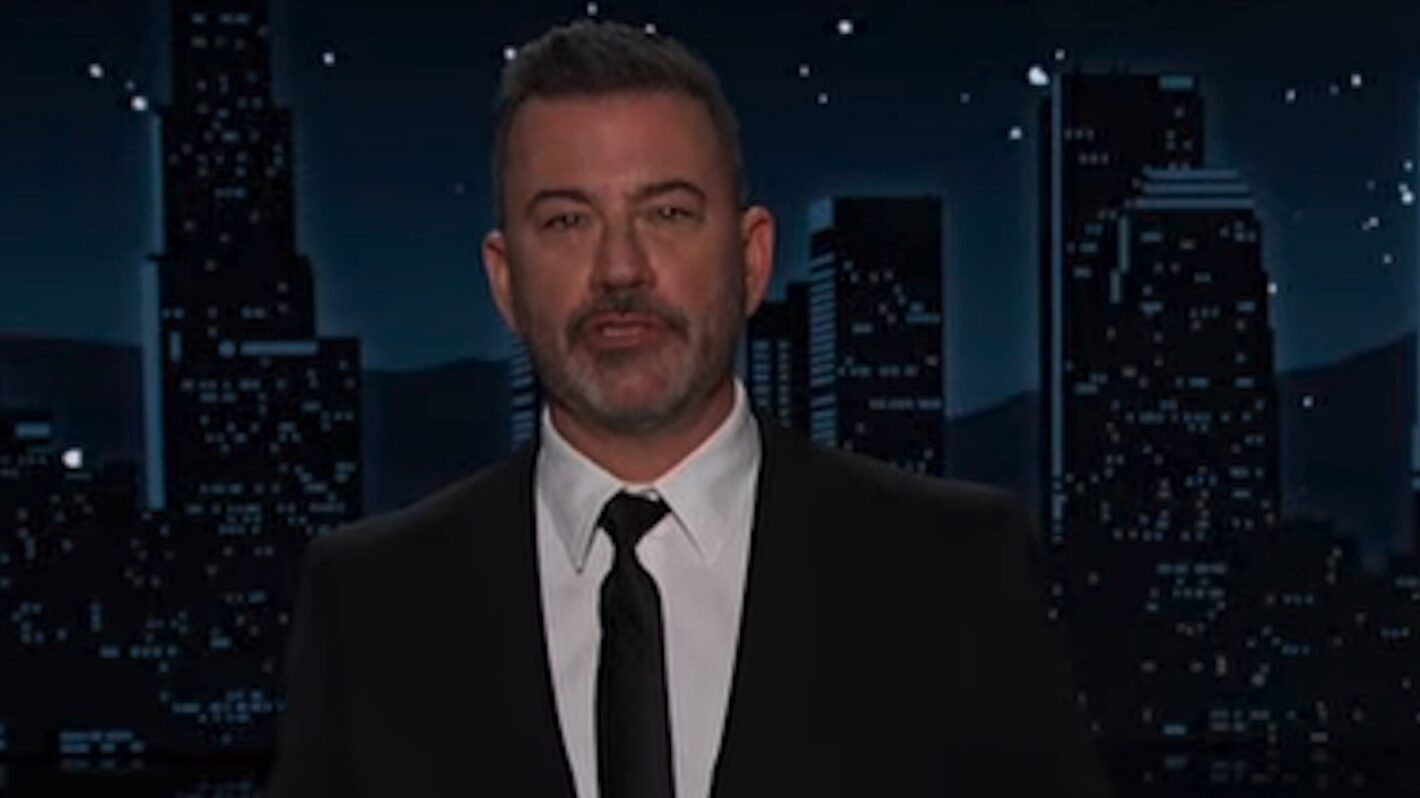
"Especially for us who grew up in the 80s, did you ever believe you’d be more likely to believe the Ayatollah than the President of the United States?" Kimmel asked, drawing a comparison that highlighted a perceived erosion of trust in presidential pronouncements over those from foreign adversaries. This question taps into a generational memory of Cold War tensions and a general expectation that a U.S. president would be a more reliable source of information than the leader of Iran.
He further commented on the increased attention on the Strait of Hormuz, a crucial maritime chokepoint for global oil supplies. "Or that we’d be hearing the words ‘Strait of Hormuz’ 12 times a day? Our whole lives, the Strait of Hormuz has been so wide open, we didn’t even know it existed." This highlights how geopolitical events can suddenly bring obscure geographical locations into the public consciousness.
Kimmel then delivered a sharp, sexually charged punchline: "We put Trump in charge and suddenly it’s been blocked more times than Melania’s bedroom door." This joke, while crude, aims to link Trump’s perceived ineffectual or chaotic foreign policy to a sensationalized and invasive personal life, suggesting a pattern of controversy and questionable judgment. The implication is that Trump’s presidency has created more instability and uncertainty around this vital waterway than existed previously.
The Strait of Hormuz has been a consistent flashpoint in U.S.-Iran relations, with Iran occasionally threatening to disrupt shipping traffic. Trump’s administration, under his "maximum pressure" campaign against Iran, had intensified tensions in the region. The accuracy and timing of pronouncements regarding its status are critical for global energy markets and international diplomacy. The contradictory statements, as highlighted by Kimmel, underscore the challenges in navigating complex geopolitical situations and the potential for misinformation or strategic misdirection.
Kimmel’s concluding remark on this segment was equally sardonic: "And still, with all this happening, Trump says the war in Iran is going swimmingly!" This final jab mocks Trump’s tendency to present even difficult or contentious situations in an overly optimistic light, regardless of contrary evidence. The phrase "going swimmingly" is often used ironically to describe a situation that is, in fact, going very poorly.
Broader Implications and Political Satire
Jimmy Kimmel’s monologues, like those of many late-night hosts, serve as a contemporary form of political commentary. By dissecting and satirizing the statements and reported actions of political figures, these shows engage audiences with current events in an accessible and often humorous way. Kimmel’s critiques of Donald Trump are not unique, as Trump has been a frequent target for comedians and commentators across the political spectrum.
The recurring themes in Kimmel’s recent work – Trump’s perceived narcissism, his detachment from common experience, and his handling of foreign policy – reflect broader concerns and discussions within the American political landscape. The ease with which Trump’s actions and words can be parodied speaks to a perceived consistency in his public persona and a willingness by many to engage in critical scrutiny of his behavior.
The reporting from The Wall Street Journal, if accurate, regarding Trump’s contemplation of self-awarding the Medal of Honor, is particularly significant. It touches upon themes of presidential power, the integrity of military honors, and the boundaries of acceptable behavior for a former head of state. The very idea challenges the principles of humility and service that such awards are intended to represent.
Similarly, the "corner store" anecdote, while seemingly minor, can be interpreted as a symbol of Trump’s perceived disconnect from the daily lives and vernacular of average Americans. His background, while not traditionally aristocratic, is one of immense wealth and privilege, which can create a gulf in understanding common experiences.
The geopolitical commentary on the Strait of Hormuz highlights the critical role of clear and accurate communication in international relations, especially in volatile regions. When presidential pronouncements are contradicted by credible sources, it can undermine diplomatic efforts and create uncertainty.
Ultimately, Jimmy Kimmel’s comedic approach, while entertaining, also serves to provoke thought and encourage a critical examination of political figures and their actions. By framing these events through a lens of humor, he allows audiences to process complex and sometimes unsettling news in a way that is both engaging and thought-provoking, contributing to the ongoing public discourse surrounding Donald Trump and his place in American politics.
Jimmy Kimmel Live! airs weeknights at 11:35/10:35c on ABC.