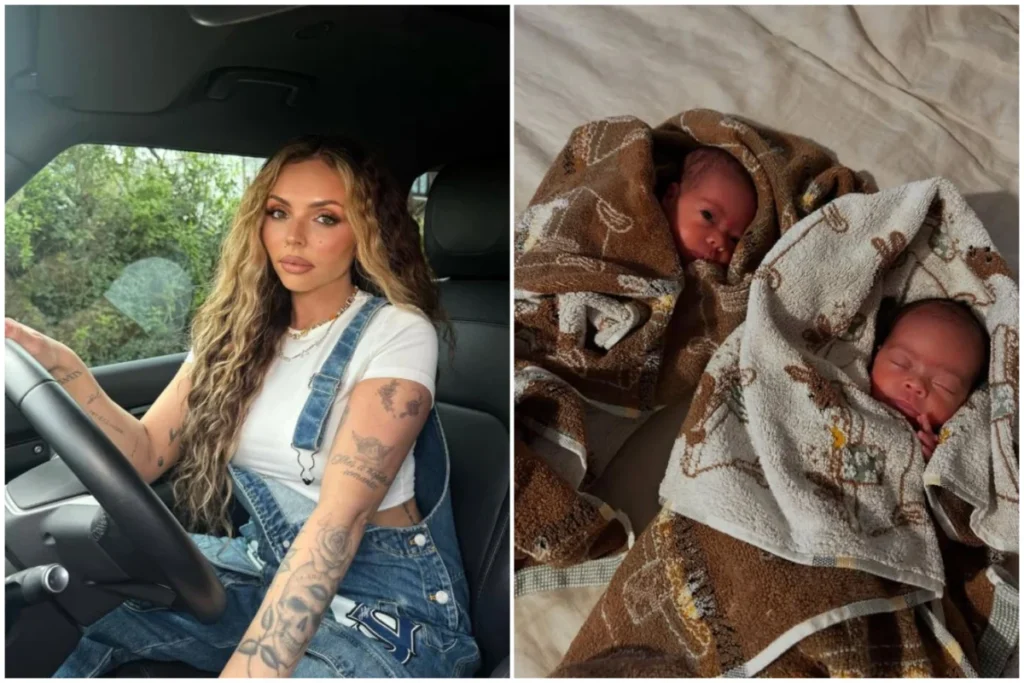

Former Little Mix singer Jesy Nelson has issued a desperate plea following the theft of her car, a black Defender bearing the registration plate JJ73SSY, from her driveway in Brentwood, Essex. The vehicle, stolen in the early hours of Saturday morning, contained essential hospital equipment critical for the ongoing care of her twin daughters, Ocean Jade and Story Monroe Nelson, both of whom suffer from Spinal Muscular Atrophy (SMA). The 34-year-old artist has publicly offered a substantial £10,000 reward for information leading to the recovery of her car and its invaluable contents, highlighting the severe impact its loss has on her family and the immediate well-being of her children.
The Incident Unfolds: A Desperate Plea
The theft was brought to public attention through a series of urgent posts on Jesy Nelson’s Instagram account. At approximately 9:00 AM BST on Saturday, Nelson shared an image of her stolen black Defender, directly appealing to her millions of followers for assistance. "My car got stolen off my driveway in the early hours of this morning," she wrote, imploring anyone who might have seen the vehicle or possessed any information to contact her directly via direct message or to alert the police. The gravity of the situation was underscored by her subsequent revelation: "I have so much of my girls’ hospital equipment in that car that’s really needed." This detail immediately elevated the theft from a simple property crime to a matter of profound medical urgency for her vulnerable children.
Later that day, Nelson reinforced her appeal, specifying the location of the theft as Brentwood, Essex, and officially announcing the £10,000 reward "to whoever helps recover it." The sheer desperation in her tone resonated deeply with her fanbase and the wider public, drawing widespread sympathy and a collective effort to share her appeal across social media platforms. The specified registration plate, JJ73SSY, became a crucial identifier in the widespread digital search. The incident has cast a shadow over Nelson’s home life, interrupting the meticulously planned care routine for her daughters, who rely on specialized equipment for their daily health management.
Understanding Spinal Muscular Atrophy (SMA): The Medical Context
Spinal Muscular Atrophy (SMA) is a rare, inherited neuromuscular disorder characterized by the progressive loss of motor neurons, which are nerve cells in the spinal cord and brainstem. These motor neurons are responsible for sending electrical signals from the brain to the muscles, controlling voluntary movements such as walking, breathing, swallowing, and speaking. In individuals with SMA, these motor neurons progressively degenerate and die, leading to muscle weakness and atrophy (wasting).
SMA is caused by a genetic defect in the SMN1 (Survival Motor Neuron 1) gene, which produces a protein essential for the survival and health of motor neurons. Without sufficient SMN protein, motor neurons cannot function properly, leading to their eventual death. The severity of SMA varies widely, typically categorized into types 0 to 4, based on the age of onset and the highest motor milestone achieved.
Given Jesy Nelson’s statements that her daughters are unlikely to ever be able to walk or regain their neck strength, it suggests they are likely diagnosed with a more severe form, possibly Type 1 (infantile-onset, most severe) or Type 2 (intermediate, presenting in early childhood).
- SMA Type 1 (Werdnig-Hoffmann disease): Onset typically before 6 months of age. Infants usually cannot sit independently and have severe muscle weakness, feeding and breathing difficulties. Without treatment, life expectancy is often less than two years.
- SMA Type 2 (Intermediate SMA): Onset between 6 and 18 months. Children can usually sit independently but cannot stand or walk without assistance. They often require wheelchairs and may develop scoliosis and respiratory issues.
- SMA Type 3 (Kugelberg-Welander disease): Onset after 18 months, usually in childhood or adolescence. Individuals can walk independently at some point but may lose this ability over time.
- SMA Type 4 (Adult-onset SMA): Onset in adulthood. Symptoms are generally milder, with slowly progressing muscle weakness.
SMA affects approximately 1 in 10,000 live births globally, and about 1 in 50 people are genetic carriers of the SMN1 mutation. The medical equipment stolen from Nelson’s car could encompass a range of vital aids, including, but not limited to, respiratory support devices (e.g., nebulizers, suction machines, cough assist devices, non-invasive ventilators), feeding tubes and pumps, specialized mobility equipment (e.g., custom wheelchairs, standers, walkers), physical therapy aids, and monitoring devices. These tools are indispensable for managing the daily symptoms of SMA, preventing complications, and maintaining the quality of life for affected individuals. The absence of such equipment can lead to significant health setbacks, increased risk of infections, and severe discomfort for children with SMA.
Recent breakthroughs in SMA treatment, particularly gene therapies like Zolgensma and disease-modifying drugs such as Spinraza and Evrysdi, have revolutionized the prognosis for many patients. These treatments are most effective when administered early, ideally before symptoms manifest. This underscores the profound importance of early diagnosis and the availability of supportive care equipment to maximize the benefits of these life-changing therapies.
Jesy Nelson: A Vocal Advocate for Change
Jesy Nelson’s personal journey has evolved significantly since her departure from the hugely successful girl group Little Mix in 2020. While she has pursued a solo music career, her most profound impact in recent years has stemmed from her powerful advocacy for children with SMA and for improved newborn screening protocols in the UK. Her twin daughters’ diagnosis transformed her into a passionate campaigner, channelling her public platform to raise awareness and push for systemic change.
Nelson has been at the forefront of a campaign to ensure that SMA is included in the routine newborn blood spot screening test, commonly known as the "heel-prick test." This crucial test, performed on all newborns in the UK, screens for several serious but rare health conditions, allowing for early intervention and treatment. Currently, SMA is not universally included in this screening panel across the entire United Kingdom, though pilot programs have been initiated in some regions.
The rationale behind Nelson’s campaign is clear: early detection of SMA is paramount. If SMA is identified at birth, before symptoms even begin, treatments can be administered at a critical developmental stage, often preventing irreversible muscle damage and significantly improving long-term outcomes for affected children. Without early screening, diagnosis often occurs months or even years after birth, by which time significant motor neuron loss may have already occurred, limiting the effectiveness of available therapies.

Nelson launched a public petition advocating for the inclusion of SMA in the newborn screening program, which has garnered immense support, accumulating more than 100,000 signatures. This threshold is significant as it obliges the UK Parliament to consider the petition for debate. In January, Nelson personally met with Health Secretary Wes Streeting to discuss the life-changing impact that early detection could have had on her twins and countless other children. During the meeting, she shared her family’s experiences, highlighting the emotional and practical toll of a delayed diagnosis and underscoring the urgency of implementing a national screening program.
Further solidifying her commitment, Nelson became a patron of SMA UK in February. This national charity provides support, advocacy, and information for individuals and families affected by SMA. Her involvement lends a powerful voice and considerable public profile to the charity’s ongoing efforts to raise awareness, fund research, and improve care standards for the SMA community. Speaking to the Press Association earlier this year about her activism, Nelson stated, "It has caused a lot of commotion and it’s been amazing because the SMA community have been screaming and shouting about this for years, and it’s never been taken seriously." Her words underscore the frustration within the SMA community regarding the slow pace of change and her determination to amplify their collective voice.
A Mother’s Resilience: Pregnancy and Early Challenges
Jesy Nelson’s journey to motherhood was marked by significant medical challenges even before her daughters’ SMA diagnosis. During her pregnancy, she experienced twin-to-twin transfusion syndrome (TTTS), a serious condition that can affect identical twin pregnancies. The NHS describes TTTS as a condition caused by abnormal connecting blood vessels in the placenta, which leads to an imbalanced blood flow from one twin to the other. One twin, the "donor," receives too little blood and nutrients, leading to slower growth and reduced fluid, while the other twin, the "recipient," receives too much, potentially leading to fluid overload and heart strain.
TTTS can have severe consequences for both babies, including premature birth, miscarriage, or death, and often requires complex medical intervention, such as laser surgery to seal off the connecting blood vessels in the placenta. Nelson’s navigation of this high-risk pregnancy, followed by her daughters’ SMA diagnosis, speaks volumes about her resilience and determination as a mother. Her struggles and triumphs during this period have been extensively documented in "Jesy Nelson: Life After Little Mix," a six-part Prime Video documentary series. The series offers an intimate look into her personal life, including her pregnancy complications, the early days of motherhood, and the challenges of managing her daughters’ rare medical condition. This public sharing of her experiences has not only garnered widespread empathy but has also provided invaluable insight into the realities faced by families dealing with complex medical issues, further amplifying her advocacy efforts.
The Broader Impact: Beyond the Theft
The theft of Jesy Nelson’s car, particularly with its vital medical contents, carries implications that extend far beyond the immediate financial loss or inconvenience. For Nelson and her family, the incident represents a significant emotional toll, adding immense stress to an already challenging situation of caring for children with a serious chronic condition. The disruption to the girls’ daily medical routine could have serious health consequences, necessitating urgent replacement of specialized equipment, which is often expensive, custom-made, and requires time to procure.
Practically, the absence of this equipment could compromise the quality of care her daughters receive, potentially leading to a decline in their health or increased risk of complications associated with SMA, such as respiratory infections or muscle contractures. The incident also highlights a broader societal issue: the vulnerability of individuals and families who rely on specialized medical equipment for their daily lives. Such thefts, while rare in their specific context, underscore the profound impact that opportunistic crime can have on the most vulnerable members of society.
The public response to Nelson’s appeal has demonstrated significant solidarity, with countless individuals sharing her posts and expressing their concern. This collective outcry reflects a broader understanding of the critical nature of the stolen items and the human element behind the news story. It also serves as a stark reminder of the ethical considerations surrounding theft, particularly when the stolen property directly affects the health and well-being of children.
Law Enforcement Response and Public Assistance
Essex Police have confirmed they are investigating the theft. While specific details of their ongoing investigation are not yet public, standard procedures would involve reviewing any available CCTV footage from Nelson’s property and the surrounding area in Brentwood, canvassing for witnesses, and issuing alerts to local police forces and vehicle tracking services. The high-profile nature of the victim and the critical contents of the vehicle likely mean that the case is being treated with urgency.
The £10,000 reward offered by Nelson is a significant incentive for information. Such rewards can be effective in prompting individuals with knowledge of the crime to come forward, either directly to Nelson or, more appropriately, to the police. Members of the public who believe they have seen the black Defender (registration JJ73SSY) or have any information pertinent to the theft are urged to contact Essex Police immediately. Information can typically be provided anonymously through crime-reporting hotlines or directly to the police non-emergency number, 101, or in cases of immediate sighting, the emergency number 999.
Looking Ahead: The Search Continues
As the search for Jesy Nelson’s stolen car and its invaluable medical cargo continues, the incident serves as a poignant reminder of the fragility of life and the unforeseen challenges that can arise. The urgency of the situation for Ocean Jade and Story Monroe Nelson cannot be overstated, as their ongoing health and comfort are directly tied to the return of their essential hospital equipment. Beyond the immediate crisis, this event also casts a renewed spotlight on Jesy Nelson’s broader campaign for universal SMA newborn screening, emphasizing once more the vital importance of early detection and comprehensive support systems for families affected by this rare and debilitating condition. The hope remains that the public’s vigilance and the ongoing police investigation will lead to the swift and safe recovery of the vehicle and its critical contents.