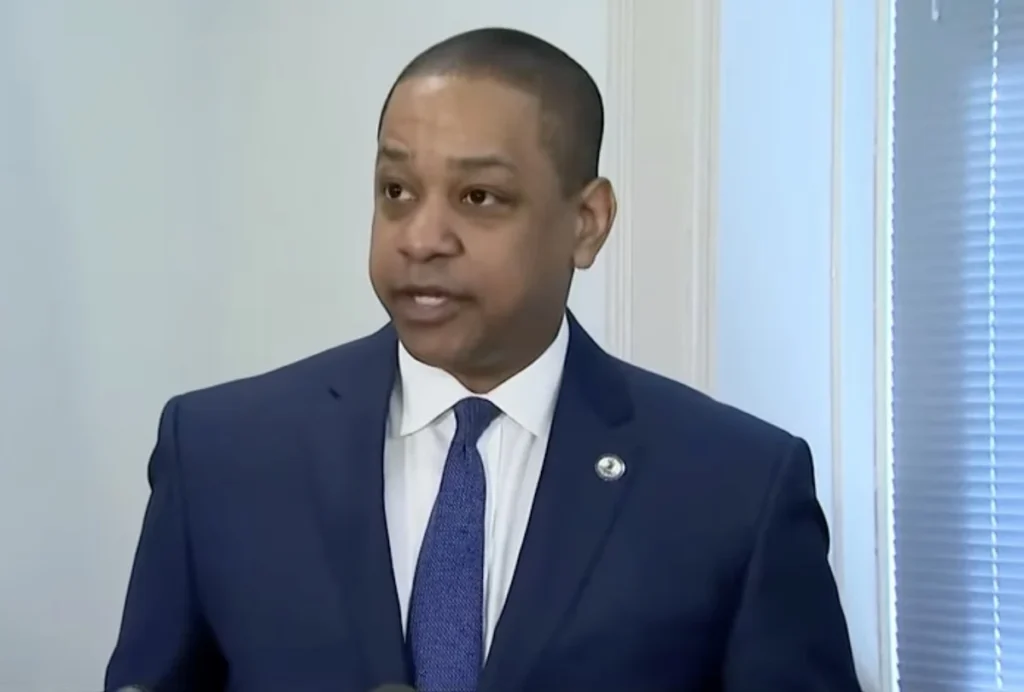

The political landscape of Virginia and a quiet suburban community in Annandale were plunged into profound shock and sorrow on Thursday following the tragic discovery of former Lieutenant Governor Justin Fairfax and his wife, both deceased, in their family home. Authorities are investigating the incident as an apparent murder-suicide, an outcome that brings a devastating and violent conclusion to a life already marked by significant public controversy and personal turmoil.
Discovery and Initial Police Response
The horrifying scene unfolded shortly after midnight on Thursday when Fairfax County police received a distressed 911 call from the couple’s teenage son. Responding swiftly to the residence in Annandale, law enforcement officers discovered both Justin Fairfax and his wife deceased. The preliminary findings from the Fairfax County Police Department indicate that Fairfax appears to have fatally shot his wife before taking his own life. This immediate assessment paints a grim picture, leaving a family shattered and a community grappling with the sudden and unexpected loss of two lives. The precision and speed of the police response, coupled with the somber announcement, underscore the gravity of the incident and the immediate need for answers in a tragedy of such public magnitude.
Fairfax County Police Chief Kevin Davis addressed the media hours later, confirming the identities of the deceased and providing initial insights into the circumstances. Chief Davis revealed that the couple had been navigating divorce proceedings, a detail that investigators are now scrutinizing as a potential catalyst for the tragic events. He noted that Fairfax had recently been served with legal paperwork related to an upcoming court appearance, suggesting this development might have served as a critical "spark" in the escalating personal crisis. "That may have been a spark," Chief Davis stated, "Detectives will figure out if that led to this tragedy here." This statement highlights the intricate and often painful interplay between legal battles, personal relationships, and the potential for emotional distress to reach critical levels.
A Once-Promising Political Trajectory Derailed
The news of Justin Fairfax’s death marks a tragic end to a career that, just a few years prior, had positioned him as a rising star within the Democratic Party. Born in Pittsburgh, Pennsylvania, Fairfax’s early life and academic achievements pointed to a future of significant public service. He graduated from Duke University and Columbia Law School, subsequently serving as an Assistant U.S. Attorney for the Eastern District of Virginia, where he prosecuted cases involving drug trafficking, violent crime, and firearms offenses. His legal background and articulate demeanor were assets that propelled him into the political arena.
Fairfax was elected Lieutenant Governor of Virginia in 2017, alongside Governor Ralph Northam and Attorney General Mark Herring. This victory represented a significant milestone in his political journey, placing him in a prominent statewide office and positioning him for further advancement. He was seen by many as a charismatic and intelligent figure, embodying a new generation of leadership within the party.
The zenith of his political potential arrived abruptly in early 2019, when a scandal engulfed then-Governor Ralph Northam. A racist photo from Northam’s medical school yearbook, depicting individuals in blackface and a Ku Klux Klan robe, surfaced, leading to widespread calls for his resignation. As Lieutenant Governor, Fairfax was next in line for the governorship, suddenly thrust into the national spotlight as the potential successor. The political machinery in Virginia braced for a historic transition, with Fairfax poised to become only the second African American governor in the state’s history.
The Shadow of Allegations: Sexual Assault Claims Emerge
However, just as the opportunity for the governorship loomed large, Fairfax’s political future was irrevocably altered by a series of explosive sexual assault allegations. Two women independently came forward with claims against him, stemming from incidents years earlier, effectively derailing his aspirations and casting a long shadow over his career.
The first allegation came from Vanessa Tyson, a professor at Scripps College, who publicly accused Fairfax of sexually assaulting her in 2004 during the Democratic National Convention in Boston. Tyson alleged that Fairfax forced her to perform oral sex in a hotel room. Her detailed account sent shockwaves through the political establishment, immediately drawing comparisons to the #MeToo movement and prompting intense scrutiny of Fairfax’s past.
Shortly thereafter, a second woman, Meredith Watson, came forward with another claim, alleging that Fairfax had raped her in 2000 when they were both students at Duke University. Watson’s account further intensified the crisis, painting a pattern of alleged non-consensual encounters and deepening the political and personal quagmire for Fairfax.
Fairfax vehemently denied both sets of allegations, maintaining that his encounters with both women were entirely consensual. He resisted mounting pressure from within his own party and from across the political spectrum to resign. Despite his denials and calls for due process, the damage to his reputation and political standing was immediate and profound. His pathway to the governorship evaporated, and his political career never fully recovered its previous momentum. He lost his bid for re-election as Lieutenant Governor in 2021, marking the effective end of his time in statewide office.
The Weight of Personal Turmoil: Divorce Proceedings as a Catalyst
In the years following the political scandals, Fairfax largely retreated from the public eye, focusing on his legal practice and personal life. However, the recent events suggest that significant personal challenges continued to unfold behind closed doors. Chief Davis’s revelation that the couple was undergoing divorce proceedings provides a critical piece of context for the tragedy.
Divorce, even under amicable circumstances, is an inherently stressful and emotionally taxing process. For individuals, particularly those who have experienced public scrutiny and professional setbacks, the breakdown of a marriage can exacerbate existing pressures and trigger profound emotional distress. The serving of legal paperwork, such as a petition for divorce or a summons for a court appearance, often represents a point of no return in these proceedings, solidifying the impending legal and personal separation. This act can be perceived as an ultimate rejection or a final blow, potentially escalating feelings of anger, despair, or desperation.
While the specifics of the Fairfax’s divorce proceedings remain private, the general nature of such legal battles often involves complex negotiations over assets, child custody, and financial support, each element carrying significant emotional weight. For a former public figure, the added layer of potential public exposure, even in private legal matters, can intensify the pressure and contribute to a sense of vulnerability and loss of control. Investigators will undoubtedly be examining the contents of the legal documents, the timing of their service, and any recent interactions between the couple to piece together the emotional landscape leading up to the incident.
Community and Official Reactions
The news of the apparent murder-suicide has sent shockwaves not only through the immediate Annandale community but also across the broader political landscape of Virginia and beyond. Chief Kevin Davis encapsulated the prevailing sentiment, stating, "It’s very sad for this community. A lot of people who know the Fairfax family, everybody’s shocked. We’re shocked." This collective disbelief and sorrow highlight the devastating impact such a tragedy has on those who knew the family personally, as well as on the wider public that had followed Fairfax’s career.
Political figures, many of whom served alongside Fairfax or were involved in the events of 2019, have largely maintained a respectful silence or offered subdued expressions of grief, reflecting the sensitive and somber nature of the event. The tragedy undoubtedly reopens wounds from the past, reminding many of the intense pressures of public life and the profound consequences of personal struggles. The focus for many remains on the surviving family members, particularly the teenage son who made the initial 911 call and now faces an unimaginable loss. The long-term psychological impact on a child witnessing or discovering such a horrific event cannot be overstated, underscoring the profound human cost of this tragedy.
Broader Implications and The Unanswered Questions
The apparent murder-suicide of Justin Fairfax and his wife leaves behind a multitude of unanswered questions and serves as a stark reminder of the complex interplay between public life, personal struggles, and mental health. While investigators continue their work to establish the precise sequence of events and motivations, the broader implications of this tragedy resonate deeply.
Firstly, it underscores the intense pressures faced by individuals in public office and the profound psychological toll that scandals and career derailments can inflict. The fall from grace experienced by Fairfax, from being on the cusp of the governorship to the ignominy of sexual assault allegations, represented a catastrophic professional and personal blow. The long-term effects of such public shaming and the loss of a once-promising future can be immense, potentially contributing to mental health challenges that, if unaddressed, can spiral into devastating outcomes.
Secondly, the incident tragically highlights the critical issue of domestic violence and the urgent need for support and intervention. While the specific dynamics of the Fairfax’s relationship remain private, the apparent murder-suicide scenario is a stark example of the most extreme form of domestic violence. It serves as a grim reminder that such violence can occur across all demographics, socioeconomic statuses, and public profiles. The tragic loss of life underscores the importance of recognizing warning signs, providing accessible resources, and fostering environments where individuals feel safe to seek help for themselves or others experiencing domestic conflict.
Finally, the event prompts a broader reflection on the societal responsibility to address mental health crises and the availability of support systems. In situations of extreme stress, be it related to divorce, professional failure, or personal trauma, individuals may find themselves overwhelmed. The tragedy serves as a poignant reminder that mental health support and intervention are not just for private individuals but are crucial for everyone, including those who once held positions of public trust and prominence.
The story of Justin Fairfax, once a beacon of political promise, has concluded in an unspeakably tragic manner. Two lives have been lost, a family shattered, and a community left to grapple with the profound sorrow and the difficult questions that such an event inevitably raises. As the investigation continues, the focus remains on understanding the full scope of this tragedy and, hopefully, preventing similar heart-wrenching outcomes in the future.
If you or someone you know is experiencing domestic violence, help is available. Consider calling the National Domestic Violence Hotline at 800-799-7233, or text START to 88788, or go to https://www.thehotline.org/.