
The transformation of a 1930s lakeside cottage in Maine represents a sophisticated intersection of historical preservation and modern architectural necessity. When Gregory Rockwell, a designer recognized on the AD100 list, was commissioned by longtime clients to revitalize their family property, the project faced a complex set of challenges: a derelict structure, stringent modern building codes, and the deeply personal emotional history of a multi-generational summer retreat. The resulting renovation serves as a case study in how to elevate a rustic "camp" aesthetic into a high-end "adult house" without sacrificing the nostalgic charm that defines the Maine wilderness experience.

The property, situated on the edge of a lake, was originally acquired by the homeowner’s grandparents in the 1940s. At that time, it functioned as a traditional summer camp before being expanded into a family compound. For the current owner, the cottage was the backdrop of a childhood defined by the absence of digital distractions—a place of fort-building and lake-swimming. However, by the time Rockwell and his team were brought on board, the primary cabin was uninsulated, structurally compromised, and essentially uninhabitable by modern standards.
Historical Context and the Legacy of the Maine Summer Camp
Maine’s "summer camp" culture is a distinct architectural and social phenomenon that dates back to the late 19th and early 20th centuries. These properties were often designed to be intentionally primitive, offering wealthy families from urban centers like New York and Boston a chance to "rough it" in the woods. Architecturally, this translated to exposed studs, wide-plank floors, and large porches designed to maximize airflow and views of the water.

In the case of this specific 1930s cottage, its proximity to the water is a feature that would be impossible to replicate under current environmental regulations. Modern Maine building codes typically dictate that new structures must sit back at least 175 feet from the high-water mark to protect the shoreline ecosystem. Because this structure was erected nearly a century ago, it was "grandfathered" in, allowing it to remain at the water’s edge. This positioning creates a unique living experience that the homeowner describes as "being on a houseboat." Preserving this footprint was the primary objective of the renovation, necessitating a "gut" approach where the house was stripped to its studs rather than demolished and moved.
Structural Overhaul and Architectural Strategy
To bring the structure into the 21st century, Rockwell collaborated with the Massachusetts-based firm Olson Lewis + Architects and contractor Timothy Ferreira. Interior architect Micah McKelvey-Quiñones also played a critical role in reconfiguring the interior layout.

The team faced a significant puzzle: how to increase the home’s functionality while staying within the original footprint. While they could not expand outward, they were permitted to extend the height of the building by 15 feet. This vertical expansion allowed for the creation of more gracious guest rooms and improved ceiling heights, transforming the previously cramped quarters into a space suitable for hosting adult friends and family.
The renovation was comprehensive. Every system, from the plumbing and electrical to the insulation, was replaced. However, the architectural team was careful to reintroduce materials that felt consistent with the original 1930s vernacular. Walls were finished in walnut-stained oak board and batten, alongside white shiplap—materials that evoke the ruggedness of the Maine woods while providing a refined, finished look.

Design Philosophy: The Elevated "Inherited" Aesthetic
Rockwell’s design philosophy for the project focused on creating a sense of "inherited" history. Working with project designer Jane Brooks, the team sought to curate furniture and finishes that looked as though they had been collected by the family over several decades. This approach avoided the "showroom" feel often found in new renovations, opting instead for an eclectic mix of high-end custom pieces, vintage finds, and local antiques.
The living room serves as a centerpiece for this philosophy. It features a custom sofa paired with an armchair upholstered in Pierre Frey tweed and a Victorian reclining chair sourced from Obsolete. A 1970s Danish cocktail table with a slate top, found at Nickey Kehoe, sits alongside a custom flagstone fireplace designed by Rockwell’s team. The mix of textures—wool, slate, tweed, and oak—reinforces the "hardy" material palette that Rockwell insists is essential for a Maine summer house.

In the entry, the team used cutout oak to add graphic flair, a nod to the 1930s modernity of architects like Charles Rennie Mackintosh. This attention to detail extends to the staircase, where a custom railing features geometric cutouts, elevating a functional element into a piece of architectural art.
Culinary Integration and Modern Amenities
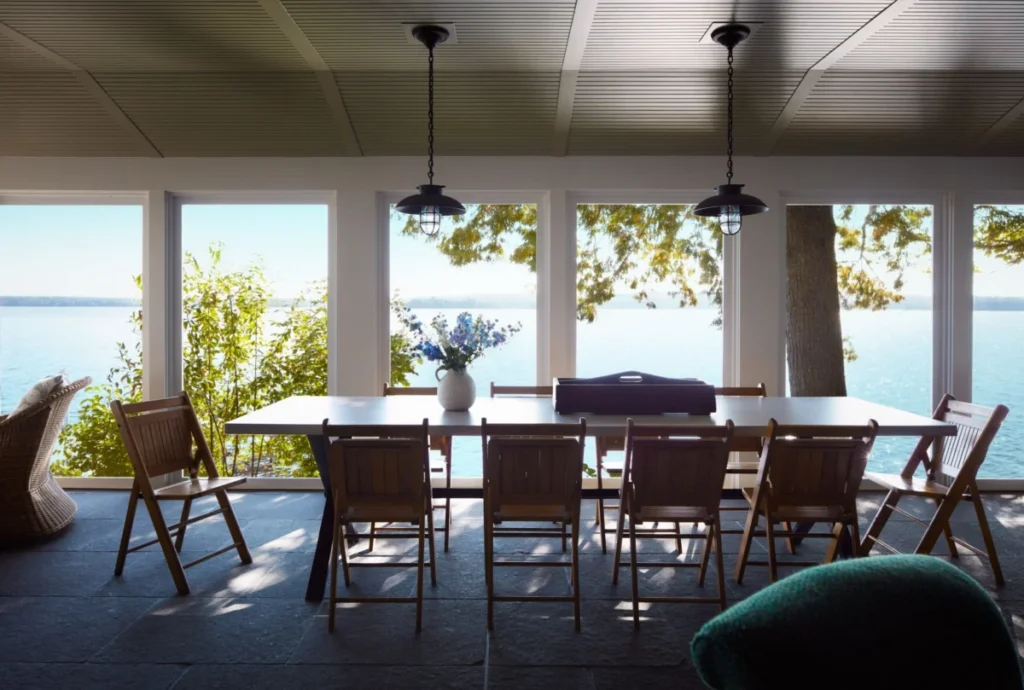
Because the property is located in a remote area—roughly 40 minutes from the nearest grocery store—the kitchen was designed to be a high-performance space for a "serious cook." The design team installed floor-to-ceiling subway tile from Pratt and Larson and deep-green millwork by the British firm Plain English. A large central island provides a gathering point for family meals, particularly on rainy days when the preferred dining spot—the wraparound porch—is unavailable.

The kitchen manages to hide modern appliances behind traditional cabinetry, maintaining the "campy" atmosphere requested by the clients. This balance of hidden technology and visible craftsmanship is a hallmark of the entire renovation.
Local Sourcing and Artisanal Details
A key requirement of the project was that the home should possess a "real Maine flavor." To achieve this, the design team prioritized local sourcing for both materials and decor.

- Local Wood: A lofty upstairs bedroom was sheathed in barn wood sourced directly from a nearby farm.
- Antiques: A twig table in the living room and a set of French folding dining chairs on the deck were sourced from local Maine markets, including the Cabot Mill Antiques market in Brunswick.
- Custom Tilework: In the guest bathroom, Emery & Cie tiles were hand-painted with a custom seaweed motif inspired by the vegetation found at the bottom of the lake.
- Natural Materials: Perhaps the most daring design choice was the powder room, which features walls paneled in real tree bark from Bark House. This serves as a direct homage to the rustic Adirondack camp interiors of the early 20th century.
Initially, the homeowners were hesitant about some of the more "outdoorsy" ephemera suggested by Rockwell, such as boat oars, vintage snowshoes, and flags. However, once installed, these items provided the final layer of narrative needed to make the house feel lived-in and historically grounded.
Market Trends and the Value of Heritage Properties
The renovation of the Maine cottage reflects broader trends in the high-end real estate market, where "heritage" and "authenticity" are increasingly valued over new construction. According to recent data from the Maine Association of Realtors, waterfront properties, particularly those with historical significance or established family compound status, have seen a significant increase in valuation over the last five years. In many cases, these properties are considered "irreplaceable assets" due to the aforementioned environmental setbacks and zoning laws.
.jpg)
The decision to renovate a dilapidated structure rather than tear it down is also increasingly seen as a more sustainable—albeit more expensive—path. By reusing the existing framework and sourcing local materials like reclaimed barn wood, the project reduced the carbon footprint typically associated with a new luxury build.
Implications for Modern Residential Design
The success of the Gregory Rockwell renovation lies in its ability to satisfy two seemingly contradictory desires: the need for modern luxury and the longing for primitive nostalgia. By "rebuilding the house around the porch," the design team ensured that the primary focus remained on the natural environment and the water.

The homeowner’s reaction to the finished project underscores the success of this approach. After the first full summer in the renovated space, the client noted that the house felt as though they had been living there "forever." This "instant history" is the result of meticulous architectural planning and a design strategy that respects the emotional weight of a family property.
For the architectural and design community, this project reinforces the importance of narrative in residential design. It suggests that the most successful renovations are those that don’t just update a building, but rather continue the story that began decades earlier. In an era of rapidly changing technology and aesthetic trends, the Maine cabin stands as a testament to the enduring appeal of the "summer camp soul"—a place where the design facilitates a slower, more connected way of life.