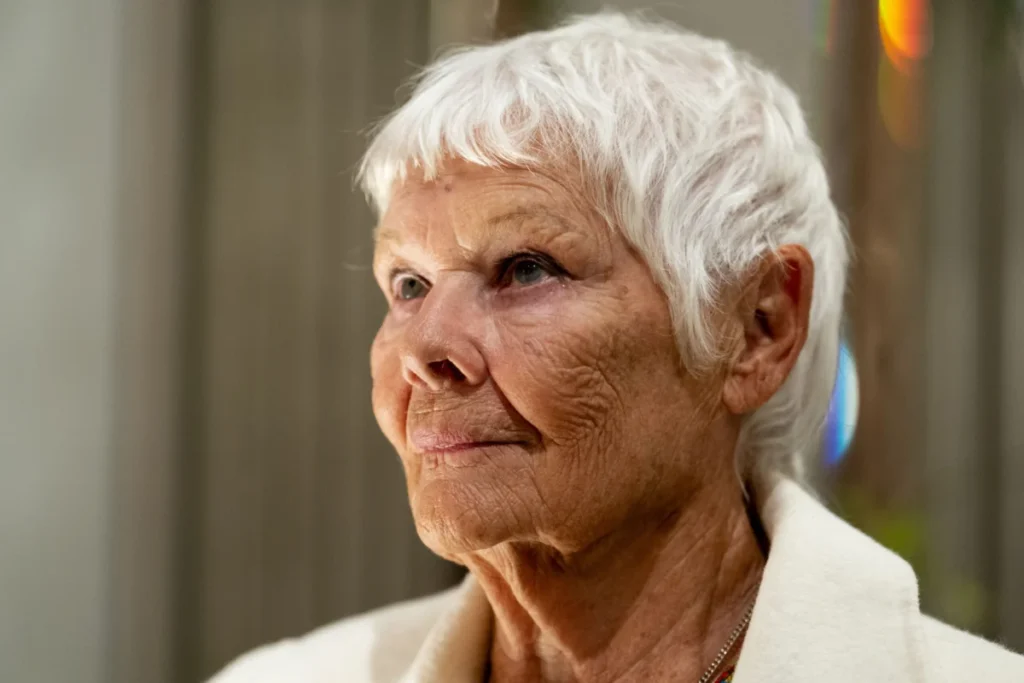

A pivotal decision looms for North Yorkshire Council’s planning committee this Friday as it considers a controversial proposal from Harrogate Spring Water (HSW) to expand its bottling facility, a plan vehemently opposed by acclaimed actor Dame Judi Dench and a chorus of other prominent figures. At the heart of the dispute lies Rotary Wood, a cherished community woodland in Harrogate, which campaigners argue faces destruction to pave the way for industrial development, despite promises of new tree plantings and job creation by the multinational-owned firm. Dame Judi, a staunch advocate for environmental preservation, has issued a heartfelt plea to councillors, urging them to reject the plans and safeguard what she describes as “a living, growing woodland created through patience, care and public spirit,” warning against the irreversible loss of a vital local ecosystem and community legacy.
The Genesis of a Conflict: Rotary Wood and Harrogate Spring Water
The contention centres on a parcel of land earmarked for the expansion of Harrogate Spring Water’s existing facility. Rotary Wood, an area of significant local value, was meticulously planted two decades ago by local schoolchildren, volunteers, and community groups. Over the years, it has matured into a vibrant green space, serving as a crucial haven for local wildlife and a beloved recreational spot for residents. Its creation was a testament to collective civic action, embodying a shared sense of environmental stewardship and community spirit that now finds itself under threat.
Harrogate Spring Water, a well-established entity within the region, is proposing an expansion that it argues is essential for its continued growth and economic contribution to the area. The company, which is a subsidiary of the France-based multinational food-products giant Danone, contends that its plans would lead to the creation of over 50 new jobs, a significant boost to local employment. Furthermore, HSW has pledged to mitigate the environmental impact by establishing a new, publicly accessible two-acre woodland adjacent to the existing Pinewoods, featuring 491 new, more mature trees. Beyond this, the firm has committed to planting approximately 3,000 trees across the wider Harrogate district, a figure it highlights as six times greater than the number of trees it estimates would be lost from Rotary Wood.
A Growing Tide of Opposition
Despite HSW’s pledges, the proposal has ignited a fierce backlash from both local residents and national figures. North Yorkshire Council has been inundated with more than 1,000 formal objections to the scheme, reflecting widespread community concern. Campaigners dispute HSW’s figures, claiming that the expansion would necessitate the removal of up to 1,000 trees from Rotary Wood, significantly more than the 500 acknowledged by the company. The core of the opposition, however, extends beyond mere numbers, touching upon the irreplaceable ecological and social value of a mature, established woodland versus newly planted saplings.

Dame Judi Dench’s Powerful Intervention
The voice of Dame Judi Dench has added considerable weight and public attention to the campaign. In a poignant letter addressed to councillors and council officers, which campaigners hope will be read aloud during Friday’s crucial planning meeting, the Yorkshire-born Oscar, Bafta, and Olivier Award-winning actor articulated the profound significance of Rotary Wood. "I am sorry not to be with you in person, but I wanted my support for Rotary Wood and for the local community defending it to be heard clearly at this planning meeting," Dame Judi stated, underscoring her commitment to the cause.
She passionately argued that Rotary Wood is "not an empty plot waiting for a better use. It is a living, growing woodland created through patience, care and public spirit." Her letter highlighted the emotional investment of the community, noting that "Local families, volunteers, schoolchildren and community supporters helped plant it and watch it take root. Over the years it has become part of Harrogate’s natural fabric and part of the area’s shared sense of place."
Dame Judi further connected the local issue to broader global challenges, stating, "At a time when the country is talking so urgently about biodiversity loss, climate pressure and the need to protect nature close to where people live, it is deeply troubling that a healthy community woodland could be treated as disposable." She concluded her impassioned appeal by respectfully urging the committee "to recognise Rotary Wood for what it is: a meaningful community woodland, a haven for wildlife and a symbol of what local people can achieve when they invest in nature. It deserves protection, not destruction."
A Constellation of Celebrity Support and Expert Criticism
Dame Judi Dench is not alone in her opposition. Other notable figures who have publicly voiced their concern include fellow actors Dame Joanna Lumley and Sam West, alongside the esteemed environmentalist Sir Jonathon Porritt. Their collective voices amplify the local community’s pleas, transforming a regional planning dispute into a matter of national environmental and ethical debate.
Dame Joanna Lumley echoed the sentiment of irreplaceability, stating, "To cut down so many trees planted by children to develop a bottling plant is dreadful in so many ways. This 20-year-old forest carrying the hopes of the next generation cannot be replaced." Her statement underscores the profound symbolic and emotional value attached to a woodland nurtured by successive generations.

Sir Jonathon Porritt, a leading authority on sustainable development, has launched a scathing critique of Harrogate Spring Water’s parent company, Danone, accusing its actions of contradicting its own stated environmental policies. Danone purports to have a robust "Forest Policy" and aims to be "forest positive." However, Sir Jonathon asserts, "I’ve spent decades urging companies to turn fine words on forests into real action. What Danone is proposing in Harrogate does the opposite. You cannot call yourself ‘forest positive’ while cutting down a thriving community woodland planted by children." This accusation of "greenwashing" – presenting a misleadingly positive image of environmental responsibility – adds another layer of scrutiny to Danone’s corporate ethics.
The Planning Process and Council’s Dilemma
The impending decision on Friday places North Yorkshire Council’s planning committee in a challenging position. Planning officers, after reviewing the application and considering various factors, have recommended that the plan be approved. This recommendation typically indicates that the proposal, in the officers’ assessment, aligns with relevant planning policies and regulations, often weighing economic benefits against environmental and social impacts.
The council’s arboriculturist, for instance, advised HSW to reduce the number of trees planned for its new community woodland from 1,500 to 491, suggesting an attempt to align with expert guidance. However, the committee’s role extends beyond merely rubber-stamping officer recommendations. They are tasked with making a balanced judgment, taking into account all representations, including the substantial public objections and the compelling arguments put forth by environmental advocates and community leaders. The decision will inevitably be scrutinized for its adherence to principles of sustainable development, local democracy, and corporate accountability.
Harrogate Spring Water’s Defence and Corporate Commitments
In response to the mounting criticism, a spokesperson for Harrogate Spring Water reiterated the company’s commitment to responsible development. "Throughout the planning process, we have worked constructively with council officers and listened closely to community concerns," the spokesperson stated. They emphasized the company’s efforts to mitigate environmental impact, highlighting the commitment to creating a new, publicly accessible two-acre woodland with 491 native and more mature trees, and the wider district-level planting of approximately 3,000 trees.
The spokesperson further asserted that these plans are "consistent with Danone’s commitments globally to sustainable, responsible development, including its Renewed Forest Policy." They concluded by stating, "Ultimately our goal remains to balance sustainable development and economic growth with care for the local environment and community." HSW also clarified its tree removal figures, stating that only "500 trees in the wood will be impacted, rather than the 1,000 cited by the campaigners," attempting to narrow the scope of the environmental sacrifice.

Broader Implications: Biodiversity, Corporate Ethics, and Local Governance
This local dispute in Harrogate encapsulates a much broader national and global conversation about environmental protection, sustainable development, and corporate social responsibility. The debate over Rotary Wood highlights several critical issues:
- Biodiversity Loss vs. Economic Growth: The core tension lies in balancing the immediate economic benefits of industrial expansion (jobs, investment) against the long-term ecological and social costs of destroying mature green infrastructure. Ecologists consistently emphasize that a mature, biodiverse woodland provides far greater ecosystem services (carbon sequestration, habitat provision, air quality improvement, flood mitigation) than newly planted saplings, which take decades to reach similar ecological maturity. The concept of "net gain" in biodiversity is often challenging to achieve in practice, especially when replacing established habitats.
- The Value of Community Woodlands: Rotary Wood is not merely a collection of trees; it is a living monument to community effort and a tangible asset for public well-being. Its destruction would represent a loss of shared history and a blow to local civic pride. The psychological and social benefits of accessible green spaces, particularly those created by the community, are increasingly recognized as vital for public health and social cohesion.
- Corporate Greenwashing and Accountability: Sir Jonathon Porritt’s critique of Danone’s "forest positive" claims brings into sharp focus the challenge of holding multinational corporations accountable for their global sustainability pledges at the local level. Critics argue that such policies lose credibility if they permit the destruction of established woodlands in one location while promoting tree planting elsewhere, particularly when the replacement trees are young and lack the ecological complexity of what is being lost. This case could set a precedent for how rigorously companies’ environmental claims are scrutinized in planning decisions.
- The Role of Local Governance: North Yorkshire Council faces immense pressure to make a decision that respects both the economic aspirations of a significant local employer and the deeply held environmental and social values of its constituents. The planning committee’s decision will be a test of its commitment to genuine sustainable development, weighing jobs against natural capital and short-term gains against long-term environmental integrity. The outcome will be watched closely by environmental groups and communities facing similar development pressures across the UK.
As Friday approaches, all eyes are on North Yorkshire Council. The decision regarding Harrogate Spring Water’s expansion and the fate of Rotary Wood will not only shape the landscape of Harrogate but also serve as a significant indicator of how local authorities navigate the complex interplay between economic progress, environmental preservation, and the invaluable legacy of community-driven initiatives in an era of urgent climate action.