
Jeff Probst, the long-standing host and executive producer of the seminal reality competition series Survivor, has marked the production of the show’s historic 50th season by commissioning a bespoke gift for the program’s extensive behind-the-scenes staff. Moving away from the traditional industry standards of commemorative apparel, such as embroidered jackets or hats, Probst sought a more enduring and individualized token to honor the hundreds of professionals who facilitate the complex filming operations in the Mamanuca Islands of Fiji. The gesture underscores the significant milestone of reaching 50 seasons, a feat rarely accomplished in the landscape of American prime-time television.
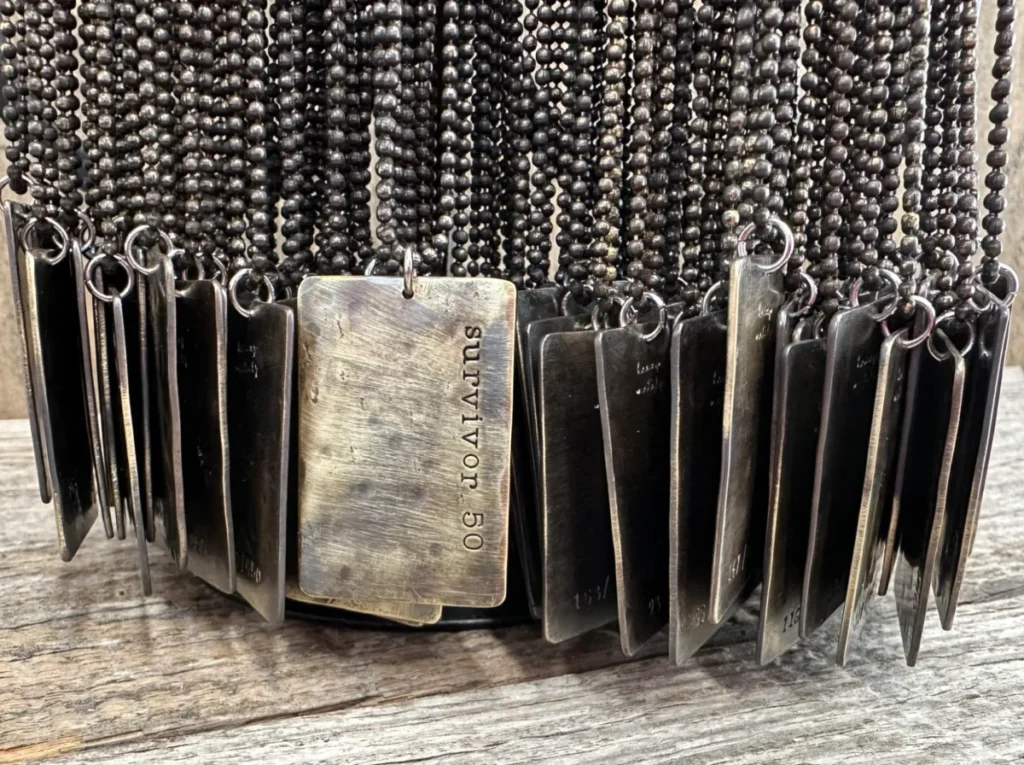
The commemorative gift took the form of custom-designed, hand-stamped dog tag necklaces, a choice Probst indicated was rooted in both personal sentiment and the rugged aesthetic of the franchise. In a recent disclosure regarding the production of the landmark season, Probst noted that the decision was influenced by his own habit of wearing a dog tag engraved with his wedding date. He expressed a desire for the crew’s gift to mirror that level of personal significance, seeking an item that felt "individual and unique" rather than mass-produced.
The Artistry Behind the Commemoration
To realize this vision, Probst turned to the artisanal marketplace Etsy, eventually identifying Heavy Metalz Studio, a Florida-based craft business operated by Amanda Vernor and Gina Thompson. The collaboration resulted in the creation of 450 individual metal dog tags, each meticulously hand-stamped to ensure a distinct finish. The design features the "Survivor 50" branding on the obverse side, while the reverse side of each tag is marked with a unique identification number.
The choice of a hand-stamped, "antiqued and distressed" finish was intentional, aimed at capturing the "essence" of the show’s demanding environment. According to Probst, the aesthetic reflects the grit and resilience required of the crew, who operate in remote, tropical conditions to build elaborate challenge sets, manage complex logistics, and document the experiences of the contestants. Vernor and Thompson, who are reportedly long-time fans of the series, worked closely with Probst to finalize a design that balanced the show’s branding with the utilitarian, military-inspired look of traditional dog tags.
Logistics of the Milestone Season Production
The production of Season 50 represents a massive logistical undertaking for CBS and the production company, SEG. The dog tags were shipped to Fiji in April, coinciding with the arrival of the crew for the commencement of the filming cycle. In a move designed to reinforce a culture of equality within the production, Probst eschewed a hierarchical distribution method. Rather than assigning specific numbers based on seniority or job title, the 450 tags were placed in a communal container.
As crew members arrived at the base camp in Fiji, they were invited to select a tag at random. Probst explained that this method was intended to reflect the "one team" philosophy that has sustained the show for over two decades. By removing the association of "Number 1" or "Number 100" with specific roles, the production sought to emphasize that every contribution—from the camera operators and editors to the local Fijian labor force and catering staff—is essential to the show’s success.
Contextualizing Survivor’s Longevity and Cultural Impact
The arrival of Season 50 is not merely a numerical milestone but a testament to the franchise’s ability to evolve. Since its debut in the summer of 2000, Survivor has undergone numerous transformations, transitioning from a social experiment into a highly strategic game of "outwit, outplay, and outlast." The show’s survival through the "Golden Age of Television" and into the streaming era on Paramount+ highlights its robust format and the loyalty of its fan base.
Reaching 50 seasons puts Survivor in an elite category of television history, alongside long-running programs like Saturday Night Live, 60 Minutes, and various soap operas. The crew, many of whom have been with the production for decades, are often described by Probst as the "beating heart" of the operation. The physical demands of the show are notorious; filming in Fiji involves navigating unpredictable weather, including tropical cyclones, and maintaining high-tech equipment in high-humidity, saltwater environments.
Supporting Data: The Scale of Survivor Production
While the exact budget for Season 50 remains proprietary, industry data provides a window into the scale of such an operation. A typical season of Survivor employs between 350 and 500 staff members. The production has a significant economic impact on the Republic of Fiji, where it has been permanently based since Season 33 (Survivor: Millennials vs. Gen X).
- Economic Footprint: Survivor is one of the largest employers in the Fijian film and television sector. The production utilizes local resources for construction, transportation, and hospitality, contributing millions of dollars annually to the local economy.
- Filming Schedule: The show typically films two seasons back-to-back over the course of several months. The crew arrived in April to begin the rigorous setup required for the milestone season, which often involves more elaborate challenges and higher production values than standard cycles.
- Infrastructure: The "base camp" mentioned by Probst is a sophisticated hub that includes editing suites, medical facilities, and living quarters, all of which must be maintained in a remote archipelago.
The 450 dog tags commissioned by Probst cover the vast majority of the core production staff, illustrating the breadth of the human capital required to bring the show to air.
Reciprocity and Professional Reactions
The gesture from Probst was met with an unexpected response from the crew. In a display of professional camaraderie, members of the production staff reached out to Heavy Metalz Studio independently to commission a reciprocal gift for the host. They ordered a specialized 14k gold version of the dog tag to be presented to Probst, acknowledging his leadership and his role as the face of the franchise since its inception.
This exchange of gifts highlights the unique workplace culture of Survivor. Unlike many scripted productions where there is a sharp divide between "above-the-line" talent and "below-the-line" crew, the isolated nature of the Survivor set fosters a tight-knit community. Probst has often spoken about the "Survivor family," and the exchange of these commemorative items serves as a tangible symbol of that bond.
Broader Implications for the Franchise
The focus on the crew during the lead-up to Season 50 may also signal the thematic importance of the upcoming season. While CBS has been tight-lipped about the specific format of the 50th installment, Probst has confirmed it will feature returning players, a move highly anticipated by the "Superfan" community. The emphasis on honoring the show’s history and the people who make it suggests that Season 50 will serve as a celebration of the franchise’s legacy.
From a management perspective, Probst’s choice of an individualized gift serves as a case study in employee recognition. In high-pressure environments like reality TV production, where burnout can be high, such gestures are instrumental in maintaining morale and ensuring the retention of experienced personnel. The "One Team" philosophy articulated during the distribution of the tags is a core component of the show’s operational success.
Future Outlook
As Survivor 50 moves through its production phases, the focus will eventually shift from the behind-the-scenes celebrations to the on-screen competition. However, the story of the dog tags provides a rare glimpse into the internal mechanics of the show. It reinforces the narrative that Survivor is as much about the endurance of its production team as it is about the survival of its contestants.
The handcrafted nature of the gifts—numbered, distressed, and unique—mirrors the show’s own brand identity: rugged, authentic, and enduring. For the 450 individuals currently working in the Mamanuca Islands, these tags serve as more than just jewelry; they are a permanent record of their participation in a television milestone that has spanned a quarter-century.
Survivor continues to be a cornerstone of the CBS programming block and a top performer on the Paramount+ streaming platform. As the franchise looks toward the future, the stability of its production crew and the leadership of Jeff Probst remain its most significant assets. The Season 50 dog tags are a small but powerful reflection of a production that, after 24 years, shows no signs of slowing down.