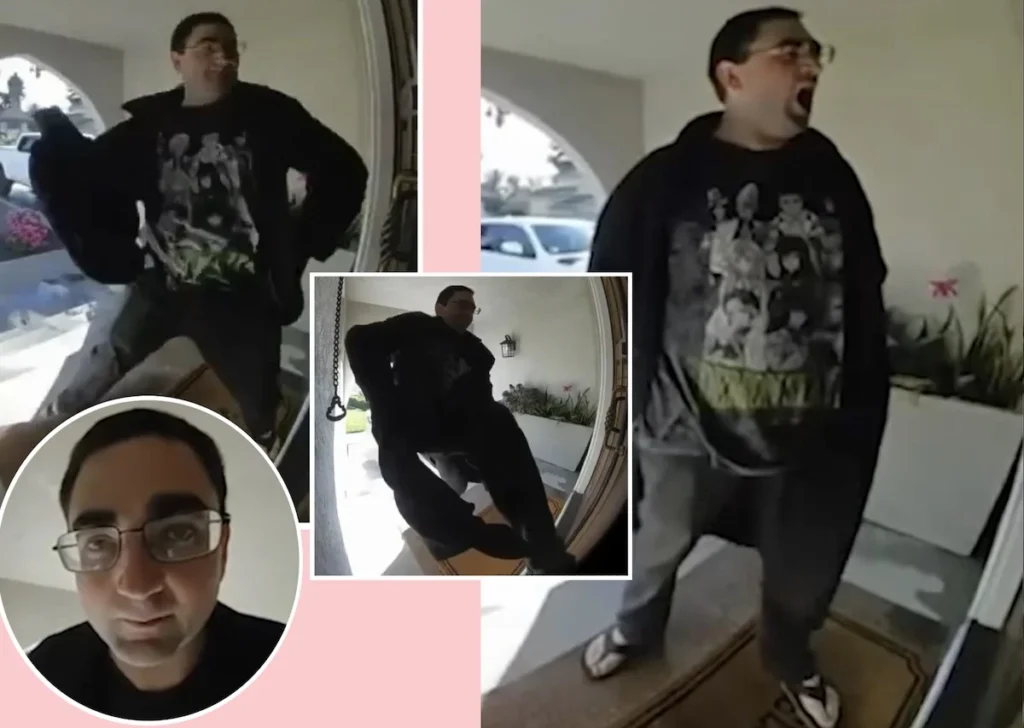

A quiet Northern California neighborhood in Fairfield was shattered this week by a harrowing home invasion incident, captured in chilling detail by a family’s Ring doorbell camera and subsequent interior security footage. The event, which quickly went viral across social media platforms, exposed a terrifying escalation from a seemingly innocuous front-door interaction to a violent breach of a family’s sanctuary, prompting widespread alarm and renewed discussions about home security and personal safety. Authorities have since identified the alleged perpetrator as 30-year-old Jason Nichols, who now faces multiple felony charges, including burglary, vandalism, and the deeply disturbing accusation of annoying or molesting a child under 18, leading to a significantly increased bail of $250,000.
The incident unfolded earlier this week, plunging a family into a nightmare scenario as a stranger attempted to gain entry to their home while a mother and her child were inside. What began as a peculiar encounter at the front door rapidly devolved into a violent and targeted assault on the residence, culminating in a physical confrontation and the eventual arrest of the suspect. The detailed video evidence from the home’s security system has provided a clear, albeit terrifying, chronology of events, underscoring the vital role such technology plays in both deterring crime and providing crucial evidence for law enforcement.
A Deceptive Beginning: The Initial Approach
The disturbing chain of events commenced with the arrival of a man, later identified as Jason Nichols, at the front door of a home in a typically tranquil Fairfield community. The initial interaction, as recorded by the Ring doorbell camera, was deceptively calm. Nichols, dressed in a long black coat, flip-flops, and glasses, approached the residence and spoke in a measured, almost conversational tone. He calmly requested to be let inside, stating, "I just want to make sure everything is OK. I just figured I would check on something." His composed demeanor, initially, did not immediately signal danger, perhaps even suggesting a misguided neighbor or someone genuinely concerned.
However, the homeowner, a woman who was inside with her child, instinctively sensed something was amiss. Exercising caution, she refused to open the door. Her husband, who was monitoring the doorbell camera system remotely, quickly became aware of the unfolding situation. From afar, he attempted to intervene, clearly communicating through the system’s two-way audio feature, instructing the stranger to leave immediately: "I don’t know what you want man, get out of my house." This direct command, intended to de-escalate the situation, unfortunately had the opposite effect, marking a sinister turning point in the encounter.
Escalation of Threats and Violent Intent
Following the homeowner’s refusal and her husband’s remote intervention, Nichols’s demeanor abruptly shifted from calm to overtly aggressive. The measured tone vanished, replaced by a torrent of increasingly hostile demands and threats. He began to kick the door violently, attempting to force entry, while shouting menacingly. The nature of his demands became chillingly specific, moving beyond a simple request for entry to inquiries that sent a cold shiver down the spine of anyone who witnessed the footage.
Among his shouted threats, Nichols explicitly demanded, "Open this fing door. Where is your daughter, man? Who’s in there with you. Open the door or I’m breaking it fing down. Is everybody in this house OK?" The specific mention of a "daughter" and "child" transformed the incident from a potential random trespass or attempted burglary into something far more sinister and targeted. This immediate and specific inquiry about a child inside the home suggested a disturbing motive beyond simple property crime, raising fears of potential abduction or harm. The explicit nature of these threats highlighted a clear intent to gain access, coupled with an alarming focus on the vulnerable occupants.
As the situation intensified, the homeowner could be heard pleading with Nichols to depart. Instead of complying, Nichols’s threats escalated further, becoming more explicit and terrifying. He declared, "Open the door. This is my neighborhood. Now… Or I’ll f***ing end you. Do you understand me?" This direct threat of violence shattered any remaining semblance of safety for the family, transforming their home into a fortress under siege. The deliberate destruction of the doorbell camera shortly after — Nichols ripping it off the wall — appeared to be a desperate attempt to erase evidence or prevent further recording of his actions, a common tactic employed by criminals seeking to evade identification.
Breach and Confrontation: A Family’s Fight for Safety
Despite the homeowner’s refusal to open the door and the husband’s remote warnings, Nichols was not deterred. Reports indicate that he managed to find an alternative point of entry, allegedly slipping through a sliding glass door located at the rear of the residence. This breach confirmed the family’s worst fears: the perpetrator had gained access to their home. Interior security footage, crucial for corroborating the family’s account, reportedly shows Nichols inside the house, moving through rooms, opening cupboards and doors, actively searching for the woman and her child who were desperately hiding within their own sanctuary. The psychological terror of being hidden in one’s own home while an intruder roams freely is an experience that can leave indelible scars.
Upon learning of the forced entry, the husband, who had been remotely monitoring the situation, immediately rushed back to his home. Driven by an urgent need to protect his family, he reportedly grabbed a shovel on his way, preparing for a confrontation. When he arrived, he found Nichols still inside. A physical altercation ensued between the two men, resulting in head injuries for both, according to reports from The Sun. This heroic act of self-defense by the homeowner, putting his own safety at risk, ultimately played a critical role in containing the threat until law enforcement could arrive.
Within minutes of the initial distress calls, police units arrived at the scene. They found Jason Nichols outside the home and quickly took him into custody. He was initially transported to a hospital for treatment of his injuries before being formally booked on multiple felony charges, including burglary and vandalism. The swift response of law enforcement, coupled with the homeowner’s bravery and the invaluable evidence provided by the security cameras, brought a terrifying ordeal to an end, preventing what could have been an even more tragic outcome.
Legal Proceedings and Aggravated Charges
Following his arrest, the legal process against Jason Nichols began to unfold, revealing the escalating gravity of his alleged actions. Initially, Nichols was charged with burglary and vandalism, felonies reflecting the forced entry and property damage. However, as investigators delved deeper into the details of the incident, particularly the specific and chilling demands made by Nichols regarding the "daughter" during his aggressive attempts to gain entry, authorities added a significantly more disturbing charge: annoying or molesting a child under 18. This additional felony charge dramatically increased the severity of the case, suggesting a motive far beyond simple theft or random aggression, and indicating a potential predatory intent.
The implications of this new charge were immediately reflected in Nichols’s bail amount. Initially set at $35,000, the bail was substantially increased. The Vacaville Reporter later noted that a judge in the case further escalated Nichols’s bail to a staggering $250,000. Such significant increases in bail are typically indicative of the court’s assessment of the seriousness of the charges, the potential flight risk of the defendant, and the perceived danger he poses to the community, particularly given the allegations involving a child. Nichols’s next court date was scheduled for Tuesday afternoon, marking the beginning of a complex legal battle that will seek to hold him accountable for his actions.
The Indispensable Role of Home Security Technology
This harrowing incident powerfully underscores the critical and increasingly indispensable role of modern home security technology in protecting families and providing crucial evidence for law enforcement. The Ring doorbell camera, despite being violently ripped from the wall, captured the entirety of Nichols’s initial approach and the terrifying escalation of his threats, providing a clear visual and audio record of the perpetrator and his intentions. This footage was instrumental in quickly identifying Jason Nichols and in understanding the full scope of his aggressive actions.
Furthermore, the interior security footage proved equally vital, confirming that Nichols had indeed breached the home and was actively searching for the occupants. Without these integrated security systems, the narrative of the home invasion might have been harder to piece together, and the identification and apprehension of the suspect potentially delayed. These devices serve not only as deterrents but also as silent witnesses, documenting events as they unfold and providing irrefutable evidence that can accelerate investigations and strengthen prosecution cases.
The incident highlights a broader societal trend: the widespread adoption of smart home security systems, which offer features like remote monitoring, two-way audio communication, and real-time alerts. While no system can guarantee absolute safety, the ability of the husband to remotely communicate with Nichols and to observe the escalating threat in real-time provided valuable seconds for the family to react and for the husband to rush back. This event serves as a stark reminder of the benefits of investing in robust home security measures, particularly in an era where technology can offer an additional layer of vigilance and protection.
Community Impact and Broader Implications
The home invasion in Fairfield has sent shockwaves through the local community and beyond, prompting residents to re-evaluate their own home security measures and raising broader concerns about neighborhood safety. Fairfield, like many suburban communities, prides itself on its tranquility and sense of security. An incident of this nature, particularly one involving such explicit threats against a child and a violent breach of a home, shatters that sense of peace and highlights the persistent need for vigilance.
The psychological toll on the victimized family cannot be overstated. While thankfully the woman and child were not physically harmed, the emotional trauma of such an invasion, the fear of being hunted in one’s own home, and the violation of personal space can have lasting effects. Survivors often grapple with anxiety, fear, and a pervasive sense of insecurity long after the immediate danger has passed. Mental health support and counseling are often crucial in helping victims process such deeply disturbing experiences.
Police officials have rightly praised the homeowner for his courageous actions in defending his family. They noted that the man "worked to protect his family while officers were responding to the scene," emphasizing the importance of self-preservation and having a safety plan in place during critical moments. This commendation underscores the reality that while law enforcement strives for rapid response, homeowners sometimes find themselves in situations where immediate self-defense is necessary.
Understanding Home Invasion Statistics and Prevention
The Fairfield incident, while specific in its details, fits into a broader pattern of home invasion crimes that pose significant threats to communities nationwide. According to data from the Bureau of Justice Statistics, a significant number of burglaries involve forced entry, and a subset of these escalate into home invasions where residents are present, dramatically increasing the risk of violence. While overall property crime rates have fluctuated, the psychological impact of crimes committed within the sanctity of one’s home remains profoundly disturbing.
Motivations for home invasions can vary widely, from theft to revenge or, most disturbingly, targeting individuals for violence or abduction. The specific inquiry about a "daughter" in this case raises serious questions about Nichols’s true intentions and highlights the vulnerability of children. This aspect of the crime has resonated deeply with parents, amplifying fears and prompting discussions about child safety protocols within homes.
Prevention strategies are paramount in mitigating the risk of such incidents. Experts consistently advise homeowners to implement multiple layers of security, including reinforced doors and locks, alarm systems, and external lighting. The use of smart home technology, like doorbell cameras and interior surveillance, provides an additional layer of deterrence and evidence collection. Furthermore, basic safety practices such as never opening the door to unfamiliar individuals, ensuring all entry points are secured, and having a pre-determined family safety plan can make a critical difference. Community watch programs and neighborhood vigilance also play a crucial role in fostering collective security.
Conclusion
The terrifying home invasion in Fairfield serves as a potent reminder of the fragility of safety and the critical importance of vigilance in protecting one’s home and family. The swift and courageous actions of the homeowner, coupled with the invaluable evidence provided by modern security technology, were instrumental in bringing the perpetrator to justice. As Jason Nichols faces a serious array of felony charges, including those relating to a child, the legal system will work to ensure accountability. Meanwhile, the incident leaves a lasting impression on the community, reinforcing the need for robust security measures, heightened awareness, and the unwavering resolve to protect the sanctity of our homes. While the family escaped physical harm, the emotional scars of such an ordeal will undoubtedly linger, underscoring the profound and far-reaching impact of violent crime on individuals and communities.