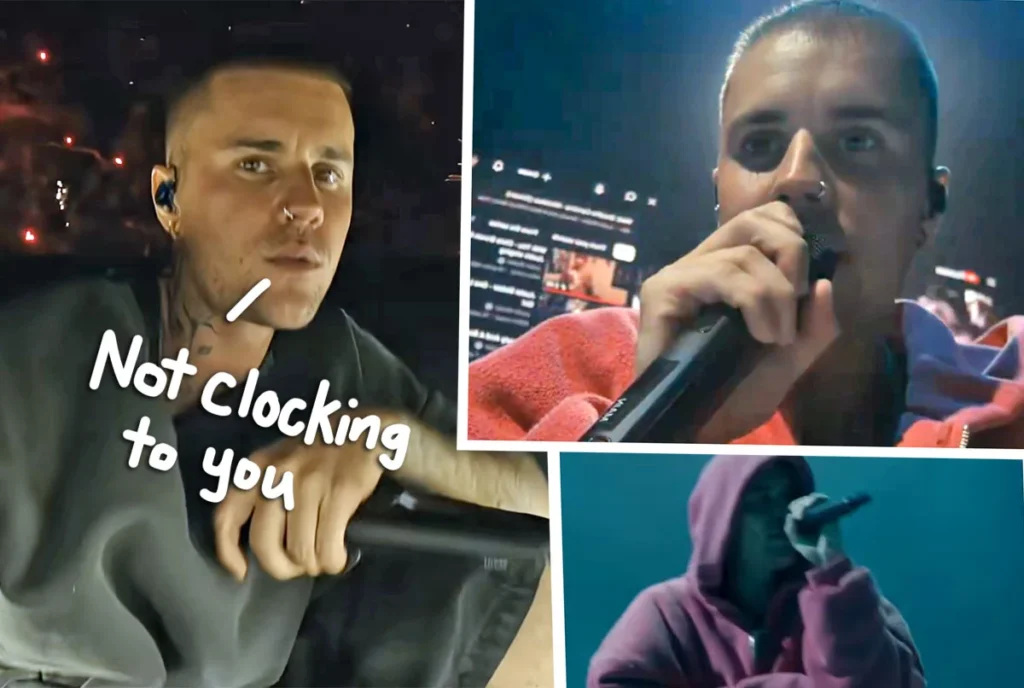

Justin Bieber’s headlining performance at the 2026 Coachella Valley Music and Arts Festival on Saturday night has ignited a fervent discussion across the music industry and among his global fanbase, marking what many observers believe is a definitive pivot in the superstar’s illustrious career. Far from the meticulously choreographed, high-production spectacles that defined his earlier years, Bieber presented a notably laid-back set, a stylistic choice that has polarized critics and fans alike but firmly established his new, fiercely independent artistic direction. This highly anticipated debut as a Coachella headliner, undertaken without the long-standing managerial guidance of Scooter Braun and his former team, underscores a profound shift towards artistic autonomy, a theme echoed by close sources who assert Bieber’s indifference to external perceptions.
A New Era of Autonomy: The Scooter Braun Split and Its Ramifications
The backdrop to Bieber’s unconventional Coachella appearance is the widely publicized dissolution of his professional relationship with long-time manager Scooter Braun. For over a decade, Braun was an omnipresent force in Bieber’s career, credited with discovering him on YouTube and meticulously guiding his transformation from a pre-teen sensation to a global pop icon. This partnership, once considered one of the most powerful and enduring in modern music, saw Bieber achieve unprecedented success, including multiple platinum albums, sold-out world tours, and a pervasive cultural influence. Braun’s management style was often characterized by aggressive strategic planning, extensive media engagement, and the cultivation of a polished, mainstream image for his artists. The partnership endured through Bieber’s meteors rise, periods of public scrutiny, and personal challenges, making their eventual separation in 2025 a seismic event in the industry.
The End of a Dynastic Partnership
The split from Braun was not just a change in personnel; it signaled a profound re-evaluation of Bieber’s career trajectory and his desire for greater personal and creative control. Reports at the time suggested Bieber felt a need to break free from the pressures associated with his earlier, more manufactured image, seeking a path that prioritized authenticity and personal well-being over relentless commercial expansion. This desire for independence is not unique in the music industry, where artists, particularly those who achieve fame at a young age, often grapple with the demands of their public persona and the expectations of their teams. The narrative surrounding Bieber’s departure from Braun painted a picture of an artist yearning to define his own narrative, to shed the layers of external influence that had accumulated over a career spanning more than 15 years. This Coachella performance, therefore, was not merely a concert but a public declaration of this newfound artistic sovereignty, a statement delivered on one of the world’s most visible stages.
Seeking Creative Control
The decision to perform on his "own terms" at Coachella, eschewing the elaborate production values typically associated with a festival headliner, can be seen as a direct consequence of this shift. Without the accustomed "pushing" from a manager focused on maximizing spectacle and commercial appeal, Bieber was free to craft a show that resonated more deeply with his current artistic sensibilities. This move highlights a growing trend among established artists who, having achieved commercial peak, seek to redefine their relationship with their art and their audience. The industry is witnessing a gradual rebalancing of power, where streaming platforms and direct-to-fan engagement empower artists to bypass traditional gatekeepers and management structures, fostering environments where creative expression can take precedence over market demands. Bieber’s choice to simplify his performance, rather than amplify it, positions him as a pioneer in this evolving landscape, challenging the very definition of a "successful" major festival set.
Coachella: A Stage for Reinvention
Coachella, held annually in Indio, California, stands as one of the most prestigious and culturally significant music festivals globally. Known for its eclectic lineups, celebrity attendees, and cutting-edge stage productions, headlining Coachella is considered a pinnacle achievement for any artist. The festival attracts hundreds of thousands of attendees over two weekends and millions more through its extensive global livestreams, making it an unparalleled platform for artistic statements.
The Festival’s Grand Scale and Expectations
The expectation for a Coachella headliner is typically nothing short of a monumental spectacle. Artists often invest significant resources into creating elaborate stage designs, intricate visual effects, guest appearances, and highly choreographed routines designed to leave an indelible mark. Beyoncé’s "Beychella" in 2018, for instance, set a new benchmark for festival performances, featuring a massive marching band, multiple costume changes, and a meticulously crafted narrative that celebrated Black culture. Similarly, artists like Travis Scott and Billie Eilish have leveraged the festival’s vast canvas to deliver immersive, high-energy experiences that resonate far beyond the Empire Polo Club grounds. This established precedent creates immense pressure on headliners to deliver a performance that not only entertains but also innovates and defines the current state of popular music.
Precedent of Spectacle
Given this context, Justin Bieber’s "laid-back" approach at Coachella 2026 was a stark departure. Instead of attempting to outdo previous headliners with sheer scale, he opted for an intimate, reflective set. This choice directly challenged the prevailing ethos of festival performance, where bigger, bolder, and more visually stunning are often equated with success. His decision to scale back, rather than scale up, forced a re-evaluation of what a headlining act at a major festival could, and perhaps should, be. It suggested a deliberate rejection of the "pop spectacle" model that has dominated such events for years, in favor of a more personal and arguably authentic engagement with his material and his audience. This strategic minimalism, far from being perceived as a lack of effort by his inner circle, was a carefully planned artistic statement designed to communicate his new philosophical approach to his career.
The Performance Unpacked: A Homage to Origins Amidst Criticism
Justin Bieber’s Saturday night set was characterized by an understated elegance, prioritizing musicality and personal connection over bombastic theatrics. He took to the main stage to a roar of anticipation, but the ensuing performance quickly established a different tone than expected. The "laid-back set" featured Bieber largely performing with his band, focusing on vocal delivery and stripped-down arrangements of his hits, interspersed with new material that showcased a more mature, reflective sound.
A Deliberately Intimate Set
The production was notably minimalist compared to previous Bieber tours and certainly in contrast to typical Coachella headliners. There were fewer elaborate dancers, simpler lighting cues, and a general atmosphere that felt more akin to a sophisticated club performance than an arena-sized spectacle. This intentional choice allowed Bieber’s voice and presence to be the central focus, drawing the audience into a more intimate experience. While some attendees and viewers appreciated this shift, praising his vocal prowess and the raw emotion conveyed, others found it lacking the energy and visual stimulation they had come to expect from a major festival headliner. Social media quickly became a battleground of opinions, with some fans expressing disappointment at the perceived lack of effort, while loyal "Beliebers" lauded his authenticity and courage to defy expectations.
The Viral YouTube Moment
Perhaps the most discussed element of the set was a segment where Bieber sang along to some of his old YouTube videos, projected onto the massive screens. This moment, intended as a heartfelt "homage" to his humble beginnings, quickly went viral, sparking both admiration and confusion. Critics slammed it as "lazy" and "unprofessional," questioning why a headliner at Coachella would use stage time to play old clips instead of delivering new, live content. The optics of a global superstar sitting on stage, seemingly watching his own past performances, struck many as unconventional, even bizarre, for such a grand platform. However, for a segment of his audience and his inner circle, this was a poignant and deliberate choice. It was a visible bridge between the prodigious teenager who captured the world’s attention with raw talent filmed in his bedroom and the seasoned artist now commanding one of the world’s largest stages. This specific act encapsulated the dichotomy of his performance: a bold, personal statement that risked alienating a portion of his audience for the sake of artistic integrity and self-reflection.
Defending the Vision: An Insider’s Perspective
Amidst the swirling debate, an anonymous source close to Justin Bieber offered insight into the philosophy behind the Coachella performance, speaking to Us Weekly on Sunday. The source emphatically defended Bieber’s artistic choices, framing the set as a clear manifestation of "Justin in 2026," an artist operating under significantly less external pressure and driven by personal fulfillment rather than commercial imperatives.
Prioritizing Authenticity Over Spectacle
"This is Justin in 2026," the source stated. "He doesn’t have anyone pushing him to do these huge pop spectacles like a 3D concert movie anymore. It’s all about vibing and enjoying where he’s at now. There’s a lot less pressure on him, which allows him to put on the show that he wants to." This statement is crucial, as it directly addresses the perceived lack of "spectacle" by positioning it as a conscious artistic decision. It suggests a deliberate move away from the high-stakes, high-production demands that often characterize global superstardom, opting instead for an approach rooted in personal authenticity and enjoyment. The source further clarified the controversial YouTube segment, arguing it was "only a small part of a much larger set." They emphasized, "He didn’t sit behind a computer the whole time. Anyone who watched the full show saw that." This defense aimed to contextualize the moment not as a shortcut, but as a specific, intentional nod to his journey, designed to resonate with his long-time fans who understand his origins. The intent was to create a full-circle moment, demonstrating his trajectory "from posting videos on YouTube to performing on one of the world’s biggest stages, also on YouTube."
Hailey Bieber’s Endorsement
Adding a personal dimension to the defense, the confidant revealed that Bieber’s wife, Hailey Bieber, was entirely supportive of his vision. "Hailey thought it was adorable and very Justin. It was exactly what he planned and rehearsed," the source affirmed. This insight underscores the personal conviction behind the performance, suggesting that it was not a spur-of-the-moment decision but a carefully considered artistic statement, fully endorsed by his closest confidante. This internal validation reinforces the idea that the performance was primarily for Bieber himself and those who truly understand his journey, rather than being tailored to meet external industry or fan expectations for grandiosity. The viral nature of the moment, regardless of the mixed reactions, solidified its place as a memorable, career-defining event.
Broader Implications: A Blueprint for Artist Independence?
Justin Bieber’s Coachella performance is more than just a concert; it’s a significant marker in his career and potentially a bellwether for the music industry. By actively disengaging from the traditional expectations of a headlining act and the historical influence of his former management, Bieber is effectively charting a new course for himself and, perhaps, for other artists seeking similar autonomy.
Reshaping the Artist-Manager Dynamic
The implications for the artist-manager dynamic are profound. The widely reported split with Scooter Braun highlights a growing trend where artists, particularly those with established brands and direct fan access through social media, are re-evaluating the necessity of traditional, all-encompassing management. The power dynamic, once heavily skewed towards managers who controlled access and strategy, is shifting. Artists like Bieber are demonstrating that they can navigate the complexities of the industry, from booking major gigs to crafting their public image, with a leaner team or even independently. This could inspire a new generation of artists to demand greater creative and business control, fundamentally altering the landscape of talent representation and career development in music.
The Authenticity Imperative in Modern Music
Furthermore, Bieber’s embrace of a more "authentic" and "vibing" performance style speaks to a broader cultural shift towards valuing genuine expression over manufactured spectacle. In an era saturated with curated content and digital perfection, there is a growing appetite for raw, unfiltered artistry. This performance could be seen as Bieber tapping into this zeitgeist, prioritizing a genuine connection with his music and his audience, even if it means foregoing the dazzling effects that often characterize pop performances. This "authenticity imperative" might encourage other artists to similarly strip back their acts, focusing on the core of their talent and message, rather than continually escalating production values. It challenges the notion that bigger is always better, suggesting that sometimes, less can indeed be more impactful.
Financial and Cultural Readjustment
From a financial perspective, while high-production tours undoubtedly generate massive revenue, a more minimalist approach could lead to lower overhead costs, potentially allowing artists to retain a larger share of their earnings. This shift could also impact how sponsors and brands engage with artists, moving towards partnerships that align with authentic personal narratives rather than just mass appeal. Culturally, Bieber’s move redefines what it means to be a "superstar" in the 2020s. It suggests that sustained success can be achieved not just through relentless chart dominance and stadium-filling theatrics, but also through artistic evolution, personal well-being, and a clear, unwavering vision of one’s own creative path.
The Road Ahead: What This Means for Justin Bieber
This Coachella performance, therefore, is not an isolated event but a clear signal of Justin Bieber’s future trajectory. It demonstrates an artist who is actively taking the reins of his career, prioritizing his personal artistic vision and well-being over the relentless demands of commercial expectation. The "Justin in 2026" described by the insider suggests a more self-possessed artist, one who has found peace in doing things his own way.
Charting a New Path
This new approach is likely to influence his forthcoming musical releases, tours, and public appearances. Fans might anticipate albums that are more introspective, performances that are more intimate, and an overall public persona that is less focused on chasing trends and more on genuine self-expression. It’s a brave new world for Bieber, one where he is the principal architect of his legacy, free from the constraints of past expectations or external pressures. The implications extend beyond his immediate career, potentially influencing how other established artists, particularly those who began their careers at a young age under intense management, might navigate their own paths toward greater autonomy.
The Fanbase’s Evolving Relationship
For his massive fanbase, the "Beliebers," this shift will necessitate an evolving relationship. While some may initially miss the larger-than-life pop star, others will undoubtedly embrace this more mature, self-directed version of Bieber, appreciating his courage and authenticity. The question posed to fans – whether they "deserved a bigger production" or were "pleased with the show he put on" – highlights this internal reckoning within his audience. Ultimately, the performance was a powerful statement that Bieber doesn’t feel the need to "prove" anything to anyone through conventional means, but rather through the strength of his own vision, brought to life by a dedicated, albeit smaller, team. He appears genuinely "happy with it," which, for true Beliebers, might be the most important measure of success.
Justin Bieber’s Coachella 2026 performance will undoubtedly be remembered not just for its content, but for the profound statement it made about artistic freedom, the evolving music industry, and the personal journey of one of the world’s most enduring pop stars. It was a clear, unyielding declaration of independence, marking a pivotal moment in an already legendary career.