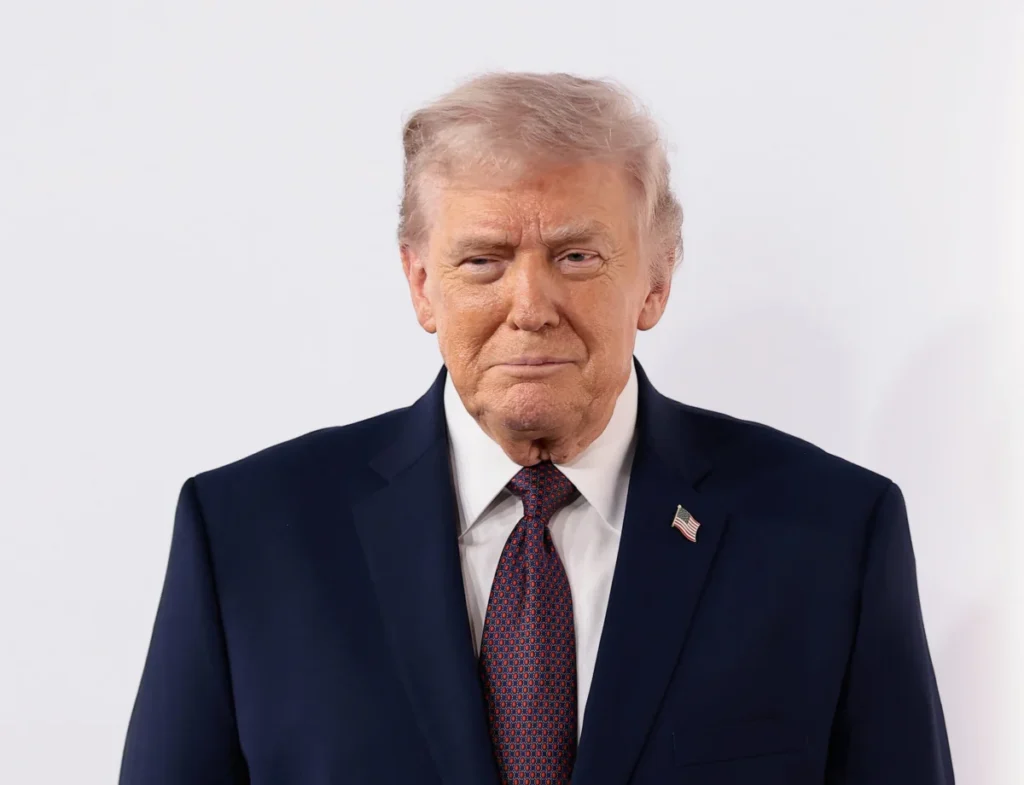

Former President Donald Trump launched an unprecedented and blistering online assault on Pope Leo XIV this past weekend, following the pontiff’s public condemnation of Trump’s ongoing military engagement in Iran. The fiery response, disseminated across Trump’s Truth Social platform, marked a dramatic escalation in tensions between the former president and the Vatican, drawing sharp criticism from within the Catholic Church and raising significant questions about the intersection of political rhetoric and religious leadership in an era of heightened global conflict.
The genesis of Trump’s vitriolic reaction appears to be a segment on the acclaimed CBS news program 60 Minutes. During the broadcast, three prominent Catholic cardinals voiced profound concerns regarding the perceived callousness of Trump’s public commentary on the war in Iran. Cardinal Blase Cupich, in particular, delivered a powerful indictment of Trump’s approach, stating, “We are dehumanizing the victims of war by turning the suffering of people and the killing of children and our own soldiers into entertainment.” Cupich further characterized Trump’s social media posts as “sickening,” elaborating, “To splice together movie cuts with actual bombing and targeting of people for the purposes of entertainment is sickening. This is not who we are. We’re better than this.”
These statements from the cardinals were presented in the context of Pope Leo XIV’s earlier, more direct denunciation of the Iran conflict. The pontiff’s criticism, it seems, served as the catalyst for Trump’s explosive online retort, which not only attacked the Pope’s stance on foreign policy but also delved into deeply personal and politically charged territory.
Trump’s Truth Social Offensive: A Multi-Pronged Attack
Trump’s Truth Social posts, which collectively constitute a significant public statement, can be dissected into several key thematic areas:
1. Accusations of Weakness and Ineffectiveness:
Trump’s opening salvo directly labeled Pope Leo XIV as “WEAK on Crime, and terrible for Foreign Policy.” This framing immediately attempted to reframe the Pope’s moral pronouncements through the lens of Trump’s own political priorities. He then pivoted to a historical grievance, accusing the Catholic Church and other Christian organizations of experiencing fear during the COVID-19 pandemic, citing instances of priests and ministers allegedly being arrested for holding services, even with social distancing measures in place. This historical accusation aimed to undermine the Pope’s moral authority by suggesting hypocrisy within the Church itself.
2. Disparagement of Papal Brother and Political Allegiance:
In a particularly unusual move, Trump drew a distinction between Pope Leo XIV and his brother, Louis, stating, “I like his brother Louis much better than I like him, because Louis is all MAGA. He gets it, and Leo doesn’t!” This remark not only injected a highly partisan element into the critique of the Pope but also suggested a transactional understanding of religious affiliation, where political alignment dictates personal approval.
3. Foreign Policy Disagreements and National Security Concerns:
Trump then directly addressed the Pope’s presumed positions on critical international issues, particularly Iran’s nuclear ambitions and the situation in Venezuela. He declared, “I don’t want a Pope who thinks it’s OK for Iran to have a Nuclear Weapon.” This directly challenged the Pope’s perceived stance on a significant global security threat. Furthermore, Trump expressed his strong disagreement with any criticism of his administration’s actions in Venezuela, which he characterized as a necessary measure to combat drug trafficking and criminal elements entering the United States. His framing implied that the Pope’s criticism of U.S. foreign policy was out of step with perceived national interests.
4. Dismissal of Papal Authority and Election Narrative:
Perhaps the most audacious claim was Trump’s assertion that Pope Leo XIV’s election was a “shocking surprise” and that he was “only put there by the Church because he was an American, and they thought that would be the best way to deal with President Donald J. Trump.” He went further, stating, “If I wasn’t in the White House, Leo wouldn’t be in the Vatican.” This conspiracy-laden narrative sought to delegitimize the Pope’s position by suggesting it was politically motivated and dependent on Trump’s presidency, thereby diminishing the spiritual and institutional authority of the papacy.
5. Renewed Attacks on "Liberalism" and Political Advising:
Trump reiterated his critique of the Pope as being “weak on crime [and] weak on nuclear weapons.” He also expressed his disapproval of the Pope meeting with individuals Trump perceived as “Obama Sympathizers,” specifically naming David Axelrod as a “LOSER from the Left.” This accusation aimed to portray the Pope as being unduly influenced by liberal political figures, further alienating him from Trump’s base. The former president concluded by urging the Pope to “get his act together,” “use Common Sense,” and stop “catering to the Radical Left,” urging him to focus on being a “Great Pope, not a Politician.”
The AI Image and On-Air Remarks
Adding another layer to the controversy, Trump later posted an AI-generated image on Truth Social depicting himself as Jesus Christ performing a miracle on a sick man. While the direct link to his critique of the Pope was not explicitly stated, the timing and the religious iconography strongly suggested a deliberate juxtaposition, potentially intended to portray himself as a divinely favored figure in contrast to the Pope he was actively criticizing.
Furthermore, Trump’s interactions with reporters outside Air Force One on Sunday evening reinforced his public stance. He reiterated his displeasure with a pope who would allegedly deem Iran’s nuclear weapons program acceptable, stating, “I am not a big fan of Pope Leo. He’s a very liberal person. He’s a man that doesn’t believe in stopping crime.” These remarks, made in a more direct and public forum than his Truth Social posts, amplified the controversial message to a wider audience.
Background and Context: The Iran Conflict and Papal Diplomacy
The military engagement in Iran, which Trump refers to as “his war,” has been a complex and evolving situation. While specific details of the conflict are not provided in the original text, the context suggests a significant intervention by the Trump administration, likely involving military operations with substantial human cost.
Historically, the Vatican, under various pontiffs, has consistently advocated for peace, diplomatic solutions, and the protection of civilians in conflict zones. Papal pronouncements on war and peace are rooted in centuries of Catholic social teaching, emphasizing the sanctity of life, the dignity of every human person, and the pursuit of justice. Pope Leo XIV’s criticism of the Iran war, therefore, aligns with this long-standing tradition of papal engagement with global humanitarian crises.
The cardinals’ appearance on 60 Minutes and their explicit condemnation of Trump’s rhetoric indicate a significant level of concern within the American hierarchy of the Catholic Church regarding the impact of political discourse on public perception of war and suffering. Their intervention suggests a belief that Trump’s approach not only trivialized the human cost of the conflict but also potentially undermined the moral standing of religious institutions in advocating for peace.
Analysis of Implications
Trump’s direct and aggressive attack on the Pope carries several significant implications:
- Erosion of Respect for Religious Authority: By publicly denigrating the Pope and questioning his legitimacy and motivations, Trump’s actions could contribute to a broader erosion of respect for religious leaders and institutions, particularly among his political base. This could have long-term consequences for the role of faith in public discourse.
- Polarization of Religious Communities: The attempt to divide Catholic communities by favoring a hypothetical "MAGA Pope" brother over the actual pontiff highlights a strategy of political polarization that extends even to religious figures. This could further alienate moderate Catholics and create deeper divisions within the faithful.
- International Relations and Diplomatic Norms: The unprecedented nature of a former U.S. president engaging in such a public and vitriolic dispute with the head of the Catholic Church can have repercussions for international relations. While the papacy is a spiritual leader, it also holds diplomatic standing in many countries.
- The Role of Social Media in Political Discourse: The incident underscores the power and potential destructiveness of social media platforms like Truth Social in shaping political narratives and facilitating direct, often unfiltered, attacks on prominent figures, including global religious leaders.
- Debate on War Ethics and Media Representation: The core of the conflict, the dehumanization of war victims and the use of suffering for entertainment, raises crucial ethical questions about how conflicts are reported, consumed, and discussed in the digital age. The cardinals’ comments and Trump’s response highlight a starkly different understanding of responsibility and empathy.
The controversy ignited by Donald Trump’s social media campaign against Pope Leo XIV is likely to reverberate for some time, prompting renewed discussions about the boundaries of political rhetoric, the role of religious leaders in global affairs, and the ethical considerations of modern warfare and its media representation. The clash between a former president’s assertive, often confrontational, political style and the Vatican’s long-standing commitment to peace and human dignity has created a potent and deeply divisive public spectacle.