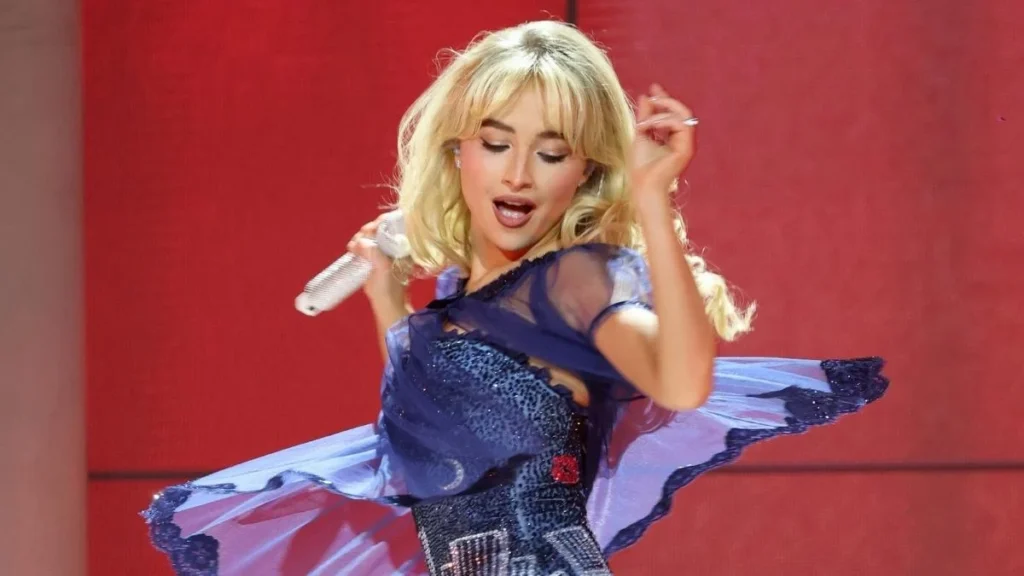

Sabrina Carpenter’s presence at the Coachella Valley Music and Arts Festival in 2026 served as a definitive moment for the artist, blending high-concept fashion with a meticulously choreographed pop spectacle. While the festival is renowned for its diverse musical lineup, Carpenter’s set stood out as a masterclass in visual storytelling, utilizing rapid wardrobe transitions to mirror the evolving energy of her discography. The performance, which drew thousands of fans to the main stage, was characterized by a seamless blend of sheer lace, sculptural silhouettes, and Western-inspired fringe, cementing her status as a leading figure in both the music and fashion industries.
The Architectural Opening: The Sheer Lace Bodysuit
The performance commenced with a high-drama visual statement as Carpenter emerged in a semi-sheer lace bodysuit. This initial look was designed to evoke a sense of ethereal sophistication, featuring intricate embroidery that played with transparency and texture. The most striking element of the ensemble was a sculptural, wing-like train that extended several feet behind her, creating a dramatic silhouette against the desert backdrop.
This opening garment was more than just a fashion choice; it served as a theatrical prop. The "wings" added a layer of grandiosity to the opening numbers, emphasizing Carpenter’s command over the stage. In the world of live performance, such elaborate pieces are often used to establish a "larger-than-life" persona before the artist transitions into more mobile attire for high-energy choreography. The lace bodysuit, while visually stunning, was temporary, designed to be shed as the set progressed into more rhythmically demanding segments.
The Mid-Set Transition: From High-Fashion to Performance-Ready
As the introductory notes of her hit single “Feather” began to echo across the Polo Club grounds, Carpenter executed a swift wardrobe change that signaled a shift in the show’s tempo. The removal of the lace bodysuit revealed a white halter-neck bikini-style top, which featured a complex arrangement of asymmetrical pearl strands. These pearls draped elegantly across her torso, catching the stage lights and adding a three-dimensional quality to the look.
The lower half of the ensemble consisted of low-rise micro shorts paired with a calf-length fringe skirt. The choice of fringe was particularly effective for the Coachella environment, as the material is known for its fluid movement. As Carpenter moved down the catwalk and engaged in synchronized choreography, the fringe enhanced the visual rhythm of her performance, swaying in time with the beat. This transition allowed the artist to move with greater freedom, facilitating the athletic dance sequences that have become a hallmark of her live shows.
Setlist Dynamics and Choreographic Precision
The wardrobe changes were strategically timed to coincide with the emotional and energetic shifts of the setlist. Following the "Feather" transition, Carpenter moved through a series of fan-favorite tracks, including "Juno" and the global chart-topper "Espresso." Each song was accompanied by specific staging elements, including stylized chair sequences that required a high degree of mobility from the performer.
The setlist for Coachella 2026 included:
- Intro/Opening: Orchestral arrangement of "Feather" (Lace Bodysuit)
- Act I: "Read Your Mind" and "Vicious"
- The Transition: "Feather" (Reveal of Bikini and Fringe look)
- Act II: "Juno" and "Espresso"
- Act III: "Nonsense" (with custom Coachella outro)
- Finale: "Goodbye"
The choreography, developed in collaboration with world-class movement directors, utilized the entirety of the stage. The use of the fringe skirt during "Espresso" was particularly noted by spectators, as the garment’s movement emphasized the song’s upbeat, summer-inflected tempo. The performance concluded with "Goodbye," a more introspective track that allowed the visual focus to shift back to Carpenter’s vocal delivery, rounding out a set that was as musically diverse as it was visually complex.
The Cultural Context of Coachella Fashion
Coachella has long served as a primary runway for "festival fashion," but in recent years, the emphasis has shifted from attendee style to the bespoke stage wear of the performers. Sabrina Carpenter’s 2026 wardrobe is a testament to the increasing professionalization of stage fashion. The shift from a "red carpet" aesthetic (the lace train) to a "performance" aesthetic (the fringe and shorts) reflects a broader trend among pop vocalists who prioritize both form and function.
The "Short n’ Sweet" aesthetic, which Carpenter has championed throughout her recent career phases, was on full display. This style—characterized by a mix of vintage feminine tropes, such as lace and pearls, with modern, daring silhouettes—has influenced a significant portion of her fanbase. Industry analysts note that Carpenter’s ability to sell a cohesive visual brand is a major factor in her commercial success. The Coachella set served as a live-action lookbook for this brand, reinforcing her image as a sophisticated yet accessible pop icon.
Technical Execution and Creative Team Collaboration
A performance of this scale requires a massive behind-the-scenes effort. While the artist is the face of the show, the seamless wardrobe transitions are the result of months of planning by a dedicated team of stylists, dressers, and stagehands. Quick changes at festivals like Coachella are notoriously difficult due to the heat, wind, and the tight scheduling of back-to-back sets.
The rigging of the lace bodysuit for an easy "tear-away" or "step-out" transition suggests a high level of technical engineering in the garment’s construction. Furthermore, the use of pearls as a primary embellishment on the bikini top required careful attachment to ensure they remained intact during high-intensity dancing. Reports from the festival’s production crew indicate that Carpenter’s team utilized a dedicated "quick-change" tent located just off-stage, allowing the artist to switch looks in under 90 seconds.
Audience Reception and Social Media Impact
The reaction to Carpenter’s Coachella set was immediate and overwhelmingly positive. Social media platforms were flooded with clips of the "Feather" transition, with fashion enthusiasts praising the asymmetrical pearl detailing. On X (formerly Twitter) and TikTok, the "fringe skirt" look became a viral sensation, with fans dissecting the materials and seeking affordable recreations of the outfit.
Data from social media monitoring tools indicated that "Sabrina Carpenter Coachella" was a top-trending topic for 48 hours following her performance. The engagement metrics were bolstered not only by her musical performance but by the "shareability" of her fashion moments. In the modern music industry, a viral outfit change can be just as impactful as a hit single in terms of maintaining an artist’s relevance and reaching new audiences.
Broader Implications for the Pop Music Landscape
Carpenter’s performance at Coachella 2026 highlights the evolving expectations for pop stars. It is no longer sufficient to simply deliver a vocal performance; artists are now expected to curate an entire sensory experience. The integration of high fashion into the live set serves to elevate the concert from a musical event to a piece of performance art.
Furthermore, the success of this set underscores the importance of Coachella as a platform for career-defining moments. For Carpenter, the 2026 set represented a graduation to a new tier of stardom. By successfully navigating the technical and artistic challenges of a major festival headlining slot, she has positioned herself as a reliable and innovative live performer.
The use of specific motifs—the pearls, the lace, the fringe—creates a visual language that fans can recognize and emulate. This creates a deeper connection between the artist and the audience, as the fashion becomes a shared part of the fan experience. As other artists look to make their mark on the festival circuit, Carpenter’s Coachella 2026 performance will likely be cited as a blueprint for how to balance fashion, choreography, and music in a high-pressure environment.
Conclusion: A Legacy of Style and Sound
As the dust settles on Coachella 2026, Sabrina Carpenter’s set remains a highlight of the festival. Her ability to trade a sheer lacy bodysuit for a bikini top and fringe skirt mid-performance was more than just a costume change; it was a strategic move that enhanced the narrative arc of her show. Through careful planning, creative collaboration, and a keen understanding of her own brand, Carpenter delivered a performance that satisfied both the ears and the eyes of her global audience.
The performance serves as a reminder that in the world of pop music, the visual is often just as important as the auditory. As Carpenter continues her "Short n’ Sweet" era and moves toward future projects, the lessons learned and the trends set at Coachella 2026 will undoubtedly influence the next generation of performers. For now, the image of the fringe skirt moving in the desert breeze remains an iconic symbol of a pop star at the height of her powers.