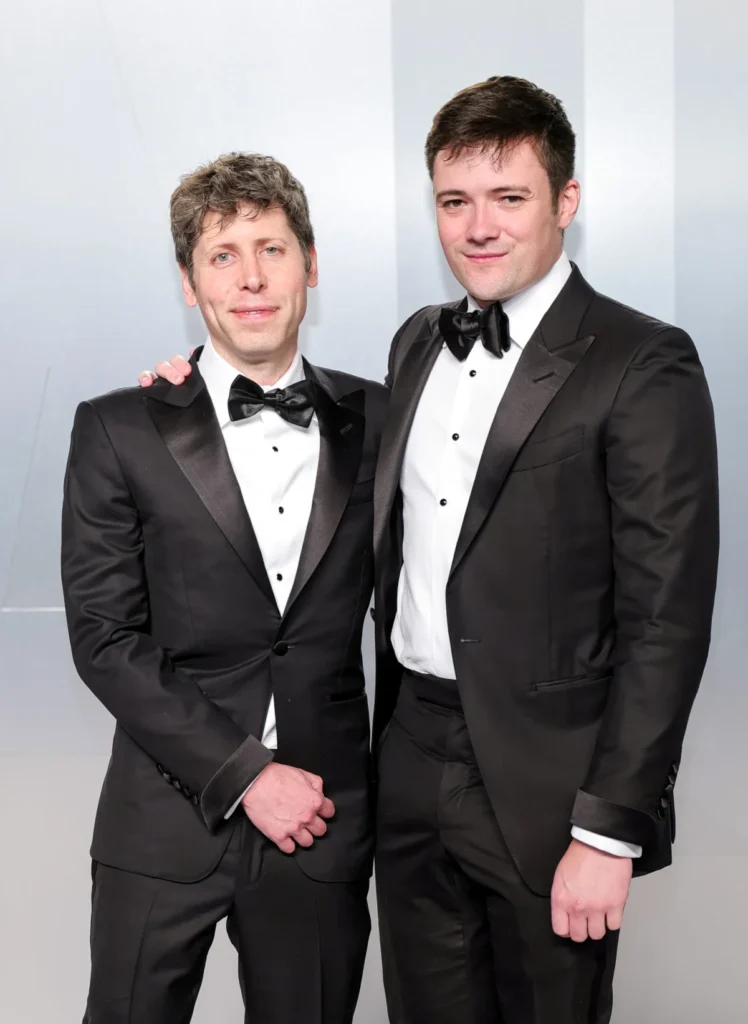

San Francisco police arrested an individual on Friday, April 10, 2026, after they allegedly threw a Molotov cocktail at the residence of OpenAI CEO Sam Altman and subsequently made threats outside the company’s headquarters. The alarming incident, which resulted in no reported injuries, transpired against a backdrop of heightened public anxiety surrounding artificial intelligence development and recent critical media scrutiny of Altman’s leadership and the power dynamics within the burgeoning AI industry.
A Chronology of Events Leading to the Attack
The dramatic events of Friday unfolded following a week already marked by significant headlines for Sam Altman. The preceding days saw the publication of a comprehensive and critical investigation by Ronan Farrow and Andrew Marantz in The New Yorker, titled "Sam Altman May Control Our Future. Can He Be Trusted?" This article, delving into Altman’s influence and OpenAI’s governance, set a tense stage for what was to come.
In the early hours of Friday, April 10, specifically at 3:45 AM, an assailant reportedly threw a Molotov cocktail at Sam Altman’s home in San Francisco. Fortunately, Altman later confirmed in a blog post that the incendiary device bounced off the house, preventing serious damage or injury. Hours later, the same individual allegedly escalated their actions by making threats directly outside the OpenAI headquarters, further intensifying the security concerns for the company’s employees.
The San Francisco Police Department (SFPD) responded swiftly to the incident. Officers successfully apprehended an individual, taking them into custody. OpenAI promptly released a statement confirming the incident and expressing gratitude for the rapid response from law enforcement. "We deeply appreciate how quickly SFPD responded and the support from the city in helping keep our employees safe," OpenAI stated. "The individual is in custody, and we’re assisting law enforcement with their investigation." The SFPD also issued a public statement via their official social media channels, confirming the arrest and reiterating that no injuries had been reported.
Later the same day, Sam Altman himself broke his usual private stance to address the events in a candid personal blog post titled "2279512." This post served as a direct response to both the physical attack on his home and the preceding New Yorker article, illustrating the deep personal impact of the week’s developments. In a moment of raw honesty, Altman initially described the New Yorker article as "incendiary," a term he later publicly retracted on X (formerly Twitter), acknowledging it was a poor choice of words made during a "tough day" when he wasn’t "thinking the most clearly."
Background and Context: AI’s Public Face Under Fire
Sam Altman stands as one of the most recognizable and influential figures in the global technology landscape, particularly within the field of artificial intelligence. As the CEO of OpenAI, the company behind revolutionary tools like ChatGPT and DALL-E, Altman is widely regarded as the public face of the push towards artificial general intelligence (AGI). His vision and leadership have propelled OpenAI to the forefront of an industry poised to reshape virtually every aspect of society. However, this prominence also places him directly in the crosshairs of intense public scrutiny, ethical debates, and anxieties surrounding the rapid advancement of AI.
OpenAI’s mission, ostensibly dedicated to ensuring that AGI benefits all of humanity, has been met with both widespread admiration and significant skepticism. The rapid deployment of its "world-shifting tools" has sparked global conversations about job displacement, algorithmic bias, misinformation, and even existential risks posed by superintelligent systems. This climate of both excitement and apprehension forms the critical backdrop against which the Molotov cocktail incident and the New Yorker investigation must be understood.
The New Yorker article by Ronan Farrow and Andrew Marantz represented a significant moment of journalistic deep-dive into Altman’s leadership and the inner workings of OpenAI. Farrow, known for his impactful investigative journalism, co-authored a piece that reportedly questioned Altman’s concentration of power, the company’s governance structure, and the speed at which OpenAI is deploying powerful AI systems without fully addressing potential societal ramifications. The article likely revisited the highly publicized governance crisis of November 2023, when Altman was briefly fired by OpenAI’s board before being reinstated amidst widespread employee and investor pressure. This internal turmoil had already exposed cracks in the company’s leadership and raised questions about accountability and decision-making at the highest levels of a company building potentially world-altering technology. The New Yorker piece, therefore, served to amplify existing concerns and contributed to a narrative that portrayed Altman as a powerful, perhaps even controversial, figure at the helm of an industry with immense, yet uncertain, consequences.
Official Responses and Altman’s Candid Reflections

The immediate response from both law enforcement and OpenAI underscored the seriousness of the attack. SFPD’s swift action in apprehending the suspect was crucial in de-escalating the situation and ensuring public safety. OpenAI’s statement, while brief, highlighted their gratitude for the police’s efficiency and their commitment to employee safety, signaling a clear stance against any form of violence or intimidation.
However, it was Sam Altman’s personal blog post that offered the most profound insights into the emotional and intellectual toll of the week. Opening with a poignant decision to share a photo featuring his husband, Oliver Mulherin, and their child – a deliberate move to humanize himself and deter future attacks – Altman laid bare the shock of the 3:45 AM incident. "Images have power, I hope. Normally we try to be pretty private, but in this case I am sharing a photo in the hopes that it might dissuade the next person from throwing a Molotov cocktail at our house, no matter what they think about me," he wrote, revealing a rare glimpse into his personal life to make a public plea for safety.
Altman then directly linked the physical attack to the power of media narratives, particularly The New Yorker article. He recounted a conversation where someone suggested the article, published amidst "great anxiety about AI," made things more dangerous for him. His initial dismissal of this notion was shattered by the reality of the Molotov cocktail. "Now I am awake in the middle of the night and pissed, and thinking that I have underestimated the power of words and narratives," he confessed, acknowledging the profound impact of public discourse on personal safety. His subsequent walk-back on X, apologizing for calling the article "incendiary," further illustrated the pressure and emotional turmoil he was experiencing.
Beyond the immediate events, Altman used his blog post as a platform for candid self-reflection and a broader discourse on his beliefs regarding AI and OpenAI’s trajectory. He acknowledged his own imperfections, stating, "I am a flawed person in the center of an exceptionally complex situation, trying to get a little better each year, always working for the mission." This included a direct apology for his conduct during the previous board conflict: "I am not proud of handling myself badly in a conflict with our previous board that led to a huge mess for the company… I am sorry to people I’ve hurt and wish I had learned more faster." This rare public admission of fault from a tech titan offered a human dimension to the often-impersonal world of AI development.
Altman then articulated his core philosophy for navigating the AI revolution. He recognized the legitimacy of public fear and anxiety, describing AI’s advent as "the largest change to society in a long time, and perhaps ever." He emphasized the urgent need for comprehensive safety measures, extending beyond mere model alignment to a "society-wide response to be resilient to new threats," including "new policy to help navigate through a difficult economic transition." Crucially, Altman advocated for the democratization of AI, asserting that "power cannot be concentrated" and that "it isn’t right for only a few AI labs to make the most consequential decisions about the shape of our future." This stance directly addresses criticisms about the centralization of power within the AI industry, a point often raised in discussions about OpenAI’s structure and influence.
Despite the challenges and personal attacks, Altman expressed immense pride in OpenAI’s achievements. He highlighted the company’s success in building powerful AI, securing necessary capital and infrastructure, developing robust products, and delivering "reasonably safe and robust services at a massive scale." His concluding statement on this point was unequivocal: "A lot of companies say they are going to change the world; we actually did."
Broader Implications and Analysis
The Molotov cocktail attack on Sam Altman’s home marks a concerning escalation in the discourse surrounding artificial intelligence and the personal security of high-profile tech leaders. It underscores a growing intensity in public sentiment, where abstract anxieties about technological advancement can translate into tangible threats against individuals.
One of the most significant implications of this incident is the stark reminder of the intersection between media scrutiny and real-world consequences. Altman’s immediate connection between the "power of words and narratives" and the physical attack highlights a dangerous dynamic. While critical journalism is vital for accountability and public discourse, particularly concerning powerful technologies, this event suggests a need for careful consideration of how narratives are framed and received, especially in a climate of widespread societal unease. The incident serves as a cautionary tale about the potential for extreme reactions when complex technological debates become highly personalized or politicized.
Furthermore, the attack brings the AI safety and ethics debate into sharper, more urgent focus. Altman’s call for a "society-wide response" to new threats and for the democratization of AI power takes on new weight when delivered in the immediate aftermath of a violent personal attack. It reinforces the idea that the concerns surrounding AI are not merely theoretical; they are deeply felt and, for some, provocative enough to incite extreme actions. This could push AI developers and policymakers to accelerate efforts in areas like transparency, public engagement, and robust regulatory frameworks to mitigate risks and rebuild public trust.
For OpenAI itself, this incident, coupled with the New Yorker investigation and past governance issues, maintains a spotlight on its internal culture and leadership. Altman’s public apology for past behavior and his renewed commitment to democratization could be seen as an attempt to address long-standing criticisms and reassert a more responsible image for the company. However, the external threat also poses challenges to maintaining focus on its core mission amidst security concerns and continued public scrutiny.
Ultimately, the Molotov cocktail incident serves as a sobering indicator of the profound societal adaptation required by the rapid march of AI. As Altman himself noted, humanity is witnessing a change perhaps unprecedented in history. Navigating this transition demands not only technological innovation but also robust public dialogue, ethical foresight, and, critically, a commitment to civil discourse even when passions run high. The ongoing investigation into the assailant’s motives will shed more light on the immediate cause of the attack, but the broader societal implications of such an act against a leader in the AI field will undoubtedly resonate for a long time to come. It challenges all stakeholders – tech leaders, journalists, policymakers, and the public – to engage with the future of AI with both critical vigilance and a shared commitment to safety and mutual respect.