
Every April, the city of Milan undergoes a profound metamorphosis, shifting from Italy’s financial engine into the undisputed global epicenter of the design industry. This transformation is driven by the Salone del Mobile, the world’s largest and most influential furniture fair, which attracts hundreds of thousands of international visitors to the Rho Fiera Milano fairgrounds. While the official fair hosts nearly 2,000 exhibitors across over 200,000 square meters of floor space, the true essence of Milan Design Week—known locally as the Fuorisalone—permeates the city’s historical center, spilling into private courtyards, hidden palaces, and industrial warehouses. For the seasoned professional and the local resident, the week is defined less by the formal trade show and more by the serendipitous connections made over an aperitivo or behind the discreet doors of a Renaissance-era palazzo.
The Historical Evolution of Salone del Mobile and Fuorisalone
To understand the current scale of Milan Design Week, one must look to its origins in 1961. Initially conceived by a small group of furniture makers to promote Italian exports, the Salone del Mobile quickly outgrew its commercial roots to become a cultural phenomenon. By the 1980s, the "Fuorisalone" began to emerge as an organic alternative to the rigid structure of the trade fair. Brands, designers, and experimental collectives started hosting independent events in the city’s Brera and Tortona districts, creating a decentralized model that has since been emulated by cities like London, Paris, and New York.
%20Veneranda%20Biblioteca%20Ambrosiana%20Ph.%20Andrea%20Pignagnoli%20(1).jpeg)
Today, the event is a multi-billion-euro engine for the Lombardy region. Industry analysts estimate that Design Week generates over €250 million in direct revenue for Milan’s hospitality and retail sectors alone. However, the intangible value lies in the networking. As design luminaries and emerging talents descend upon the city, collaborations are forged not in boardrooms, but over plates of pasta at Ristorante Da Giacomo or during late-night gatherings at the iconic Bar Basso.
Strategic Navigation: The District Model of Milanese Design
The sprawling nature of the event requires a tactical approach to navigation. Milanese design insiders emphasize that the most rewarding experiences are found by exploring the city’s distinct neighborhoods, each of which adopts a unique personality during the festival.
Brera and the Design District
Brera remains the perennial heart of the Fuorisalone. Known for its narrow cobblestone streets and high-end showrooms, it serves as the primary circuit for established luxury brands. Experts like J.J. Martin, founder of La DoubleJ, suggest focusing on Via Brera and Via Fiori Chiari. Key stops often include the Dedar showroom, the historic Bar Jamaica—a legendary haunt for artists and intellectuals since 1911—and the cutting-edge installations at Dimorestudio’s gallery.

Cinque Vie: The Artisan’s Quarter
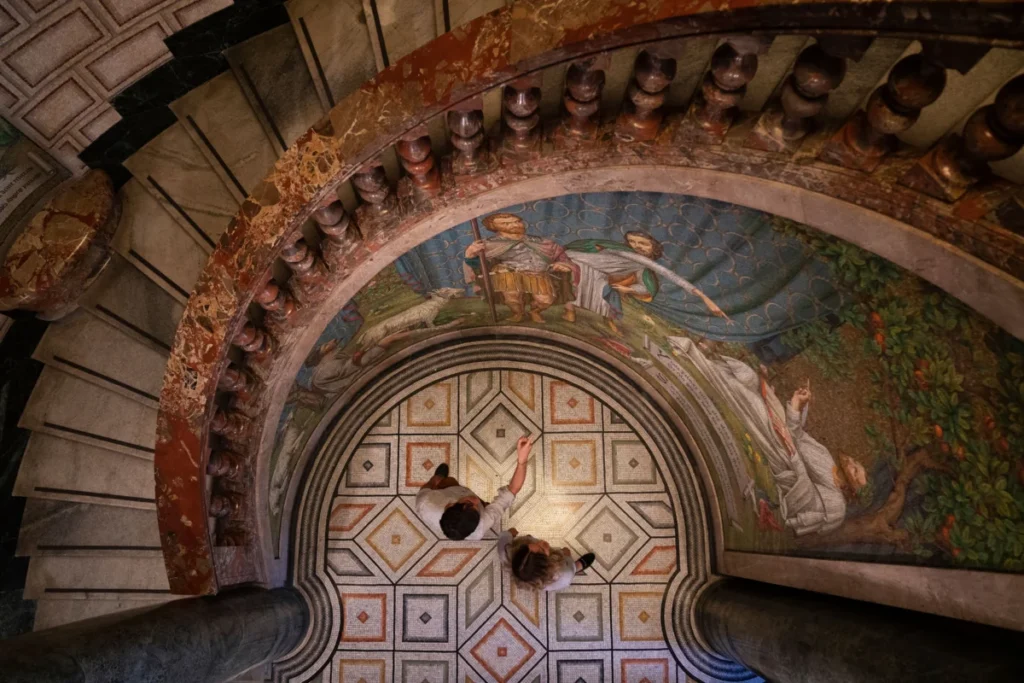
For those seeking a more historical and artisanal perspective, the Cinque Vie district offers a glimpse into Milan’s "old world" charm. Jewelry designer Madina Visconti notes that this neighborhood is one of the rare areas where prominent Milanese families still reside in their ancestral palaces. During Design Week, many of these private courtyards are opened to the public, hosting experimental installations that contrast contemporary design with centuries-old architecture. Osanna Visconti, a renowned artist and designer, recommends visiting the Ambrosiana library and museum, which houses Leonardo da Vinci’s Codex Atlanticus, as a reminder of the city’s long-standing relationship with innovation and draftsmanship.
Isola and Tortona: The New Frontiers
While Brera and Cinque Vie represent tradition, neighborhoods like Isola and Tortona represent the future. Isola, located in the shadow of the Bosco Verticale (Vertical Forest), has seen a recent surge in boutique openings and artisan workshops. Designer Margherita Maccapani Missoni highlights the area’s "creative spirit," noting that it often hosts younger, more experimental designers who are less bound by the commercial pressures of the main fairgrounds.
Architectural Heritage and the House Museum Circuit
A significant draw of Milan Design Week is the opportunity to enter architectural landmarks that are typically restricted. Milan is home to a series of "house museums" that provide context for the city’s aesthetic evolution.

The Villa Necchi Campiglio, a 1935 masterpiece by architect Piero Portaluppi, is a frequent favorite among design historians. The villa, which represents the height of Milanese rationalism, offers a stark contrast to the flamboyant installations of the modern fair. Similarly, the Museo Poldi Pezzoli and the Bagatti Valsecchi Museum allow visitors to see how historical collections of Northern Italian and Flemish art inform contemporary Italian sensibilities.
Newer cultural foundations have also joined the circuit. The Fondazione Luigi Rovati, for instance, integrates Etruscan artifacts with modern works by Giacometti, offering a layered narrative of Italian history. These venues serve as essential "breathing spaces" for visitors overwhelmed by the relentless pace of the Rho fairgrounds.
The Cultural Economy of Aperitivo and Gastronomy
In Italy, the boundary between professional networking and social ritual is intentionally blurred. The "aperitivo" is not merely a pre-dinner drink but a strategic window for deal-making and trend-spotting.

Nina Yashar, the founder of the influential Nilufar Gallery, cites Sant Ambroeus as a primary meeting point for high-level discussions. For a more casual, yet historically significant experience, Bar Basso remains the "headquarters" for the design community. It is here that the Negroni Sbagliato was famously invented, and during Design Week, the crowd of furniture designers and architects typically overflows onto the sidewalk, creating a spontaneous forum for industry discourse.
Gastronomy also plays a role in the "local" experience. While quick snacks are often necessary, insiders recommend the counter at Marchesi 1824 for an authentic Milanese espresso al banco. For sit-down meals, Trattoria Masuelli is frequently cited for its preservation of 1920s elegance, featuring original Gio Ponti chandeliers—a detail not lost on the design-literate clientele.
Supporting Data: The Impact of Global Attendance
Recent data from the Salone del Mobile organizers indicates a significant shift in the demographics of attendees. While European visitors remain the majority, there has been a 20% increase in delegates from North America and East Asia over the last three cycles. This globalization has forced the fair to adapt, introducing more digital integration and year-round programming to maintain its relevance in a digital-first world.

Hospitality statistics reflect this surge; hotel occupancy rates in Milan during Design Week typically exceed 95%, with average daily rates (ADR) increasing by as much as 300% compared to off-peak months. This economic pressure has led many visitors to seek accommodations in emerging districts or even neighboring cities like Como, utilizing the high-speed rail links that connect Northern Italy.
Logistical Preparations and Industry Reactions
For first-time visitors, the sheer scale of the event can be daunting. Official responses from city planners and event organizers emphasize a "district-a-day" strategy to mitigate fatigue. The introduction of the "Raritas" fair-within-a-fair this year marks a new effort to categorize collectible design, providing a more curated experience for serious investors and gallery owners.
Industry leaders, including Britt Moran of Dimorestudio, suggest that the most meaningful interactions often occur during "off-peak" hours. "The exhibitions are highly curated, but inevitably, the best moments come from getting lost in a hidden courtyard," Moran noted in a recent industry panel. This sentiment is echoed by many who believe that the "official" schedule should only serve as a loose framework for the week.

Practical Essentials for International Delegates
Professional visitors are advised to pack with versatility in mind. The Milanese "day-to-night" look involves a sophisticated balance of style and utility. Given the unpredictable spring weather and the miles of walking involved, stylish sneakers and high-quality tote bags for catalogs and business cards are considered essential equipment. Furthermore, booking accommodations up to a year in advance is no longer a suggestion but a necessity for those wishing to stay within the city’s design districts.
Broader Impact and the Future of Design
The implications of Milan Design Week extend far beyond the furniture industry. It serves as a bellwether for global trends in sustainability, materials science, and urban living. As the world grapples with environmental challenges, the 2024 and 2025 editions of the fair have placed a heightened emphasis on circular economy principles and bio-based materials.
The event also functions as a vital platform for cultural diplomacy. By opening its private homes and historical sites, Milan reinforces its status not just as a center of commerce, but as a guardian of Western aesthetic tradition. As Nina Yashar observes, the energy of the week lies in "unexpected encounters." Whether it is a chance meeting at a pop-up gallery in Isola or a discovery in the archives of the Triennale Milano, the week ensures that Milan remains the lens through which the world views the future of the domestic environment.

In conclusion, while the Salone del Mobile provides the formal structure, the city of Milan provides the soul. Navigating the week like a local requires a willingness to step off the beaten path, a respect for the city’s architectural history, and an understanding that in Italy, the best designs are often those that have been refined over generations. For the global design community, the pilgrimage to Milan remains an essential ritual—a week where the past and the future of human creativity exist in a vibrant, albeit exhausting, harmony.