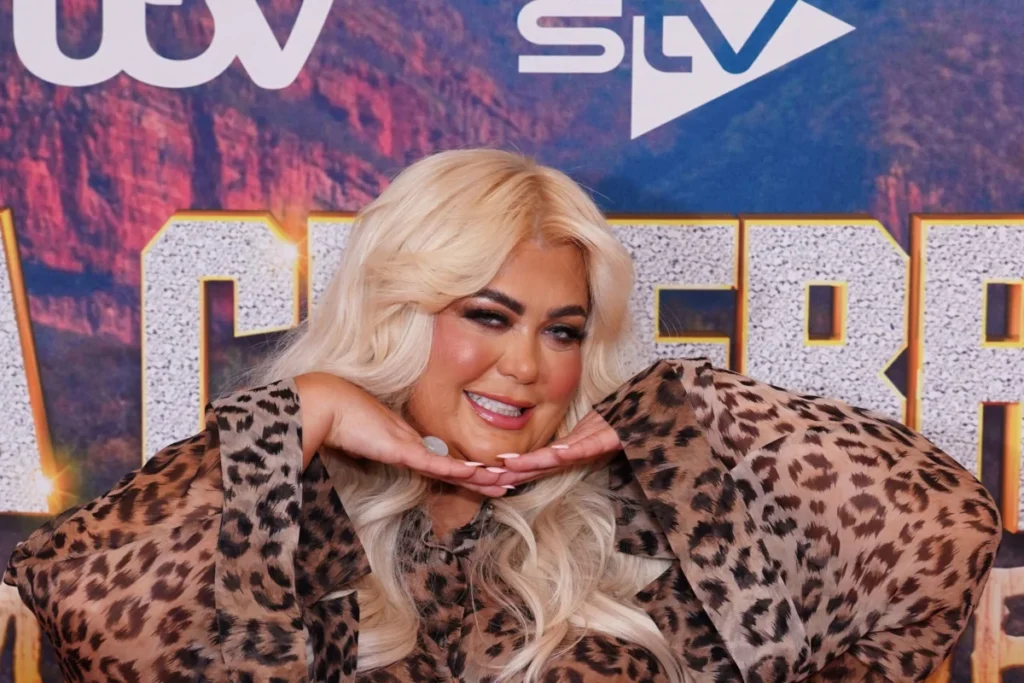

The latest episode of I’m A Celebrity… Get Me Out Of Here! South Africa is poised to deliver a dramatic escalation of tension, as reality television stalwart Gemma Collins is seen tearfully confiding in a fellow campmate about her fear of being perceived as weak, just moments before engaging in a sharp confrontation with pop icon Sinitta regarding her career and theatrical aspirations. The highly anticipated instalment, set to air on Thursday, showcases Collins grappling with the harsh realities of jungle life in the challenging Savannah Slum camp, culminating in an emotional outpouring and a direct challenge to her professional credibility upon the merger of the two distinct camp groups. This series, an ‘All-Stars’ iteration filmed in South Africa, is designed to bring back memorable and often controversial figures from the show’s extensive history, promising heightened drama and revisiting unresolved narratives from past seasons.
Collins’ Initial Ordeal and Emotional Vulnerability
From the outset of the preview, Gemma Collins, aged 45, whose public persona has been meticulously cultivated through her prolific reality television appearances, most notably on The Only Way Is Essex, demonstrates a profound struggle with the rudimentary conditions imposed by the Savannah Slum camp. Her discomfort is vividly illustrated by her candid confession to the Bush Telegraph, where she laments having endured a night in what she emphatically describes as “the worst possible bed.” This seemingly minor grievance quickly escalates into a broader philosophical commentary on the perceived entitlements of celebrity. Collins, known for her unapologetic and often extravagant lifestyle, articulates her belief that individuals of her stature should not be subjected to such deprivations, stating, “We shouldn’t be suffering. Like, let’s get real, we are celebrities – do you know what I mean? No one should have to suffer like this, let alone a celeb.” This statement, delivered with a characteristic blend of humour and genuine exasperation, initially elicits laughter from her campmates, a testament to her unique ability to blend self-awareness with a theatrical interpretation of her own struggles.
However, beneath the veneer of light-hearted complaint, a deeper vulnerability emerges. Following the inevitable merger of the Savannah Slum camp with the main camp, a pivotal moment in the show’s format designed to integrate previously separated contestants, Collins is seen in a significantly more distressed state. She seeks solace and counsel from Craig Charles, the DJ and Red Dwarf actor, with whom she shared a brief but impactful experience during her initial stint on I’m A Celebrity in 2014. In a tearful confession, Collins articulates her profound anxiety: “No one else knows me here and I don’t want them to think I’m weak.” This raw admission reveals the immense pressure many public figures face to maintain a strong, resilient facade, particularly within the unforgiving environment of reality television, where every emotional fluctuation is magnified and dissected by millions of viewers. Charles, drawing upon his own experience and their shared past, offers reassurance, encouraging her to embrace her authentic self: “You’re going to fit right in, just be yourself.” This moment underscores the psychological toll the jungle environment can take, pushing even the most seasoned celebrities to their emotional limits and exposing their deepest insecurities.

A History of Jungle Challenges: The Redemption Arc
Gemma Collins’ return to the I’m A Celebrity franchise for the South Africa series carries significant weight, as it represents a highly publicised attempt at a “redemption” arc. Her original appearance in the 2014 Australian series was famously cut short after a mere three days. Her premature departure was attributed to her profound inability to cope with the extreme conditions, including claustrophobia and a general aversion to the lack of creature comforts. That initial exit became a defining, albeit challenging, moment in her public narrative, often cited as an example of her perceived inability to handle adversity. Her decision to re-enter the jungle, this time in the more demanding ‘All-Stars’ format, was widely framed as an opportunity to prove her resilience, overcome past demons, and ultimately redefine her image as a more robust and adaptable individual. The current struggles, particularly her emotional vulnerability and complaints about basic amenities, directly challenge this redemption narrative, raising questions about whether she can truly conquer the environment that previously defeated her. This internal conflict between her desire for redemption and her inherent discomfort forms a central psychological drama of her participation this season.
The Confrontation: Sinitta Challenges Collins’ Credibility
The atmosphere in the main camp shifts dramatically with the arrival of the Savannah Slum contingent, and with it, a new dynamic emerges, particularly between Gemma Collins and fellow campmate Sinitta. Sinitta, a pop singer and television personality with a long-standing career rooted in the music industry and a close association with The X Factor judge Simon Cowell, quickly initiates a probing line of questioning directed at Collins. The focal point of this interrogation centres on Collins’ professional background and, more specifically, her brief but highly publicised involvement with the West End musical Chicago.
Collins had been slated to star as Matron “Mama” Morton in a 2022 production of the iconic musical. This announcement had generated considerable media buzz, representing a significant foray for the reality star into legitimate theatrical performance. However, her participation was ultimately curtailed, with Collins withdrawing from the production citing a “terrible injury.” This withdrawal left a lingering question mark over her theatrical capabilities and the feasibility of her transition from reality television to musical theatre.
Sinitta, who herself has experience performing in Chicago on stage, approaches the subject with a directness that borders on skepticism. She informs Collins that she initially perceived the casting announcement as a “joke.” Collins, visibly taken aback and defensive, retorts, “It’s not a joke, Sinitta, I auditioned for it fair and square. Did all the training and everything, had a voice coach.” This exchange highlights a common tension within the entertainment industry: the debate between traditional talent pathways and the increasing trend of casting celebrity personalities, often from reality television, in established theatrical roles to boost ticket sales and media attention.

Sinitta elaborates on her perspective, contextualising her doubt: “I think you had just presented something, some awards, and fallen off the stage – it was like you were more of a comedian.” She further draws a comparison, likening Collins to the legendary Hollywood socialite Zsa Zsa Gabor, remarking, “Very camp, very glamorous. You don’t really do anything, but you make a great entrance and make everybody laugh. I didn’t know you could actually sing, dance and all that jazz.” This cutting assessment not only dismisses Collins’ theatrical ambition but also frames her career primarily as that of a comedic personality, rather than a performer with diverse talents. The implication is clear: Sinitta believes Collins lacks the fundamental skills traditionally required for a role in a demanding musical like Chicago.
The impact of this direct challenge is palpable within the camp. Fellow contestants, including former Gogglebox star Scarlett Moffatt and comedian Seann Walsh, are visibly taken aback by the intensity of the discussion, their expressions conveying a mixture of shock and awkwardness. Collins, determined to defend her professional integrity, reiterates her point, asserting, “I don’t think you’d get cast as Mama Morton in Chicago if you didn’t pass the audition.” This statement underscores her belief in the legitimacy of her audition process and the professional validation it implied, regardless of Sinitta’s personal opinion. The confrontation serves as a microcosm of the broader public discourse surrounding celebrity casting, where the artistic merit of such decisions is frequently weighed against their commercial appeal.
The Iconic Musical "Chicago": A Background
To fully grasp the weight of Sinitta’s comments, it’s essential to understand the legacy and demands of Chicago. First staged in 1975 with music by John Kander, lyrics by Fred Ebb, and a book by Ebb and Bob Fosse, Chicago is one of Broadway’s longest-running musicals. Its satirical take on corruption and celebrity in the 1920s jazz age, coupled with its distinctive Fosse choreography and iconic songs, has cemented its place in theatrical history. The role of Matron "Mama" Morton, the cynical, manipulative, yet ultimately pragmatic warden of the Cook County Jail, is a pivotal character. "Mama" Morton is known for her powerful vocal solos, notably "When You’re Good to Mama," and requires a performer with strong stage presence, comedic timing, and significant vocal prowess. The role has been played by numerous acclaimed actresses and singers over the decades, both on Broadway and in the West End, with a tradition of sometimes casting well-known personalities to bring fresh audiences to the show. However, even these celebrity castings are typically expected to meet rigorous vocal and performance standards, a point Sinitta seemingly highlights with her skeptical remarks about Collins’ suitability. Sinitta herself, having performed in the musical, possesses firsthand knowledge of the dedication and talent required, lending a certain authority to her criticisms, even if delivered controversially.
The "Petrifying Plunge" Bushtucker Trial
Adding to the emotional and interpersonal drama, the episode also features a harrowing Bushtucker Trial known as the “Petrifying Plunge,” specifically undertaken by the residents of the Savannah Slum camp. These trials are a cornerstone of the I’m A Celebrity format, designed to push contestants to their physical and psychological limits, often involving close encounters with exotic animals, confined spaces, and unpleasant substances, all in the pursuit of food for the camp.

The “Petrifying Plunge” is presented as a particularly intense challenge. The stars are required to submerge themselves in confined boxes filled with water, which are also inhabited by various aquatic creatures, including crocodiles and catfish. Within these claustrophobic, water-filled enclosures, contestants must navigate through the murky depths, searching and digging for keys. The successful retrieval of these keys is crucial for winning meals for the entire camp, placing immense pressure on each participant.
Gemma Collins’ reaction to this trial is immediate and visceral. As she finds herself trapped in the confined, water-filled space, her deep-seated anxieties and claustrophobia, which famously contributed to her early exit in 2014, resurface dramatically. She is seen panicking, her voice echoing with distress as she repeatedly questions, “Have I got air, have I got air?” This moment serves as a powerful reminder of the genuine fear and physical discomfort that contestants endure, offering viewers an unfiltered glimpse into the psychological challenges of the show. Her struggle in this trial, juxtaposed with her earlier tearful admission to Craig Charles, further complicates her “redemption” narrative, presenting a compelling picture of a celebrity grappling with both internal demons and external pressures. The successful navigation of such a trial, despite her profound fear, would be a significant triumph, while failure might reinforce the very image of weakness she desperately seeks to shed.
Broader Implications and Public Reception
The events unfolding in this episode are likely to have significant implications for the show’s narrative, the public perception of the involved celebrities, and the broader discourse surrounding reality television. I’m A Celebrity… Get Me Out Of Here! South Africa, by its very nature as an ‘All-Stars’ edition, thrives on revisiting past dramas and creating new ones among its cast of familiar faces. The producers’ decision to bring back high-profile, opinionated personalities like Gemma Collins and Sinitta virtually guaranteed fireworks, and this confrontation appears to be a prime example of their strategic casting paying off.
For Gemma Collins, this episode represents a critical juncture in her much-touted redemption arc. Her emotional vulnerability, followed by her assertive defence against Sinitta’s criticisms, showcases a multifaceted personality. Will the public view her tears as genuine struggle and her defence as strength, or will it simply reinforce an image of a celebrity ill-suited for the harsh realities of the jungle? Social media reactions, often immediate and polarised, will play a crucial role in shaping this perception. Fans of Collins are likely to rally behind her, praising her honesty and resilience, while critics might use her struggles to validate existing negative views.

Sinitta, by directly challenging Collins’ professional qualifications, positions herself as a gatekeeper of talent and authenticity within the entertainment industry. This stance, while potentially alienating some viewers, might resonate with others who hold similar reservations about the blurring lines between reality television fame and traditional artistic merit. Her bluntness, though perhaps perceived as harsh, adds a layer of unvarnished honesty to the camp dynamics, fostering genuine conflict rather than manufactured drama.
The show itself stands to benefit from such intense personal and professional clashes. High-stakes emotional moments and heated debates are precisely what captivate audiences and drive conversation, contributing to strong viewing figures and media buzz. ITV and the show’s production team are masters at crafting compelling narratives from the raw material of celebrity interaction, and this particular episode seems designed to be a standout. The contrast between Collins’ initial complaints about the "worst possible bed" and her later courageous, albeit panicked, participation in the Bushtucker Trial, coupled with the intellectual sparring over her career, creates a rich tapestry of entertainment.
Ultimately, this episode serves as a powerful commentary on the evolving nature of celebrity in the 21st century, where reality television stars navigate a complex landscape of public expectation, personal vulnerability, and professional aspiration. The jungle, stripped of the usual comforts and public relations filters, becomes a crucible where these elements are tested, often with compelling and unpredictable results.
I’m A Celebrity… South Africa continues to air on weeknights at 9pm on ITV1, STV, ITVX, and STV Player, promising further revelations and dramatic developments as the celebrities continue their quest for jungle glory.