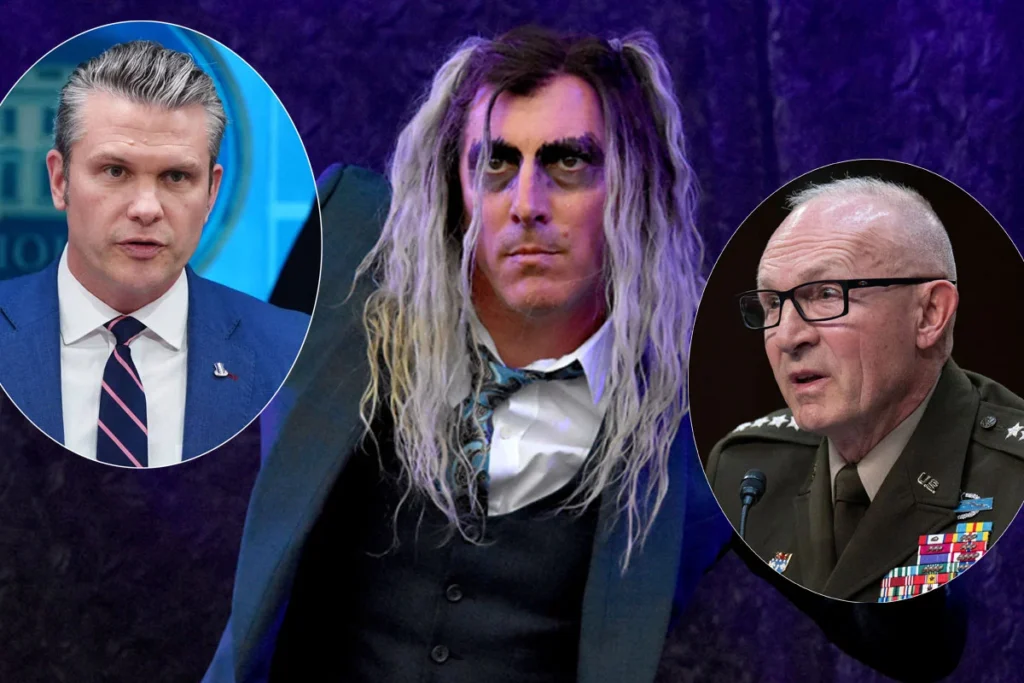

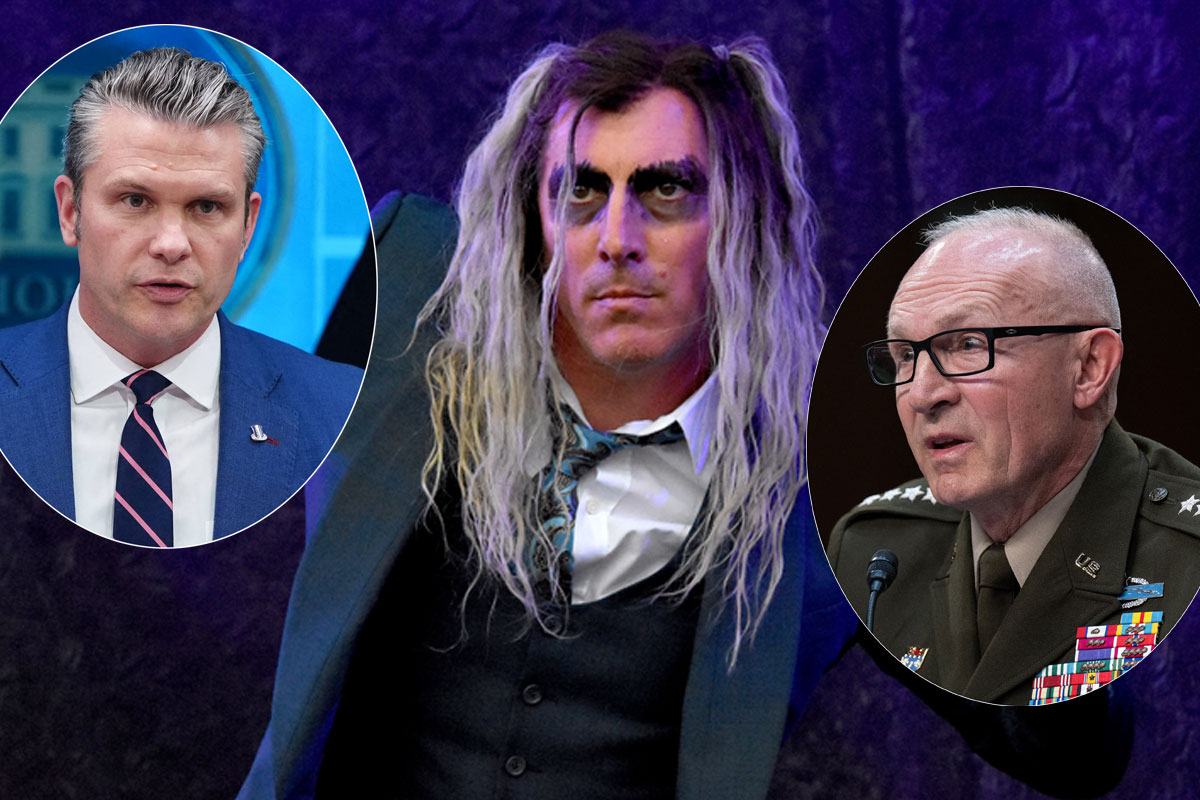
In an unexpected confluence of rock music, military service, and high-stakes politics, Maynard James Keenan, the enigmatic frontman of bands like Tool, A Perfect Circle, and Puscifer, has publicly voiced staunch support for his former West Point Prep classmate, General Randy George, following George’s abrupt dismissal as the 41st Chief of Staff of the United States Army. The move, reportedly orchestrated by President Trump’s Secretary of War, Pete Hegseth, and linked to escalating "war efforts against Iran," has sent ripples through both military and political circles, casting a spotlight on civil-military relations and the increasing politicization of top defense appointments.
The Dismissal of General Randy George
General Randy George, a distinguished four-star general with a career spanning nearly four decades, was reportedly relieved of his duties as the Chief of Staff of the United States Army on Thursday, April 2, 2026. Having served in the prestigious role since September 2023, his tenure was cut short, sparking immediate speculation and concern regarding the reasons behind such a high-profile ouster. While official channels have remained largely reticent about the specifics, widespread reports attribute the decision to Pete Hegseth, who, under a hypothetical Trump administration, would serve as the Secretary of War – a title notably revived from historical precedent, replacing the modern "Secretary of Defense," and signaling a potentially more aggressive, unilateral approach to military policy.
George’s dismissal comes at a critical juncture, purportedly linked to intensified "war efforts against Iran." This geopolitical backdrop suggests a period of heightened tensions in the Persian Gulf and broader Middle East, where U.S. interests and those of its allies frequently clash with Iranian regional influence and nuclear ambitions. The abrupt change in Army leadership, therefore, is not merely an internal personnel matter but one with significant implications for global stability and the strategic direction of U.S. military engagement. Sources familiar with defense policy, speaking on condition of anonymity, suggest that the move might reflect a desire by the current administration for a military leadership more closely aligned with a particular aggressive stance towards Tehran, potentially implying a disagreement or lack of full alignment from General George with the administration’s strategic directives.
Pete Hegseth and the Political Undercurrents
The alleged role of Pete Hegseth in General George’s dismissal is central to understanding the political dimensions of this event. Hegseth, a prominent media personality and military veteran, is known for his staunch conservative views and unwavering loyalty to former President Donald Trump. His hypothetical appointment as "Secretary of War" would itself be a significant political statement, harkening back to a pre-1947 cabinet position and signaling a potential restructuring of the Department of Defense, possibly to emphasize a more direct and assertive use of military force.
A Trump administration, as inferred by the context of the article, would likely prioritize an "America First" foreign policy, which often includes a skeptical view of established military leadership, a willingness to challenge conventional wisdom, and a preference for swift, decisive action. In this context, the removal of a seasoned, albeit relatively new, Army Chief could be interpreted as an effort to consolidate control over the military apparatus and ensure that top brass are fully aligned with the President’s vision, particularly concerning sensitive geopolitical flashpoints like Iran. Such a move could also be seen as a broader effort to purge elements of the military establishment perceived as resistant to political directives or as too entrenched in traditional strategic doctrines. The specific nature of "war efforts against Iran" remains undefined but could encompass anything from increased military presence and sanctions to covert operations or more direct military confrontation, each requiring specific leadership qualities and strategic alignment.
Maynard James Keenan’s Unexpected Intervention
The most surprising element of this developing story arrived over the weekend when Maynard James Keenan, a figure typically known for his artistic pursuits rather than political commentary, took to Instagram to offer a heartfelt defense and show of support for General Randy George. Keenan, celebrated for his complex lyrics and powerful vocal performances with Tool, A Perfect Circle, and Puscifer, has cultivated a public persona that is often philosophical, introspective, and deliberately removed from mainstream political discourse, making his direct intervention all the more striking.
In a lengthy and deeply personal caption accompanying a series of throwback photographs, Keenan revealed a previously little-known chapter of his life: his military service and a shared past with George at the United States Military Academy Preparatory School (USMAPS), often referred to as West Point Prep. This revelation provided a rare glimpse into the formative years of the multi-talented artist, who joined the Army to finance his college education, ultimately excelling in military training and being selected for USMAPS with the prospect of attending West Point.
A Shared Past: West Point Prep and Divergent Paths
Keenan’s Instagram post detailed his journey, stating, "As long as I can remember I wanted to be an artist in some way. Visual, musical, performing. Wasn’t certain what. Just that the Arts was where I was supposed to be. However, after H.S. graduation, the reality of tuition set in. My family were living on a teachers salary. Not much left over after bills. Grants and student loans weren’t going to cover it. So I joined the Army to take advantage of the Army College Fund. And as it turns out, I excelled in the military. Not what I was expecting. I was awarded Distinguished Graduate from both basic and advanced training. Then after many many rounds of testing I was chosen to attend U.S.M.A.P.S. and to apply to the U.S. Military Academy, West Point."
He further elaborated on the contrasting paths he and George embarked upon, highlighting their shared experience as cross-country teammates at West Point Prep. "As you can imagine most of my classmate at West Point Prep were there with a singular mission. To be a West Point graduate and serve in our military. Focus, drive, a plan, and zero compromise. I, on the other hand, was one of the few with doubts and inner conflict. So when my heart spoke louder than the outside influencers and I declined my appointment to West Point, most of those around me saw it as a huge mistake. But a handful were very supportive. They knew me well enough to respect that decision. One of those supportive classmates was my Cross Country teammate, Randy George."
This candid account underscores the rigorous environment of USMAPS, designed to prepare select individuals for the demanding academic and physical challenges of the U.S. Military Academy at West Point. It emphasizes the deep sense of camaraderie and respect that can form in such intense settings, even among individuals with vastly different long-term aspirations. While Keenan chose a path in the arts, George pursued a distinguished military career, culminating in the highest uniformed position in the U.S. Army.
The Significance of Keenan’s Statement
Keenan’s public declaration of support is particularly poignant, given his own decision to leave the military path for artistic pursuits, a decision that George and a few others respected. His statement concluded with a direct address to his old friend: "Randy went on to be a Four Star General and Chief of Staff for the U.S. Army. He was approaching his 40th year of service. I can’t even imagine how disappointed and upset he must feel for having been ‘asked’ to retire early. So I’m just here to return that favor of support. We’re here for you, Randy. Might be time for a beer or three. See you soon."
This gesture transcends typical celebrity endorsements. It speaks to a deeply personal connection and a recognition of the sacrifice inherent in a lifetime of military service. Keenan’s words lend a human element to what could otherwise be perceived as a cold political maneuver, emphasizing the personal cost of such high-level dismissals. For many, Keenan’s unexpected voice adds credibility and a non-partisan perspective to the controversy, highlighting the integrity and dedication of career military professionals like General George.
Reactions and Official Silence
The Department of Defense has, predictably, maintained a guarded silence regarding the specifics of General George’s departure. Standard protocol in such high-profile cases often involves official statements citing "personal reasons" or an intention to "pursue other opportunities," sidestepping any political implications. However, the timing and the widely reported link to Pete Hegseth and Iran policy make such boilerplate explanations difficult to accept at face value. Military analysts and former defense officials are likely to interpret this silence, combined with the context, as a strong indication of a politically motivated dismissal.
Sources within the current (hypothetical) administration, if they were to speak, would likely frame the change in leadership as a necessary step to align the Army’s command more closely with the President’s strategic vision for national security, particularly concerning the Middle East. They might emphasize the need for unwavering resolve and a unified approach to confront perceived threats from adversaries like Iran.
Broader Implications for Civil-Military Relations
General George’s reported dismissal, particularly if driven by political expediency, carries significant implications for civil-military relations, a delicate balance crucial to democratic governance. The principle of civilian control over the military is a cornerstone of American democracy, but it traditionally respects the professional expertise and apolitical nature of the uniformed services. When military leaders are perceived to be removed for not fully conforming to political directives rather than for professional shortcomings, it can erode trust and foster an environment where military advice might be tailored to political preferences rather than objective assessments.
Such actions can also negatively impact military morale, particularly among senior officers who dedicate their lives to service, expecting their professional judgment to be valued. It sends a chilling message that even decades of distinguished service may not protect against political shifts. This dynamic could make it challenging to attract and retain top talent in military leadership roles if the perception grows that careers are subject to the whims of political cycles.
Foreign Policy Ramifications: The Iran Context
The explicit link between George’s dismissal and "war efforts against Iran" underscores the significant foreign policy implications. A change in the Army’s top command, especially if seen as a move towards a more aggressive posture, could be interpreted by allies and adversaries alike as a clear signal of the administration’s intent. For Iran, it could be perceived as an escalation, potentially leading to a reciprocal hardening of their own stance. For U.S. allies in the region and globally, it might create uncertainty about the stability and predictability of American foreign policy, potentially compelling them to re-evaluate their own strategic alignments.
The specific nature of these "war efforts" would dictate the full extent of the impact. Whether it involves increased deployments, intensified cyber warfare, or preparations for direct military confrontation, the removal of a seasoned general in this context suggests a significant shift in strategic priorities and a potential move towards more confrontational tactics.
Conclusion
The unexpected intersection of a rock icon’s personal history and a high-stakes military leadership change highlights a moment of profound political and societal flux. Maynard James Keenan’s deeply personal defense of General Randy George humanizes a situation that could easily be reduced to political maneuvering, reminding the public of the individuals at the heart of national security decisions. As the dust settles on this abrupt leadership change, the broader implications for civil-military relations, the morale of the armed forces, and the strategic direction of U.S. foreign policy, particularly concerning Iran, will undoubtedly be subjects of intense scrutiny and debate for years to come. The incident serves as a stark reminder of the often-unseen connections that bind individuals across vastly different walks of life, even as political currents threaten to divide institutions.