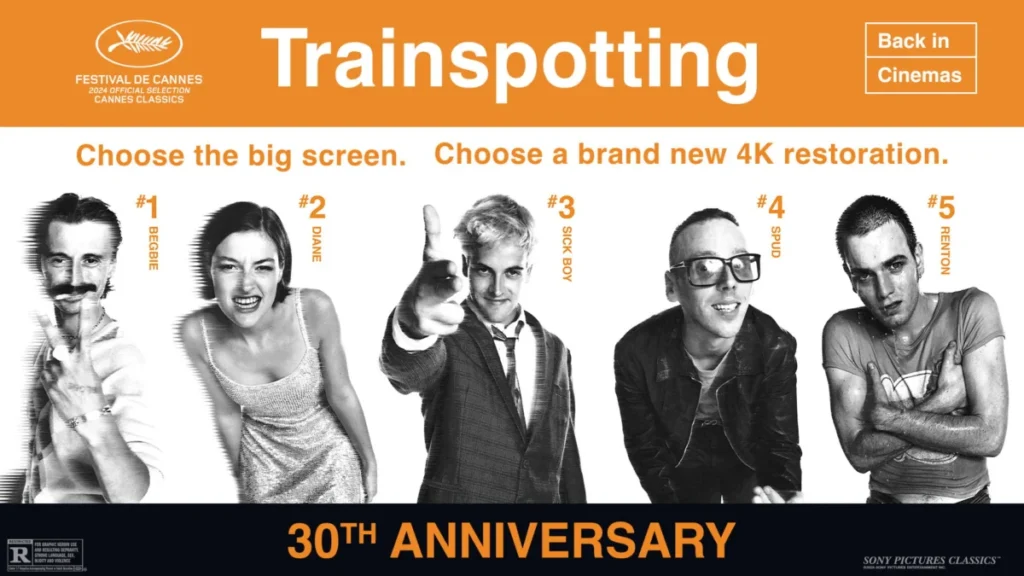

Sony Pictures Classics has announced a special theatrical re-release of Danny Boyle’s seminal 1996 film, Trainspotting, to commemorate its 30th anniversary. The iconic British movie, celebrated for its raw portrayal of addiction and its indelible impact on cinema, will be presented in a brand-new 4K restoration, returning to select theaters across the United States starting June 5th, 2026. This initiative aims to introduce a new generation to the film’s visceral storytelling and enduring cultural significance, while offering long-time fans an opportunity to experience it on the big screen in unparalleled visual and auditory fidelity.
A Landmark Film Reimagined in 4K
The forthcoming re-release centers on a meticulously crafted 4K restoration, promising to breathe new life into the film’s distinctive visual style. The original cinematography, often lauded for its gritty realism and vibrant, sometimes unsettling, aesthetic, is expected to be enhanced by the higher resolution and improved color grading. This technical upgrade will allow audiences to appreciate the nuanced details of the film’s production design, from the grimy streets of Edinburgh to the stark interiors that served as backdrops for the characters’ tumultuous lives. The sound design, too, is anticipated to benefit from the restoration, ensuring that the film’s iconic soundtrack and its sharp, often profanity-laden dialogue resonate with renewed clarity.
The decision to re-release Trainspotting in theaters underscores its continued relevance and critical acclaim. Upon its initial release, the film was a cultural phenomenon, sparking both controversy and widespread admiration for its unflinching depiction of heroin addiction within a group of disaffected Scottish youths. Directed by Danny Boyle and adapted from Irvine Welsh’s equally provocative novel, Trainspotting transcended its subject matter to become a powerful exploration of friendship, desperation, and the elusive pursuit of a better life.
Historical Context and Chronology of Trainspotting
Trainspotting‘s journey to the screen is a testament to its audacious spirit. The film’s genesis can be traced back to Irvine Welsh’s 1993 novel, a literary work that shocked and captivated readers with its authentic and often disturbing portrayal of the Scottish drug scene. The novel’s raw prose and distinctive dialect immediately marked it as a significant cultural artifact.
Danny Boyle, then a director with a burgeoning reputation following his 1994 debut Shallow Grave, took on the challenging task of adapting Welsh’s novel for the screen. The screenplay, penned by John Hodge, managed to distill the novel’s sprawling narrative and complex characters into a cohesive and cinematic experience.

The film’s initial premiere took place at the Cannes Film Festival in May 1996, where it garnered significant attention and critical buzz. However, its theatrical release began earlier in the United Kingdom in February 1996, followed by its United States debut in July of the same year. This staggered release allowed the film to build momentum and establish its reputation as a groundbreaking piece of cinema.
The original cast, a collection of emerging talents who would go on to achieve international stardom, was instrumental in the film’s success. Ewan McGregor, as the central protagonist Mark Renton, delivered a performance that became career-defining. Alongside him, Ewen Bremner, Jonny Lee Miller, Kevin McKidd, Robert Carlyle, and Kelly Macdonald formed a compelling ensemble that brought a palpable sense of authenticity and chaotic energy to their roles. The film is widely credited with launching or significantly boosting the careers of these actors.
Twenty years after its initial release, in 2017, a sequel, T2 Trainspotting, was released, reuniting the original cast and director. While the sequel explored the characters’ lives in their middle age, it is often considered to have captured a different tone and resonance compared to the raw, uninhibited energy of the original. The upcoming 30th-anniversary re-release firmly places the spotlight back on the enduring power of the 1996 film.
Thematic Depth and Cultural Impact
Trainspotting‘s enduring appeal lies in its complex thematic tapestry. While overtly about drug addiction, the film delves into broader existential questions about choice, freedom, and the search for meaning. The iconic opening monologue, "Choose Life," delivered by Renton, encapsulates the film’s central tension: the struggle between succumbing to despair and actively seeking a path towards redemption and a semblance of normalcy.
The film’s unflinching portrayal of the grim realities of addiction was groundbreaking for its time. It refused to sanitize or moralize, instead opting for a visceral and often darkly comedic approach that resonated with audiences on a primal level. This approach, while controversial, was also lauded for its honesty and its ability to foster empathy, even for characters engaged in self-destructive behavior.
Beyond its thematic explorations, Trainspotting had a significant impact on the cinematic landscape. Its distinctive visual style, characterized by rapid editing, striking imagery, and a killer soundtrack, influenced a generation of filmmakers. The film’s soundtrack, featuring an eclectic mix of British pop and rock music, became a cultural phenomenon in its own right, further cementing its place in the cultural zeitgeist. Artists such as Iggy Pop, Lou Reed, and Underworld contributed to a soundscape that perfectly complemented the film’s frenetic energy and emotional undercurrents.

Critical Reception and Enduring Legacy
Upon its release, Trainspotting was met with widespread critical acclaim. Reviewers lauded Danny Boyle’s directorial vision, the sharp screenplay by John Hodge, and the powerhouse performances from its ensemble cast. The film’s ability to balance dark subject matter with moments of genuine humor and pathos was frequently highlighted.
Richard Corliss, writing for Time Magazine in 1996, captured the film’s vital energy, stating, "In an era in which every movie seems way longer than it has to be, this one packs a whole multiplex worth of black-and-blue comedy into 94 minutes. The film is about joy–in conniving and surviving, in connecting with audiences, in its own fizzy, jizzy style. And that’s why, compared with it, most other films look zombified. Death hangs like crape over Renton and his mates, but the movie couldn’t be more vital. So say it without irony: Trainspotting chooses life."
The film’s lasting legacy is undeniable. It remains a touchstone in discussions about British cinema, addiction narratives, and the art of filmmaking. Its influence can be seen in countless subsequent films that have attempted to tackle similar themes or adopt its distinctive visual and narrative strategies. The 30th-anniversary re-release, enhanced by a state-of-the-art 4K restoration, ensures that this cinematic masterpiece will continue to captivate and provoke audiences for years to come.
Supporting Data and Potential Implications
The decision by Sony Pictures Classics to invest in a 4K restoration and theatrical re-release of Trainspotting is supported by several factors. Firstly, the enduring popularity of the film suggests a consistent demand for its exhibition. Re-releases of critically acclaimed and culturally significant films often perform well at the box office, particularly among audiences seeking a nostalgic cinematic experience or an opportunity to see beloved films on the big screen with enhanced technical quality.
The market for 4K restorations of classic films has been steadily growing. Audiences have become accustomed to higher fidelity in home viewing, and this expectation extends to theatrical presentations of older films. A well-executed 4K restoration can significantly enhance the viewing experience, making the film more accessible and enjoyable for contemporary audiences.
Furthermore, the re-release provides an opportunity for educational institutions and film studies programs to screen the film for students, allowing for deeper analysis of its cinematic techniques, thematic content, and historical context. The film’s continued presence in academic discourse further solidifies its importance.

The implications of this re-release extend beyond mere exhibition. It serves as a reminder of the power of independent filmmaking and the potential for films to challenge societal norms and spark important conversations. Trainspotting‘s journey from a controversial novel to a celebrated cinematic classic highlights the evolving landscape of what is considered acceptable and impactful in mainstream cinema.
The success of this re-release could also encourage further investment in restoring and re-releasing other significant films from the 1990s, a decade that saw a surge of innovative and influential cinematic works. This initiative by Sony Pictures Classics is not just a tribute to a single film, but a potential catalyst for preserving and celebrating cinematic history for future generations.
Official Statements and Anticipation
While specific official statements from Danny Boyle or the original cast regarding this 30th-anniversary re-release have not yet been widely disseminated, the timing of the announcement, coupled with the release of a new trailer, suggests a concerted effort to generate excitement. The trailer itself, featuring the tagline, "Choose the big screen. Choose a brand new 4K restoration. Choose cinema," directly appeals to cinephiles and highlights the premium nature of this re-release.
The anticipation for this event is palpable within film enthusiast communities. Social media platforms and film forums are already abuzz with discussions about the upcoming re-release, with many expressing eagerness to revisit the film in its restored glory. The opportunity to experience the raw energy and iconic performances of Trainspotting on a large screen, with pristine picture and sound quality, is a significant draw for fans.
The re-release of Trainspotting in its 30th anniversary 4K restoration is more than just a cinematic event; it is a cultural reaffirmation of a film that dared to be different, to be raw, and to be undeniably alive. It offers a chance to re-engage with a piece of cinematic history that continues to resonate with its unflinching portrayal of the human condition and its enduring call to "choose life."