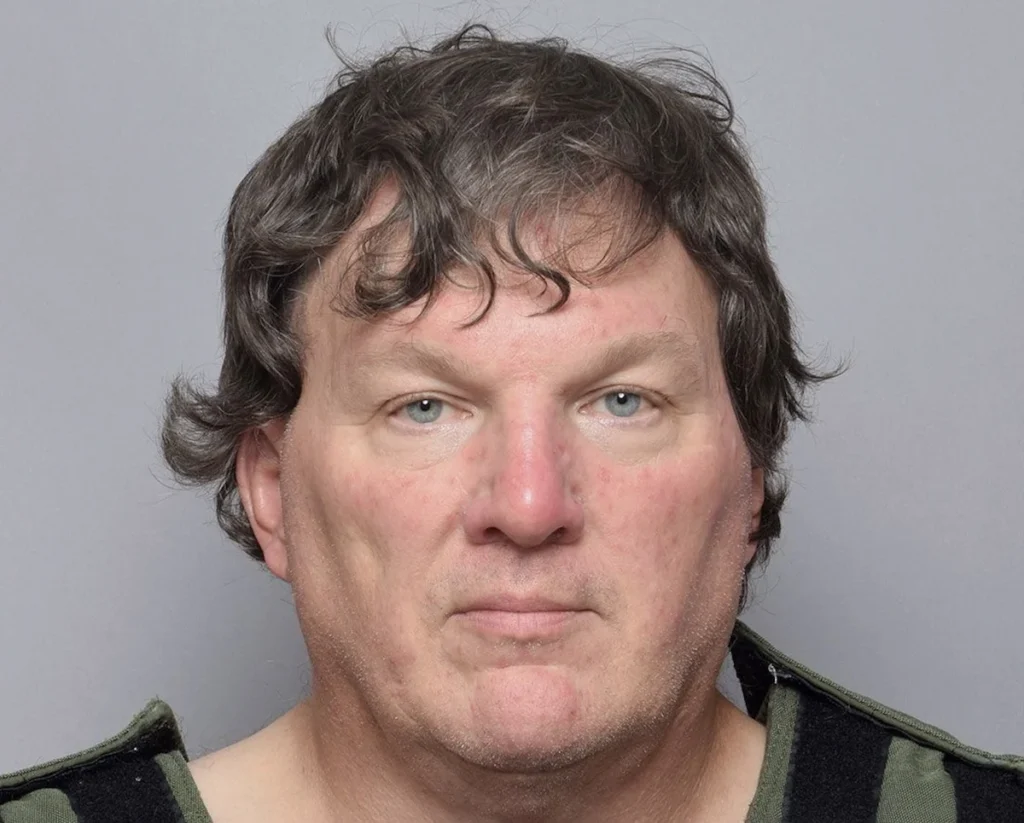

Rex Heuermann, the Massapequa Park architect accused of perpetrating the infamous Gilgo Beach murders that have haunted Long Island and the nation for decades, is now reportedly poised to enter a guilty plea for a string of brutal homicides. This dramatic development, confirmed by multiple news outlets on Tuesday, signals a profound shift in one of modern American crime’s most enduring mysteries, offering a potential pathway to resolution for families who have long grappled with unimaginable grief and uncertainty.
The anticipated plea would see Heuermann admit responsibility for the killings of at least seven women, whose disappearances and subsequent discoveries along the desolate stretches of Ocean Parkway between 2010 and 2011 ignited a massive, multi-agency investigation. These victims, Melissa Barthelemy, Maureen Brainard-Barnes, Amber Lynn Costello, Sandra Costilla, Valerie Mack, Jessica Taylor, and Megan Waterman, represent lives tragically cut short and families forever altered by the senseless violence. The gravity of this moment is further intensified by reports that Heuermann may also plead guilty to the murder of an eighth, as-yet-unidentified individual, adding another layer of chilling complexity to an already devastating narrative.
The Accused: Rex Heuermann and the Charges
Rex Heuermann, 60, a self-employed architect with a business in Midtown Manhattan, was arrested on July 13, 2023, following an intensive investigation that spanned over a decade. His apprehension sent shockwaves through the quiet, suburban community of Massapequa Park, where he lived with his wife and two children, seemingly leading an unremarkable life. Initially charged with the murders of Melissa Barthelemy, Megan Waterman, and Amber Lynn Costello, collectively known as three of the "Gilgo Four," Heuermann was subsequently charged in January 2024 with the murder of Maureen Brainard-Barnes, completing the set of victims whose remains were found tightly clustered along Gilgo Beach in December 2010.
Further charges followed in June 2024, connecting Heuermann to the deaths of Sandra Costilla, Valerie Mack, and Jessica Taylor. The discovery of Costilla’s remains in North Sea, Southampton, in 1993, predates the Gilgo Beach discoveries by nearly two decades, suggesting a much longer, more extensive predatory period for the alleged killer. Valerie Mack’s partial remains were found near Manorville in 2000 and later identified through DNA in 2020, with additional remains found at Gilgo Beach in 2011. Jessica Taylor’s remains were found in Manorville in 2003, with more discovered at Gilgo Beach. These connections significantly broadened the scope of Heuermann’s alleged crimes, linking him to cases that had long perplexed investigators across Suffolk County.
The Gilgo Beach Murders: A Decades-Long Mystery Unraveled
The Gilgo Beach serial killer case, often referred to as the Long Island Serial Killer (LISK) or the Gilgo Beach Killer, began to unfold dramatically in December 2010. A search for Shannan Gilbert, a sex worker who disappeared in May 2010 after making a frantic 911 call from Oak Beach, led to the horrifying discovery of human remains. While Gilbert’s remains were eventually found in December 2011 in a marsh near Oak Beach, and her death officially ruled accidental by some authorities (though disputed by her family and their legal team), the initial search uncovered something far more sinister.
Within days, police discovered the remains of four women — Melissa Barthelemy, Maureen Brainard-Barnes, Megan Waterman, and Amber Lynn Costello — all sex workers who had disappeared between 2007 and 2010. These victims, later dubbed the "Gilgo Four," were found within a quarter-mile of each other, wrapped in burlap, signaling the presence of a methodical predator. Over the next year, additional remains belonging to six more individuals were found along Ocean Parkway, including Valerie Mack, Jessica Taylor, an unidentified Asian male, an unidentified toddler, and the remains of the toddler’s mother. In total, the remains of 11 individuals were found in the area, creating one of the most extensive and perplexing serial murder investigations in U.S. history.
Timeline of Key Events:
- 1993: Sandra Costilla’s body found in North Sea, Southampton.
- 2000: Partial remains of Valerie Mack found near Manorville.
- 2003: Partial remains of Jessica Taylor found in Manorville.
- 2007-2010: Melissa Barthelemy, Maureen Brainard-Barnes, Megan Waterman, and Amber Lynn Costello disappear.
- May 2010: Shannan Gilbert disappears from Oak Beach, prompting a search.
- December 2010: Search for Gilbert leads to the discovery of the "Gilgo Four" remains.
- Spring 2011: Six additional sets of human remains discovered along Ocean Parkway, including those linked to Valerie Mack and Jessica Taylor.
- December 2011: Shannan Gilbert’s remains found.
- 2012-2022: Investigation continues with limited public breakthroughs; a dedicated task force is formed in 2022.
- July 2023: Rex Heuermann arrested and charged with the murders of Barthelemy, Waterman, and Costello.
- January 2024: Heuermann charged with the murder of Brainard-Barnes.
- June 2024: Heuermann charged with the murders of Costilla, Mack, and Taylor.
- June 2024: Reports emerge that Heuermann is expected to plead guilty to multiple murders, including an eighth unidentified victim.
The Breakthrough: DNA, Cell Phones, and a Truck
For years, the Gilgo Beach investigation struggled with limited leads and complex forensic challenges. The breakthrough that ultimately led to Heuermann’s arrest involved a meticulous re-examination of cold case evidence, combined with advancements in forensic technology. Key elements included:
- DNA Evidence: Investigators recovered male DNA from the remains of some victims, which, though initially not matched, became crucial with the advent of more sophisticated genealogical analysis.
- Cell Phone Data: The killer’s alleged use of burner phones to contact victims and their families before and after the murders provided a digital breadcrumb trail. Analysis of these phones’ ping locations helped narrow down geographical areas of interest.
- Vehicle Identification: A critical piece of evidence was the identification of a dark-colored Chevrolet Avalanche, described by a witness in the Amber Lynn Costello case. In 2022, investigators linked Heuermann to a first-generation Chevrolet Avalanche registered in his name.
- Heuermann’s Discarded DNA: In a significant development, investigators obtained DNA from pizza crust and used coffee cups discarded by Heuermann outside his Manhattan office. This DNA was a match to the male hair found on one of the Gilgo victims, providing the direct link needed for his arrest.
Heuermann’s background as an architect specializing in historic preservation also came under scrutiny, as it suggested a meticulous and organized individual, traits sometimes associated with serial offenders. The discovery of soundproofed rooms and other unusual structures in his Massapequa Park home during subsequent searches further fueled public and media speculation about his alleged double life.
The Path to a Plea Deal: Legal Strategy and Implications
Heuermann had been preparing for a high-profile trial slated for September. However, the reported decision to pursue a guilty plea represents a dramatic shift in legal strategy. Several factors could contribute to such a decision:
- Overwhelming Evidence: The prosecution’s case, built on DNA, cell phone data, vehicle evidence, and witness testimony, appears robust. A plea deal could be an acknowledgment by the defense of the strength of this evidence, mitigating the risk of a jury conviction and a potentially harsher sentence.
- Avoiding a Death Penalty: While New York does not have the death penalty, a conviction on multiple murder charges could lead to consecutive life sentences without parole. A plea deal might involve specific sentencing agreements.
- Providing Information: In some plea agreements, defendants offer information about other crimes or victim locations in exchange for concessions. This is particularly relevant given the mystery surrounding the eighth victim.
- Victim Families’ Desire for Closure: A plea avoids a lengthy, emotionally draining trial that would force victims’ families to relive traumatic details. While "closure" is a complex concept, a guilty plea can offer a degree of finality and accountability that a protracted legal battle might delay.
- Defense Strategy: Even with a strong defense, the optics of a serial killer trial can be challenging. A plea might be seen as the best possible outcome for the defense under the circumstances.
The Victims: Lives Remembered and the Lingering Pain
The names of the victims are central to this story, representing not just statistics but individuals with families, dreams, and futures stolen.
- Melissa Barthelemy: 24, last seen July 2009.
- Maureen Brainard-Barnes: 25, last seen July 2007.
- Amber Lynn Costello: 27, last seen September 2010.
- Sandra Costilla: 28, last seen November 1993.
- Valerie Mack: 24, last seen May 2000.
- Jessica Taylor: 20, last seen July 2003.
- Megan Waterman: 22, last seen June 2010.
For years, these names were synonymous with "unsolved mystery." Their families endured public speculation, police scrutiny, and the agonizing wait for answers. A guilty plea, while acknowledging the horrific truth, does not erase their pain but may provide a measure of justice and allow them to move forward with a sense of finality regarding the perpetrator.
The Unidentified Eighth Victim: A Chilling New Revelation
The report that Heuermann intends to plead guilty to the murder of an eighth victim, whose identity remains unknown, introduces a chilling new dimension to the case. This revelation raises several critical questions:
- Who is this individual? Is it one of the previously unidentified remains found at Gilgo Beach or elsewhere? Or is it a completely new victim previously unconnected to the known cases?
- When and where did this murder occur?
- What information will be released about this victim? Will the plea agreement include details that could lead to identification, or will it remain a tragic mystery, known only to Heuermann and now, potentially, the courts?
The possibility of an unknown victim underscores the potential scale of Heuermann’s alleged crimes and the long-term impact on countless individuals and communities. It also highlights the painstaking work of law enforcement to connect seemingly disparate cases and ensure every victim receives justice.
Reactions and the Quest for Closure
The news of a potential plea deal has been met with a mix of relief, apprehension, and profound emotion. For the victims’ families, this development represents the culmination of a decades-long struggle. While a plea might spare them the ordeal of a trial, it will also mean confronting the man accused of devastating their lives. Family members have consistently called for justice and transparency, and a plea could offer a definitive answer to the question of who was responsible.
Law enforcement officials, including Suffolk County District Attorney Raymond Tierney and the multi-agency task force, would likely view a guilty plea as a significant victory, validating years of dedicated investigative work. It would solidify the evidence against Heuermann and officially link him to the series of murders, effectively bringing an end to one of New York’s most infamous cold cases.
However, "closure" remains a complicated term. While the legal process may conclude, the grief and trauma endured by families will persist. The plea deal, if finalized, would mark a pivotal moment, shifting the narrative from an ongoing investigation to a definitive resolution, allowing a community gripped by fear and uncertainty to begin a new chapter, albeit one forever marked by the horrors of Gilgo Beach.
Broader Implications and Future Outlook
Heuermann’s expected guilty plea carries broader implications for criminal justice and cold case investigations:
- Forensic Science’s Role: This case stands as a testament to the power of advancements in forensic DNA analysis and cell phone tracking in solving long-dormant cases.
- Victim Advocacy: The relentless advocacy of victims’ families and dedicated organizations played a crucial role in keeping the case alive and pressuring authorities for action.
- Cold Case Resurgence: The success in this case may inspire renewed efforts in other cold cases, demonstrating that even decades-old mysteries can be solved with perseverance and new technologies.
- Public Trust: A definitive resolution can help restore public trust in law enforcement’s ability to tackle complex, high-profile cases.
As the legal proceedings unfold, the world watches, hoping that this pivotal moment will finally bring a measure of peace to the victims’ families and a definitive end to the chilling saga of the Gilgo Beach murders. The formal plea, once entered, will not only close a dark chapter in New York’s history but also underscore the profound impact of serial violence and the enduring quest for justice.