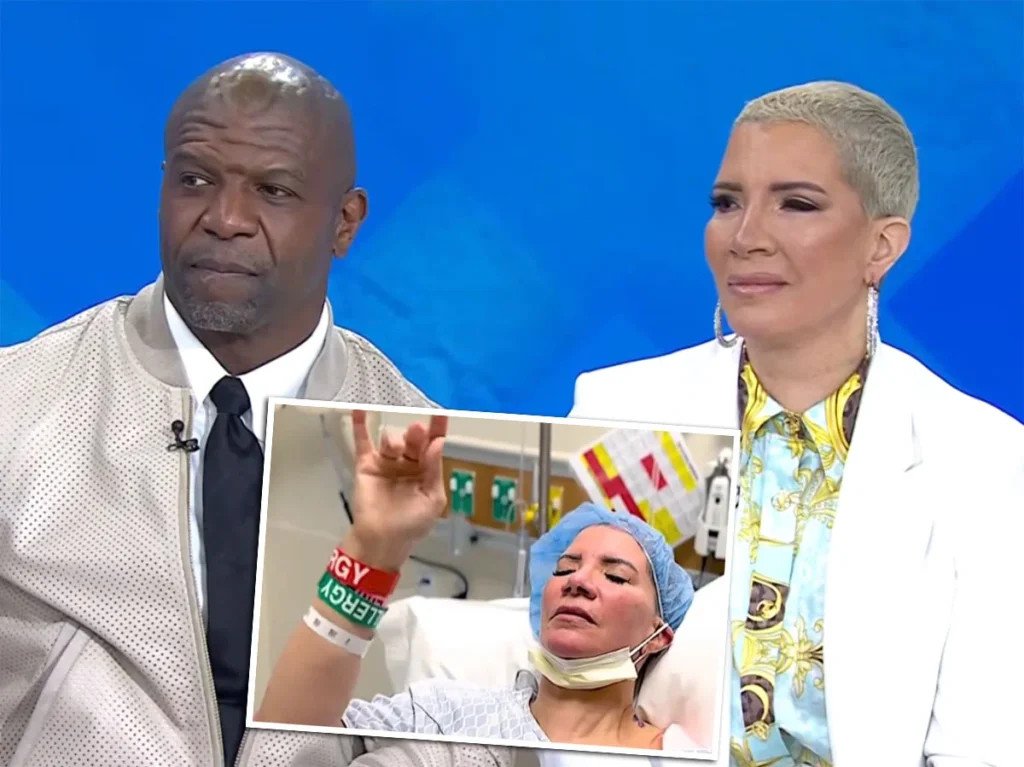

Rebecca King-Crews, entrepreneur, author, and wife of actor Terry Crews, has publicly disclosed her private battle with Parkinson’s disease, a diagnosis she has navigated in secret for over a decade. Her revelation, made during a candid appearance on Monday’s episode of Today alongside her husband, sheds light on the challenges of living with a chronic neurological condition and introduces a pioneering FDA-approved procedure that has significantly improved her symptoms. King-Crews’ decision to share her story now is driven by a desire to inspire hope, raise awareness, and advocate for broader accessibility to advanced medical treatments.
A Hidden Struggle: The Onset of Symptoms and a Delayed Diagnosis
King-Crews’ journey with Parkinson’s began subtly around 2012, manifesting with initial symptoms that were easily dismissed or misattributed. She first experienced a "slight numbness in [her] left foot," a seemingly innocuous discomfort. This was followed by a peculiar observation from her trainer, who noted that her left arm "did not swing" naturally when she walked – an early and often overlooked motor symptom of Parkinson’s known as reduced arm swing or akinesia. The definitive alarm bell, however, rang one morning when she awoke to find her hand uncontrollably shaking, a tremor she recognized from her grandmother’s own experience with neurological conditions.
Seeking medical answers, King-Crews faced a common hurdle for many women: initial misdiagnosis. Her first physician attributed her symptoms to anxiety, a frequent occurrence where women’s physiological complaints are often psychosocially interpreted. "It’s not uncommon with us ladies for someone to call everything stress," King-Crews recounted on Today. Her persistence in demanding referrals and further investigation ultimately led to a correct diagnosis of Parkinson’s disease in 2015, three years after the onset of her initial symptoms. This protracted diagnostic period underscores a critical issue in healthcare, where early and accurate diagnosis of Parkinson’s can be challenging, particularly for women, who may present with atypical symptoms or face gender bias in medical evaluations. Studies have indicated that women often experience delays in Parkinson’s diagnosis compared to men, and their symptoms, such as depression and fatigue, may be overlooked or misdiagnosed as other conditions.
Chronology of a Resilient Fight
- Circa 2012: Rebecca King-Crews experiences initial, subtle symptoms including numbness in her left foot and reduced arm swing.
- 2015: After a three-year diagnostic odyssey, she receives a definitive diagnosis of Parkinson’s disease.
- 2020: King-Crews faces another significant health challenge, battling breast cancer and undergoing a double mastectomy, further demonstrating her profound resilience.
- Early 2026 (prior to April): King-Crews undergoes a groundbreaking, FDA-approved non-invasive neurological procedure to alleviate Parkinson’s symptoms on one side of her body.
- April 2026: King-Crews publicly reveals her Parkinson’s diagnosis and the success of her recent procedure on Today, showcasing remarkable improvements in motor function, including the ability to write clearly with her right hand for the first time in years.
- September 2026 (anticipated): King-Crews is scheduled for a second procedure to address symptoms on the other side of her body, continuing her journey towards improved quality of life.
A Glimmer of Hope: The Revolutionary Non-Invasive Procedure
King-Crews’ relentless advocacy for her own health led her to discover and undergo a groundbreaking, FDA-approved non-invasive procedure designed to alleviate Parkinson’s symptoms. While the specific name of the procedure was not explicitly stated in the initial report, her description — "able to go into my brain without cutting me open — non-invasive at all" — strongly suggests a form of focused ultrasound (FUS) or a similar technology.
Focused Ultrasound is a revolutionary therapeutic technology that uses precisely targeted sound waves to treat a range of neurological conditions, including essential tremor and Parkinson’s disease, without incisions or invasive surgery. In Parkinson’s, it can target specific areas of the brain, such as the globus pallidus or subthalamic nucleus, to disrupt abnormal neural circuits responsible for tremors, rigidity, and dyskinesia. The procedure involves guiding high-intensity ultrasound beams to a small, specific target in the brain, creating a precise lesion that can alleviate motor symptoms. Patients typically remain awake during the procedure, allowing for real-time neurological assessment and immediate feedback on symptom improvement.
The immediate results for King-Crews have been nothing short of transformative. She reported seeing "improvement in my symptoms," highlighting her regained ability to "write my name, my dates, I’m able to write with my right hand for the first time in probably three years." This dramatic change was visually documented in videos shown on Today, comparing her pre-procedure tremors with the stable control she exhibited post-surgery on the treated side of her body. Although she is currently in a three-month recovery phase, the progress is already profound. She anticipates further improvement and is eagerly awaiting a second operation in September to address the symptoms on the left side of her body, which remains affected until that subsequent intervention. "Each day that I do things, I’m aware of the benefit that’s already been to me on the one side of the body. So I’m looking forward to doing the left side," she affirmed.
The Motivation Behind the Public Revelation
For over a decade, Rebecca King-Crews chose to keep her Parkinson’s diagnosis private, a decision Terry Crews attributed to her aversion to pity. However, the remarkable success of her recent procedure prompted a shift in her perspective. Her motivation for going public now is not self-serving but deeply altruistic. "I don’t believe in telling my story just so you can know my story and feel sorry for me," she stated. Instead, she views her experience as a beacon of hope and a testament to the future of medicine.
King-Crews firmly believes that this non-invasive procedure, and others like it, represent "the new frontier of medicine." Her desire is to raise awareness about such innovative treatments and, crucially, to advocate for their broader availability. She pointed out a significant barrier: the procedure is "an expensive surgery [that’s] not covered yet" by many insurance providers. By sharing her story, she hopes to influence policy, encourage insurance companies to recognize and cover these vital treatments, and ultimately "make it more available to others." Beyond accessibility, her overarching message is one of unwavering optimism: "Just to give hope to people with Parkinson’s because I believe that we’re gonna find a cure." Her public disclosure serves as a powerful call to action for both the medical community and healthcare policymakers.
A Husband’s Unwavering Support and Admiration
Terry Crews, known for his robust physique and boisterous personality, became visibly emotional when discussing his wife’s journey. Witnessing her decade-long struggle with Parkinson’s has been "very, very hard," he admitted, recalling the "tremors, the not sleeping, the loss of balance." The emotional weight of seeing his "superhero" wife endure such challenges was palpable.
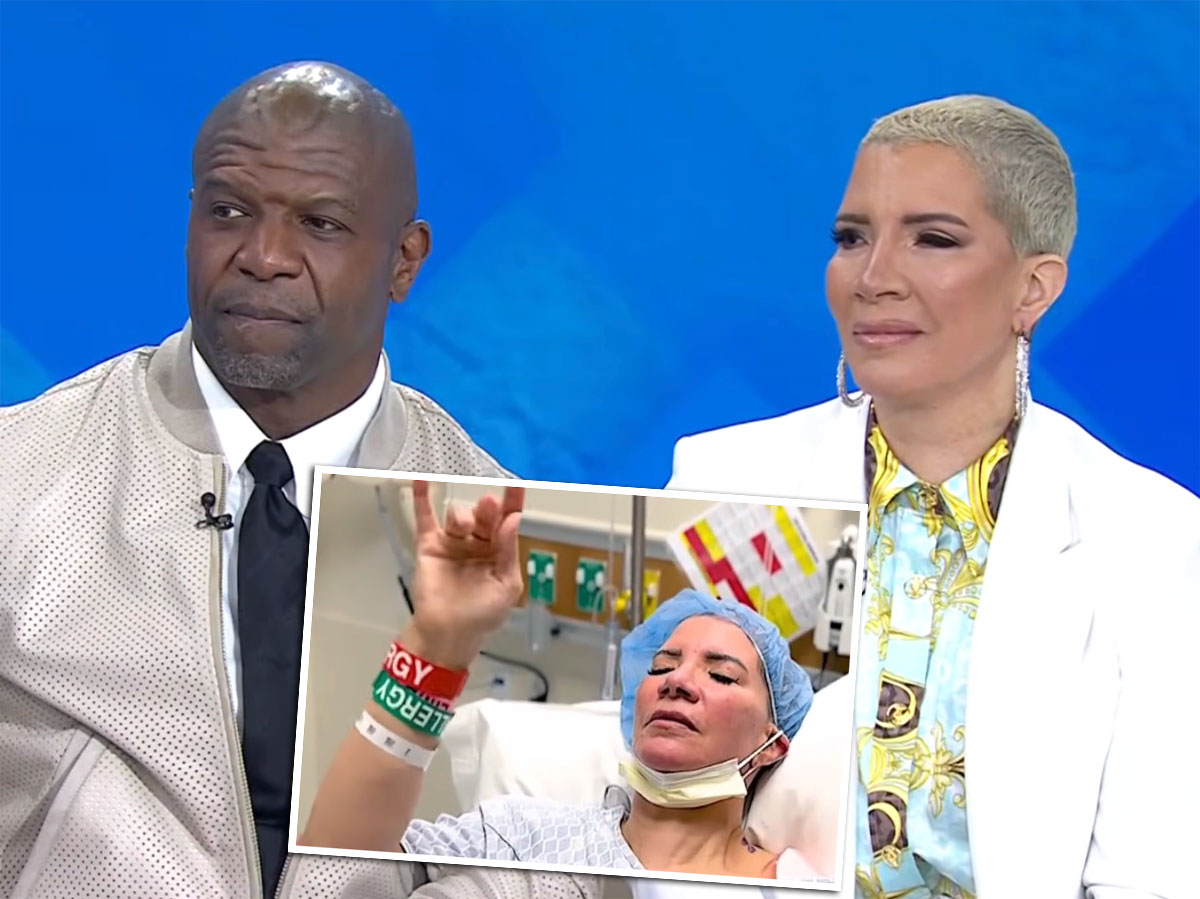
However, the recent breakthrough brought a profound sense of relief and joy. "To watch her write her name for the first time in three years, let me tell you, man. I don’t know what to say, I’m choked up just thinking about it," he shared, tears welling in his eyes. His admiration for Rebecca’s strength and resilience shone through, describing her as "the rock of our lives. She’s a superhero." Crews echoed his wife’s sentiment that her decision to speak out was not for pity but for purpose: "Because people don’t know about this, she said now is the time to tell so you can help someone else who can take advantage of what’s out here, the technology that’s out here right now." His steadfast support underscores the critical role of family and caregivers in navigating chronic illness.
Broader Context: Parkinson’s Disease and its Global Impact
Parkinson’s disease is a progressive neurodegenerative disorder that primarily affects dopamine-producing neurons in a specific area of the brain called the substantia nigra. Symptoms typically develop slowly over years and can vary widely among individuals. Common motor symptoms include tremor (shaking), bradykinesia (slowness of movement), rigidity (stiffness), and postural instability (impaired balance and coordination). Non-motor symptoms, which often precede motor symptoms, can include sleep disorders, loss of smell, constipation, depression, and anxiety.
Globally, Parkinson’s disease is the second most common neurodegenerative disorder after Alzheimer’s disease. The Parkinson’s Foundation estimates that nearly one million people in the U.S. are living with Parkinson’s disease, and this number is projected to rise to 1.2 million by 2030. Worldwide, an estimated 10 million people are living with the condition. The financial burden of Parkinson’s is substantial, with the combined direct and indirect costs, including treatment, lost income, and social security payments, estimated at nearly $52 billion per year in the U.S. alone.
The challenges in diagnosing Parkinson’s, especially in its early stages and particularly in women, contribute to delays in treatment and can significantly impact quality of life. The "stress" narrative often applied to women’s health issues highlights a systemic bias that needs addressing to ensure equitable and timely medical care. Rebecca King-Crews’ experience brings this critical issue into the public discourse, potentially catalyzing greater awareness and improved diagnostic protocols.
A Testament to Unyielding Resilience: "Just Keep Walking"
Beyond her Parkinson’s diagnosis, Rebecca King-Crews has faced other significant health battles, including a breast cancer diagnosis in 2020 which necessitated a double mastectomy. Her ability to navigate multiple life-threatening conditions with such grace and positivity is a testament to her extraordinary resilience. Her mantra throughout this challenging period has been simple yet profound: "Just keep walking." She elaborated, "Just keep going. And that’s what I’m going to keep doing. I believe that you don’t lay down and die because you got a diagnosis."
This philosophy has not only sustained her but has also fueled her creative and professional endeavors. Despite her health struggles, King-Crews has continued to write a book, work on an album, and develop a clothing line, demonstrating an unyielding spirit and a commitment to living life to the fullest. Her story serves as a powerful inspiration, demonstrating that a diagnosis does not define a person’s potential or diminish their capacity to contribute meaningfully to the world.
Implications and the Road Ahead
Rebecca King-Crews’ public sharing of her Parkinson’s journey carries significant implications. Firstly, it elevates public awareness of Parkinson’s disease, particularly highlighting the diagnostic challenges and the need for persistence in seeking answers. Her celebrity status, coupled with Terry Crews’ platform, ensures that this message reaches a broad audience. Secondly, it shines a spotlight on innovative, non-invasive treatments like focused ultrasound, which, despite their efficacy, may not be widely known or accessible. By championing this "new frontier of medicine," she could catalyze increased research funding, faster FDA approvals for similar technologies, and greater pressure on insurance providers to cover these life-changing procedures.
The financial barrier to accessing such advanced treatments is a critical point King-Crews has raised. The average cost of focused ultrasound for Parkinson’s, without insurance, can range from tens of thousands to over a hundred thousand dollars, making it prohibitively expensive for many. Her advocacy could play a pivotal role in pushing for policy changes that ensure equitable access to these therapies, moving them from the realm of experimental or luxury treatments to standard care for those who can benefit.
As Rebecca King-Crews continues her recovery and prepares for her second procedure, her story stands as a beacon of hope, resilience, and advocacy. Her commitment to sharing her experience not only offers solace and inspiration to others living with Parkinson’s but also pushes the boundaries of medical access and awareness, paving the way for a future where a diagnosis does not dictate destiny, and innovative treatments are within reach for all. The medical community, policymakers, and the public will undoubtedly watch her continued progress with keen interest, as her journey unfolds as a powerful narrative of hope in the face of adversity.