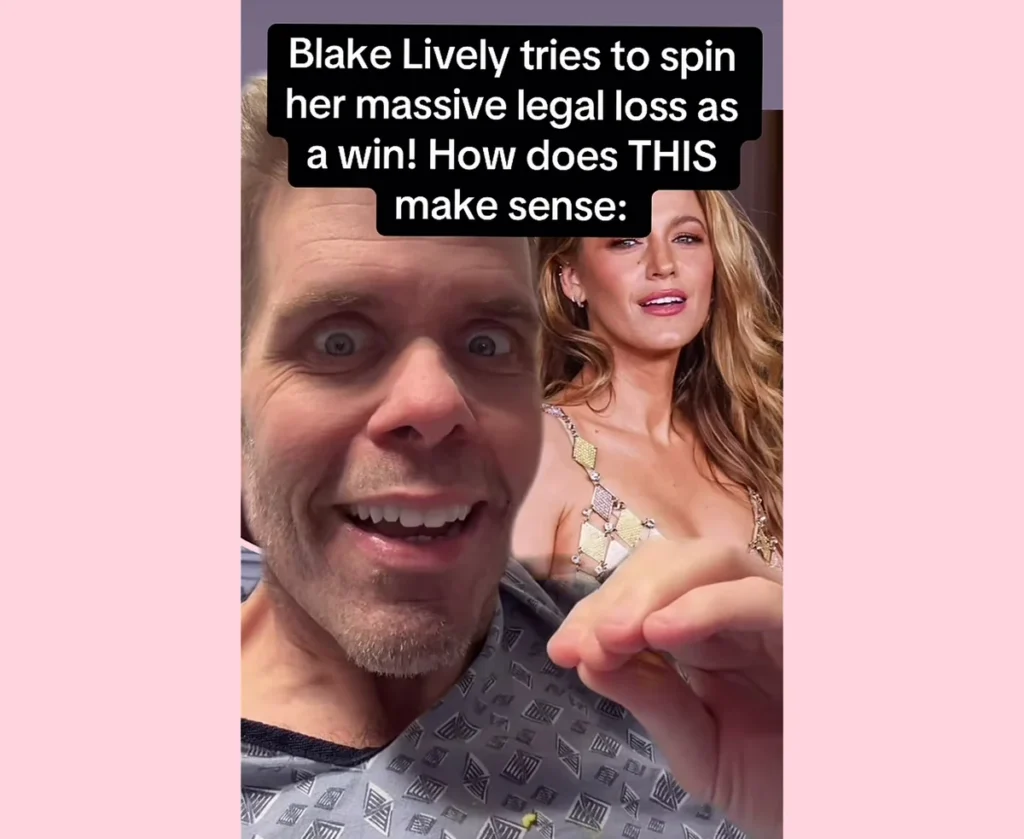

Hollywood actress Blake Lively has experienced a significant legal development this week, as a federal court judge dismissed ten of her thirteen claims in an ongoing dispute against actor and filmmaker Justin Baldoni. The ruling, issued by Judge Liman on April 4, 2026, represents a substantial reduction in the scope of Lively’s lawsuit, though reports suggest her camp may be attempting to frame the outcome in a more favorable light. The legal skirmish is understood to be connected to the highly anticipated film adaptation of Colleen Hoover’s best-selling novel, "It Ends With Us," a project in which both Lively and Baldoni are deeply involved.
Background to the "It Ends With Us" Production Dispute
The project at the heart of this legal contention is the film adaptation of "It Ends With Us," the phenomenally successful romance novel by Colleen Hoover. Published in 2016, the book garnered immense popularity, particularly through social media platforms like TikTok, selling millions of copies and cementing its status as a contemporary literary phenomenon. Its narrative, which explores themes of domestic violence, trauma, and resilience, resonated deeply with a global audience, making a film adaptation an inevitable and highly coveted endeavor within the entertainment industry.
Blake Lively, known for her roles in "Gossip Girl," "A Simple Favor," and "The Shallows," was announced to star as the protagonist, Lily Bloom. Her casting was met with significant public discussion, given the character’s complex journey. Justin Baldoni, recognized for his work in "Jane the Virgin" and for directing "Five Feet Apart," was not only cast as the male lead, Ryle Kincaid but also took on the crucial role of director and a producer through his company, Wayfarer Studios. This dual involvement as both lead actor and director/producer placed him in a central, influential position within the production.
The collaboration between Lively and Baldoni, initially presented as a harmonious partnership to bring a beloved story to the big screen, appears to have encountered significant friction behind the scenes. While the specific details of the initial thirteen claims filed by Lively against Baldoni remain largely undisclosed to the public, such disputes in high-profile productions often involve allegations pertaining to breach of contract, intellectual property rights, creative differences, financial disagreements, or professional conduct. The stakes in adapting a best-selling novel are considerable, involving substantial financial investment, intricate contractual obligations, and the potential for immense box office returns, all of which can contribute to complex legal challenges when disagreements arise.
Details of the Lawsuit and the Court’s Decision
The lawsuit initiated by Blake Lively against Justin Baldoni and potentially affiliated entities reportedly comprised thirteen distinct claims. While the exact nature of these claims has not been fully detailed in public records available at the time of this report, they are understood to have arisen from disagreements or alleged grievances stemming from the pre-production or production phases of the "It Ends With Us" film. In Hollywood, disputes of this magnitude often involve sophisticated legal arguments concerning profit participation, creative control, adherence to contractual obligations, or allegations of misrepresentation or misconduct.
On April 4, 2026, Judge Liman, presiding over the case in federal court, issued a ruling that significantly altered the landscape of Lively’s legal challenge. The court granted a motion, likely a motion to dismiss, filed by Baldoni’s legal team, resulting in the dismissal of ten out of Lively’s original thirteen claims. A motion to dismiss is typically filed early in litigation, seeking to have a case, or parts of it, thrown out because the plaintiff has failed to state a claim upon which relief can be granted, or because the court lacks jurisdiction, or for other procedural deficiencies. For a judge to dismiss such a substantial portion of a plaintiff’s claims, it generally indicates that, even if the alleged facts were true, they did not meet the legal threshold required to sustain a cause of action under applicable law.
Judge Liman’s decision implies a rigorous examination of the legal merits of each claim presented by Lively’s attorneys. While the specific reasoning for each dismissal has not been publicly disseminated, common grounds for such rulings include:
- Failure to State a Claim: The complaint did not adequately allege facts that, if proven true, would constitute a legally recognized wrong.
- Lack of Standing: The plaintiff did not demonstrate a sufficient connection to and harm from the action challenged to support her participation in the lawsuit.
- Insufficient Evidence: The claims lacked the necessary factual specificity to proceed.
- Statute of Limitations: The claims were filed after the legally prescribed time limit.
- Preemption: The claims were superseded by other laws or contractual agreements.
The dismissal of ten claims leaves only three claims remaining for Lively to pursue. The nature of these surviving claims is also not publicly known, but their endurance suggests they met the necessary legal standards for continuation through the litigation process. This ruling marks a critical juncture, narrowing the focus of the lawsuit considerably and potentially shifting the burden of proof more heavily onto the remaining allegations.
Reactions and Interpretations
The immediate aftermath of Judge Liman’s ruling has seen differing interpretations from the involved parties. While legal analysts generally consider the dismissal of over 75% of a plaintiff’s claims a significant setback, reports indicate that Blake Lively’s representatives may be attempting to portray the outcome as a partial victory or a strategic recalibration. This approach, often seen in high-stakes litigation, aims to manage public perception and maintain a strong front despite adverse rulings.
From Lively’s perspective, the argument might be that the three surviving claims are the most crucial or impactful, and their continuation validates the core grievances of the lawsuit. Her legal team might emphasize that the court did not dismiss the entire case, thereby affirming that legitimate issues still warrant judicial consideration. They could argue that by streamlining the claims, the litigation can now focus more intensely on the fundamental points of contention, potentially leading to a more efficient resolution. This narrative seeks to transform a perceived loss into a strategic advantage, highlighting resilience and continued determination.
Conversely, Justin Baldoni’s legal team is likely to view the dismissal of ten claims as a substantial vindication of his position. Such a ruling would bolster their argument that the majority of Lively’s initial allegations lacked sufficient legal basis or factual support. This outcome could strengthen Baldoni’s negotiating position, if settlement discussions were to occur, and potentially reduce his overall legal exposure. A statement from Baldoni’s camp, if released, would likely emphasize the court’s careful consideration of the facts and the significant reduction in the scope of the legal challenge against him, reiterating his commitment to the "It Ends With Us" project and its successful completion.
Legal experts observing the case from an objective standpoint would likely highlight the practical implications of such a ruling. While three claims remain, the overall legal and financial pressure on Lively has undeniably increased, given the resources already expended on the dismissed claims. The remaining claims will now be subject to more intense scrutiny during discovery and potential trial, requiring robust evidence and compelling legal arguments to succeed.
Chronology of Key Events
To provide context to this recent development, a reconstructed chronology of events leading up to the ruling is essential:
- August 2016: Colleen Hoover’s novel "It Ends With Us" is published, gaining widespread acclaim and eventually becoming a global bestseller.
- July 2019: Justin Baldoni’s Wayfarer Studios announces it has optioned the film rights to "It Ends With Us," with Baldoni set to direct and produce.
- January 2023: Blake Lively is officially announced to star as Lily Bloom, joining Baldoni, who is also cast as Ryle Kincaid. The casting generates significant public discourse.
- May 2023: Principal photography for "It Ends With Us" reportedly begins in New Jersey.
- June 2023: Production is temporarily halted due to the WGA strike, followed by the SAG-AFTRA strike later in the year, causing significant delays.
- Early 2024 (Inferred): Reports of behind-the-scenes disagreements or contractual issues begin to surface within industry circles.
- Mid-2024 (Inferred): Blake Lively’s legal team files a comprehensive lawsuit against Justin Baldoni and potentially Wayfarer Studios, comprising thirteen distinct claims related to the production.
- Late 2024 – Early 2025 (Inferred): Baldoni’s legal representatives file a motion to dismiss Lively’s lawsuit, arguing that many of her claims lack legal merit or factual sufficiency.
- March 2026 (Inferred): Oral arguments are heard before Judge Liman regarding the motion to dismiss.
- April 4, 2026: Judge Liman issues a ruling, dismissing ten of Blake Lively’s thirteen claims, leaving three to proceed.
Broader Implications for the "It Ends With Us" Production
The legal dispute between its lead actress and its director/producer inevitably casts a shadow over the "It Ends With Us" film production. While the project has already faced delays due to industry-wide strikes, this internal conflict introduces a new layer of complexity and uncertainty.
Impact on Production Schedule and Release: Although principal photography may have largely concluded, post-production work, including editing, scoring, and marketing, often requires significant collaboration. An ongoing lawsuit between key creative figures could potentially complicate these processes, leading to further delays in the film’s eventual release. Investors and distributors will be closely monitoring the situation for any signs that the legal battles might impede the project’s completion or marketability.
Creative Dynamics and Future Collaborations: The public nature of such a dispute can strain professional relationships beyond repair. Even if the remaining claims are resolved or settled, the likelihood of Lively and Baldoni collaborating on future projects, or even engaging in promotional activities for "It Ends With Us," might be significantly diminished. This could force marketing teams to develop strategies that minimize direct interaction between the two stars, potentially impacting the film’s promotional effectiveness.
Financial Ramifications: Legal battles in Hollywood are notoriously expensive. Both Lively and Baldoni are incurring substantial legal fees, regardless of the outcome. Furthermore, if the remaining claims lead to a settlement or a judgment, there could be significant financial penalties or payouts involved, potentially affecting the film’s overall profitability or individual stakeholders’ earnings.
Public Perception and Brand Image: For both Blake Lively and Justin Baldoni, managing public perception is crucial. While Lively’s team aims to spin the ruling positively, the initial news of a "stinging defeat" could impact her image as a shrewd businesswoman or a reliable collaborator. Baldoni, as director and producer, faces scrutiny regarding his leadership and management of the production. The prolonged nature of the dispute could lead to negative press and fan speculation, potentially distracting from the film’s artistic merits.
Legal Precedent and Industry Context
Disputes between actors, directors, and producers are not uncommon in the entertainment industry, particularly for high-value intellectual properties like "It Ends With Us." The industry operates on a complex web of contracts, relationships, and creative visions, making disagreements almost inevitable. The dismissal of a majority of claims in such a high-profile case serves as a reminder of the rigorous standards applied by courts to legal complaints, even when brought by prominent figures.
This ruling underscores the principle that merely having a grievance is not enough; plaintiffs must demonstrate that their alleged harm constitutes a legally actionable claim, supported by specific facts and consistent with established legal precedents. It reinforces the importance of meticulously drafted contracts and clear communication during production to mitigate potential legal entanglements. For studios and production companies, the case highlights the need for robust legal oversight and dispute resolution mechanisms to safeguard projects from internal conflicts that could jeopardize their success.
The Road Ahead
With ten of Blake Lively’s thirteen claims dismissed, the focus now shifts to the remaining three claims. The legal process will likely move into the discovery phase for these claims, where both sides will exchange information, conduct depositions, and gather evidence. This phase can be extensive and costly.
Following discovery, the parties may engage in mediation or settlement discussions, particularly given the public nature of the dispute and the desire to avoid a protracted legal battle that could further harm the film’s prospects. If a settlement cannot be reached, the case would proceed towards summary judgment motions (where one party asks the court to rule in their favor without a full trial, arguing there are no genuine issues of material fact) or, ultimately, to a trial.
An appeal of Judge Liman’s decision to dismiss the ten claims is also a possibility for Lively’s legal team. Such an appeal would challenge the judge’s interpretation of the law or her application of legal standards to the facts presented. However, appeals are lengthy processes and do not guarantee a reversal of the initial ruling.
The future of "It Ends With Us" as a film, and the professional relationship between Blake Lively and Justin Baldoni, remains intertwined with the resolution of these outstanding legal matters. While the recent court ruling has significantly altered the playing field, the full impact on the highly anticipated adaptation of Colleen Hoover’s novel is yet to be seen as the legal proceedings continue.