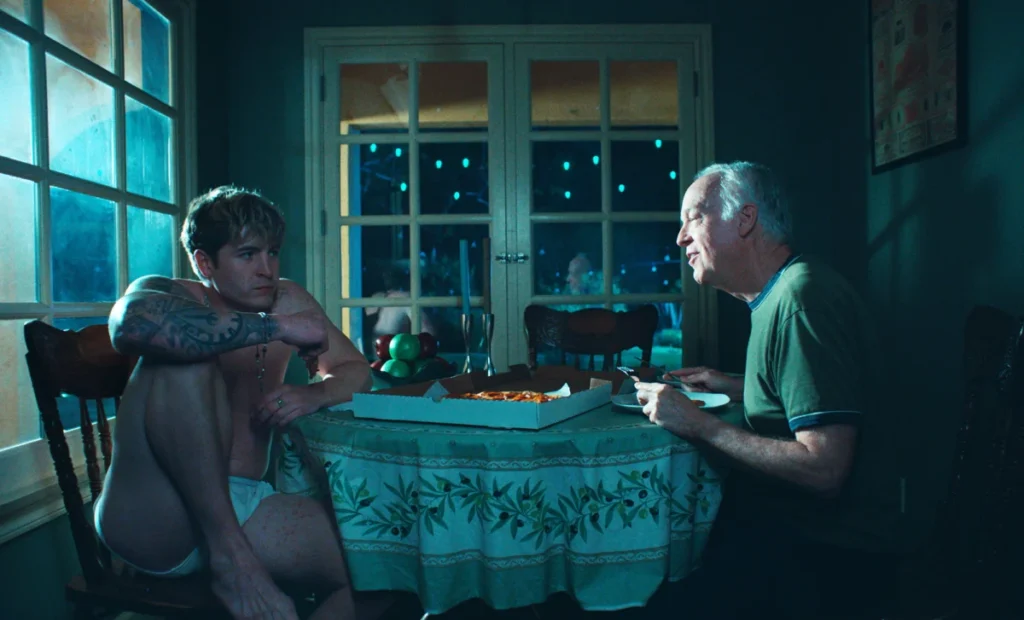

Obscured Releasing has unveiled the official trailer for Elliot Tuttle’s independent drama, Blue Film, a highly anticipated LGBTQ+ tale that promises to delve into complex themes of desire, identity, and the lingering shadows of past trauma. The film, which premiered at the 2025 Edinburgh Film Festival and subsequently screened at the Montclair and Philadelphia Film Festivals, is set to grace select U.S. theaters on May 8, 2026. The trailer offers a tantalizing glimpse into a narrative that has been described as "scarier than any straight horror this year" and "one of the most daring American films of recent vintage," largely due to its unflinching examination of taboo subjects related to sex and sexuality.
The film centers on Aaron Eagle, a fetish camboy portrayed by Kieron Moore, known for his role in Netflix’s Boots. Aaron agrees to a clandestine encounter with an anonymous client, a transaction that comes with a substantial sum of $50,000. However, what begins as a professional arrangement quickly devolves into a psychological and emotional minefield when Aaron discovers that his masked client, played by veteran actor Reed Birney, is intimately connected to his own obscured past. The trailer hints at a night of intense verbal and emotional sparring as the two men are forced to confront the profound impact of a shared, yet deeply troubled, history.
A Look at the Narrative and Key Players
Blue Film is the brainchild of American indie filmmaker Elliot Tuttle, whose previous directorial work includes the feature film The Steps and a collection of short films. Tuttle’s foray into more provocative territory with Blue Film signals a bold step in his burgeoning career. The film’s narrative arc appears to hinge on the gradual dismantling of personas, as Aaron and his client shed their masks, both literal and metaphorical, to engage in a raw and vulnerable exploration of their true desires and the buried secrets that bind them.
Kieron Moore, stepping into the role of Aaron Eagle, brings a compelling presence to the character of a young man navigating the complexities of his profession and his personal history. His performance is expected to be central to the film’s emotional resonance, portraying the vulnerability and resilience required to confront deeply buried trauma. Reed Birney, a respected actor with a distinguished career, is poised to deliver a nuanced performance as the enigmatic client, whose motivations and connection to Aaron are central to the film’s suspense. The interplay between these two actors is anticipated to be a driving force in the film’s exploration of intimacy and psychological tension.

The supporting cast and production team also lend significant weight to the project. The film is produced by Bijan Kazerooni, Will Youmans, Adam Kersh, and Waylon Sall. Notably, Mark Duplass serves as a consulting producer, a role that often indicates a commitment to supporting innovative and artistically driven independent cinema. Duplass’s involvement, in particular, suggests a belief in the film’s potential to push boundaries and spark important conversations.
Festival Circuit and Critical Buzz
The journey of Blue Film to its theatrical release has been marked by its reception on the festival circuit. After facing initial rejections from numerous other festivals, its premiere at the 2025 Edinburgh Film Festival provided a significant platform. The festival, known for its diverse and often challenging programming, offered a fitting venue for a film of Blue Film‘s nature. Its subsequent screenings at the Montclair Film Festival and the Philadelphia Film Festival further solidified its position within the independent film landscape, garnering attention from critics and industry professionals alike.
The film’s critical reception, as suggested by the promotional material, has been polarized yet intriguing. The descriptors "scarier than any straight horror this year" and "one of the most daring American films of recent vintage" indicate a film that is unafraid to confront difficult subject matter and challenge conventional cinematic norms. This suggests that Blue Film is not aiming for broad commercial appeal in the traditional sense, but rather seeks to engage a discerning audience willing to grapple with complex emotional and psychological themes. The emphasis on taboo topics related to sex and sexuality underscores its provocative nature, aiming to elicit strong reactions and potentially spark debate.
Thematic Depth and Societal Implications
The narrative of Blue Film appears to be deeply rooted in the exploration of desire and its often-complicated relationship with past experiences. The film’s focus on an LGBTQ+ narrative within this context adds another layer of complexity, potentially examining how societal perceptions, personal identities, and past traumas intersect. The "fetish camboy" aspect of Aaron’s character suggests a narrative that will likely explore the nuances of transactional relationships, the commodification of intimacy, and the search for genuine connection in unconventional circumstances.
The "disturbing tie to his past" that Aaron uncovers is a crucial narrative hook. This element hints at themes of abuse, exploitation, or perhaps even a shared history of trauma that has been suppressed or distorted. The film’s promise to explore the "impact of a tainted and shared past" suggests a psychological thriller that will unfold through dialogue and emotional revelation rather than overt action. The "war of words & emotions" described in the film’s synopsis points towards a character-driven piece where the internal landscapes of the protagonists are as significant as any external plot developments.

The film’s potential impact on broader societal conversations is also noteworthy. By tackling themes that are often relegated to the fringes of mainstream discourse, Blue Film could contribute to a more open and nuanced understanding of sexuality, trauma, and the complexities of human relationships. The very fact that it has been labeled "scarier than any straight horror" suggests that the film’s power lies in its psychological depth and its ability to tap into primal fears and anxieties related to vulnerability, exposure, and the potential for past transgressions to resurface and wreak havoc.
Production Background and Release Strategy
The journey of Blue Film from conception to screen has been a testament to the perseverance of independent filmmaking. The film’s independent status is further underscored by the involvement of Mark Duplass as a consulting producer. Duplass has a well-established track record of championing unique and artistically driven projects, often collaborating with emerging filmmakers to bring their visions to fruition. His input, even in a consulting capacity, can provide invaluable guidance and lend a degree of prestige to an independent production.
Obscured Releasing, the distributor, has carved out a niche for itself by handling films that often push creative and thematic boundaries. Their decision to distribute Blue Film aligns with their commitment to showcasing independent cinema that challenges audiences and sparks dialogue. The chosen release strategy of "select U.S. theaters" suggests a targeted approach, aiming to reach audiences who are actively seeking out thought-provoking and unconventional cinematic experiences. This strategy is common for independent films that may not have the broad appeal or marketing budgets of major studio releases but can find a dedicated following through word-of-mouth and critical acclaim.
The release date of May 8, 2026, places Blue Film in a competitive yet potentially advantageous position within the cinematic calendar. It offers audiences an opportunity to engage with a more mature and complex narrative as the spring film season unfolds. The anticipation surrounding the film, fueled by its festival success and the intriguing trailer, suggests that it is poised to be a talking point within the independent film community and beyond.
Conclusion: A Daring Cinematic Endeavor
Blue Film emerges as a bold and potentially groundbreaking independent film that is not afraid to confront the darker, more complex aspects of human psychology and desire. With a compelling narrative, strong performances from Kieron Moore and Reed Birney, and the artistic vision of Elliot Tuttle, the film promises a thought-provoking and emotionally resonant experience. Its journey from festival premieres to a limited theatrical release signifies its ambition to engage audiences on a deeper level, prompting introspection and potentially sparking important conversations about sexuality, trauma, and the enduring power of the past. As Blue Film prepares to debut in May 2026, it stands as a testament to the vitality and daring spirit of independent cinema, offering a glimpse into a cinematic landscape that continues to evolve and challenge its viewers.