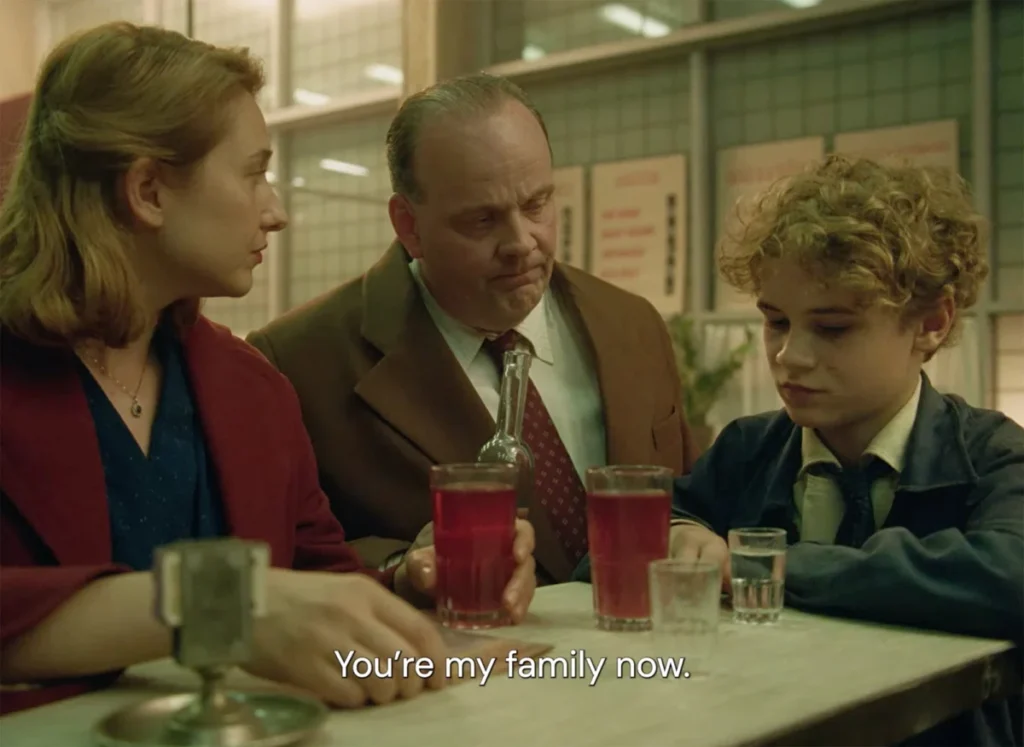

Mubi has unveiled the official UK trailer for Orphan, the latest cinematic offering from acclaimed Hungarian filmmaker Laszlo Nemes. The film, which premiered at the 2025 Venice Film Festival, is set against the tumultuous backdrop of 1957 Hungary, a nation grappling with the aftermath of the anti-Soviet uprising. The trailer offers a glimpse into a deeply personal narrative set against a period of significant national upheaval, exploring themes of identity, family, and the lingering shadows of historical trauma.
A Glimpse into Post-Uprising Hungary
Orphan, also known by its Hungarian title Árva, plunges viewers into Budapest in the year following the 1956 Hungarian Revolution. This period was marked by intense political repression and a societal struggle to rebuild and redefine itself. The film centers on Andor, a young boy raised by his mother, who has nurtured him with idealized stories of his deceased father. This carefully constructed reality is shattered when a formidable, imposing man enters Andor’s life, asserting his claim as the boy’s biological father and seeking to assume a role in his upbringing. The central dramatic tension lies in the uncertainty of this man’s true identity and intentions, and how this revelation will irrevocably alter Andor’s understanding of his past and his place in the world.
The film’s setting is crucial to its thematic resonance. The 1956 Hungarian Uprising, a spontaneous nationwide revolt against the communist government and its Soviet-imposed policies, was brutally suppressed by Soviet forces. The aftermath saw widespread arrests, executions, and a pervasive atmosphere of fear and uncertainty. For a young boy like Andor, growing up in this environment, the narratives of heroism and loss, of idealized figures and harsh realities, would be deeply intertwined with the national experience. The presence of a man claiming to be his father, a figure shrouded in mystery and potentially linked to the turbulent events, adds a layer of personal conflict to the broader historical narrative.

Laszlo Nemes’ Continued Exploration of History and Identity
Laszlo Nemes has established himself as a director adept at portraying intensely personal stories within sweeping historical contexts. His previous critically acclaimed works, Son of Saul and Sunset, both explored the human experience during periods of profound historical crisis in Hungary. Son of Saul, which won the Academy Award for Best Foreign Language Film in 2016, offered a harrowing and intimate perspective on the Holocaust through the eyes of a Sonderkommando. Sunset, released in 2018, delved into the complex social and political landscape of pre-World War I Budapest. With Orphan, Nemes continues this thematic trajectory, examining the psychological impact of a nation’s trauma on an individual’s formative years.
The screenplay, co-written by Nemes and Clara Royer, promises an intricate narrative. The juxtaposition of a child’s innocent perspective with the harsh realities of a post-revolutionary society, coupled with the ambiguity surrounding the paternal figure, suggests a film that will probe the complexities of truth, memory, and familial bonds under duress. The tagline, "Freedom has its price," hints at the sacrifices and difficult choices faced by individuals in such times, both on a national and personal level.
Critical Reception and Festival Circuit
Orphan made its debut at the 2025 Venice Film Festival, a prestigious platform known for showcasing auteur cinema. However, early critical responses were notably mixed. While some reviews acknowledged the film’s meticulous historical staging and Nemes’ directorial craft, others found it to be unevenly paced and lacking in compelling engagement. Critics have pointed to the film’s deliberate pacing and introspective nature, which may not resonate with all audiences.
Following its Venice premiere, Orphan was also screened at a number of other prominent film festivals, including the Toronto International Film Festival, Zurich Film Festival, London Film Festival, and AFI Fest. This broad festival circuit indicates a deliberate strategy by Mubi, the film’s distributor, to generate broader awareness and critical discussion. The varied reception at these festivals suggests that Orphan is a film that sparks debate and is likely to be polarizing among viewers. The Rotten Tomatoes score, currently at 60%, reflects this divided critical landscape, with reviewers often highlighting its "unevenly paced & curiously uninvolving" qualities. This suggests that the film may appeal most strongly to dedicated cinephiles who appreciate Nemes’ distinctive style and his willingness to tackle challenging subject matter.

Key Cast and Production Details
The film features a cast of notable European actors. Bojtorján Barabás stars as Andor, the young protagonist whose world is turned upside down. He is joined by Andrea Waskovics, Grégory Gadebois, Elíz Szabó, Sándor Soma, and Marcin Czarnik in supporting roles. The ensemble cast’s performances will be crucial in conveying the emotional weight of the narrative and navigating the complex relationships at its core.
The production team includes producers Mike Goodridge, Gregory Jankilevitsch, Alexander Rodnyansky, Ildiko Kemeny, and Ferenc Szőlle. The involvement of these individuals, some of whom have worked on critically acclaimed international productions, underscores the film’s ambitious scope and artistic aspirations.
Release and Distribution
Mubi, a global distributor and streaming service known for its curated selection of art-house and independent cinema, is handling the distribution of Orphan. The film is slated for release in UK, Ireland, and German cinemas on May 15th, 2026. This staggered release strategy, beginning with theatrical runs in key European markets, is typical for independent films seeking to build momentum and critical attention before potentially wider streaming availability. Mubi’s involvement suggests a commitment to presenting Orphan to audiences who appreciate challenging and artistically driven filmmaking.
Broader Context and Implications
The release of Orphan arrives at a time when historical dramas exploring the impact of political upheaval and personal identity continue to hold significant cultural relevance. In Eastern Europe, in particular, films that delve into the legacy of communist regimes and the struggle for national identity often resonate deeply, prompting reflection on shared histories and the enduring effects of political systems on individual lives.

Nemes’ focus on the aftermath of the Hungarian Uprising is particularly poignant. The event remains a sensitive and complex chapter in Hungarian history, often viewed through competing narratives. By centering the story on a child’s experience, Nemes offers a unique lens through which to examine the psychological and emotional toll of such events, where truth can be malleable and personal narratives are shaped by collective memory and trauma.
The film’s exploration of a "brutish man" claiming paternity also taps into universal themes of familial mystery and the search for belonging. In a society still reeling from a violent suppression of its people’s aspirations, the emergence of such a figure could symbolize both the lingering dangers of the past and the uncertain promise of the future. The question of whether this man represents a genuine paternal connection or a manipulative force adds a layer of suspense that is likely to captivate audiences.
Furthermore, the critical debate surrounding Orphan‘s pacing and engagement highlights a broader discussion within the film industry about audience expectations and the role of arthouse cinema. While some viewers seek fast-paced narratives, others are drawn to more contemplative and character-driven stories. Nemes’ work often falls into the latter category, demanding patience and active engagement from its audience. The mixed reviews suggest that Orphan may not be a film for everyone, but for those willing to invest in its intricate storytelling and thematic depth, it promises a thought-provoking cinematic experience.
The success of Orphan will likely depend on its ability to transcend the initial critical reservations and connect with audiences on an emotional and intellectual level. Its release in key European markets will provide an important test of its appeal, and its subsequent availability through Mubi will allow for a broader global reach. For cinephiles and those interested in the complex intersection of history, identity, and the human spirit, Orphan represents a significant cinematic event from a director known for his unflinching gaze into the shadows of the past.