

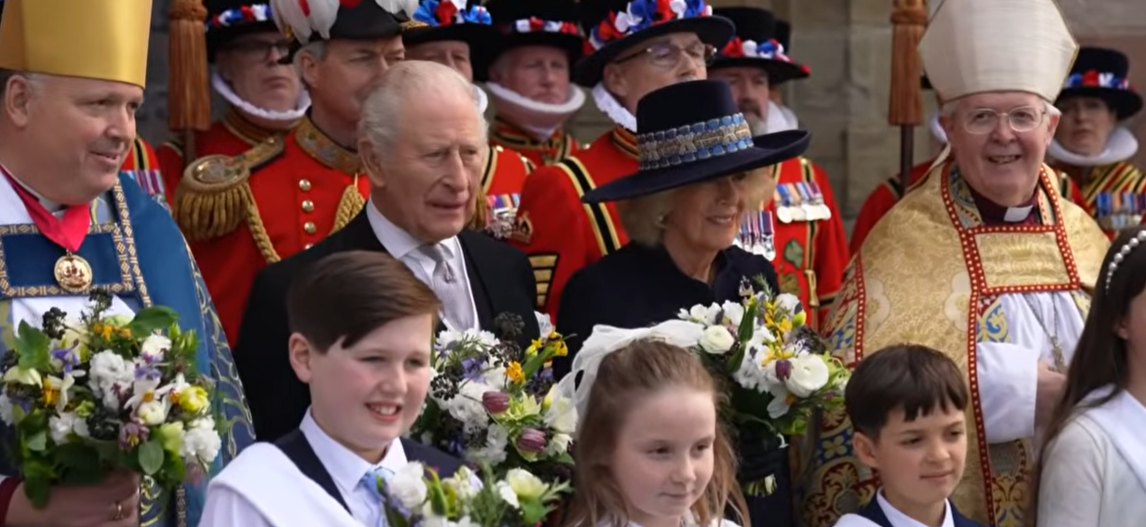
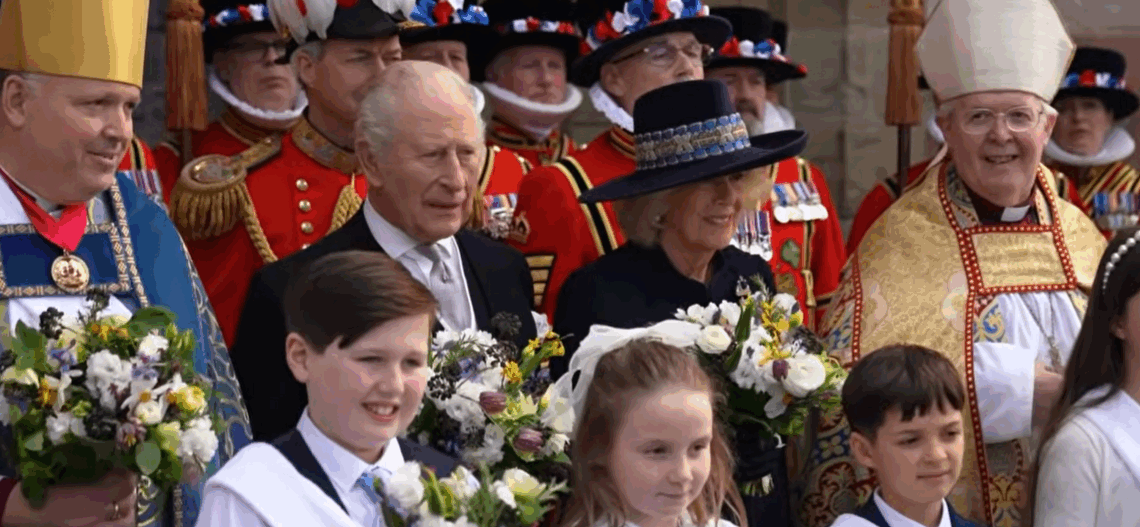
King Charles, during a profoundly significant Maundy Service held at St. Asaph Cathedral, received a floral tribute that, while a customary part of the ceremony, is typically presented to the Queen. This gesture, a continuation of a centuries-old tradition, underscored the King’s personal engagement with the spiritual and charitable heart of the nation, even as it highlighted a subtle shift in ceremonial practices. As His Majesty departed the historic Welsh cathedral, he was presented with a posy of vibrant spring flowers, a symbolic acknowledgement of the day’s proceedings and the community members honoured.
A Royal Tradition Rooted in Humility and Remembrance
The presentation of posies, or nosegays, at the Maundy Service traces its origins back to medieval times. Initially, these small bouquets of fragrant herbs and flowers served a practical purpose: to mask the unpleasant odours that were prevalent in densely populated areas and during periods of less frequent bathing. However, over centuries, their significance evolved, becoming deeply interwoven with the spiritual essence of the Maundy ceremony. The flowers came to symbolise the herbs and blossoms associated with the ritual washing of feet, an act of profound humility once performed by the monarch. This practice mirrored the actions of Jesus Christ, who washed the feet of his disciples during the Last Supper, a foundational event in Christian theology.
While historically, royal women were more consistently presented with flowers, the Maundy Service has evolved to include leading figures present, meaning King Charles, as the principal participant, was rightfully a recipient. The tradition of the monarch holding the posy for formal photographs following the ceremony, as observed outside St. Asaph, ensures that this symbolic element is visually captured and shared, reinforcing its importance within the public understanding of the event. The posy presented to King Charles was a carefully arranged collection of bright spring blooms, featuring striking purple and yellow blossoms, nestled within the traditional white fringed surround, a testament to the artistry and care involved in its creation.
St. Asaph Cathedral Hosts Landmark Maundy Service
The choice of St. Asaph Cathedral for this year’s Maundy Service was itself a notable event. It marked the first occasion the service has been held in north Wales and only the second time it has taken place in Wales since its inception. This geographical selection underscores a commitment to distributing royal engagements across the United Kingdom and acknowledging the diverse regions and communities within the nation. The cathedral, one of the smallest in Britain, provided an intimate and historically rich setting for this deeply spiritual observance.
The Maundy Service is a cornerstone of the Christian calendar, observed on Maundy Thursday, the day before Good Friday. It commemorates the Last Supper and Jesus’s commandment to love one another, as well as his act of washing the feet of his disciples. Traditionally, the monarch would personally perform the symbolic washing of the feet of a number of individuals chosen to represent the poor or needy. In modern times, this direct act has been superseded by the distribution of Maundy Money, a specially minted set of coins, and other gifts, to a number of men and women equal to the monarch’s age.
Honouring Community Service with Maundy Money
During the service at St. Asaph, King Charles presented Maundy Money to 77 men and 77 women. This number, reflecting His Majesty’s age, is a consistent practice in modern Maundy ceremonies. The recipients are not chosen randomly but are individuals recognised for their significant contributions to their communities, often through charitable work, volunteering, or other acts of service. Each recipient received two purses: one white, containing specially minted silver pennies, and one red, containing a symbolic amount of money, often one pound and one penny, representing the monarch’s gift to help them meet their needs.
The specially minted Maundy coins are legal tender but are primarily of historical and symbolic value. They are distinct from regular coinage, often featuring portraits of the monarch and specific designs related to the occasion. The distribution of these coins serves as a tangible recognition of the recipients’ dedication and a continuation of the ancient practice of distributing alms. The total number of recipients this year, 154 individuals, represents a significant cohort of community champions from across the country.
Royal Walkabout and Easter Preparations
Following the solemnity of the Maundy Service, King Charles and Queen Camilla engaged with the public during a walkabout, greeting the crowds who had gathered to catch a glimpse of the Royal Family. This direct interaction allows the monarch to connect with the people they serve and offers a more personal dimension to their public duties. The presence of the King and Queen in St. Asaph was a significant occasion for the local community, drawing considerable attention and providing an opportunity for residents to show their support.
The Royal Family’s calendar now turns towards Easter. King Charles and Queen Camilla are expected to travel to Windsor Castle, their traditional residence for the Easter period. There, they will lead the Royal Family at the Easter Sunday service. It is anticipated that the Prince and Princess of Wales, along with their children, will join them for this important religious observance. Easter is a significant time for the Royal Family, marked by religious services and family gatherings, providing a moment of reflection and celebration within the broader context of their public roles.
Absence of Princesses Beatrice and Eugenie
Notably, Princess Beatrice and Princess Eugenie will not be attending the Easter celebrations at Windsor this year, as they will be spending the holiday elsewhere. This absence follows renewed public scrutiny and controversy surrounding their father, Prince Andrew, and their mother, Sarah Ferguson, and their past associations with the convicted sex offender Jeffrey Epstein. While the reasons for their absence are not explicitly stated as being directly linked to this controversy, the timing and the sensitive nature of the Prince Andrew situation have led to considerable media speculation. The Duke of York himself has largely withdrawn from public royal duties following a settled lawsuit concerning allegations of sexual abuse.
Broader Implications and Analysis
The King’s receipt of the posy at the Maundy Service, while seemingly a minor detail, offers a subtle insight into the evolving nature of royal ceremonies. It demonstrates a flexibility in tradition that acknowledges the principal role of the monarch, even when certain aspects might have historically been more associated with the Queen Consort. This adaptability ensures that traditions remain relevant and meaningful in contemporary society.
Furthermore, the King’s active participation in the Maundy Service, particularly in a location as significant as St. Asaph, reinforces the Crown’s commitment to recognising and celebrating community spirit. The choice of recipients for the Maundy Money serves as a powerful endorsement of volunteerism and altruism, encouraging further engagement in civic life. The distribution of Maundy Money, a practice that dates back to the 13th century, connects the modern monarchy to its historical roots, providing a tangible link between past and present.
The economic and symbolic value of the Maundy Money, while modest for the recipients in monetary terms, carries immense symbolic weight. It is a profound acknowledgement from the head of state, recognising the intrinsic value of their service and dedication. The event also provides a significant boost to the chosen location, drawing national attention and fostering a sense of pride and community engagement. For St. Asaph, hosting this historic event was an honour that resonated throughout north Wales, highlighting the region’s heritage and its people. The successful execution of the service underscores the ongoing relevance of these ancient traditions in fostering national unity and celebrating the virtues of service and humility.