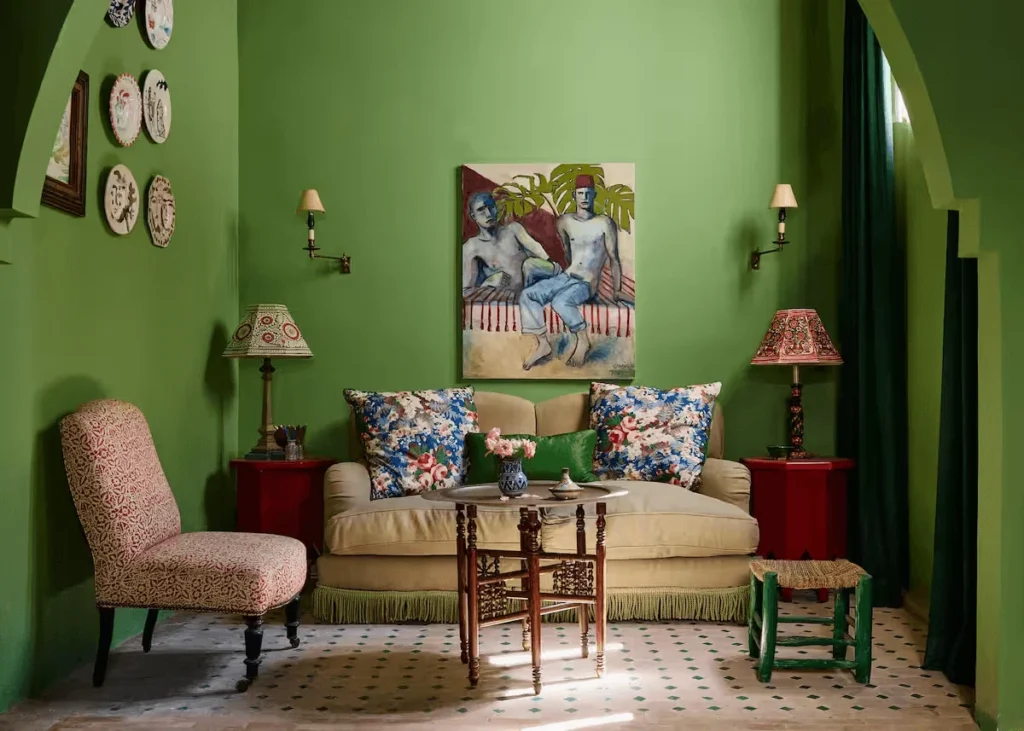

The landscape of Moroccan hospitality is undergoing a significant architectural and economic transformation as a new wave of design-led short-term rentals redefines the traditional travel experience. Moving away from the standardized luxury of international hotel chains, travelers are increasingly seeking "living heritage" sites—private riads and townhouses that synthesize centuries-old Moroccan craftsmanship with contemporary midcentury modern and minimalist sensibilities. This shift is particularly evident in the country’s historic medinas, where the renovation of crumbling estates into high-end Airbnbs is driving a localized real estate boom and preserving traditional building techniques that were once at risk of obsolescence.
Morocco’s aesthetic identity has long been defined by its refusal of traditional minimalism. The architectural vernacular is rooted in the concept of the "Riad"—an inward-looking garden house designed to provide privacy and protection from the North African sun. Today, the most sought-after properties in cities like Marrakech, Essaouira, and Fez are those that honor this structural history while introducing "Tadelakt" walls in earthy tones, polished concrete staircases, and vintage brass lighting. These elements create a visual dialogue between the "Maâlems" (master artisans) of the past and the design-conscious travelers of the 21st century.
The Historical and Architectural Context of the Moroccan Riad
To understand the current trend in Moroccan short-term rentals, one must look at the historical evolution of the riad. Derived from the Arabic word for "garden" (riyad), these structures were historically the urban homes of the wealthy and the merchant class. The architecture is characterized by a central courtyard, which serves as a micro-climate regulator and a private sanctuary.
In the late 20th century, many of these structures in the medinas of Marrakech and Fez fell into disrepair as families moved to the "Ville Nouvelle" (New City) areas built during the French protectorate era. However, the early 2000s saw a resurgence of interest in medina living, spurred by UNESCO World Heritage designations and a global fascination with Orientalist aesthetics. The current market represents a "Third Wave" of renovation: one that moves beyond the kitsch of the past toward a sophisticated "Afro-modernism." This involves the use of zellige (hand-cut geometric tiles), carved cedar wood, and lime-based plasters, integrated with high-speed fiber optics, climate control, and modern kitchen facilities.
Regional Highlights: Marrakech as the Epicenter of Design Innovation
Marrakech remains the primary driver of the high-end rental market in Morocco. The city’s medina, a labyrinth of narrow alleys, houses properties that vary from maximalist boutique experiences to serene, minimalist retreats.
Riad Sadaka, located near the vibrant Rahba Lakdima (Spice Traders’ Square), exemplifies the luxury of the private mansion model. Priced from $541 per night, it offers five bedrooms and a full suite of spa services. The property highlights a growing trend in the rental market: the "all-inclusive private stay," where guests receive the amenities of a five-star hotel—including heated pools and on-site staff—within the confines of a private home.
Conversely, Riad Isobel and Riad Zayan represent the "decorator-led" movement. Owned and operated by professional designers, these properties focus on the "curated" experience. Riad Isobel, starting at $427 per night, utilizes local art as striking wall decor and features modern light fixtures that contrast with traditional arched galleries. Riad Zayan, priced from $293, emphasizes the use of earth-toned zellige tiles and artisanal textiles, proving that the modern traveler values a cohesive aesthetic narrative as much as physical comfort.
Coastal Adaptation and Urban Modernism: Essaouira and Casablanca
While Marrakech focuses on the interior-facing riad, the coastal city of Essaouira offers a different architectural proposition. Properties such as Villa Heritage, priced at $598 per night, utilize "coastal interior design." This style incorporates oversized windows to capture Atlantic views—a departure from the traditional windowless exterior walls of the medina. The use of sand and rust-toned textiles reflects the natural palette of the Mogador coast, creating a seamless transition between the built environment and the geography.
In Casablanca, the country’s economic heart, the rental market is pivoting toward "compact luxury." The Tiny Home glasshouse, priced at $89 per night, illustrates how Moroccan design can be adapted for small-space living. By using floor-to-ceiling glass and sculptural privacy dividers, this property appeals to a younger, more mobile demographic of digital nomads and business travelers who prioritize light and efficiency over sprawling square footage.
Supporting Data: The Economic Impact of High-End Tourism
The growth of these luxury rentals is backed by robust tourism data. According to the Moroccan Ministry of Tourism, the country welcomed a record 14.5 million tourists in 2023, a 34% increase from 2022. This surge has contributed significantly to the national GDP, with tourism now accounting for approximately 7% of the country’s economic output.
The "Vision 2026" roadmap, a government initiative, aims to attract 17.5 million tourists and create 200,000 new jobs by 2026. High-end Airbnbs play a crucial role in this strategy by distributing tourism revenue directly into the hands of local homeowners and neighborhood businesses within the medinas. The renovation of a single riad often requires months of labor from local craftsmen, providing a steady income for artisans specializing in plasterwork, carpentry, and tile-making.
Chronology of the Short-Term Rental Evolution
- The Pre-Digital Era (Pre-2000s): Traditional hospitality was dominated by large-scale hotels outside the medinas. Riads were mostly private family homes or abandoned ruins.
- The Boutique Hotel Boom (2000-2010): European investors began purchasing and converting riads into "Guesthouses" (Maison d’Hôtes). This period established the medina as a luxury destination.
- The Airbnb Integration (2012-2019): The rise of global booking platforms allowed individual owners to compete with established hotels. Design became the primary differentiator.
- Post-Pandemic Resilience (2021-Present): Travelers began favoring private residences over shared hotel spaces. The "Design-Conscious Traveler" emerged as a dominant market segment, seeking unique, Instagram-ready interiors and authentic cultural immersion.
Official Responses and Industry Sentiment
Industry experts suggest that the professionalization of the Airbnb market in Morocco has forced traditional hotels to innovate. "We are seeing a democratization of luxury," says one Marrakesh-based real estate consultant. "A traveler can now stay in a property that looks like a museum for the price of a standard suite at a four-star hotel. This has raised the bar for everyone."
Local authorities have also responded by streamlining the classification process for "Maison d’Hôtes" and private rentals to ensure safety and quality standards are met. This regulation is seen as a necessary step to protect the "Brand Morocco" as the country prepares for international events, including its joint bid for the 2030 FIFA World Cup.
Broader Impact and Implications for Urban Preservation
The proliferation of high-design Airbnbs has broader implications for urban preservation. In Fez, properties like Riad Keltoum (from $301) and The Secret Patio (from $142) are helping to revitalize the Mouassine and Medina districts. By integrating modern kitchens and fiber-optic Wi-Fi into centuries-old structures, these rentals prove that historic buildings can be adapted for modern life without losing their soul.
However, this trend also brings challenges, including the potential for gentrification and the rising cost of living for local residents within the medinas. As properties are converted into luxury rentals, the balance between a "living city" and a "tourist museum" becomes increasingly delicate.
Conclusion: The Future of Moroccan Design-Travel
The best Airbnbs in Morocco today—from the vibrant townhouses of Tangier to the tranquil courtyards of Fez—are more than just places to sleep. They are curated environments that reflect a nation’s pride in its craft and its openness to the world. As Morocco continues to invest in its infrastructure and tourism "Vision 2026," the synergy between traditional architecture and modern design will remain its most potent draw. For the traveler, these homes offer a private sanctuary that captures the essence of the Maghreb: a place where light, shadow, and pattern converge to create an experience that is both ancient and entirely new.