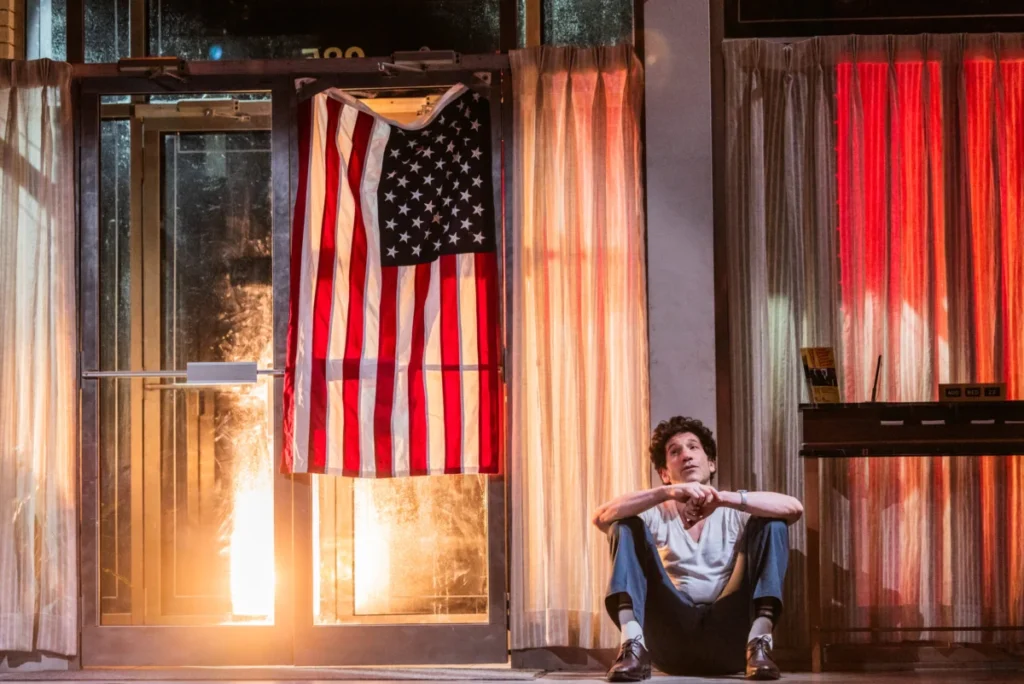

The highly anticipated Broadway adaptation of Sidney Lumet’s seminal 1975 film, Dog Day Afternoon, has premiered to a critical reception that largely highlights a significant departure from the original’s gritty neorealism and tense dramatic underpinnings. Adapted by Pulitzer-winning playwright Stephen Adly Guirgis and directed by Rupert Goold, the new production at the August Wilson Theater appears to have veered sharply into broad comedy, transforming a nuanced exploration of desperation and systemic critique into what many reviewers describe as an antic farce of bumblers and crass jokes. This reinterpretation has raised questions about the challenges of translating cinematic masterpieces to the stage, particularly when the core essence of the source material is fundamentally altered.
The Genesis of a Cinematic Masterpiece: Real-Life Drama and Lumet’s Vision
To understand the current Broadway production’s critical reception, it is essential to revisit the enduring legacy of Sidney Lumet’s Dog Day Afternoon. The film itself is a cinematic adaptation of a true story: the botched 1972 bank robbery of a Brooklyn Chase Manhattan branch by John Wojtowicz and Salvatore Naturile. The real-life event unfolded over 14 hours, turning into a media circus with thousands of spectators gathering outside the bank. Wojtowicz, a Vietnam veteran, claimed his motivation was to fund a sex reassignment surgery for his transgender wife, Elizabeth Eden (then known as Ernest Aron). This unusual, deeply personal motivation, coupled with the escalating tension and the public’s fascination, provided fertile ground for storytelling.
Lumet’s 1975 film, starring Al Pacino as Sonny Wortzik (Wojtowicz’s fictionalized counterpart) and John Cazale as Sal Naturile, captured the raw immediacy and human frailty of the event with remarkable precision. Critics like Vincent Canby of The New York Times lauded its "reportorially efficient and vivid" quality, noting its ability to find humor in desperate situations without sacrificing the underlying gravity. The film is a product of 1970s "New Hollywood" cinema, characterized by its gritty realism, anti-establishment themes, and complex characters. Lumet, known for his meticulous direction and ability to extract powerful performances, crafted a narrative that explored themes of media sensationalism, police incompetence, economic hardship, and the burgeoning visibility of LGBTQ+ issues, particularly through Sonny’s complex relationship with his partner, Leon (based on Elizabeth Eden).
Dog Day Afternoon garnered six Academy Award nominations, including Best Picture, Best Director for Lumet, Best Actor for Pacino, and ultimately won Best Original Screenplay for Frank Pierson. Its portrayal of Sonny as an unlikely anti-hero, often cheered on by the crowd outside the bank, resonated with a post-Vietnam, post-Watergate American public increasingly distrustful of authority. The iconic "Attica! Attica!" chant, spontaneously initiated by Sonny, became a powerful symbol of working-class defiance against systemic oppression, referencing the infamous 1971 prison riot and its violent suppression. The film’s lasting impact lies in its masterful blend of tension, character study, and social commentary, all grounded in a deeply human, if chaotic, story.
The Broadway Vision: A Shift in Tone and Intent
Given the film’s profound dramatic weight and its status as a cultural touchstone, the decision to adapt it for the stage presented a unique challenge. The choice of Stephen Adly Guirgis as adapter initially seemed promising. Guirgis is celebrated for his works like Jesus Hopped the ‘A’ Train and Between Riverside and Crazy, plays that delve into the lives of hardscrabble New Yorkers caught in cycles of crime and consequence, often blending raw drama with poetic, comedic elements. His deep understanding of urban argot and character-driven narratives might have suggested a faithful, if theatrical, rendition of Lumet’s film. However, reports from early production hinted at creative differences over the play’s tone, with The New York Times reporting that Guirgis was, for a period, banned from the rehearsal room, indicating potential clashes over the direction the adaptation was taking.
Under director Rupert Goold, known for diverse theatrical endeavors such as King Charles III and the film Judy, the Broadway production appears to have leaned heavily into the comedic potential of the situation, often at the expense of the film’s nuanced characterizations and underlying pathos. The critical consensus suggests that the creative team became "stuck on the funny part" of Lumet’s film, elevating the occasional, rueful amusement derived from desperate circumstances into the dominant mode of the entire production.
A Divergent Interpretation: Critical Assessment of the Play
The primary critique leveled against the Broadway Dog Day Afternoon is its wholesale embrace of farce and cheap humor. The original film’s occasional comedic beats arose organically from the absurdity of a desperate situation, highlighting the fragile humanity of its characters. In contrast, the play reportedly engineers laughter through broad caricatures and gratuitous gags.
One of the earliest indicators of this tonal shift, as noted by critics, occurs with the character of Ray Ray, the timid would-be third perpetrator. In the film, Sonny quietly lets him go, a moment that underscores Sonny’s surprising compassion and the fragile nature of their criminal enterprise. The stage version, however, transforms this into a grotesque comedic sequence where Ray Ray loudly complains of stomach issues before explicitly soiling himself. This choice, according to reviewers, reduces a moment of quiet character development to a base sight gag, inviting audiences to laugh at the characters’ incompetence rather than empathize with their predicament.
This pattern of injecting crude humor continues throughout the play. The police negotiator’s surname is changed to Fucco, seemingly solely to allow a swaggering FBI agent to repeatedly call him "Fucko"—a comedic device described as both childish and unnecessary. The bank tellers, who in the film are depicted as women of varying ages grappling with fear, resilience, and a wary bond with their captors, are transformed into one-dimensional stereotypes: "floozies or sardonic sitcom moms." These changes strip the characters of their relatable humanity, reducing them to fodder for easy laughs.
Character Transformations and Thematic Dilution
The reimagining extends to the central figures, further diluting the film’s complex character studies. Sal, the edgy and unpredictable robber famously played with quiet intensity by John Cazale, is reconfigured for 2026 audiences into a "dumb, loose-cannon maybe-closet-case" by Ebon Moss-Bachrach. This portrayal is criticized for being a "tired riff" on Moss-Bachrach’s character from The Bear, sacrificing Sal’s unique menace and vulnerability for a more contemporary, albeit clichéd, archetype.
Perhaps the most "galling" transformation, as described by critics, is that of Leon, Sonny’s transgender wife. In a film made 50 years ago, Lumet and Pierson approached Sonny and Leon’s complicated relationship with a surprising degree of sensitivity for its era, portraying Leon’s struggle and Sonny’s deep, albeit flawed, commitment. The Broadway production, however, reportedly paints Leon (played by Esteban Andres Cruz) as a "flighty, feisty, man-crazy sex worker," reducing her to a "big gag" and another "bit of crassness." This portrayal is seen as a regressive step, particularly in a contemporary production, failing to offer the compassion or nuanced understanding that the original film managed to convey. Other examples of gratuitous humor include "wheezy jokes" about a bank teller seeing Deep Throat or another having slept with her uptight boss—elements entirely absent from the film and deemed unnecessary additions that further distract from the core narrative. The consistent drive to make every character and situation a source of broad comedy actively undermines any attempt for the audience to take the story or its people seriously.
The "Attica!" Moment: A Symbol of Misinterpretation
One of the most powerful and iconic moments in Lumet’s film is Sonny Wortzik’s spontaneous "Attica! Attica!" chant. In the film, this moment is a thrilling, almost revolutionary outburst. Sonny, facing down police, harnesses the already simmering anti-establishment fervor of the crowd gathered outside the bank, turning their collective anger into a cry for solidarity with the victims of the Attica prison uprising. It is a moment of raw, unscripted public outrage, reflecting a city and a nation bristling with tension and distrust of authority. Lumet masterfully captures this organic surge of proletarian support, highlighting the deep-seated grievances against corrupt police and politicians.
In the Broadway adaptation, this pivotal scene is reportedly transformed into an awkward, forced exercise in audience participation. Jon Bernthal, as Sonny, takes center stage, waving his arms and explicitly asking the audience to repeat "Attica!" and to applaud when he shouts "Fuck you, NYPD!" Critics found this call-and-response entirely misses the point. Instead of earning a genuine emotional response, it attempts to extract one, rendering the moment "achingly limp and awkward." The intimate, spontaneous burst of revolutionary outcry from the film is replaced by a hollow, almost commercialized slogan, stripped of its context and genuine fervor. This misinterpretation of one of the film’s most potent symbols encapsulates the production’s broader failure to grasp the spirit and substance of the original.
Production Challenges and Individual Performances
Director Rupert Goold’s approach is cited as a significant factor in the play’s tonal issues. His direction is described as ill-suited to mitigate the playwright’s "sneering impulse." Action sequences are characterized as "clunky, shouty jumbles," and a pervasive lack of tension permeates what should be a heated standoff. David Korins’ set design, reportedly impressively realistic, is underutilized, primarily serving as a rotating backdrop. Goold is also criticized for steering most of his actors towards "the broadest of performances," favoring high pitch and volume over the "measured authenticity" that defined Lumet’s ensemble.
Despite the overarching issues, some individual performances manage to register. Jon Bernthal, stepping into Al Pacino’s formidable shoes as Sonny, occasionally "registers as a real human being caught in a moment of desperation," maintaining a "springy energy" even when the play around him falters. Jessica Hecht, as head teller Colleen, is noted for fighting her "miscasting with noble grace," finding ways to infuse "canned one-liners into something resembling the everyday." Jon Ortiz brings a "certain air of decency" to the character of Fucco, vaguely evoking Charles Durning’s "brilliant shagginess" from the film. However, Spencer Garrett, of Mad Men fame, appears to be the standout, "nailing the smarmy, officious tone" of the FBI agent and feeling "truly of the story’s time and place," in stark contrast to others who seem to be "playing to a studio audience."
Broader Implications and Legacy
The Broadway production of Dog Day Afternoon serves as a cautionary tale in theatrical adaptation, particularly when attempting to transpose a work celebrated for its specific blend of realism, tension, and social commentary. The decision to prioritize broad comedy and caricature over the original’s humanistic drama and poignant exploration of desperation not only alienates fans of the film but also undermines the potential for a new generation to engage with its powerful themes.
The original Dog Day Afternoon remains a vital piece of American cinema, praised for its unflinching look at complex characters under duress and its timely social critique. It offered a rare, empathetic portrayal of a transgender character for its time and captured the volatile spirit of a nation grappling with its own identity. By stripping away these layers for easy laughs and surface-level antics, the Broadway adaptation risks rendering a significant cultural narrative into a hollow spectacle. The film’s Sonny Wortzik, a man desperate for love and respect, who briefly ignited a spark of rebellion in a disillusioned city, would likely be appalled to see his story reduced to a marketing slogan and a series of crude jokes. The hostages, whose terror and eventual nuanced relationship with their captors formed the emotional core of the film, would likely feel similarly misrepresented. The challenge for future adaptations of beloved films lies in understanding and honoring the core spirit and thematic depth of the source material, rather than merely extracting its most superficial elements for fleeting entertainment.
Production Details:
- Venue: August Wilson Theater, New York
- Cast: Jon Bernthal, Ebon Moss-Bachrach, Jessica Hecht, Jon Ortiz, Esteban Andres Cruz, Spencer Garrett
- Director: Rupert Goold
- Writer: Stephen Adly Guirgis
- Set design: David Korins
- Costume design: Brenda Abbandandolo
- Lighting design: Isabella Byrd
- Sound design: Cody Spencer