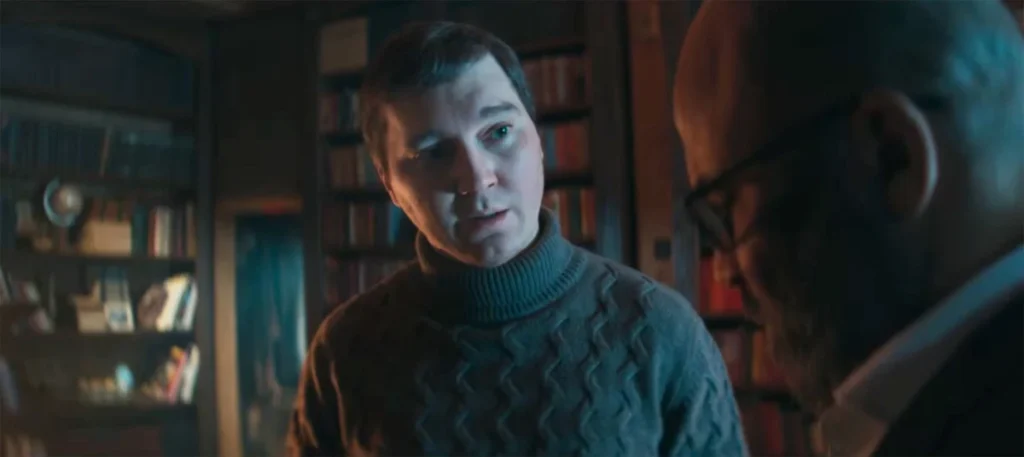

Signature Entertainment and Gaumont have unveiled a compelling new official trailer for The Wizard of the Kremlin, an English-language feature film helmed by acclaimed French director Olivier Assayas. This cinematic exploration delves into the intricate and often chilling rise to power of Vladimir Putin, offering an insider’s perspective on the machinations within Russia’s highest echelons. The film, which premiered to critical acclaim at the 2025 Venice Film Festival, has since traversed the international festival circuit, captivating audiences at Toronto, San Sebastian, Busan, and Zurich. Its UK release is slated for April 17, 2026, though a definitive US release date remains unannounced.
The narrative centers on Vadim Baranov, portrayed with a disarming blend of calm and shrewdness by Paul Dano. Baranov, a young Russian artist in the tumultuous post-Soviet era, unexpectedly finds himself becoming a key advisor and chief propagandist to Vladimir Putin as he ascends to the presidency in 2000. The film promises an in-depth examination of the power dynamics, pervasive corruption, and calculated manipulation that characterized this pivotal period in Russian history.
The Wizard of the Kremlin boasts a formidable cast, with Jude Law embodying Vladimir Putin, Alicia Vikander portraying the enigmatic Ksenia, and supported by distinguished actors such as Jeffrey Wright, Tom Sturridge, and Will Keen. The initial critical reception from screenings, including at the Venice Film Festival, has highlighted the film’s exceptional insight into the nature of power and control. The trailer itself effectively conveys the immense and unsettling scope of the regime’s architecture, with Dano’s meticulous performance serving as the linchpin of this intricate narrative.

Genesis and Development
The genesis of The Wizard of the Kremlin lies in the acclaimed novel of the same name by Giuliano Da Empoli, a work that sought to unravel the psychological and political underpinnings of Vladimir Putin’s ascent. Da Empoli, a political scientist and writer, drew upon extensive research and interviews to construct a narrative that, while fictionalized, offers a potent and often unnerving portrayal of the forces that shaped modern Russia. The adaptation for the screen was undertaken by Olivier Assayas, a director celebrated for his nuanced explorations of identity, politics, and societal shifts. Assayas’s filmography includes a diverse range of critically lauded works such as Summer Hours, Clouds of Sils Maria, Personal Shopper, and the recent Irma Vep series, all of which demonstrate his capacity to dissect complex human and political landscapes.
The collaboration between Assayas and Emmanuel Carrère for the screenplay underscores the film’s ambition to translate the novel’s intellectual depth and narrative drive into a compelling cinematic experience. The production, overseen by Olivier Delbosc and Sidonie Dumas through their respective companies Curiosa Films and Gaumont, marks a significant international co-production, reflecting the global interest in the subject matter and the caliber of talent involved.
A Chronology of Power and Influence
The film’s narrative is deeply rooted in a specific historical period, charting the transformation of Russia from the chaotic aftermath of the Soviet Union’s collapse to the consolidation of power under Vladimir Putin.
- Early 1990s: Russia grapples with profound political and economic instability following the dissolution of the Soviet Union. This era of uncertainty and flux creates fertile ground for new power structures to emerge.
- Mid-1990s: Vadim Baranov, initially an artist, navigates this evolving landscape, transitioning into roles within the burgeoning media industry, including reality television production. This period allows him to hone his skills in shaping narratives and public perception.
- Late 1990s: Baranov’s talents attract the attention of a rising KGB agent, Vladimir Putin. He becomes instrumental in crafting Putin’s public image and political strategy, effectively serving as his chief propagandist and advisor. This marks the beginning of their symbiotic, albeit ethically ambiguous, relationship.
- 2000: Vladimir Putin officially assumes the presidency of Russia. Baranov is firmly entrenched at the heart of the new administration, playing a crucial role in shaping the nation’s trajectory. The film explores the blurring lines between truth and falsehood, belief and manipulation within this powerful inner circle.
- Post-2000: The film suggests a period of introspection for Baranov, who eventually retreats from public life, shrouded in mystery. His later decision to "open up" forms the narrative frame, allowing him to reveal the "dark secrets" of the regime he helped to build.
This chronological arc underscores the film’s focus on the gradual and often insidious nature of power acquisition and consolidation, highlighting how individuals can become complicit in the construction of systems that shape national destinies.

Supporting Data and Contextual Background
The rise of Vladimir Putin and the subsequent transformation of Russia represent a significant geopolitical shift of the late 20th and early 21st centuries. Understanding the context of the era is crucial to appreciating the film’s thematic concerns.
- Post-Soviet Transition: The 1990s in Russia were marked by economic hardship, political instability, and a sense of national disorientation. The rapid privatization of state assets led to the rise of oligarchs, and the democratic reforms of the early Yeltsin years often appeared fragile and vulnerable. This environment created a demand for strong leadership and a return to perceived order.
- The Role of Media and Propaganda: The development of independent media in post-Soviet Russia was rapid, but it also became a battleground for influence. The film’s focus on Baranov as a "spin doctor" and propagandist reflects the increasing sophistication of media manipulation in shaping public opinion and political discourse. The era saw the emergence of powerful media moguls and the strategic use of television to influence voter perceptions.
- The Chechen Wars: The Second Chechen War, which began in 1999, was a critical catalyst for Putin’s rise. His strong stance and perceived decisiveness in this conflict resonated with a population weary of instability and perceived weakness. The film likely touches upon how such events were leveraged to consolidate power.
- Global Geopolitical Landscape: The period also saw shifts in global power dynamics, with the United States emerging as the sole superpower. Russia’s reassertion of its influence on the world stage, often in defiance of Western interests, is a backdrop against which the film’s events unfold.
The film’s title, The Wizard of the Kremlin, itself evokes a sense of sorcery and control, hinting at the complex and perhaps arcane methods employed to steer the nation. The narrative’s emphasis on Baranov’s role suggests that the machinations of power are not always overt but can be subtly woven through media, influence, and strategic narrative construction.
Critical Reception and Festival Circuit
The film’s premiere at the Venice Film Festival, a prestigious platform for cinematic innovation and artistry, immediately signaled its potential significance. Its subsequent inclusion in major international film festivals like Toronto, San Sebastian, Busan, and Zurich further solidified its position as a noteworthy cinematic event. These festival appearances allow for early critical evaluation and provide insights into the film’s reception by diverse international audiences and critics.
While specific reviews from the Venice premiere were not detailed in the initial announcement, the fact that the film was selected for these highly competitive festivals suggests a strong artistic and thematic merit. Directors like Olivier Assayas are often lauded for their intellectual rigor and their ability to engage with complex social and political issues. The film’s focus on a controversial and globally significant figure like Vladimir Putin guarantees a level of inherent interest, but its success will ultimately hinge on Assayas’s ability to deliver a nuanced and compelling narrative. The presence of a celebrated cast further enhances its appeal and raises expectations for strong performances.

Official Statements and Industry Reactions (Inferred)
While direct quotes from filmmakers or distributors regarding the specific implications of the new trailer are not provided in the source material, the act of releasing an official trailer, especially for a film that has already premiered internationally, signifies a strategic push towards broader audience engagement.
- Signature Entertainment and Gaumont’s Strategic Release: The release of this UK trailer by Signature Entertainment and Gaumont indicates their commitment to promoting the film within the British market. The April 17, 2026 release date suggests a carefully planned distribution strategy, aiming to capitalize on cinematic release windows and potentially build upon any international buzz generated by festival screenings.
- Director Olivier Assayas’s Artistic Intent: Assayas, known for his thoughtful and often provocative filmmaking, likely intends for The Wizard of the Kremlin to serve as a critical examination of power, influence, and the construction of political narratives. His past works often delve into the complexities of human motivation and the societal forces that shape individual choices. The film is expected to offer a challenging but illuminating perspective on a figure who has profoundly impacted global politics.
- Anticipation from Film Critics and Audiences: The ensemble cast, featuring established talents like Paul Dano and Jude Law, naturally generates anticipation among film critics and a discerning audience. Dano’s reputation for embodying complex characters, coupled with Law’s ability to portray charismatic yet formidable figures, suggests that their performances as Baranov and Putin, respectively, will be central to the film’s critical reception. The film’s exploration of a highly relevant geopolitical subject matter also positions it as a significant talking point within contemporary cinema.
Broader Impact and Implications
The Wizard of the Kremlin‘s emergence in the global cinematic landscape carries significant implications, both artistically and geopolitically.
- Understanding Contemporary Russia: In an era where Russia’s role on the world stage is a subject of constant debate and analysis, a film offering an intimate portrayal of its political leadership’s formative years holds particular relevance. By delving into the alleged machinations behind the scenes, the film may provide viewers with a deeper, albeit dramatized, understanding of the forces that have shaped Russia’s trajectory.
- The Power of Narrative and Media: The film’s explicit focus on Baranov as a propagandist and spin doctor underscores the critical role of narrative control and media manipulation in shaping political realities. This theme resonates universally, as societies worldwide grapple with the challenges of disinformation, propaganda, and the influence of media in shaping public opinion. The Wizard of the Kremlin could serve as a stark reminder of how narratives are constructed and weaponized in the pursuit and maintenance of power.
- International Co-Productions and Storytelling: The film’s status as an English-language production from a French director, distributed by international companies, highlights the increasingly globalized nature of filmmaking. Such co-productions facilitate the exploration of diverse narratives and bring different cultural perspectives to bear on complex subjects. This collaboration allows for a broader reach and potentially a more nuanced examination of a story that transcends national borders.
- Artistic Interpretation of Political Figures: The portrayal of real-life political figures in cinema is always a delicate balance between historical accuracy and artistic license. The Wizard of the Kremlin, by focusing on a fictionalized account inspired by a novel, enters this complex territory. The film’s reception will likely involve discussions about the ethical considerations of dramatizing the lives and actions of prominent political leaders, and the extent to which such portrayals can inform or influence public perception.
As The Wizard of the Kremlin prepares for its UK release, it stands as a testament to the enduring fascination with power, influence, and the intricate dance of politics. Its release promises to spark conversation and offer a compelling, albeit dramatized, glimpse into a pivotal period of modern history. The meticulous performances and Assayas’s directorial prowess are expected to elevate the film beyond mere political commentary, offering a profound exploration of the human dynamics that underpin the levers of state.