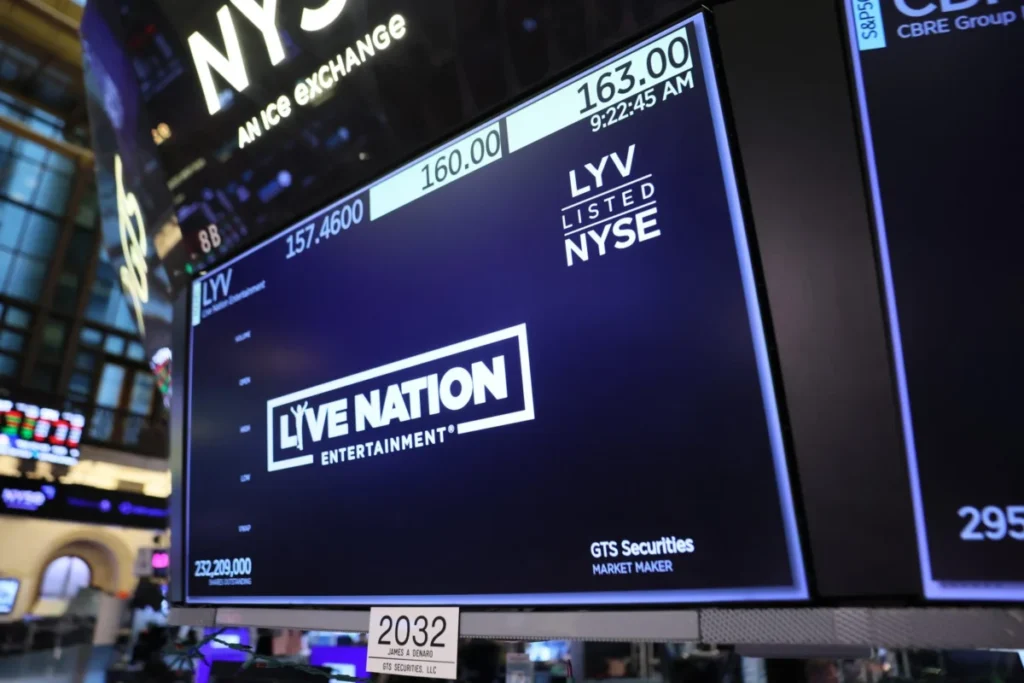

The blockbuster antitrust trial involving concert giant Live Nation has entered a pivotal phase as the company begins presenting its defense, following a comprehensive presentation of evidence by state attorneys general. This past week, the courtroom buzzed with testimony that delved into controversial client-steering arrangements and challenged the very notion of Live Nation’s alleged monopoly in the live entertainment industry. As the trial progresses, key figures from Oak View Group (OVG) and Live Nation’s own executives have taken the stand, offering starkly contrasting perspectives on the competitive landscape and the company’s business practices.
The legal battle, initially spearheaded by the Department of Justice (DOJ), shifted its primary focus to a coalition of states after the federal agency reached a settlement with Live Nation just one week into the proceedings. This settlement, reportedly influenced by direct intervention from then-President Donald Trump upon the recommendation of Endeavor CEO Ari Emanuel, has mandated certain changes in Live Nation’s conduct but crucially does not require the divestiture of its dominant ticketing arm, Ticketmaster. However, states like New York and California are determined to pursue the dissolution of the integrated live events behemoth, viewing the DOJ’s agreement as insufficient.
Week Three: Unpacking the Allegations and the Defense’s Opening Salvo
The third week of the trial saw the conclusion of the state attorneys general’s case-in-chief, with a few remaining witnesses slated to testify at a later date due to scheduling complexities. Live Nation then commenced its defense, a strategy expected to span another week and include testimony from influential figures such as Adel Nur, also known as Future the Prince, the manager of global superstar Drake.

Central to the prosecution’s narrative has been the alleged symbiotic relationship between Live Nation and Oak View Group (OVG), a venue management company. On Wednesday, March 25th, Chris Granger, the current CEO of OVG, testified as a government witness. His testimony centered on a $20 million client-steering arrangement between OVG and Ticketmaster. Granger confirmed that, as stipulated by a non-prosecution agreement stemming from federal bid-rigging charges against OVG founder Tim Leiweke the previous year, OVG was compensated to actively encourage venues to select Ticketmaster as their exclusive primary ticketing vendor. Crucially, he acknowledged that this incentive arrangement was not disclosed to OVG’s clients.
While not inherently illegal, state prosecutors argued that these undisclosed financial incentives from Ticketmaster to OVG significantly bolstered Live Nation’s already formidable market power and contributed to its alleged anticompetitive practices. Reports from legal news outlet Law360 detailed Granger’s cross-examination, where he candidly admitted, when pressed on the lack of disclosure, "I don’t know why, we should have." Despite this admission, Granger also asserted that he would recommend Ticketmaster to venues even without the incentive, citing its perceived superiority over competitors like AXS and SeatGeek. He characterized Ticketmaster as possessing "the biggest database [and] the best name recognition, so when you’re trying to sell tickets, it has a bit of a marketing halo."
Live Nation’s defense formally began on Thursday, March 26th, with Omar Al-joulani, Live Nation’s president of touring, taking the stand. Al-joulani presented a counter-narrative, directly challenging the prosecution’s assertion of Live Nation’s monopolistic grip on the industry. He testified about his work with some of the world’s most prominent touring acts, including Coldplay, Kendrick Lamar, Drake, and Imagine Dragons. However, he emphasized that Live Nation does not maintain exclusive, long-term contracts with these artists. Instead, he stated, the company must continuously demonstrate its value and secure their business through competitive means.
"There are lots of promoter options," Al-joulani declared, according to Courthouse News Service. He further bolstered his argument by revealing that Live Nation has indeed lost out on securing business from major artists such as Morgan Wallen and Bruce Springsteen, underscoring the highly competitive nature of the touring promotion landscape. "I can’t stress [enough] how competitive the business is," he added.
The jury also heard from two PhD economists, Nicholas Hill and Rosa M. Abrantes-Metz, who served as expert witnesses for the states. Additionally, Mark Yovich, Ticketmaster’s global president, and former AEG Presents president Rick Mueller, provided their perspectives during the week.

The OVG Connection: A Pivotal Piece of the Prosecution’s Case
Granger’s testimony held significant weight for the prosecution, as OVG has been a central figure in the antitrust case since its inception. The DOJ’s initial 2024 complaint had characterized OVG as a "pimp" and "hammer" designed to reinforce Ticketmaster’s exclusive ticketing arrangements, which are fundamental to the monopoly claims.
OVG had previously stipulated to some of these operational facts as part of its non-prosecution agreement in the Leiweke case. This criminal antitrust proceeding was specifically related to the construction of the Moody Center in Austin. However, the prosecution of Leiweke was effectively nullified when President Trump issued a pardon to him in December. The DOJ had reportedly hoped to secure Leiweke’s testimony in the Live Nation trial, a prospect that appears to have been extinguished by the pardon.
Live Nation’s Defense Strategy: Challenging Market Definitions
Al-joulani’s testimony on behalf of Live Nation is a cornerstone of the company’s defense. It directly supports Live Nation’s long-standing argument that robust competition exists across all facets of the live entertainment sector, encompassing touring, venue ownership, and ticketing. The company contends that any evidence presented by the states suggesting otherwise is predicated on flawed metrics and an inaccurate portrayal of the market.

Broader Context and Legal Ramifications
The antitrust trial against Live Nation, a company formed through the 2010 merger of Live Nation and Ticketmaster, has been closely watched by industry observers, artists, and consumers alike. The core accusation is that Live Nation leverages its dominance in concert promotion to unfairly disadvantage competitors and inflate prices, while Ticketmaster utilizes its near-monopoly in ticketing to extract excessive fees and stifle innovation.
The DOJ’s settlement, while requiring Live Nation to implement stricter compliance measures and refrain from retaliatory actions against artists or venues that work with competitors, has been criticized by some as a missed opportunity to fundamentally reshape the industry. The absence of a divestiture of Ticketmaster means the integrated business model, which the states argue is the primary source of anticompetitive harm, remains intact.
The states, however, are pressing forward with their more ambitious goals. Their strategy involves demonstrating that Live Nation’s business practices have created a self-reinforcing cycle of market power, making it exceedingly difficult for new entrants or existing competitors to gain a significant foothold. The testimony regarding OVG’s undisclosed incentives is designed to illustrate how Live Nation allegedly uses its influence and financial leverage to entrench Ticketmaster’s dominance, thereby limiting venue choices and, by extension, artist and fan options.
The defense, conversely, aims to dismantle this narrative by highlighting the numerous independent promoters, ticketing platforms, and venue operators that actively compete for artist attention and fan dollars. By presenting evidence of lost business and the constant need to win contracts, Live Nation seeks to portray itself not as an unassailable monopolist, but as a significant player in a dynamic and fiercely contested market.

The Path Forward
As the trial continues, the jury will be tasked with weighing the evidence presented by both sides. They will need to consider the definitions of relevant markets, the impact of Live Nation’s business practices on competition, and whether the company has indeed acted as a monopolist, stifling innovation and harming consumers. The testimony from industry insiders, economic experts, and company executives will be crucial in shaping their understanding of the complex dynamics at play in the multi-billion dollar live entertainment industry. The outcome of this trial could have profound implications for the structure of the music business, the relationship between artists and their fans, and the overall accessibility and affordability of live music events. The ongoing legal proceedings serve as a stark reminder of the intense scrutiny faced by dominant players in major industries and the persistent legal challenges aimed at ensuring a competitive marketplace.