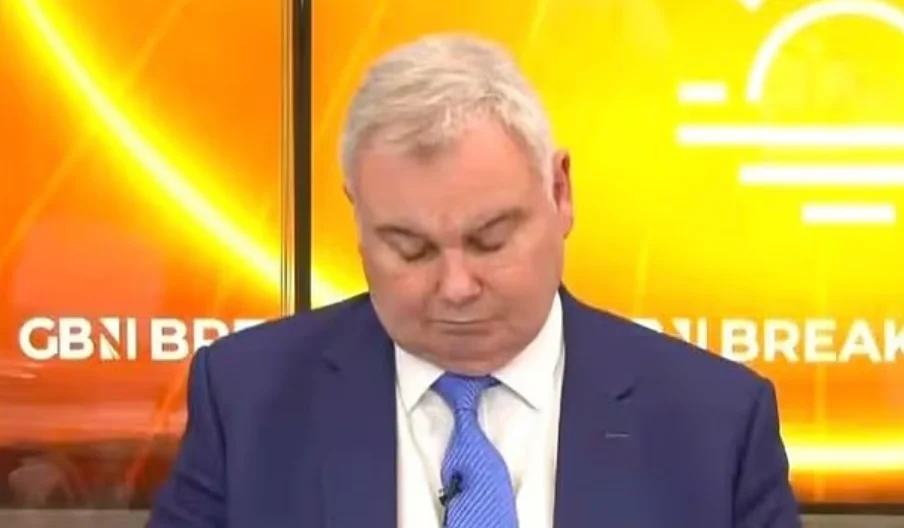

Veteran broadcaster Eamonn Holmes recently found himself at the centre of public discussion following an on-air incident on GB News, where some viewers accused him of slurring his words and appearing to fall asleep alongside co-presenter Ellie Costello earlier this month. The 66-year-old television personality, whose career spans decades across major British networks, swiftly clarified the situation, attributing his perceived inattention to technical issues with his microphone equipment. This incident, however, has inadvertently cast a spotlight on Holmes’s ongoing and very public battle with severe health challenges, which he has candidly discussed, bringing critical issues of ageism, disability, and accessibility in the media industry and wider society to the forefront.
The GB News Incident and Holmes’s Prompt Clarification
The episode in question occurred during a broadcast where Holmes, known for his sharp wit and engaging presenting style, was observed by some viewers fiddling with his microphone pack and mobile phone while seated. The visual cues, combined with what some interpreted as a lack of engagement, quickly led to a flurry of comments on social media platforms, with viewers expressing concern for his well-being. Accusations ranged from suggestions of fatigue to more serious speculation about his health, particularly given his well-documented medical history.
Holmes, however, did not allow the speculation to fester. He seized an opportune moment during an appearance at Hayley Palmer’s ‘An Audience With…’ event held at London’s Hippodrome Casino on a Wednesday evening to set the record straight. Addressing the conjectures directly, he explained, "I was just looking down at my mic pack to see why it was not working, as we don’t have floor managers or camera operators." He then added with characteristic dismissiveness, "Apparently I was sleeping? Whatever!" This explanation highlighted a practical reality of broadcasting in certain environments, where presenters may be more hands-on with technical aspects than in larger, more traditionally staffed productions. The absence of floor managers, who typically assist with microphone adjustments, cueing, and general on-set coordination, placed the onus on Holmes to troubleshoot his own equipment, an action that was unfortunately misconstrued by viewers. His quick and unambiguous rebuttal aimed to dispel any lingering doubts and reassure his audience that his focus was purely on resolving a technical glitch.
A Distinguished Career Marked by Resilience: Eamonn Holmes’s Journey
Eamonn Holmes has been a fixture on British television for over four decades, cultivating a reputation as one of the nation’s most recognisable and enduring presenters. His career began in Northern Ireland before he transitioned to national broadcasting, making his mark as a breakfast television host. He famously anchored ‘GMTV’ for 12 years, from 1993 to 2005, before moving to ‘Sky News’ where he presented ‘Sunrise’ for 11 years until 2016. He then joined ‘This Morning’ on ITV, co-hosting the Friday slot with his wife, Ruth Langsford, for 15 years until 2020, and later became a prominent presenter on GB News since its inception. Throughout his career, Holmes has been lauded for his ability to handle both hard news and lighter entertainment with equal dexterity, known for his direct interviewing style, warmth, and often self-deprecating humour. His extensive experience in live broadcasting has made him a trusted and familiar face to millions, making the recent viewer concerns particularly poignant.
However, the latter part of his career has been significantly impacted by a series of severe health issues that have progressively challenged his mobility and daily life. This chronological unfolding of his health struggles provides crucial context to his recent public statements and the GB News incident.

- 2016: Double Hip Replacement: Holmes underwent a double hip replacement operation, a major surgical procedure that, while successful, marked the beginning of a more complex health journey. The recovery from such an operation is extensive, involving significant physical therapy and adjustments to daily routines.
- 2021: Triple Slipped Discs and Dislocated Pelvis: A far more debilitating setback occurred in 2021 when Holmes suffered three slipped discs and a dislocated pelvis. This injury left him in excruciating pain and severely compromised his mobility, rendering him unable to walk without assistance. He has since openly spoken about the chronic pain and the physical and emotional toll it has taken. This period marked a significant turning point, necessitating the use of a wheelchair or walker for mobility and requiring extensive physiotherapy and care. The transition from a highly active public figure to one facing profound physical limitations has been a challenging adaptation, both personally and professionally. His candidness about this journey has resonated with many who face similar health battles.
Candid Confessions: The ‘Session7’ Podcast Interview
Preceding the GB News incident, Holmes had offered a deeply personal and revealing account of his health struggles and their broader implications during an interview on Scott Wright’s podcast, ‘Session7’. His honesty during this conversation provided invaluable insight into the daily realities he faces and the systemic challenges he perceives within his industry and society at large.
One of the most striking points Holmes raised was his belief that "Society’s ageist" and that his physical condition, being "sick" and "in a wheelchair," makes him feel overlooked by the television industry. "Certainly, I don’t think TV wants to know you," he stated, articulating a sentiment shared by many older professionals in various sectors, but particularly pronounced in the youth-centric world of media. The issue of ageism in broadcasting is well-documented. Reports by regulatory bodies like Ofcom and media industry analyses frequently highlight the underrepresentation of older presenters, particularly women, and the pervasive emphasis on youth. While Holmes, as a prominent male figure, has maintained a presence, his comments underscore the inherent anxieties that even established personalities face as they age and confront health challenges. The industry’s perceived preference for younger faces and able-bodied individuals often marginalises experienced talent, leading to a significant loss of wisdom and diverse perspectives.
Furthermore, Holmes detailed the practical difficulties imposed by his disability. "I can’t get up. I need help getting out of this chair. I have to have carers throughout the day," he confessed, laying bare the extent of his dependence on assistance. This frank admission painted a vivid picture of the profound impact his injuries have had on his autonomy. Yet, he was quick to assert his undiminished professional capability: "But once I’m sitting down, I can do everything. I understand my job, I understand what I’m supposed to do." This statement highlights a critical distinction: physical limitations do not equate to a decline in intellectual capacity or professional competence. Holmes’s experience presents a powerful argument against the often-unspoken bias that associates physical disability with a diminished ability to perform skilled work. His willingness to continue working despite needing significant support challenges the ableist assumptions prevalent in many workplaces, including television.
His articulation of this "sitting down" paradox—where his physical limitations are significant until he is in position to perform his role—is a potent commentary on how society and industries often fail to accommodate differences. It suggests that with minor adjustments and a shift in perspective, valuable contributions from disabled individuals can continue unimpeded. This perspective is crucial for fostering truly inclusive environments that value talent over perceived physical ‘perfection’.
Navigating an Inaccessible World: Holmes’s Advocacy for Disability Rights
Beyond the confines of the television studio, Eamonn Holmes also shed light on the pervasive accessibility issues that disabled individuals face in everyday public spaces. His personal anecdotes from the podcast interview resonated deeply with the broader disability community, illuminating systemic failures in infrastructure and design.
"When you’re disabled, it’s unbelievable how society works," he remarked, citing experiences in theatres, restaurants, and cinemas. He elaborated specifically on the frustrations encountered at cinemas: "The cinema never ceases to amaze me. I love the cinema, but when you go and you’re disabled you get two choices: you’re either at the very, very back of the cinema, or you’re right at the very front. And you think to yourself, why is this? Why does it have to be one or the other like that?"

Holmes’s observation regarding cinema seating is not an isolated complaint but reflects a widespread issue of inadequate and poorly planned accessibility provisions. In the UK, while the Equality Act 2010 mandates that service providers make "reasonable adjustments" for disabled people, the reality often falls short. Many older buildings, including cinemas and theatres, were not designed with modern accessibility standards in mind, leading to retrofitted solutions that are often suboptimal. According to statistics from disability advocacy groups like Disability Rights UK, a significant percentage of disabled individuals report difficulties accessing public venues, with seating and navigation being primary concerns. For example, a 2022 survey by the UK Cinema Association found that while 99% of cinemas provided wheelchair access, the quality and placement of these spaces varied drastically, often relegating disabled patrons to less desirable viewing positions, thus diminishing their experience.
The ‘front or back’ dilemma highlighted by Holmes is a classic example of "token accessibility" – meeting the letter of the law without truly integrating disabled patrons into the mainstream experience. Optimal viewing positions are often reserved for able-bodied patrons, reinforcing a sense of otherness for those with mobility aids. This issue extends beyond cinemas to other venues, where accessible seating might be in isolated areas, requiring separate entrances, or offering a restricted view, thereby preventing full and equal participation.
Holmes’s personal accounts serve as a powerful advocacy tool, drawing attention to the practical and often indignifying difficulties encountered by disabled people daily. By using his platform to vocalise these frustrations, he contributes significantly to raising public awareness and advocating for more thoughtful, inclusive design in public spaces. His narrative moves the conversation beyond mere compliance to genuine inclusion, advocating for dignity and equity in access to leisure and cultural activities.
Broader Impact and Implications for Media and Society
Eamonn Holmes’s recent experiences and outspokenness carry significant implications for both the media industry and wider societal attitudes towards age and disability.
- Challenging Media Stereotypes: As a prominent figure, Holmes’s continued presence on screen, despite his significant health challenges, directly confronts entrenched media stereotypes. He demonstrates that age and disability do not inherently preclude an individual from contributing meaningfully to public life and professional roles. His example encourages a re-evaluation of casting decisions and content strategies, pushing for greater diversity that reflects the full spectrum of human experience, including those living with disabilities and older individuals. This aligns with broader movements within media to enhance representation beyond traditional demographics.
- Raising Disability Awareness and Advocacy: Holmes has, perhaps inadvertently, become an advocate for disability rights and accessibility. His candid discussions demystify the realities of living with a disability, moving away from pity or discomfort towards understanding and empathy. By sharing his struggles and frustrations, he empowers others facing similar challenges and encourages a more robust public discourse on accessibility. His voice adds to the chorus of disability activists demanding better infrastructure, more inclusive policies, and a fundamental shift in societal attitudes.
- The Future of Broadcasting: The incident on GB News and Holmes’s explanation also hint at the evolving landscape of broadcasting. Smaller, newer channels like GB News often operate with leaner crews and different production models compared to established networks. This can place greater demands on presenters, blurring the lines between talent and technical support. While this might foster adaptability, it also introduces new challenges, especially for presenters with specific needs or during unexpected technical glitches, as Holmes experienced. This dynamic underscores the need for production environments to be mindful of individual needs and to provide adequate support for all team members.
- GB News’s Stance (Inferred): While GB News has not issued a specific statement regarding the incident or Holmes’s health, the channel’s continued employment of a well-known personality battling significant health issues could be seen as a tacit commitment to diversity and inclusion. Channels often value the experience and audience loyalty that veteran presenters like Holmes bring. Supporting their talent through personal challenges can enhance a channel’s public image and demonstrate a commitment to its workforce.
In conclusion, Eamonn Holmes’s recent on-air moment and subsequent clarification have evolved into a broader narrative about resilience, the challenges of aging in the public eye, and the ongoing fight for disability rights and accessibility. His candidness has transformed a momentary on-screen misunderstanding into a powerful platform for advocacy. By openly sharing his personal battles and frustrations, Holmes not only defends his professional integrity but also elevates critical societal discussions, urging a more inclusive and understanding approach to individuals living with disabilities and challenging the ageist tendencies within the media industry. His journey underscores the vital importance of empathy, adaptation, and unwavering support in fostering a truly equitable society.