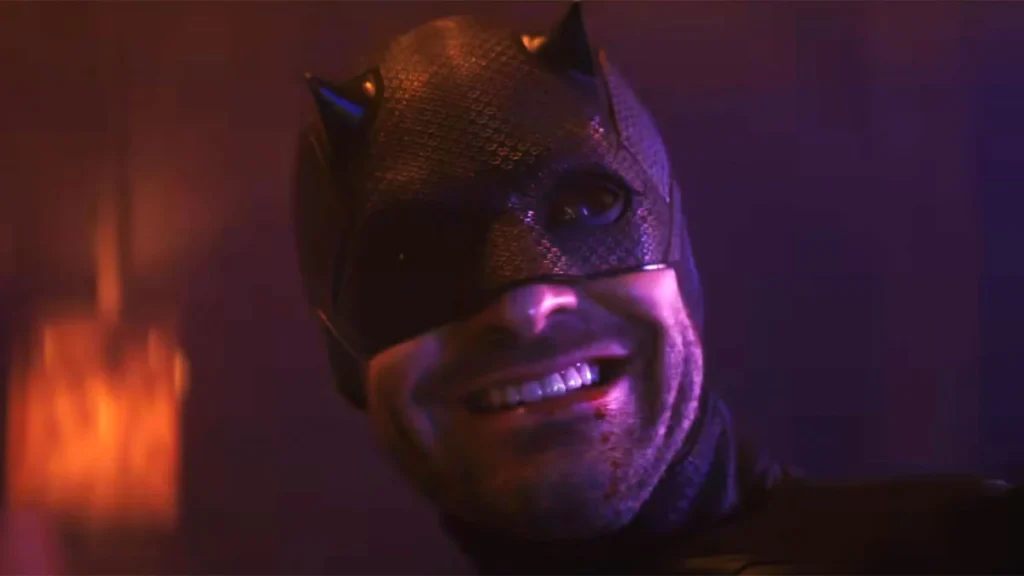

As the second season of Daredevil: Born Again commences, New York City finds itself under the firm, autocratic hand of its newly elected mayor, Wilson Fisk, portrayed with chilling gravitas by Vincent D’Onofrio. The metropolis, once a crucible of chaotic vigilantism and street-level crime, is now ostensibly "safer," a peace enforced by Mayor Fisk’s controversial anti-vigilante task force. This new order casts a long shadow over the city, with Daredevil (Charlie Cox), his steadfast ally Karen Page (Deborah Ann Woll), and their sympathizers becoming targets in a systematic crackdown that blurs the lines between law enforcement and authoritarian control.
The Rise of a Dystopian Hell’s Kitchen: Mayor Fisk’s New Order
Wilson Fisk’s ascent to the mayoral office marks a pivotal and ominous turn for Hell’s Kitchen and New York City at large. His political triumph, a calculated maneuver to consolidate power and legitimacy, ushers in an era where the lines between order and oppression are dangerously blurred. Fisk, long known as the criminal mastermind Kingpin, now wields the machinery of the state, legitimizing his control through public office while simultaneously deploying extra-legal measures to quash any form of dissent or independent justice. This strategic shift from a clandestine crime lord to a publicly sanctioned authoritarian figure represents a profound evolution of the character, echoing real-world narratives of populists gaining power through promises of stability at the cost of civil liberties.
The anti-vigilante task force, a central instrument of Fisk’s new regime, is visually and ideologically provocative. Its members, clad in military-grade tactical gear, conspicuously bear the iconic Punisher skull emblem. This imagery, notorious for its appropriation by various law enforcement and military factions in contemporary society, serves as a potent symbol within the series, highlighting the controversial use of vigilante iconography by state-sanctioned entities. The task force operates with impunity, disregarding established police procedures, arbitrarily detaining citizens for minor infractions, and whisking them away to undisclosed "secret camps." This narrative choice is undeniably "ripped-from-the-headlines," making the series’ second season feel acutely relevant, almost too timely, as it mirrors widespread global concerns regarding state surveillance, militarized policing, and the erosion of due process. The showrunners’ decision to lean into these unsettling parallels firmly grounds the fantastical superhero narrative in a stark, recognizable reality, compelling viewers to confront uncomfortable contemporary issues through the lens of Matt Murdock’s ongoing struggle to save his city from itself.
From Netflix to Disney+: The Evolution of Daredevil
The journey of Daredevil to Born Again on Disney+ has been a tumultuous yet ultimately triumphant one, reflecting broader industry shifts in streaming and content strategy. The character’s initial three-season run on Netflix, launched in 2015, garnered critical acclaim for its mature tone, gritty realism, complex character development, and groundbreaking fight choreography. Starring Charlie Cox as Matt Murdock/Daredevil and Vincent D’Onofrio as Wilson Fisk, the Netflix series carved out a distinct niche within the burgeoning superhero television landscape, proving that comic book adaptations could delve into darker, more morally ambiguous territory. Its cancellation in 2018, following Disney’s decision to consolidate its Marvel properties under its own streaming platform, Disney+, left a void and sparked a fervent fan campaign for its revival.
The announcement of Daredevil: Born Again for Disney+ was met with immense anticipation, but also with questions regarding its continuity with the Netflix series and its integration into the broader Marvel Cinematic Universe (MCU). The first season of Born Again, which relaunched Cox’s Daredevil, experienced significant behind-the-scenes challenges. Creative differences and a mid-production showrunner change – initially with Chris Ord and Matt Corman, later replaced by Dario C. and Justin Benson & Aaron Moorhead, with Kevin Feige’s direct involvement – led to a reported overhaul of the series’ direction. The initial reports suggested a lighter, more procedural tone, a departure from the Netflix iteration, which caused concern among fans. However, the subsequent retooling aimed to bring the series closer to the beloved tone of its predecessor, culminating in a singular, more serialized narrative, albeit one that still explored various tonal registers.
While the first season experimented with a more episodic, almost procedural vibe in some segments, the second season of Born Again eschews this approach. Instead, it maintains a laser focus on Matt Murdock and his allies as they actively build a resistance movement against Fisk’s increasingly tyrannical rule. This narrative shift signals a firm commitment to a serialized, high-stakes story arc, prioritizing the overarching conflict and the development of the resistance against Fisk’s thuggish tactics and pervasive corruption. This focused approach is a deliberate choice, aiming to deliver a cohesive and intense viewing experience that directly confronts the political and social themes introduced by Fisk’s mayoral regime.
The Assembling Resistance: Returning and New Faces
Season 2 of Daredevil: Born Again brings back a robust ensemble cast from its inaugural season, enriching the tapestry of Hell’s Kitchen’s struggle. The core dynamic between Matt Murdock and Karen Page takes center stage, with their relationship deepening as they navigate the perils of resistance. Living in hiding, Matt and Karen form a united front, driven by their shared resolve to expose Fisk as the criminal Kingpin he truly is, hidden beneath the veneer of legitimate authority. This intimacy and shared purpose underscore the personal stakes for the characters, making their fight not just about justice, but also about survival and loyalty in a world turned upside down.
Among the returning cast, Genneya Walton reprises her role as video journalist BB Urich, continuing the vital investigative work of her late Uncle Ben Urich, a character deeply embedded in Daredevil lore. BB’s presence symbolizes the importance of independent journalism and truth-telling in an oppressive regime, acting as a crucial voice against Fisk’s propaganda. Michael Gandolfini returns as one of Fisk’s most loyal and intimidating underlings, providing a tangible face to the mayor’s enforcers. Arty Froushan is back as the quietly terrifying fixer, Buck, whose calculating demeanor adds another layer of menace to Fisk’s inner circle. And Ayelet Zurer continues to deliver a masterful performance as Vanessa Fisk, Wilson’s beloved wife and shrewd accomplice. Vanessa’s character is crucial, as she embodies both elegance and quiet menace, often serving as the strategic mind behind Fisk’s most cunning schemes, solidifying their formidable partnership.
A notable addition to the cast for Season 2 is Matthew Lillard, who portrays the mysterious Mr. Charles. Lillard, enjoying a significant career resurgence, particularly in roles that allow him to revel in villainy, shines as a character who performs nefarious deeds for powerful individuals and clearly relishes his work. His recent appearances in projects such as Cross Season 2, the Five Nights at Freddy’s films, and Scream 7 have cemented his niche as a character actor adept at embodying sinister yet entertaining figures. Lillard’s limited but impactful presence in Born Again Season 2 adds a captivating layer of intrigue without detracting from the season’s generally grim and serious tone. His performance injects a subtle, unsettling energy, proving to be a welcome and effective element.
Bone-Crunching Action and Mature Storytelling
True to its legacy, Born Again Season 2 continues to embrace its TV-MA rating, delivering a visceral and uncompromising depiction of urban vigilantism. Daredevil’s signature "kick-punches" are back with a vengeance, as Matt Murdock carves a path through countless goons, with a particular, almost surgical emphasis on bone-breaking impacts. The fight choreography remains a highlight, maintaining the brutal, grounded realism that defined the Netflix series. This commitment to mature action distinguishes Born Again from many other MCU offerings on Disney+, positioning it as a cornerstone for more adult-oriented superhero narratives within the franchise.
The series cleverly acknowledges Matt’s Catholic faith, even amidst his violent methods. As one preacher famously remarked regarding Daredevil, "the Bible is anti-killing but somewhat fuzzier on the subject of kneecaps." This quote perfectly encapsulates Matt’s internal struggle and moral compass, allowing for a nuanced exploration of his violent actions within the framework of his deep-seated beliefs. It reinforces that while Matt operates in a morally gray world, his core principles still guide him, even when he resorts to extreme measures to protect the innocent.
The Return of Defenders: Jessica Jones and Bullseye
Season 2 of Daredevil: Born Again is further enlivened by the highly anticipated return of fan-favorite characters from the Netflix "Defenders" universe. Krysten Ritter reprises her role as Jessica Jones, the sardonic private investigator with superhuman strength. While her appearances require a degree of patience from viewers, and the season doesn’t lean on her as heavily as some fans might hope, her presence in multiple episodes is a significant draw. The biggest disappointment, as noted by critics, is that certain intriguing changes to her status quo are introduced but woefully underexplored. Nevertheless, any amount of Jessica Jones is seen as a welcome addition, bridging the gap between the original Netflix series and the current MCU iteration, and hinting at a broader reintegration of these beloved street-level heroes.
Additionally, the season features a much more prominent and entertaining role for Wilson Bethel’s Bullseye. The assassin with perfect aim is given several standout sequences, showcasing his lethal precision and unstable psyche. One particular highlight, a diner fight set to the iconic strains of Billy Joel’s "New York State of Mind," is cited as a moment of darkly humorous brilliance, adding a unique flavor to the season’s intense action. The series delves into the complex question of whether Bullseye deserves forgiveness or grace from Daredevil, especially after his unforgivable act of murdering Foggy Nelson in Season 1. This exploration taps into Matt’s deep-seated Catholic guilt and his perpetual struggle with concepts of redemption and justice, ensuring that the thematic depth synonymous with Daredevil remains intact, even if it means Matt spending a predictable amount of time moping in a church.
A Glimpse into the Past: Foggy Nelson’s Return
While the present timeline of Season 2 is relentlessly focused on the unfolding resistance against Fisk, the narrative takes a deliberate pause for a flashback episode that offers a significant tonal shift. This episode brings back Elden Henson as Foggy Nelson, along with a few other surprises, providing a momentary reprieve from the grim realities of Fisk’s reign. Although some critics suggest this episode feels somewhat "inessential" to the main, serialized plot, its charm lies in its nostalgic revisiting of the early days of Nelson & Murdock, Attorneys at Law.
This flashback serves multiple purposes. It offers viewers a cherished glimpse into the camaraderie and idealism that defined Matt, Foggy, and Karen’s initial partnership, reminding them of what was lost and what they are fighting for. It provides a much-needed break in the season’s intense and often brutal tone, allowing for moments of lighter character interaction and reflection. Moreover, it subtly reinforces the profound impact of Foggy’s absence (in the present day, following his murder in Season 1) and the weight of that loss on Matt and Karen, deepening their motivations and resolve. This brief return to simpler times, even if fleeting, enriches the emotional landscape of the season, highlighting the personal cost of their ongoing battle.
Broader Implications and Thematic Resonance
The stakes in Daredevil: Born Again Season 2 are depicted as immense, and the danger for its characters feels acutely real, underscored by more than a few shocking twists that keep viewers on edge. The series gains significant power from its direct and undeniable connection to contemporary global events and political climates. In an era grappling with concerns about militarized police forces, government overreach, erosion of civil liberties, and the rise of authoritarian figures, Born Again‘s narrative feels incredibly timely. The visual symbolism of the Punisher skull emblazoned on an anti-vigilante task force, coupled with the systemic rounding up of citizens to secret camps, resonates deeply with real-world anxieties.
However, despite its potent parallels, the article suggests that the show’s attempts at relevancy, while impactful, sometimes fall short due to their overtness. The message, though vital, can be perceived as blunt, essentially stating, "Hey, maybe it’s bad to have overarmed thugs roaming the streets assaulting civilians while a corrupt political leader abuses his office." While this might seem simplistic, the context of a mainstream superhero series tackling such themes remains significant. It represents a continued maturation of the superhero genre, using its platform to engage with complex societal issues beyond mere good-versus-evil narratives.
Ultimately, Born Again Season 2 delivers proper, grown-up storytelling. Its tone is often grim and direct, yet undeniably effective in conveying the gravity of its themes and the brutality of its world. The season feels less like a standalone second installment and more like the concluding half of a comprehensive story arc, bringing many plot threads to a compelling head. This structured approach ensures a satisfying narrative flow, even as it leaves ample room for future developments.
The confirmed third season of Daredevil: Born Again promises further exploration of this nuanced universe. The ending of Season 2 establishes numerous directions for the narrative to evolve, whether it involves escalating the conflict with Fisk, introducing new threats, or delving deeper into the wider MCU’s street-level landscape. Regardless of how the next season chooses to reflect today’s world, one thing remains certain: Matt Murdock will continue to embody the relentless spirit of justice, striving to make things better in a city perpetually teetering on the brink.
Daredevil: Born Again Season 2 is set to premiere on March 24th on Disney+, with new episodes released weekly on Tuesdays, inviting audiences to witness the next chapter in the Devil of Hell’s Kitchen’s enduring fight against injustice.