
The recent appearance of Ryan Gosling sporting a distinctive fox-themed zip-up cardigan in promotional material for Amazon MGM Studios’ upcoming film, Project Hail Mary, has triggered an immediate and widespread social media phenomenon. This seemingly humble garment has rapidly transcended its role as a mere costume piece, becoming a focal point of online discussion, meme culture, and fervent consumer interest, highlighting the profound impact of celebrity fashion on public consciousness and commercial trends.
The Genesis of a Viral Sensation
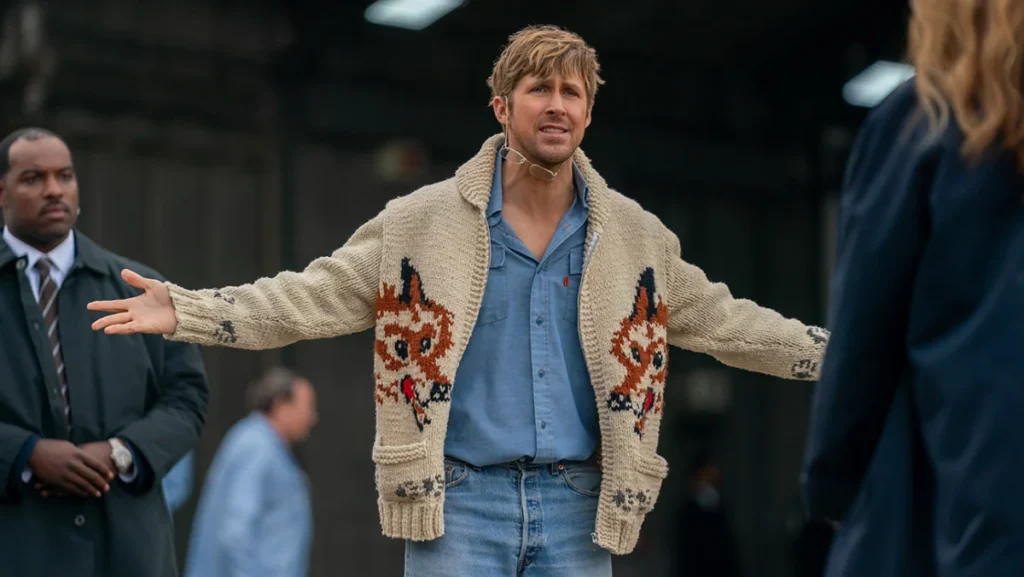
Ryan Gosling, portraying the character of Ryland Grace in the film, an unassuming schoolteacher tasked with an interstellar mission to save humanity, is depicted in various scenes wearing an oatmeal cream-colored sweater. This cardigan features a ribbed, turned-down knit collar, cuffs, and hem, presenting a decidedly un-debonair, yet instantly endearing, aesthetic. In one notable promotional image, Grace stands with arms outstretched alongside co-star Lionel Boyce, the sweater’s simple design and bold fox motifs immediately catching the eye. Further scenes show Gosling wearing the same garment opposite Sandra Hüller, solidifying its presence as a key element of his character’s wardrobe.
The film, based on Andy Weir’s acclaimed 2022 novel of the same name, positions Grace as an unlikely hero. Unlike the sleek, futuristic attire often associated with cinematic space travel, Gosling’s character embraces a look that suggests practicality, comfort, and perhaps a touch of nostalgic charm. This deliberate sartorial choice resonated powerfully with audiences, sparking a viral interest online over a recent weekend, with countless inquiries emerging about the availability and origin of the "classic curling sweater."
Social Media Eruption and Fan Frenzy
The digital landscape quickly became saturated with discussions surrounding the cardigan. Film writer and critic Tomris Laffly encapsulated the collective sentiment on her X (formerly Twitter) account, posing the question, "How much do you want Ryan Gosling’s cardigan in PROJECT HAIL MARY? Want it a lot like I do?" Laffly’s post pointed to a specific "wolf cardigan knit kit" from Mary Maxim, a well-known purveyor of exclusive yarn and crafts, which subsequently experienced a rapid sell-out, underscoring the immediate commercial pull generated by the viral moment.
Echoing this observation, Globe and Mail writer Nathalie Atkinson, a Canadian, swiftly identified the garment’s distinct heritage. She noted on her own X account, "As a Canadian I clocked Ryan Gosling’s fox (wolf) sweater as a vintage Mary Maxim immediately, so it was fun to write about the meaning and history of the homespun cardigans." This insight provided crucial context, transforming the sweater from a generic movie prop into an item imbued with cultural significance and a tangible connection to a specific brand and craft tradition. The swift identification by Canadian users highlights the deep-rooted recognition of Mary Maxim designs within the country, demonstrating how a niche cultural item can gain global prominence through celebrity endorsement.
The phenomenon extended beyond simple admiration, fostering a lively meme culture. Fans began creating humorous comparisons, "want" lists, and even speculative theories about the sweater’s in-universe backstory. This organic engagement amplified the buzz around Project Hail Mary long before its theatrical release, effectively turning a costume piece into a potent marketing tool.
The Mary Maxim Connection and Canadian Heritage
The identification of the cardigan as potentially a vintage Mary Maxim design or inspired by their patterns adds a significant layer of cultural context. Mary Maxim, a Canadian company established in Paris, Ontario, in 1951, is renowned for its distinctive line of knitting patterns, particularly its iconic "curling" or "cowichan" style sweaters featuring bold, often animal-themed, intarsia designs. These sweaters, characterized by their heavy-gauge wool, zippered fronts, and intricate motifs (bears, deer, wolves, and yes, foxes), became a staple of Canadian casual wear, embodying warmth, durability, and a rugged, outdoorsy aesthetic.
Originally inspired by traditional Cowichan sweaters hand-knit by Indigenous Coast Salish people in British Columbia, Mary Maxim adapted and popularized machine-knitting patterns for a broader market. While distinct from authentic Cowichan sweaters, Mary Maxim’s interpretations became widely popular across North America, especially during the mid-20th century. The company offered kits containing yarn and patterns, enabling home knitters to create these distinctive garments. The "wolf cardigan knit kit" that sold out so quickly online is a direct descendant of this legacy, illustrating the enduring appeal of these classic designs.
For many Canadians, seeing Gosling, a prominent Canadian actor, in such a sweater evokes a strong sense of nostalgia and national identity. It taps into a collective memory of family photos, winter activities, and a certain practical, unpretentious style. This cultural resonance further amplified the cardigan’s viral trajectory, making it more than just a fashion statement—it became a symbol.
Director’s Vision: Comfort, Character, and Personal Touch
The decision to feature such a distinctive, almost anachronistic, garment in a high-stakes science fiction film was not arbitrary. Chris Miller, who co-directed Project Hail Mary with Phil Lord, shed light on the meticulous thought process behind Ryland Grace’s wardrobe in an interview with The Hollywood Reporter. Miller explained that Gosling’s character’s attire was a deliberate "combination of these very specific things."
Crucially, the fox motif on the cardigan was a personal suggestion from Gosling himself. "Ryan had experiences with a fox, and he wanted to have a cardigan that had foxes on it," Miller revealed. This personal anecdote imbues the costume with an authentic, character-driven quality. Furthermore, Miller noted, "He wore science T-shirts based on the joke science T-shirts that my son wears. Everything is a personal [detail]." This approach underscores a philosophy of costume design where every item of clothing serves to deepen the audience’s understanding of the character, rather than merely adorning the actor.
For Ryland Grace, a former schoolteacher thrust into an extraordinary situation, comfort and familiarity would naturally be paramount. The choice of a chunky, warm cardigan aligns perfectly with a character who is not a trained astronaut or military operative, but rather an intellectual who values practicality and perhaps a touch of homespun comfort, even when light-years away from Earth. The cardigan becomes a visual metaphor for Grace’s grounded nature amidst the cosmic unknown, a sartorial anchor in a universe of scientific marvels and existential threats. It suggests a character whose priorities lie in survival and problem-solving, not in presenting a dashing appearance.
The Broader Trend: Understated Style and Viral Wardrobe Moments
The phenomenon of Gosling’s fox cardigan is not an isolated incident but rather part of a growing trend where specific, often understated, garments from film and television achieve cult status and commercial virality. This trend reflects a broader shift in fashion, moving away from overtly luxurious or high-fashion statements towards more relatable, character-driven, and "cozy" aesthetics.
Gosling himself, a Canadian, has proven to be an influential figure in popularizing such down-to-earth styles. His previous roles have often featured sartorial choices that resonate with authenticity, whether it’s the minimalist cool of Drive or the distinctive pink of Barbie. The fox cardigan adds to this legacy, demonstrating that when it comes to classic, chunky knitwear, it’s the attitude and context brought to wearing such basic clothing that truly counts.
Another compelling example comes from the breakout gay hockey drama, Heated Rivalry. Hudson Williams, playing Shane Hollander, wore an iconic Team Canada zip-up fleece jacket in one episode that quickly went viral on social media. Fans of the show engaged in a competitive hunt for knock-off copies, eager to emulate Hollander’s understated character. Hanna Puley, Heated Rivalry‘s costume designer, deliberately crafted the fleece jacket as a "basic and cozy coat" to contrast with the flashier attire of other characters, stating, "I wanted to make something that felt wearable, something that felt comfortable, and something that would contrast with what Ilya was wearing." The immense popularity led Heated Rivalry producer Accent Aigu Entertainment to strike a merchandise deal with the Province of Canada apparel company, producing the iconic fleece jacket for purchase, initially within Canada. This commercial success underscores the tangible economic impact of viral costume moments.
Similarly, Cynthia Erivo’s character Elphaba in Wicked: For Good showcased a wool "sex cardigan" during a pivotal love scene with Fiyero (Jonathan Bailey). Costume designer Paul Tazewell explained the choice as an "organic decision of what does Elphaba have access to? And living alone, what choice would she make when she’s looking for a robe, some way to be protective and warm? … It’s operating as her robe for that moment." This highlights how even a seemingly simple garment can be loaded with narrative purpose and character insight, resonating deeply with audiences who appreciate thoughtful costume design. These examples collectively illustrate that audiences are increasingly drawn to authenticity and character-driven fashion, making these pieces powerful symbols that extend beyond the screen.
From Screen to Retail: The Merchandising Impact
The immediate sell-out of the Mary Maxim knit kit and the subsequent discussions about replica cardigans for Project Hail Mary underscore the potent commercial implications of viral costume moments. In an era dominated by social media and e-commerce, the gap between on-screen appearance and consumer demand has shrunk dramatically. Studios, brands, and retailers are increasingly aware of the "halo effect" that a popular film or television show can have on specific garments.
This phenomenon represents a significant opportunity for merchandise sales and brand partnerships. For Amazon MGM Studios, the buzz around Gosling’s cardigan provides invaluable, organic pre-release marketing for Project Hail Mary. It generates conversations, increases visibility, and fosters a sense of anticipation and connection with the film’s aesthetic. For brands like Mary Maxim, it offers an unexpected surge in demand and renewed relevance for classic designs, potentially introducing their heritage craft to a new generation of consumers.
The success of the Heated Rivalry fleece jacket, which transitioned from costume to official merchandise, provides a direct blueprint for how studios can capitalize on these viral fashion moments. It is highly probable that Amazon MGM Studios, or collaborating apparel brands, will explore similar avenues to offer official Project Hail Mary-themed merchandise, potentially including a replica of Gosling’s fox cardigan or other character-inspired items. This strategy not only generates revenue but also deepens fan engagement, allowing audiences to literally wear their appreciation for the film and its characters.
Costume as Narrative: The Deeper Meaning of a Sweater
Beyond its immediate commercial appeal, the fox cardigan in Project Hail Mary serves as a powerful example of how costume design contributes to narrative and character development. In science fiction, where fantastical elements often dominate, grounded and relatable costume choices can anchor characters in reality, making their extraordinary journeys more poignant.
Ryland Grace’s cardigan communicates several key aspects of his character: his academic background, his inherent pragmatism, and perhaps a subtle yearning for comfort and familiarity in an alien environment. The animal motif itself could subtly allude to themes of nature, survival, or even a sense of being out of place, much like a fox in an unfamiliar territory. This thoughtful integration of costume into storytelling elevates it beyond mere clothing, transforming it into a non-verbal narrative device that enriches the audience’s understanding of Grace’s internal world and his external circumstances.
The deliberate choice of a "humble" and "chunky" cardigan also plays into contemporary fashion trends that celebrate authenticity, comfort, and a departure from overly polished aesthetics. This "dadcore" or "cozycore" movement, which values practical, comfortable, and slightly retro clothing, finds a perfect cinematic embodiment in Gosling’s character, making him relatable to a broad audience that appreciates understated style.
The "Gosling Effect": A History of Style Influence
Ryan Gosling has a well-documented history of influencing fashion trends through his roles. From the iconic scorpion jacket in Drive that became a symbol of cool, to the meticulously crafted Kenergy wardrobe in Barbie that redefined masculinity in pop culture, Gosling possesses a unique ability to imbue his costumes with an almost immediate cultural significance. His choices, often collaborative with costume designers, are rarely accidental; they are integral to the characters he portrays and consistently resonate with the public. The fox cardigan is the latest addition to this impressive legacy, further cementing his status as a quiet but potent style icon.
Anticipation for Project Hail Mary
The viral sensation surrounding Ryan Gosling’s fox cardigan has inadvertently become a significant part of the pre-release marketing campaign for Project Hail Mary. It has generated widespread curiosity and discussion, drawing attention to a film that is already highly anticipated due to its source material by Andy Weir, author of The Martian. The novel itself was lauded for its scientific accuracy, engaging plot, and relatable protagonist, and the film adaptation, starring an actor of Gosling’s caliber, carries considerable expectations. The cardigan’s unexpected popularity adds another layer of intrigue, suggesting that the film will not only deliver on its sci-fi premise but also offer memorable character moments and a unique aesthetic that resonates with contemporary audiences.
Conclusion
The fox-themed zip-up cardigan worn by Ryan Gosling in Project Hail Mary has demonstrated the potent, often unpredictable, power of costume design in popular culture. What began as a deliberate character choice by the film’s creative team and Gosling himself quickly transformed into a global social media phenomenon, driving consumer demand and sparking conversations about fashion, heritage, and character authenticity. This incident serves as a compelling case study in how a single, well-placed garment can become a powerful marketing tool, a cultural touchstone, and a testament to the enduring appeal of thoughtful, character-driven style in contemporary storytelling. As Project Hail Mary approaches its release, the "Gosling effect" continues to prove that sometimes, the most unassuming wardrobe choices can leave the biggest impact.