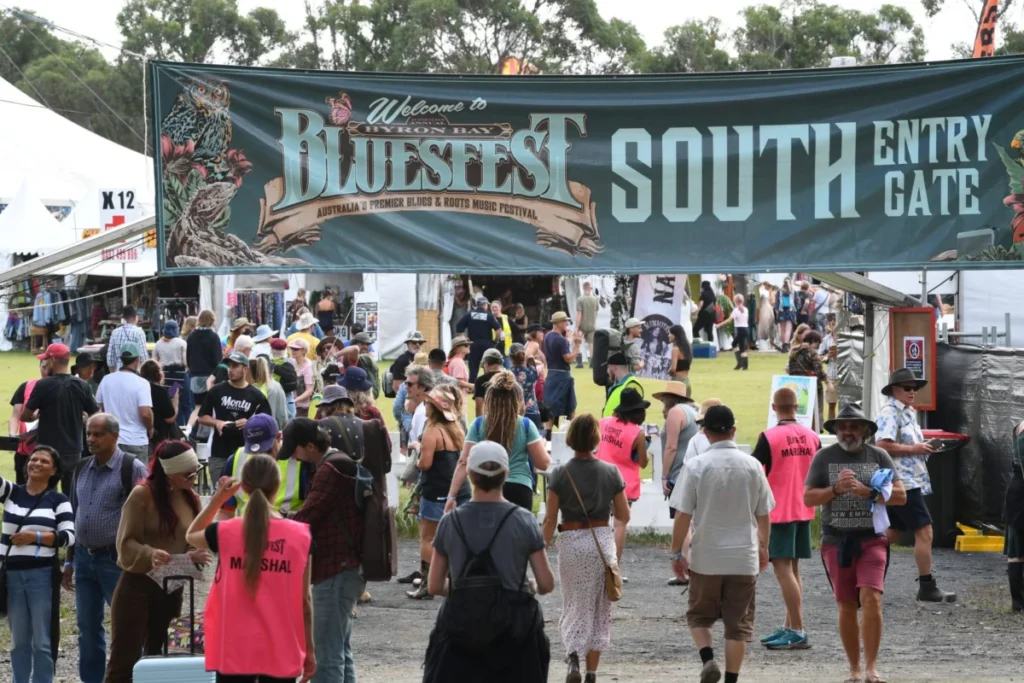

PayPal has announced a significant policy exception, offering a crucial lifeline to thousands of ticket holders affected by the sudden liquidation of the Byron Bay Bluesfest 2026. The online payment giant, a primary non-bank payment provider for the festival, confirmed on Monday that it will temporarily suspend its standard refund policies to accommodate claims for Bluesfest tickets purchased through its platform. This move comes as a welcome, albeit partial, reprieve for an estimated 10,000 individuals left out of pocket when the renowned music festival entered liquidation on March 13, mere weeks before its scheduled Easter weekend commencement.
The decision by PayPal to extend its buyer protection eligibility window marks a notable departure from its usual procedures. Typically, claims for refunds must be filed within a 180-day period from the transaction date. However, in light of the unprecedented circumstances surrounding Bluesfest’s abrupt demise, PayPal has committed to considering all eligible claims, irrespective of how long ago the tickets were purchased. This exceptional measure aims to mitigate the financial distress experienced by festival-goers who had invested in passes for what was anticipated to be a landmark event.
Byron Bay Bluesfest, a cornerstone of Australia’s live music scene for over three decades, faced an abrupt end to its long-standing legacy. The festival, which had operated for 36 years, was slated to take place from April 2-5, 2026, at the Byron Events Farm in Tyagarah. Its planned lineup boasted a diverse array of international and domestic talent, including prominent acts such as Parkway Drive, Erykah Badu, Earth, Wind & Fire, Sublime, Counting Crows, The Black Crowes, The Wailers, The Pogues, and Split Enz. The cancellation sent shockwaves through the music industry and the local Byron Bay community, which heavily relies on the economic stimulus provided by such major events.
The Unraveling of Bluesfest: A Chronology of Collapse
The rapid descent of the Byron Bay Bluesfest into liquidation was a swift and devastating affair. While the exact precipice was reached on March 13, 2026, the underlying financial strains may have been building for some time, a common challenge for large-scale entertainment events susceptible to economic fluctuations, unforeseen circumstances, and substantial operational costs.
The immediate aftermath of the liquidation announcement was characterized by a cascade of uncertainty for ticket holders. Many had purchased their passes months in advance, with prices for a single adult ticket on one day reaching $257. Multi-day passes commanded significantly higher prices, with three-day and four-day options costing up to $554 and $686 respectively. These base ticket prices did not include additional expenses such as camping and car parking, further increasing the financial outlay for attendees.
Following the liquidation, Worrells, the appointed liquidator, issued an email to creditors that offered little solace. The firm explicitly warned that refunds from the liquidation process were unlikely to materialize for ticket holders and other creditors. This grim prognosis amplified the distress among those who had spent considerable sums on festival access.
The complexity of the refund situation was further compounded by the festival’s ticketing infrastructure. Tickets were sold through Moshtix, a third-party ticketing platform. Moshtix, however, disclaimed responsibility for issuing refunds, asserting that all payments were made directly to Bluesfest via its own merchant facility. According to Moshtix, the obligation to refund purchasers rested solely with the event organizer. This stance left ticket holders in a precarious position, caught between the collapsed festival and a ticketing agent unwilling to facilitate reimbursements.
PayPal’s Intervention: A Gesture of Goodwill
PayPal’s decision to extend its refund window is a significant intervention designed to alleviate some of the financial burden on Bluesfest attendees. The online payment company, which has a substantial user base for festival and event ticket purchases, acknowledged the distress caused by the cancellation.

"In light of Bluesfest’s sudden cancellation, and to support our customers, PayPal is making a one-time exception to its buyer protection eligibility window," a PayPal spokesperson stated. "PayPal will consider all eligible claims for Bluesfest 2026 (Byron Bay) tickets purchased using PayPal, including those made more than 180 days prior to the dispute."
This statement underscores the exceptional nature of the situation and PayPal’s commitment to its users. For those who utilized PayPal’s "Buy Now, Pay Later" service, known as "PayPal Pay in 4," specific instructions were provided. These customers were advised to contact PayPal directly through the "contact us" section on the company’s website to initiate their claims.
The financial implications for PayPal are not insignificant. Documents filed with the Australian Securities and Investments Commission (ASIC) reveal that PayPal is listed as a creditor, owed approximately $1.73 million. This highlights the scale of financial exposure PayPal has in relation to Bluesfest. Another non-bank payment processor, Stripe, is also listed as a creditor, with a substantially larger claim of $3.92 million.
Broader Implications and Potential Avenues for Redress
The collapse of Byron Bay Bluesfest raises broader questions about the financial stability of large-scale music festivals and the protections available to consumers in such events. The festival’s demise serves as a stark reminder of the inherent risks associated with the live entertainment industry, which can be impacted by factors ranging from economic downturns and changing consumer habits to global health crises and logistical challenges.
For ticket holders who did not use PayPal or similar services, other avenues for potential redress may exist. Those who purchased tickets using a credit card may be able to pursue a chargeback through their respective banks. A chargeback is a consumer protection mechanism that allows cardholders to dispute a transaction and request a refund from their bank if they did not receive the goods or services they paid for. The success of a chargeback typically depends on the specific terms and conditions of the credit card agreement and the evidence provided by the cardholder.
The liquidation process itself is designed to distribute any remaining assets of the insolvent company among its creditors. However, as the liquidator’s warning indicated, it is highly probable that the festival’s liabilities will far outweigh its assets, rendering a full recovery for all creditors, including ticket holders, improbable. The process involves identifying all assets, selling them, and then distributing the proceeds in a legally prescribed order of priority. Unsecured creditors, which typically include ticket holders and many suppliers, are usually at the bottom of this priority list.
The impact of Bluesfest’s collapse extends beyond the financial losses of ticket holders and the reputational damage to the event organizers. It represents a significant loss for the Australian music calendar and the cultural landscape of Byron Bay. The festival had become an institution, fostering a sense of community and providing a platform for a wide spectrum of musical genres and artists. Its absence will undoubtedly be felt by artists, industry professionals, and the thousands of fans who have made attending Bluesfest a tradition.
A Legacy Tarnished, A Future Uncertain
Byron Bay Bluesfest’s 36-year run was a testament to its enduring appeal and ability to adapt to evolving musical tastes and industry trends. However, its sudden and dramatic conclusion leaves a void in the Australian festival circuit. The financial complexities and the disappointing news regarding refund prospects underscore the critical need for robust consumer protection measures and financial transparency within the live events industry.
As the dust settles on this unfortunate chapter, the focus for many will remain on recouping their losses. PayPal’s exceptional intervention offers a glimmer of hope for a significant portion of affected individuals. The broader implications of this collapse will likely be scrutinized by industry stakeholders, regulators, and consumers alike, potentially leading to discussions about enhanced safeguards and more resilient business models for future music festivals. The legacy of Bluesfest, once celebrated for its vibrant atmosphere and eclectic lineups, will now be intertwined with the cautionary tale of its untimely demise.