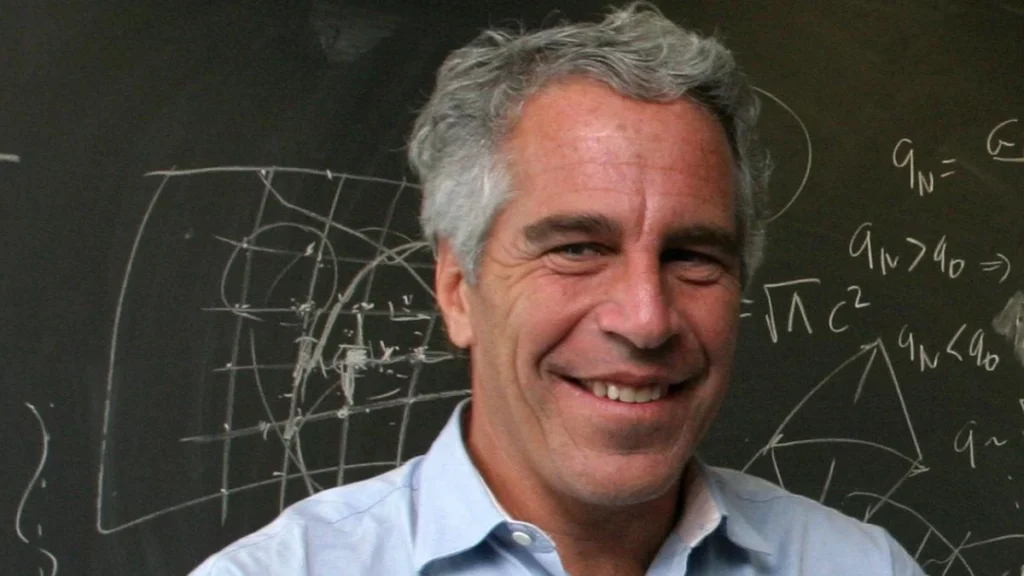

The legal representation for the late financier and convicted sex offender Jeffrey Epstein has recently provided testimony regarding the extent of Epstein’s social and professional network, specifically addressing long-standing questions about his ties to former President Donald Trump. Darren Indyke, a longtime personal attorney for Epstein and a co-executor of his multi-million dollar estate, reportedly told investigators that he had no personal knowledge of a close relationship between his client and the former president. These statements come at a time of heightened scrutiny as the House Oversight Committee continues to probe the circumstances surrounding Epstein’s activities and the potential involvement of high-profile figures within his inner circle.
The testimony was highlighted by Representative James Comer, the Chairman of the House Oversight Committee, who detailed the proceedings of the questioning. According to Comer, the inquiry into Epstein’s connections has become a point of significant contention between Republican and Democratic members of the committee. While Republicans have reportedly focused on the broader logistics and potential systemic failures related to Epstein’s operations, Comer indicated that Democratic members utilized their questioning time to focus specifically on the nature of the relationship between Epstein and Donald Trump.
The Testimony of Darren Indyke
Darren Indyke has been a central figure in the aftermath of Jeffrey Epstein’s death, serving as one of the primary executors tasked with navigating the complex legal and financial web left behind by the financier. Given his decades-long professional relationship with Epstein, Indyke was seen as a key witness who might possess insights into the private interactions of the estate’s former owner.
During the committee hearing, Indyke was asked directly about the frequency and depth of interactions between Epstein and Trump. According to Chairman Comer, Indyke’s response was definitive: he claimed he was unaware of any substantial relationship between the two men. This denial extends not only to social friendships but also to any potential business dealings or shared activities that have been the subject of public speculation since Epstein’s 2019 arrest and subsequent death in federal custody.
Furthermore, Indyke maintained a stance of ignorance regarding the illicit activities conducted by Epstein. Like many other witnesses and former employees who have been called to testify, Indyke asserted that he had no knowledge of the sexual abuse and trafficking of young women that Epstein was involved in until the details became a matter of public record through legal proceedings and investigative journalism. This "lack of knowledge" defense has been a recurring theme among Epstein’s professional associates, many of whom claim that the financier was highly effective at compartmentalizing his criminal enterprises from his legitimate business and legal affairs.
Political Friction Within the House Oversight Committee
The disclosure of Indyke’s testimony by James Comer was accompanied by sharp criticism of the Democratic members of the committee. Comer argued that the focus on Donald Trump was a diversionary tactic, suggesting that the Democrats were attempting to manufacture a narrative of liability where none existed.
"Republicans asked very substantive questions that any curious media outlet would ask, that any American who’s kept up with this story would ask," Comer stated in an interview with Fox News. "Then the Democrats get their hour, and they ask about Donald Trump."
Comer further alleged that the focus on Trump was part of a "cover-up" intended to distract from other aspects of the investigation. He claimed that the narratives being pushed regarding Trump’s liability were being "exploded" or debunked by the testimonies provided by witnesses like Indyke. This partisan divide underscores the highly charged nature of the Epstein investigation, which continues to be a flashpoint in American politics.
A Chronology of the Trump-Epstein Connection
To understand the weight of Indyke’s testimony, it is necessary to examine the documented history of the interactions between Donald Trump and Jeffrey Epstein. The two men were both fixtures of the New York and Palm Beach social scenes during the late 1980s and 1990s.
The Early 1990s: Social Overlap
In 1992, footage was captured at Trump’s Mar-a-Lago club showing the two men laughing and chatting while watching women dance at a party. During this era, they were frequently seen at the same high-society events. Trump famously commented on Epstein in a 2002 interview with New York Magazine, stating, "I’ve known Jeff for fifteen years. Terrific guy. He’s a lot of fun to be with. It is even said that he likes beautiful women as much as I do, and many of them are on the younger side."
The Mid-2000s: The Fallout
The relationship reportedly soured in the mid-2000s. While various reasons have been cited, one prominent account involves a real estate dispute over a Palm Beach mansion. Both men were interested in a property known as "Maison de L’Amitie." Trump eventually won the bidding war, purchasing the estate for $41 million and later selling it for $95 million.
In a more recent account provided in July 2025, Donald Trump elaborated on another reason for the rift. Speaking to reporters, he claimed that Epstein had been "poaching" staff from the Mar-a-Lago spa. Trump asserted that when he learned Epstein was hiring people away from his club for inappropriate purposes, he took decisive action. "People were taken out of the spa, hired by him… When I heard about it, I told him, I said, ‘Listen, we don’t want you taking our people.’ And then, not too long after that, he did it again. And I said, ‘Out of here.’"
2019 and Beyond: Distancing and Denial
Following Epstein’s arrest in July 2019, Trump, then serving as President, took steps to distance himself further. He told reporters at the White House, "I had a falling out with him. I haven’t spoken to him in 15 years. I was not a fan of his, that I can tell you."
The Context of the "Epstein Files"
The renewed interest in the Trump-Epstein connection stems largely from the unsealing of a massive trove of court documents in early 2024. These documents, often referred to as the "Epstein Files," originated from a 2015 civil lawsuit filed by Virginia Giuffre, one of Epstein’s most prominent victims, against Ghislaine Maxwell.
The files contain hundreds of names of individuals who were mentioned in depositions, flight logs, or address books. Donald Trump’s name appears multiple times in these documents, but legal experts and analysts have noted that the context is crucial. In many instances, witnesses were asked if they had seen Trump at Epstein’s residences; the majority of these witnesses testified that they had not. For example, witness Johanna Sjoberg testified that while Epstein once mentioned calling Trump while they were en route to one of Trump’s casinos, she never saw Trump at any of Epstein’s private residences or in a compromising situation.
The unsealing of these files did not provide evidence of criminal wrongdoing by Trump, but it did reignite the public debate over the social proximity of the two men.
Supporting Data and Legal Implications
The testimony of Darren Indyke is significant not just for its political ramifications but for its legal weight in the ongoing administration of the Epstein estate. As a co-executor, Indyke’s credibility is under constant scrutiny. If it were proven that he had knowledge of Epstein’s crimes or specific high-level associations that he failed to disclose, it could have severe legal consequences for the estate’s liquidation and the compensation funds established for victims.
Data from the Epstein Victims’ Compensation Program indicates that over $121 million has been paid out to more than 135 individuals. The investigation into Epstein’s associates is driven by the goal of identifying any "enablers" who may have facilitated his crimes. Indyke’s consistent denial of knowledge serves as a legal shield, suggesting that Epstein’s illicit activities were kept entirely separate from his formal legal representation.
Broader Impact and Public Perception
The intersection of the Epstein investigation and national politics continues to shape public perception of the American elite. The fact that a House Oversight Committee hearing regarding a deceased sex offender can devolve into a partisan debate over a former president illustrates the deep polarization of the current political climate.
For victims and their advocates, the focus on political figures can be a double-edged sword. While it keeps the Epstein case in the headlines, it often shifts the focus away from the systemic failures of the justice system and the need for comprehensive protection for victims of human trafficking.
The testimony of Darren Indyke adds another layer to the narrative of Epstein’s life—a narrative defined by secrecy and the successful manipulation of high-profile social circles. While Indyke’s claims of ignorance may satisfy the legal requirements of his role, they do little to quell the public’s curiosity regarding how Epstein maintained his influence for so long without his closest associates becoming aware of his actions.
As the House Oversight Committee continues its work, the focus remains on whether any new evidence will emerge from the thousands of pages of documents still being reviewed. For now, the legal stance of those closest to Epstein remains unchanged: they were witnesses to his wealth and status, but claim to have been entirely blind to the dark reality that sustained it. The investigation into the full extent of Jeffrey Epstein’s network, and the truth behind his connections to the world’s most powerful people, remains one of the most complex and contentious legal sagas in modern American history.