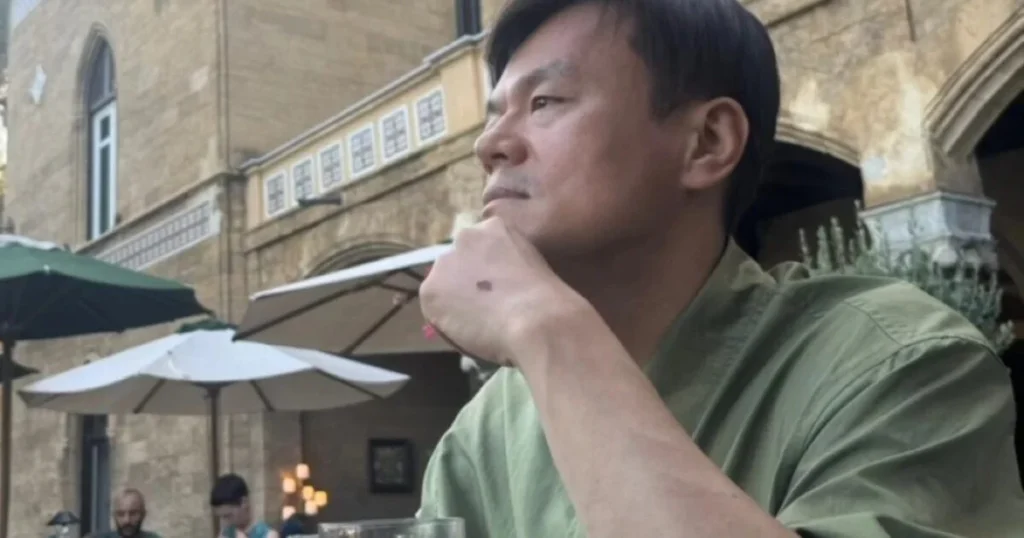

Veteran South Korean singer, songwriter, and JYP Entertainment founder Park Jin-young, widely known as J.Y. Park, has once again addressed the persistent allegations of heresy and cultism directed at the religious organization he leads, known as "First Fruits."
In a newly released video addressing theological interpretations and spiritual practices, Park directly confronted the public scrutiny and negative public perception surrounding his ministry. The ongoing controversy places one of K-pop’s most influential entertainment executives at the center of a complex intersection between mainstream secular celebrity culture and deeply scrutinized religious movements in South Korea.
A New Video Appeal to Viewers
On November 8, a video titled “For Christians Who Have Not Been Saved” was published on YouTube, drawing immediate attention from both entertainment media and religious observers. In the recording, Park elaborates on his core understanding of Christian faith, the definition of salvation, and the theological framework of the First Fruits group.
During the presentation, Park directly acknowledged the prevailing skepticism and public warnings issued against his organization. Addressing critics and curious onlookers alike, he remarked, “People say that my church is heretical or a cult, but maybe you don’t know, so why not listen once? I hope you just listen once.”
Park argued that despite—or perhaps because of—the warnings issued by mainstream pastors regarding the perceived dangers of his teachings, public awareness of First Fruits has steadily expanded. Rather than viewing the controversy as a detriment, he contended that increased notoriety has driven individuals to investigate his teachings firsthand, urging skeptics to evaluate his lectures objectively rather than relying on secondhand characterizations or denominational warnings.
Furthermore, Park challenged traditional notions of religious complacency. He asserted that individuals should not assume they are guaranteed salvation merely because they have engaged in long-term religious practices. Emphasizing personal spiritual introspection, he underscored the necessity for believers to independently verify the depth of their faith, regardless of their frequency of church attendance, participation in worship services, or involvement in early morning prayer sessions.
Historical Chronology of the Controversy
The scrutiny surrounding J.Y. Park’s religious involvement is not a recent phenomenon; it represents a multi-year narrative characterized by shifting affiliations, public denials, and expanding organizational reach.
The controversy first surfaced publicly in May 2018, when investigative media reports alleged that Park was connected to the Salvation Sect (Guwonpa), a controversial religious movement in South Korea associated with the tragic 2014 Sewol ferry disaster through its ties to the vessel’s operator. Park immediately and vehemently denied any association with the Salvation Sect, clarifying that the Bible study group he led was entirely independent and had no financial or structural ties to the aforementioned denomination. He subsequently released his own detailed theological explanations through social media to distance himself from the allegations.
In August 2020, Park appeared on the popular MBC variety talk show Radio Star. During the broadcast, he sought to clarify the nature of his gatherings, stating that his Bible study group did not belong to any formal church denomination or traditional ecclesiastical hierarchy. He described the sessions as peer-led explorations of scripture rather than institutionalized church services.
As the years progressed, however, these informal gatherings evolved into a more structured religious body. By September 2025, public attention shifted toward the formalized organization known as "First Fruits." During internal lectures and public disclosures, Park revealed that the congregation’s membership was notably diverse, drawing individuals from a wide spectrum of traditional Christian backgrounds, including Catholicism, Presbyterianism, and various Baptist churches. Crucially, the group also included former members of Shincheonji, a high-profile religious movement frequently designated as a cult by mainstream South Korean Christian denominations.
The inclusion of former Shincheonji adherents sparked renewed criticism. In response, Park forcefully refuted the equivalence drawn between First Fruits and Shincheonji, arguing that the presence of former members from a controversial group does not invalidate the distinct theological foundation and scriptural background of his own congregation.
By late 2025, First Fruits had grown substantially beyond its initial Seoul-based origins. Reports indicated that the organization had established formal operations, holding regular services and gatherings across eight domestic and international locations, including major urban centers such as Seoul and Busan, as well as overseas outposts like Los Angeles, California.
Denominational Scrutiny and Official Stances
While Park continues to utilize digital platforms to defend his ministry, institutional South Korean Christianity is actively reviewing the theological legitimacy of First Fruits.
The General Assembly of the Presbyterian Church of Korea, one of the country’s most influential religious bodies, has formally undertaken a comprehensive study to determine whether the doctrines taught by J.Y. Park and disseminated through First Fruits constitute heresy. Denominational committees are currently analyzing recorded lectures, written materials, and doctrinal statements associated with the group.
According to administrative schedules released by the General Assembly, the definitive findings and official report regarding the heresy study are slated to be presented during the regular general assembly scheduled for September 2027. Representatives for the Presbyterian Church have noted that no final, binding judgment at the denominational level has been formally adopted, meaning the organization’s official theological status remains under active review.
Implications for J.Y. Park’s Public Profile and Business Interests
The intersection of Park’s theological ambitions and his corporate status as the founder and primary creative visionary of JYP Entertainment presents a unique set of challenges and implications.
JYP Entertainment remains one of the "Big Four" K-pop agencies, managing globally recognized talent such as Stray Kids, TWICE, ITZY, NMIXX, and DAY6. While Park stepped down as CEO of the company in 2011 to focus on production and global expansion—currently serving as Chief Creative Officer (CCO)—his personal brand remains inextricably linked to the corporate identity of the agency.
Media analysts and industry insiders have closely monitored whether the ongoing religious controversies could impact JYP Entertainment’s commercial viability, international brand partnerships, or investor confidence. To date, financial markets have shown minimal direct volatility attributable to the controversy, largely because Park’s religious teachings are presented as personal spiritual endeavors rather than corporate initiatives. Furthermore, the consumption patterns of international K-pop fandoms often exhibit a high degree of separation between an artist’s or producer’s personal beliefs and their commercial output.
Nevertheless, the reputational risks remain nuanced. In South Korea, where religious movements and cult controversies carry significant cultural weight and historical sensitivity, public figures associated with non-traditional ministries frequently face intense media scrutiny. By proactively releasing lectures, addressing criticisms directly, and inviting public evaluation of his teachings, Park appears to be executing a communication strategy designed to control the narrative, mitigate accusations of secretive behavior, and normalize his religious leadership role.
As the September 2027 review by the Presbyterian Church of Korea approaches, the theological debate surrounding First Fruits is expected to intensify. Until an official ecclesiastical verdict is reached, J.Y. Park remains resolute in his public defense, utilizing digital media to reach adherents and critics alike while maintaining that his spiritual ministry operates independently of mainstream institutional condemnation.