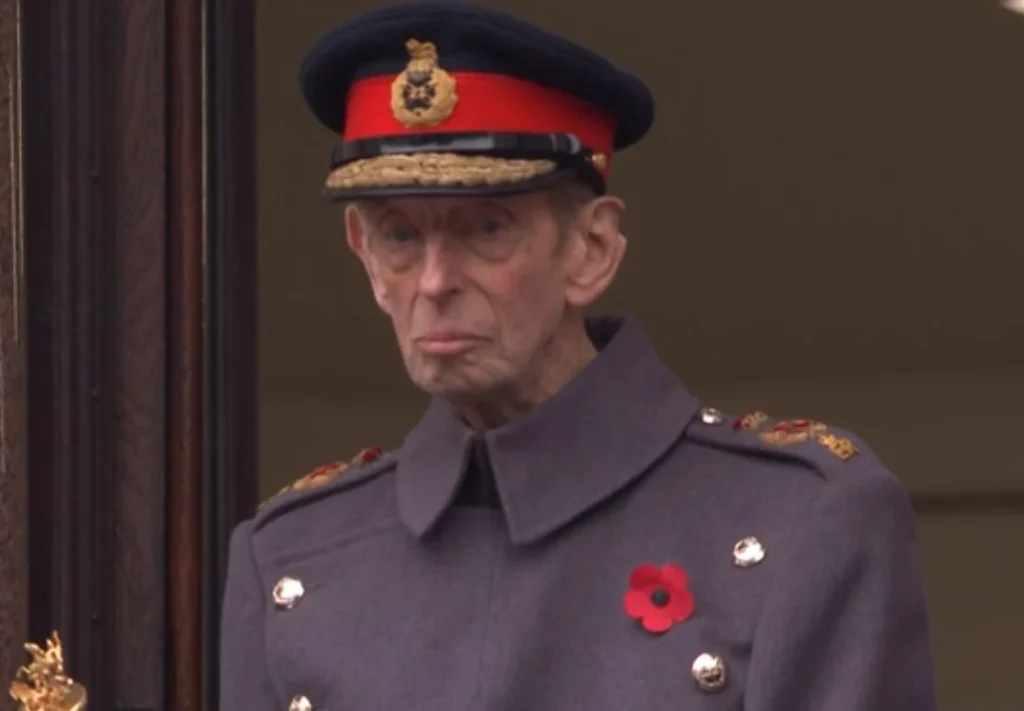

Remembrance Sunday holds a uniquely solemn place in the hearts of the British public, the Armed Forces, and the Royal Family. On a characteristically misty and overcast morning in central London, senior members of the British Monarchy gathered once again at the Cenotaph on Whitehall to honor the service personnel who have lost their lives in conflicts past and present. Amidst the poignant scenes of national mourning and reflection, a quiet moment of genuine familial compassion caught the attention of observers: the Duchess of Edinburgh stepping close to the 91-year-old Duke of Kent to check on his well-being during the emotionally charged proceedings.
Dressed in full military uniform and positioned on a Whitehall balcony overlooking the Cenotaph, the veteran royal appeared visibly moved throughout the service. Standing at the center of the royal group, the Duke watched solemnly as a wreath was laid at the foot of the monument on his behalf. Recognizing the immense emotional weight of the occasion for her elderly relative, the Duchess of Edinburgh turned to him, gently checking to ensure he was coping with the chilly weather and the heavy atmosphere. A brief, reassuring nod from the Duke confirmed he was alright, highlighting a touching dynamic of care and mutual respect within the senior ranks of the royal family.
The Background and Personal Significance of the Duke of Kent’s Service
For Prince Edward, the Duke of Kent, Remembrance Sunday is far more than a standard ceremonial obligation; it is a deeply personal anniversary rooted in the tragic loss of his own father during the Second World War. Born in October 1935, the Duke entered the world just four years before global hostilities erupted. In August 1942, when he was just six years old, his father, Prince George, Duke of Kent, was killed on active service when the RAF flying boat he was traveling in crashed in Scotland during adverse weather conditions.
Growing up in the shadow of wartime loss profoundly shaped the Duke’s life and lifelong commitment to the British Armed Forces. He went on to have a distinguished military career of his own, serving for more than two decades and holding commissions with the Royal Scots Greys and later as a colonel of the Scots Guards. Having experienced the personal devastation of losing a parent to war, the aging royal’s presence at the Cenotaph carries immense historical resonance, linking the modern Monarchy directly to the generation that endured World War II.
A Gathering of Senior Royals: Key Figures at the Cenotaph
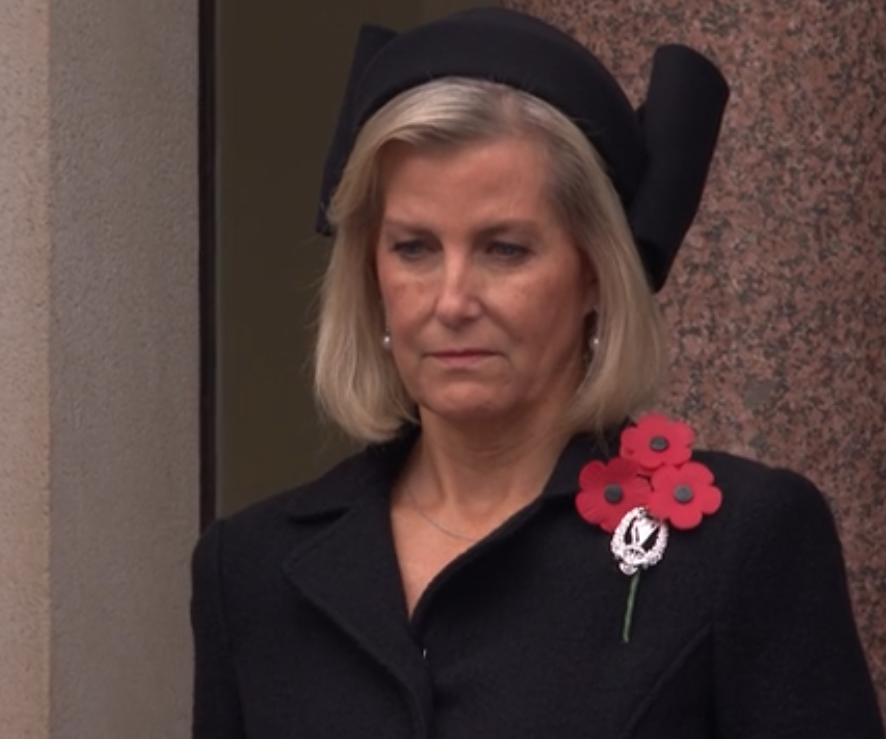
The poignant service brought together a vast cross-section of the Royal Family, with each senior member fulfilling traditional roles in honoring the fallen. King Charles III led the nation in the solemn commemorations. Arriving at the Cenotaph just before 11:00 a.m., the monarch stepped forward to lead the nation into the traditional two-minute silence, a period of nationwide reflection marked by the firing of a single gun from Horse Guards Parade.
Following the silence, King Charles laid the first floral tribute—a wreath of poppies featuring the monarch’s racing colors—at the base of the stone monument. Following the King, the Prince of Wales stepped up to lay his own wreath, bearing the distinctive three white feathers of the Prince of Wales’s crest. Additional wreaths were laid by the Princess Royal and the Duke of Edinburgh, completing the frontline royal party at the monument itself.
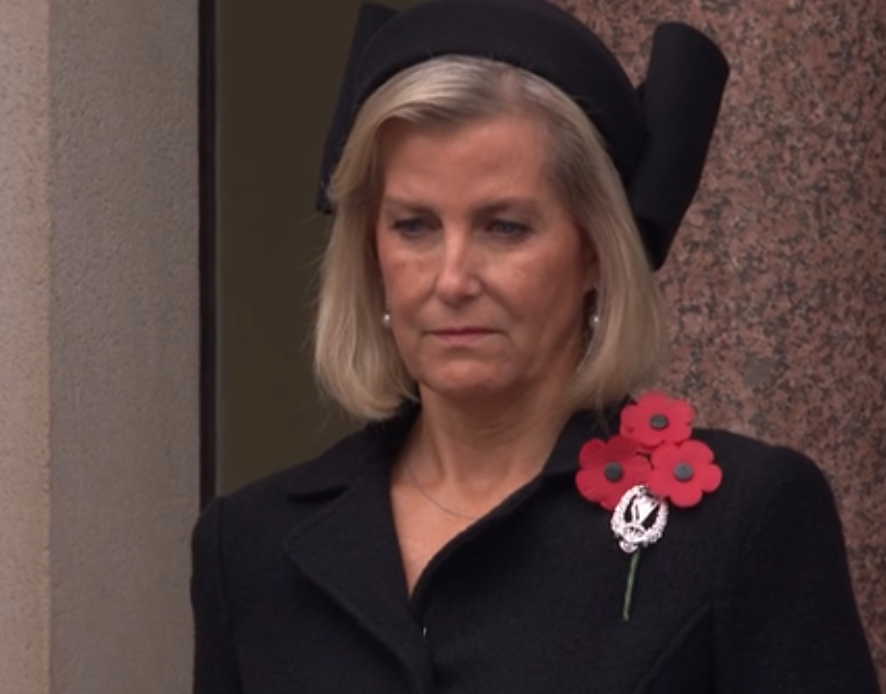
Meanwhile, other members of the family watched the proceedings unfold from nearby vantage points. Queen Camilla stood shoulder-to-shoulder with the Princess of Wales on a central balcony, sharing a moment of quiet solidarity as the nation paid its respects. The Duke and Gloucester watched from an adjacent balcony, while Vice Admiral Sir Tim Laurence, husband to the Princess Royal, stood alongside the Duchess of Edinburgh and the Duke of Kent, providing a steady and supportive presence for the veteran royal.
Chronology of the National Commemorations
The schedule of Remembrance Sunday follows a tightly choreographed sequence of events designed to maintain the dignity and solemnity befitting the nation’s war dead.
The morning commences with the gradual arrival of dignitaries, Cabinet ministers, former Prime Ministers, and foreign defense attachés, who take their designated places around the base of the Cenotaph. Shortly before 11:00 a.m., members of the Royal Family emerge from the Foreign, Commonwealth and Development Office building to take their places on the surrounding balconies or at the monument level.
At 11:00 a.m. precisely, Big Ben rings out—or, in periods of parliamentary restoration, an electronic time signal replicates the chimes—signaling the start of the two-minute silence. The atmosphere across Whitehall falls into absolute stillness, broken only by the wind and the eventual bugle call of "The Last Post," played by Royal Marines buglers.
Following the laying of the wreaths by the King, senior royals, and political leaders, a short religious service featuring Christian, Jewish, Muslim, Sikh, and Hindu prayers is conducted by the Bishop of London and other faith leaders. The service concludes with the singing of the national anthem, after which veterans and service organizations begin their annual march past the Cenotaph.
The Duke of Edinburgh’s Post-Service Duties
Once the formal proceedings at the Cenotaph concluded, members of the Royal Family dispersed to fulfill their secondary duties for the day. While the King and senior royals engaged with veterans and military families, the Duke of Edinburgh undertook a prominent and specialized role on behalf of the sovereign.
Prince Edward headed directly to nearby Horse Guards Parade to take the formal royal salute for the veterans’ march past. This massive procession sees thousands of former servicemen and servicewomen—representing conflicts ranging from the Second World War and the Falklands to more recent deployments in Iraq and Afghanistan—march past the reviewing stand. Taking the salute is a vital responsibility, allowing the Monarchy to visibly demonstrate its enduring gratitude to the thousands of veterans who continue to uphold the traditions of the British Armed Forces.
Broader Impact and Historical Context of Remembrance
Remembrance Sunday remains the pinnacle of the British commemorative calendar, serving not only as an act of mourning for those who perished in uniform, but also as a vital anchor for national identity and collective memory. In an era marked by rapid social change and geopolitical uncertainty, the enduring presence of veterans like the 91-year-old Duke of Kent bridges the gap between historical sacrifice and contemporary understanding.
The involvement of younger generations of royals—such as the Prince and Princess of Wales—alongside elderly statesmen of the family ensures that the tradition of remembrance is safely handed down. Analysts note that these public commemorations reinforce the constitutional and moral bond between the Crown and the military. By standing through the mist at Whitehall, enduring the physical demands of long outdoor ceremonies at advanced ages, members of the Royal Family signal an unwavering personal dedication to honoring the military community—a commitment that remains central to the modern institution’s public standing and national role.